
Mariel Boatlift
Mariel — the town 30 miles west of Havana that was a departure point for more than 100,000 Cubans who left the island in the 1980 Mariel boatlift — is being remade into a servicing hub for the Cuban oil industry of the future. NPR
Posted in cuba, tagged cuba, offshore drilling on May 9, 2011| Leave a Comment »
Mariel Boatlift
Mariel — the town 30 miles west of Havana that was a departure point for more than 100,000 Cubans who left the island in the 1980 Mariel boatlift — is being remade into a servicing hub for the Cuban oil industry of the future. NPR
Posted in accidents, well control incidents, tagged Deepwater Horizon, drilling, macondo, offshore drilling, offshore oil, oil spill, safety, well control on May 7, 2011| Leave a Comment »
“Is there likely to be litigation over new drilling permits? You bet there is,” said David Petit, a senior attorney with the Natural Resources Defense Council.
“We’ll definitely litigate it,” Kieran Suckling, executive director of the Center for Biological Diversity, said of the federal approval of Shell’s plan. “It’s patently illegal.”
Environmental Suits Threaten Gulf Drilling- Wall Street Journal
Posted in conferences, tagged offshore, offshore drilling, OTC, safety on May 6, 2011| Leave a Comment »
Attendance at the 2011 Offshore Technology Conference (OTC) reached a 29-year high of 78,150, up 8% from last year, as offshore energy industry experts from around the world came together at the world’s largest event for offshore resources development. OTC was held 2-5 May at Reliant Park in Houston.
Posted in Offshore Energy - General, tagged Atlantic, leasing, legislation, offshore drilling, Virginia on May 5, 2011| Leave a Comment »
….. and oil prices fall by more that $10. See how easy this is 🙂
Even if the legislation is passed by the Senate and enacted (unlikely), the only mandated sale outside of the Gulf of Mexico would be a small wedge in the Atlantic. This wedge would likely be reduced to a sliver by Defense Department concerns.
See our previous comments on this and the two companion House bills.
Posted in Uncategorized, tagged accidents, blowouts, BOP, Deepwater Horizon, drilling, macondo, offshore drilling, OTC, safety, well control on May 4, 2011| 1 Comment »

“I didn’t have a lot of set ideas about how things should work in the energy industry,” Jahnke said. “So I thought ‘Why can’t we try a curved blade?’ like the curved hook on a Swiss Army Knife can opener.”
Since January, T-3 has been testing Jahnke’s design, slicing through just about every size of drill pipe and casing used in the Gulf.
National Oilwell Varco is showing customers its new shear rams — a pair of trident-like blades that puncture a drill pipe before cutting it to shreds. The ShearMax Low Force Casing Shear Rams are aimed at cutting through tool joints – the thickest section of a drill pipe where it screws into another section of pipe.
GE Oil & Gas’ Hydril line of blowout preventers include a hardware and software system that allows an operator to know exactly how far shear rams close within the blowout preventer.
Another new Hydril product captures the natural pressure thousands of feet underwater to help activate a shear ram.
Weatherford International has touted its new “closed-loop” drilling system, which allows for better monitoring for gas as mud comes back from a well during drilling.
Posted in Uncategorized, tagged Canada, offshore drilling, offshore oil on May 4, 2011| Leave a Comment »
From Platt’s Oilgram News: 
Canadian Prime Minister Stephen Harper turned two minority election victories since 2006 into a clear-cut majority win May 2, giving him the freedom to govern unchallenged for four years and, if he chooses, open the door to Canada’s first offshore oil and natural gas exports, climate change legislation, a national energy strategy and increased resource sector takeovers by foreign state owned companies.
Harper wasted no time telling reporters May 3 that Western Canada, whose economies rely heavily on oil, natural gas and mineral resources, can “breathe a lot easier.” He said NDP and Liberal policies calling for a ban on crude oil and LNG tankers off the northern British Columbia coast and a cap-and-trade emissions-reduction plan “were pretty seriously threatening” to Western Canada. “It’s a great thing those policies won’t be coming to fruition,” Harper promised.
Posted in conferences, tagged offshore drilling, offshore oil and gas, OTC on May 4, 2011| Leave a Comment »

Helix 15000 psi capping stack on display at OTC
Posted in Uncategorized, tagged Australia, blowouts, Montara, offshore drilling, PTTEP, safety, well control on May 3, 2011| Leave a Comment »
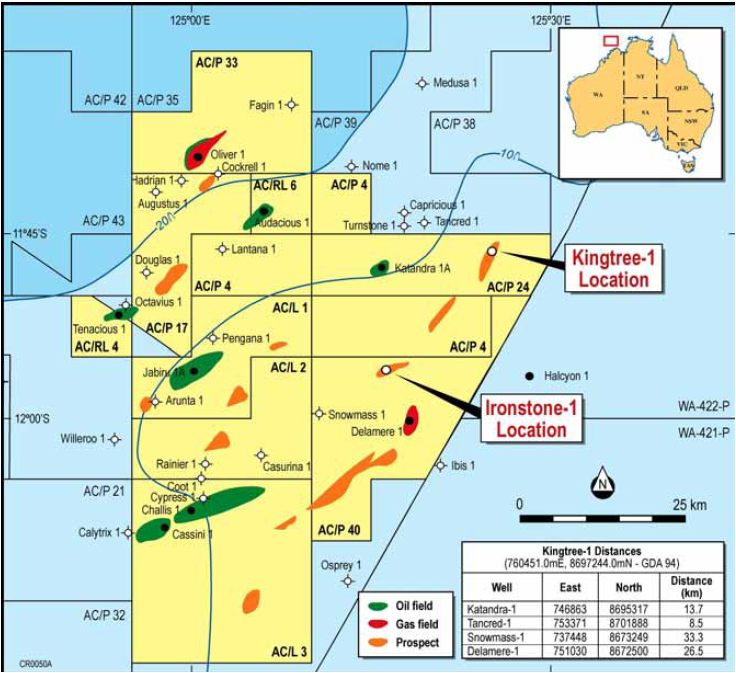
PTTEPAA, through its responsible and proactive response to the Incident has shown its commitment to responsible environmental management.
Comment: Those who read the Montara submissions and closely followed the official inquiry are likely to question this conclusion. Perhaps PTTEP should have emphasized the lessons learned and their commitment to better performance in the future.
Posted in drilling, offshore, Offshore Energy - General, tagged CNN poll, drilling, offshore drilling, offshore oil on April 19, 2011| Leave a Comment »
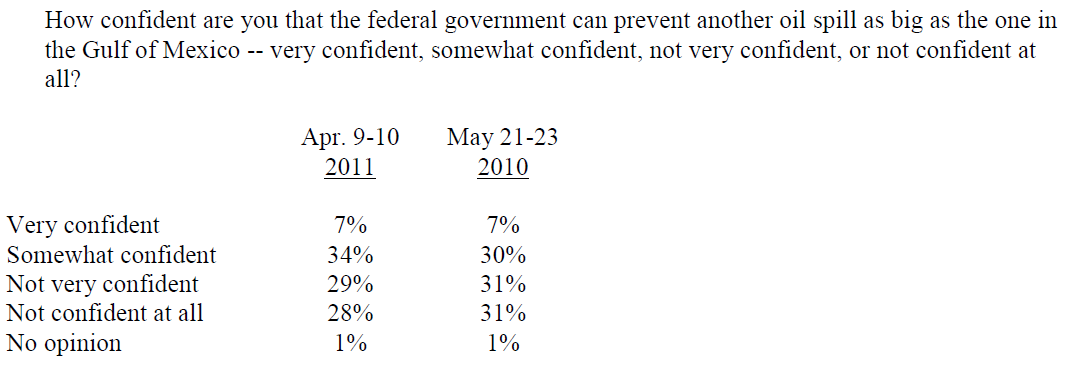
A CNN/Opinion Research Corporation survey released Tuesday indicates that 69 percent of Americans favor increased offshore drilling, with just over three in ten opposed. That 69 percent is up 20 points from last June, while the oil spill was still in progress, and is back to the level of support seen in the summer of 2008.

Confidence in government has shown a less significant increase.
Posted in Uncategorized, tagged drilling, House Natural Resources Committee, leasing, macondo, offshore drilling, offshore oil, permitting, Regulation, safety on April 18, 2011| Leave a Comment »


 Bud's Offshore Energy (BOE)