Feeds:
Posts
Comments

Posts Tagged ‘NOAA’

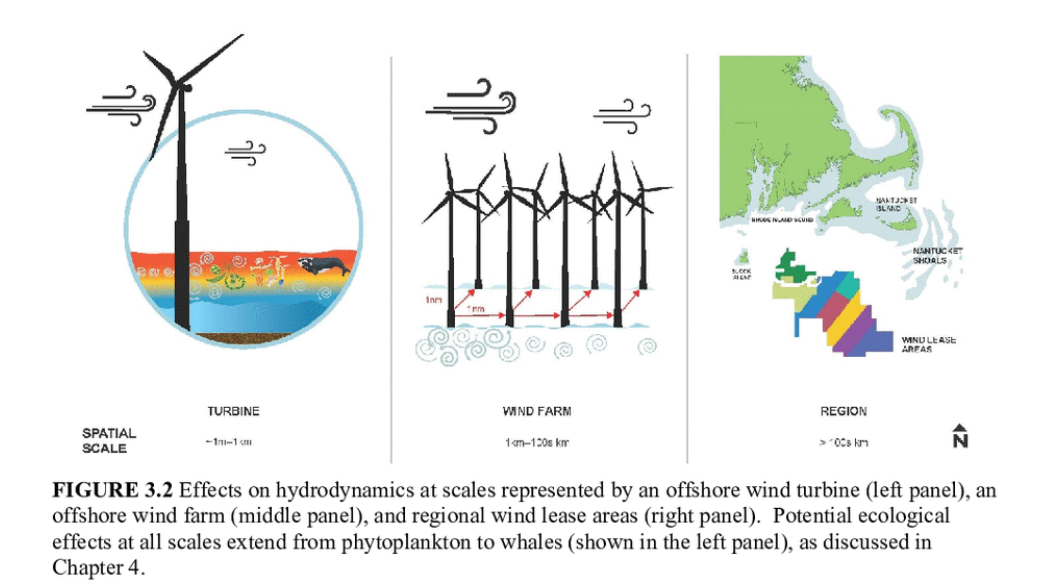
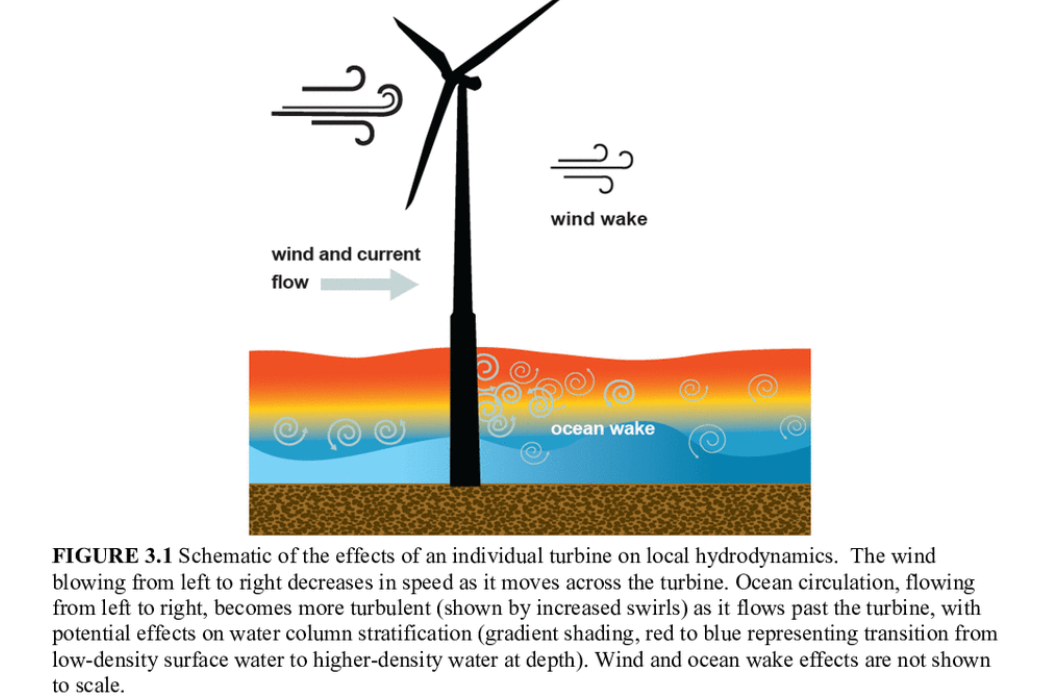
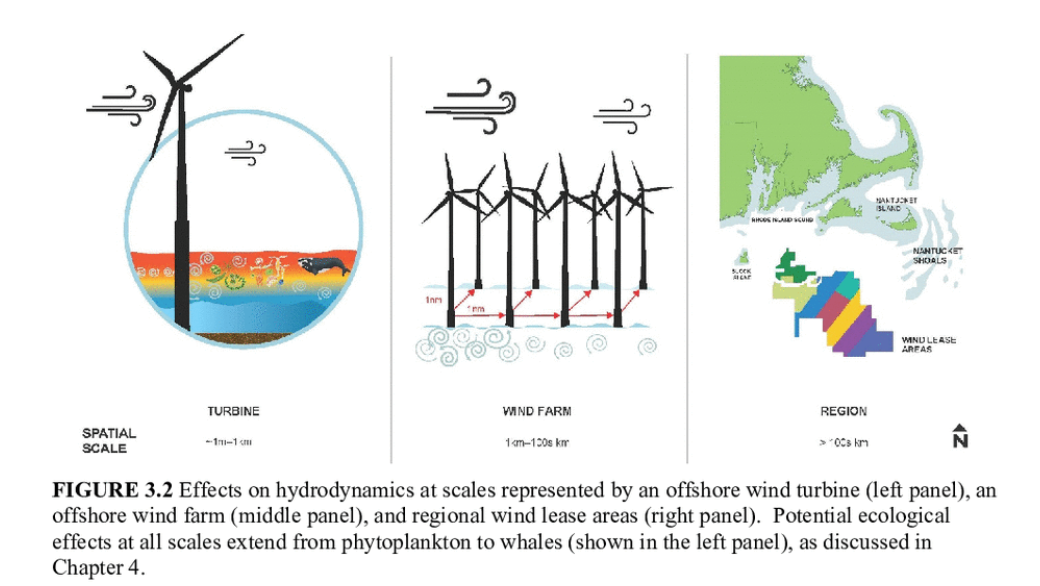
Study: Potential Hydrodynamic Impacts of Offshore Wind Energy on Nantucket Shoals Regional Ecology: An Evaluation from Wind to Whales, National Academies of Sciences, Engineering, and Medicine.

Comments:

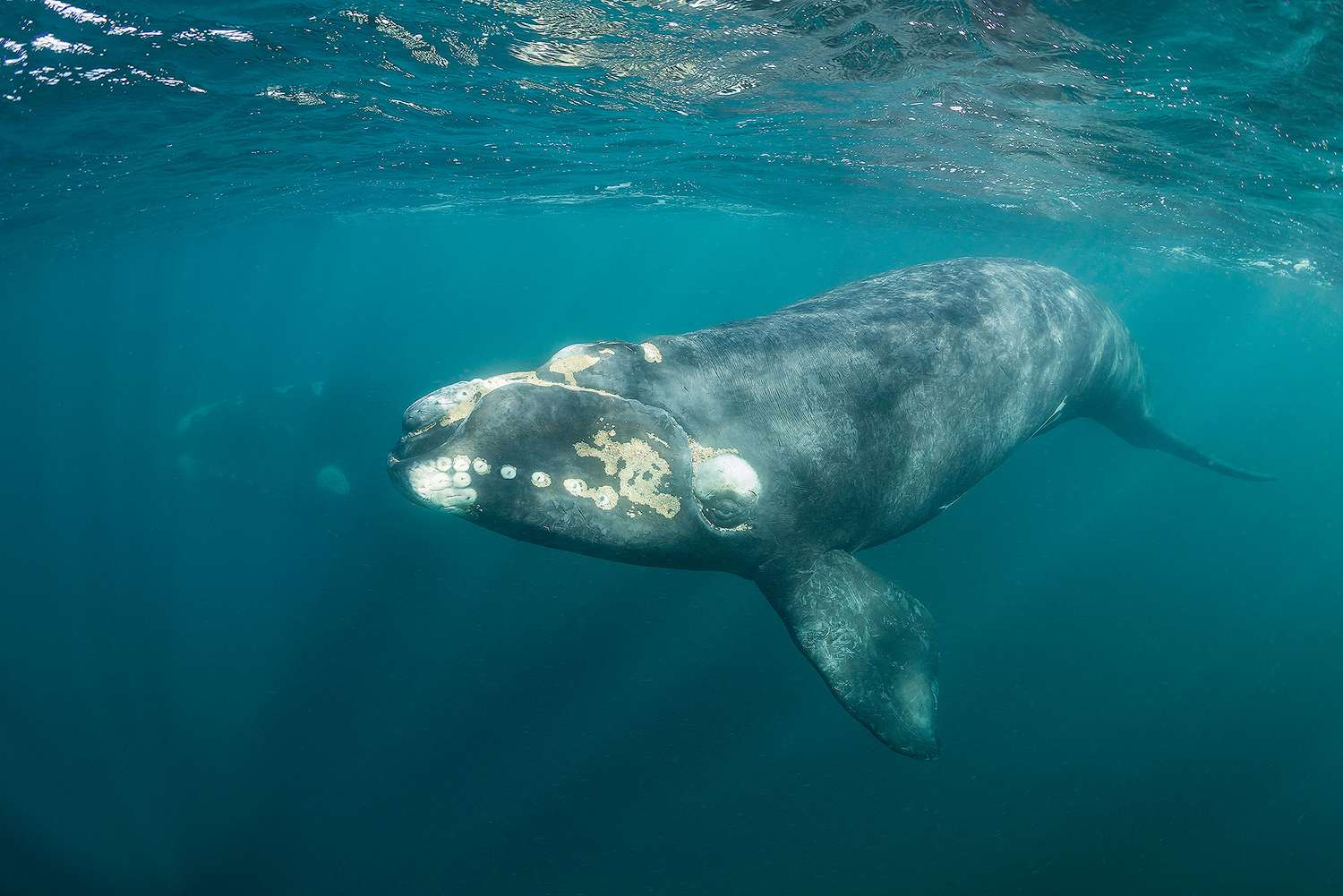
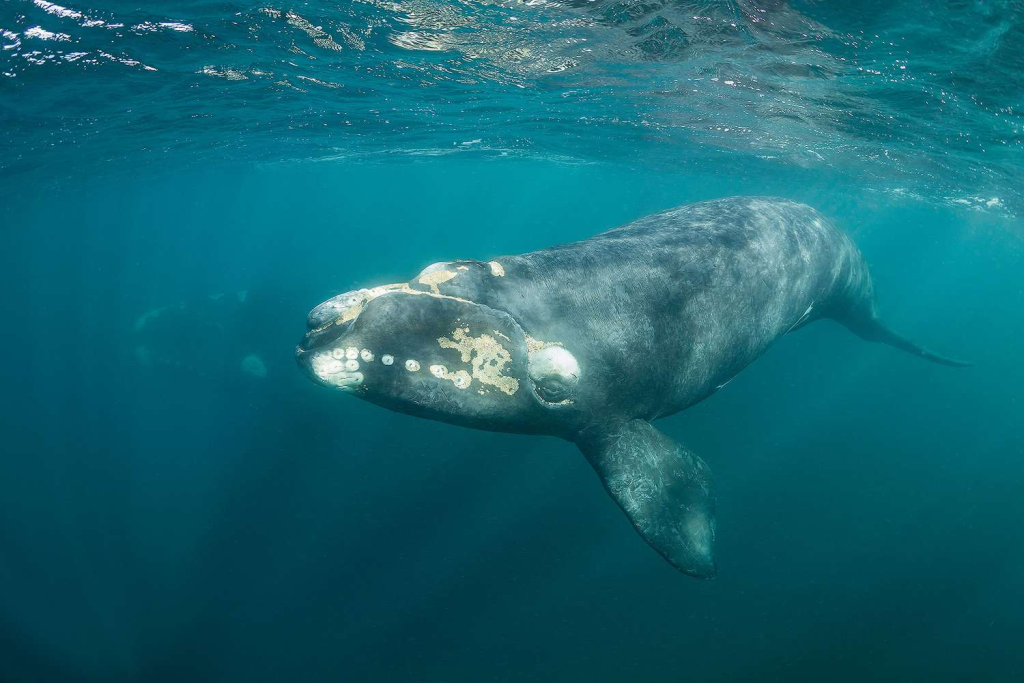
  • Kudos to BOEM for sponsoring this important study which identifies the potential ecological effects of offshore wind farms on the endangered North Atlantic Right Whale.
  • BOEM must now consider, and presumably implement, the committee’s recommendations. This could prove to be especially challenging given BOEM’s prominent wind advocacy role.
  • All 9 of the study committee members are scientists with appropriate backgrounds and specialties (see Appendix A of the report).
  • As a rule, the NAS notes potential conflicts of interest in the biographical statements. Two possible conflicts were identified: one committee member was a “compensated member of a review panel for Ortsted’s Offshore Wind Research Plan in 2021,” and another works for a firm that “has been partially funded by offshore wind development companies.”
  • The panel recommends robust monitoring during all phases of wind development and operations in the North Atlantic region. Is that sufficient given that hundreds of turbines could be installed before the data have been acquired and analyzed?
  • The concerns raised by the NAS committee are not new. 18 months ago, NOAA’s Chief of Protected Species cited some of the same concerns in recommending a conservation buffer zone adjacent to Nantucket Shoals.

. Background graphics, excerpts, and recommendations are pasted below.

Important excerpts:

  • p.2: A single offshore wind turbine can alter local hydrodynamics by interrupting circulation processes through a wake effect and induce turbulence in the water column surrounding and downstream of the turbine supporting structure, the pile. Moving away from single turbine effects and looking at arrays of turbines in a wind farm or at multiple adjacent offshore wind farms, these effects become more complex with implications for both local and regional circulation.
  • p.4: At the wind farm scale, the potential impacts include reductions in ocean current speeds, stratification, ocean surface wind speed, and deflection of the pycnocline. At the regional scale, perturbations due to offshore wind turbines are difficult to quantify because of the natural processes that drive significant environmental variability across the region.
  • p.6: Recommendation: The Bureau of Ocean Energy Management, National Oceanic Atmospheric Administration, and others should support, and where possible require, the collection of oceanographic and ecological observations through robust integrated monitoring programs within the Nantucket Shoals region and in the region surrounding wind energy areas before and during all phases of wind energy development: surveying, construction, operation, and decommissioning. This is especially important as right whale use of the Nantucket Shoals region continues to evolve due to oceanographic changes and/or the activities and conditions relevant to offshore wind farms.
  • p.7: Recommendation: The Bureau of Ocean Energy Management, National Oceanic Atmospheric Administration, and others should support, and where possible require, oceanographic and ecological modeling of the Nantucket Shoals region before and during all phases of wind energy development: surveying, construction, operation, and decommissioning. This critical information will help guide regional policies that protect right whales and improve predictions of ecological impacts from wind development at other lease sites.

Read Full Post »

Followup to our previous post on this matter:

  • How does a Coast Guard station casually post an endangered species observation on Facebook before confirming the accuracy of the sighting?
  • Even if the species identity had been confirmed, is a Facebook post an appropriate means of making such announcements?
  • Shouldn’t the observation have been reported to NOAA for any further action?
  • Was the Coast Guard station aware of Lease Sale 261 and the related Rice’s whale litigation?
  • Did the Coast Guard station understand the potential economic implications of the alleged sighting, not just for offshore oil and gas but for all commercial activities in the GoM?
  • Why did so many media outlets run with the Facebook post without confirmation from the Coast Guard or NOAA?
  • Why has only one organization, the Miami Herald, published the corrected information?
  • Why has there been no public statement from the Coast Guard?

Read Full Post »

Lease Sale 261 stipulations

In addition to the lease stipulation, the entire expanded Brice’s whale area has been excluded from the lease sale. Senator Manchin strongly criticized that decision:

Let me be clear, the exclusion of more than 6 million productive acres from the upcoming offshore oil and gas lease sale in the Gulf of Mexico based on a settlement reached in the name of protecting Rice’s whale while conveniently only targeting oil and gas is yet another example of this Administration’s intentional undermining of the strong energy security provisions in the Inflation Reduction Act.

Senator Manchin

Read Full Post »

Attached is a settlement agreement between NOAA and 4 NGOs that could have major implications for deepwater oil and gas operations in the Gulf of Mexico.

As background, the Rice’s Whale (formerly Bryde’s whale) area has been expanded (see map above) such that it fences off deepwater leases by creating a barrier to vessel transportation. The expansion is based on a single study that concluded that Rice’s whales were “the most plausible explanation” for moan calls observed in the northwest GOM shelf break area. No Brice’s whales were sighted in the expanded area during this study. The authors do point to a 2017 sighting offshore Corpus Christi, which is apparently the only actual sighting of a Brice’s whale along the NW GoM shelf break.

The settlement agreement commits BOEM, presumably with their concurrence, to exclude the expanded area from future leasing, to issue a Notice to Lessees and Operators (exhibit 1 below) and to attach stipulations to new leases (exhibit 2). Because BOEM’s authority to impose major new requirements without proposing a regulation for public review and comment is questionable, the Notice (NTL) describes the restrictions as “recommended measures.” However, the liability risks associated with the failure to comply with this “guidance” would be unacceptable to most companies. Adding to the muddle, the language in the lease stipulation differs by making it perfectly clear that compliance is required.

The most troubling restriction from an operational standpoint:

To the maximum extent practicable, lessees and operators should avoid transit through the Expanded Rice’s Whale Area after dusk and before dawn, and during other times of low visibility to further reduce the risk of vessel strike of Rice’s whales.

Comments:

  • Deepwater facilities are typically far from shore, and a requirement to transit only between dusk and dawn, particularly in the winter, is unrealistic and onerous. This is further complicated by the speed limit provision.
  • Those who have worked offshore know that periods of low visibility are unpredictable and can extend for days. The low visibility transit restriction is thus highly punitive and increases operational risks on the vessels and at the facilities they serve.
  • The vague “to the maximum extent practicable” caveat provides little comfort for planners, managers, and crews, and is a de facto acknowledgement that the requirement is unreasonable.
  • These restrictions, coupled with the required Automatic Identification System data, open the door to endless challenges, especially given the keen interest of the litigious organizations that are parties in the settlement agreement.
  • Deepwater GoM operations are few in number and highly dispersed, which is a more important mitigating factor than those included in the agreement. More on this tomorrow.
  • In addition to the deepwater operations that will be much more difficult to supply, there are currently 81 production platforms within the expanded Rice’s whale area (100 to 400 m water depth).These include important facilities like Amberjack, Cognac, Cerveza, and Lobster. What are the implications for these platforms? Will they be required to have full-time whale observers? Can they only be supplied during daylight hours with good visibility? Why not consider using these platforms as bases for more definitive studies?
  • Further to the previous point, there are 103 existing leases in the 100-400 m depth zone that is now excluded from leasing? 90 of these leases are still in their primary term, and 21 were issued in the past 2 years. How will the contractual rights of these leaseholders be protected? (In fact, the value of all 1550 active leases in >100 m water depth is affected by this agreement.)
  • Have BSEE and Coast Guard been consulted on the practicality and safety implications of these requirements?
  • Deepwater operations have been ongoing in the GoM for 50 years, and there is no apparent evidence of impacts to this species. Why can’t the consultation process and any necessary followup studies be completed before decisions are made regarding operating restrictions?
  • These types of restrictions, coupled with the diminished state of the Strategic Petroleum Reserve and tightening oil markets, raise serious energy security and economic concerns.

Finally, BOEM’s third footnote in the NTL (pasted below), doesn’t demonstrate great confidence in the need for the onerous requirements that are being imposed.

This is not meant to be construed as a blanket determination as to whether BOEM, at present, has determined that there is a “reason to believe” that incidental take may occur, within the meaning of the ESA, the consultation regulations, or BOEM’s regulations. Those decisions will be made on a case-by-case basis in accordance with BOEM regulations referenced below.” Comment: Huh??? How are these blanket restrictions case-by-case, and how are they being imposed without public review?

Read Full Post »

Just as I was lamenting the absence of scientific surveying in the Atlantic, my former colleague Renee Orr brought this NOAA announcement to my attention. Researchers from the University of Texas Institute of Geophysics and Lamont-Doherty Earth Observatory, with funding from the National Science Foundation, propose to conduct seismic surveys in the Blake Plateau area of the South Atlantic (map below).

The proposed study would acquire two-dimensional (2-D) seismic reflection and seismic refraction data to examine the structure and evolution of the rifted margins of the southeastern United States, including the rift dynamics during the formation of the Carolina Trough and Blake Plateau.

The survey will lead to a better understanding of “the interaction between tectonic and magmatic processes that led to continental breakup and the onset of seafloor spreading in the central Atlantic Ocean 200 million years ago.” The investigators are particularly interested in the “stratigraphy of sediments that formed during and after rifting, the degree of crustal stretching at the continental margins, crustal faults that formed during extension of the margin, and the geometry of lava flows that were placed on the crust before the start of seafloor spreading.”

While not a primary purpose, the research should improve our understanding of the relationship between productive oil and gas fields offshore Africa and US analogs. Paul Post and his BOEM team estimated that the US Atlantic could contain >20 billion BOE (link to the latest report).

NOAA has conducted a detailed review of the proposal and made a “preliminary determination that the impacts resulting from this activity are not expected to adversely affect any of the species or stocks through effects on annual rates of recruitment or survival.”

Read Full Post »

News: BOEMRE releases report on the September 2010 Mariner Fire in the Gulf of Mexico.
BOE Comments:

  • Good report and relatively timely. Nice job by the team.
  • Good discussion of the heater-treater and production safety issues.
  • This was a very serious incident and lives were jeopardized. Sadly, no oil spill means no public attention.
  • Why didn’t the Coast Guard participate in the investigation? Will they be reporting on the haphazard evacuation?
  • Age old question: Is the rather extensive discussion of violations appropriate for an accident report? Should violations and enforcement actions be managed independently from accident investigations?
BOE: Floating liquefaction facilities open interesting possibilities for producing natural gas in remote offshore locations, possibly including the arctic.  The first FLNG facility will be 488 m from bow to stern! Offshore to the future!
BOE: Lots of posturing and not much in the way of meaningful proposals from either party. Unlike Australia, the US has not responded to its blowout with necessary legislative action, most notably the establishment of a single offshore safety and pollution prevention regulator.
BOE: Engineers solve problems when given the opportunity and encouragement. JL Daeschler is busy at the drawing board!
News: Greenland rolls on. despite Greenpeace protests. Cairn Energy has begun a second summer of drilling.
Views: Last summer’s results must have been sufficiently encouraging to justify further exploration. 
News: Hurricane season officially begins tomorrow.
BOE: There has been surprisingly little public discussion about the offshore industry’s preparations. Hopefully, everyone is ready.
BOE: Where is the worldwide commitment from industry and government? This problem can and must be fixed!

Read Full Post »

Not surprisingly, the television networks embraced the “Georgia Study,” which estimates that up to 79% of the Macondo spillage remains in the Gulf. Correspondents, bobbing from boats, rushed to report the news.  Does this mean that the networks will resume their courageous Key West oil-watch?  How about those damage projections for East Coast beaches?

Anyone who thinks that 79% of the oil remains hasn’t spent much time observing oil spills.  NOAA’s peer reviewed numbers are more credible.

The major newspapers, to their credit, seem to be providing balanced coverage of the new report.  The New York Times has a good article and this comment from Ed Overton seems to be pretty much on target:

Other marine scientists involved in evaluating the impact of the spill defended the government’s findings. “I generally agreed with the results,” said Edward Overton, a biologist at Louisiana State University who was one of several scientists who reviewed the federal study prior to its release. “I think it’s close to being on the mark.”

Read Full Post »

« Newer Posts