Posts Tagged ‘Montara’
Déjà vu
Posted in accidents, well control incidents, tagged accidents, Australia, blowouts, Deepwater Horizon, drilling, Gulf of Mexico, macondo, Montara, National Commission, offshore oil, safety, well control on November 9, 2010| 1 Comment »
Day 139 of the Montara Report Vigil
Posted in accidents, well control incidents, tagged Australia, Minister Ferguson, Montara, NOPSA on November 4, 2010| Leave a Comment »
 Those who read this obscure blog regularly know that we have been railing about the release of the Montara Inquiry Report since it was delivered to Energy Minister Ferguson on 18 June 2010. The report has now sat on the Minister’s desk for nearly twice as long as the Montara well flowed into the Timor Sea at an announced rate (cough, cough) of 400 barrels per day.
BOE wants to thank Minister Ferguson for helping teach us the virtue of patience, an important life skill that some of us had not previously mastered. In our newly enlightened state, we are becoming more observant. As a result, we noticed that the Australian Senate has already passed legislation strengthening the National Offshore Petroleum Safety Authority (NOPSA).
After reviewing information about the legislation here and here, I am a bit confused about the changes being enacted. However, if the concerns (below) of Tina Hunter, an Assistant Professor at Bond University who had previously submitted testimony to the Montara Inquiry, have not been yet been addressed, Parliament needs to revise the legislation. Multiple regulators are a problem, not a solution. (The US needs to take notice.)
These legislative changes proposed will still split the responsibilities for Well Operations Management Plans between NOPSA and the responsible Delegated Authority (who assesses the well design and construction and drilling applications)….Furthermore, the regulatory amendments do not consider the environmental regulation of well operations and integrity, which also remains with the relevant Commonwealth or State Authority. Therefore, whilst in principle these proposed legislative amendments will provide benefits for the regulation of well integrity, it will still split the regulatory responsibility of well integrity between multiple regulators. Tina Hunter
Posted in accidents, tagged aban pearl, accidents, Australia, Bayou St. Denis, Chile, China, Jack Ryan, macondo, Mariner fire, Montara, offshore oil, varanus, venezuela on October 14, 2010| Leave a Comment »
Now that Chile, with the help of the international community (including two companies from the Commonwealth of Pennsylvania where the drilling industry began), has rescued the 33 miners, can we drill into the Australian government and rescue the Montara and Varanus Island reports?
While we are at it, can we learn more about these accidents?
-
Bayou St. Denis blowout
-
Others?
Let’s learn from past accidents, so we don’t need dramatic rescues in the future.
The offshore safety record will be suspect until industry and governments have credible, internationally accepted programs and policies for ensuring that accidents are independently investigated and that investigation updates and reports are released in a timely manner.
Too many distractions before Macondo blew?
Posted in accidents, well control incidents, tagged accidents, Australia, blowouts, BOEMRE, Coast Guard, Deepwater Horizon, drilling, Gulf of Mexico, macondo, Montara, safety, well control on October 9, 2010| Leave a Comment »
There were so many simultaneous activities — starting with the displacing of mud to the pumping of fluids overboard — it was difficult to see what was going on. John Gisclair, Sperry Sun (see Times Picayune summary of yesterday’s BOEM-Coast Guard hearing)
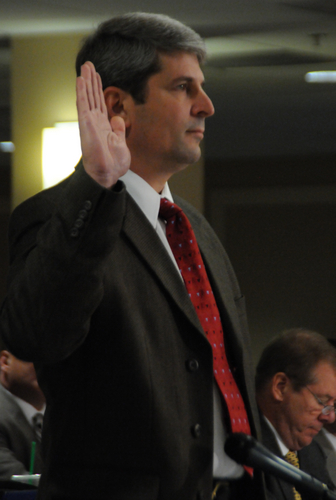
John Gisclair
Too much at once? Hurrying to finish the job? Cost concerns? No one in charge? Distracted by managers visiting the rig? One or more of these human and organizational factors appears to have contributed to the blowout.
Similarly, the rigid commitment to “batching” the development wells (for efficiency reasons) seems to have been a factor contributing to the Montara blowout in the Timor Sea. If after removing the corrosion cap on the production casing, the work on the H1 well had continued in series (i.e. casing tied-back, BOP installed, and well secured) before moving on to another well, this blowout may have been prevented.
At both Macondo and Montara, time pressures (perceived or real) may also have affected the way negative-pressure tests were conducted or assessed. These tests should have detected the influx of hydrocarbons via the shoe track.
Complaints: C-SPAN Says “No” and Transcripts Too Slow!
Posted in accidents, well control incidents, tagged accidents, Australia, blowouts, BOEMRE, Coast Guard, cspan, Deepwater Horizon, drilling, Gulf of Mexico, macondo, Montara, offshore oil, oil spill, well control on October 5, 2010| 2 Comments »
- C-SPAN has opted not to cover this weeks BOEMRE – Coast Guard Macondo hearings. Instead, they are presenting recordings of political rallies, assorted senatorial and gubernatorial candidate debates, and similar fare. In other words, all three channels will be dedicated to the usual political posturing that already receives non-stop national coverage, and the investigation into one of the more significant accidents in US history will be ignored.
- Why does it take 3 weeks to post the transcripts of these hearings? The Australians posted each Montara transcript within hours after the day’s session ended.
Colin comments on Montara-Macondo Float Collar Issues
Posted in accidents, well control incidents, tagged accidents, Australia, blowouts, BOE, Colin Leach, Deepwater Horizon, macondo, Montara, offshore oil, safety, well control on September 28, 2010| Leave a Comment »
 We have commented frequently about the similarities between the Montara and Macondo blowouts, particularly the root cause casing shoe issues. In this post, Colin Leach draws attention to the float shoe and collar issues that permitted oil and gas to enter both wells. Click here to view the full post.
The Bly report (page 70) noted some significant “inconsistencies” in the operation of the float shoe/float collar (see full post). This is so similar in nature to the “inconsistencies” in the 9 5/8″ cement job on the Montara well to be scary. The bottom line is that both disasters could have been prevented if these “inconsistencies” had been recognized and additional barriers placed above the float collar. In fact even if there are no “inconsistencies”, the placing of an additional barrier or so seems like an exceptionally prudent step, which would not take that much time or effort.
Deep water is not the problem – Update
Posted in accidents, well control incidents, tagged accidents, blowouts, bly, BOE, bp, Deepwater, Deepwater Horizon, drilling, Gulf of Mexico, macondo, Montara, offshore oil, safety, well control on September 28, 2010| 1 Comment »
As previously posted (July 27, 2010), deep water had little to do with the well integrity problems and other contributing factors leading to the Macondo blowout. The Bly (BP) report further confirms this position.
Of the eight key findings in the Bly report (listed below), only number 4 could be considered to be more of a deepwater issue. The BOP failures may also have been influenced by deepwater factors. However, as previously noted, surface BOPs have a much higher failure rate than subsea stacks.
While the Montara blowout was in relatively shallow water, slight variations of findings 1 through 4 were the primary causes of that accident.
BP findings:
- The annulus cement barrier did not isolate the hydrocarbons.
- The shoe track barriers did not isolate the hydrocarbons.
- The negative-pressure test was accepted although well integrity had not been established.
- Influx was not recognized until hydrocarbons were in the riser.
- Well control response actions failed to regain control of the well.
- Diversion to the mud gas separator resulted in gas venting onto the rig.
- The fire and gas system did not prevent hydrocarbon ignition.
- The BOP emergency mode did not seal the well.
Australia to Have Single Offshore Safety Regulator
Posted in accidents, well control incidents, tagged accidents, Australia, blowouts, Deepwater Horizon, Gulf of Mexico, macondo, Martin Ferguson, Montara, NOPSA, oil spill, safety, well control on September 23, 2010| Leave a Comment »
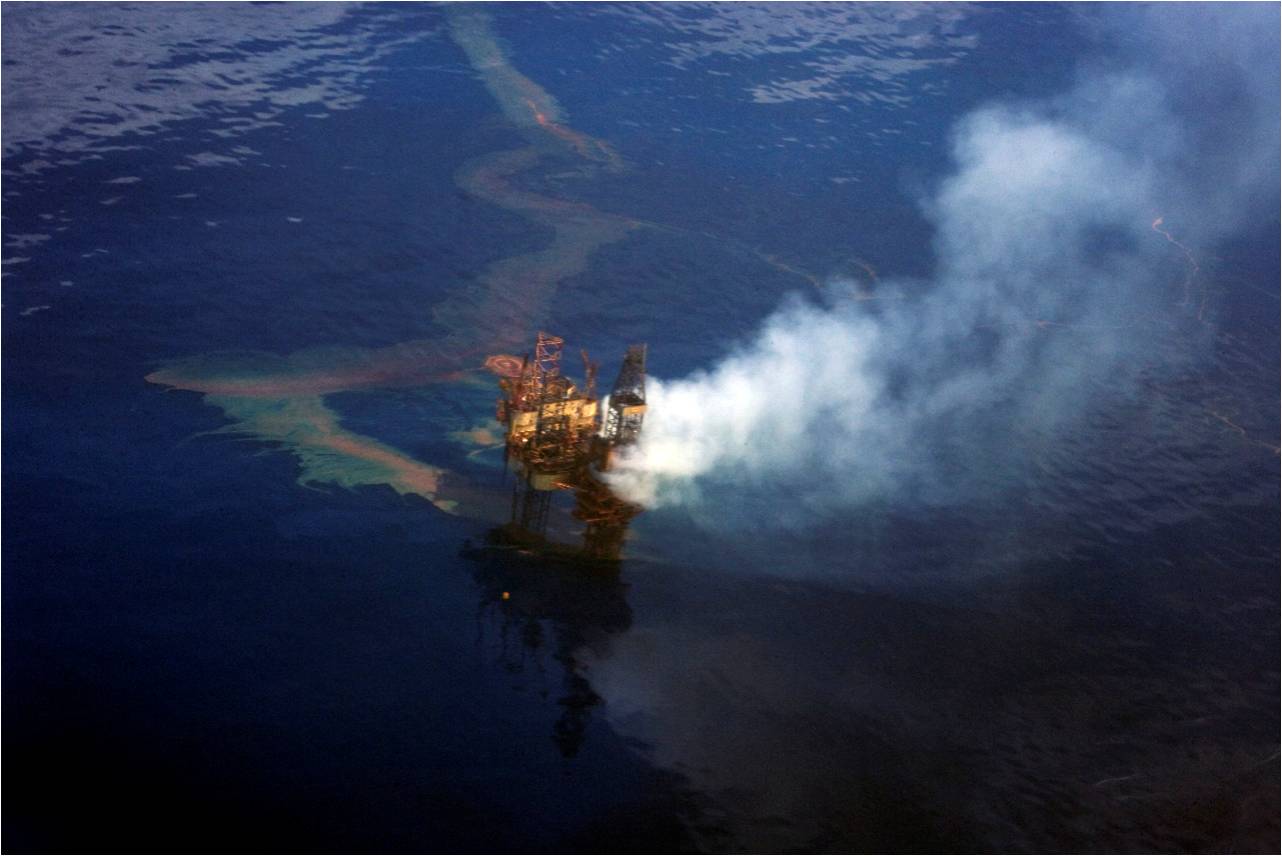
Montara Blowout, Timor Sea
I awoke to two very important developments from Australia as reported by Anthea Pitt with Upstream:
- According to Energy Minister Martin Ferguson, the Montara Inquiry Report will be publicly released by the end of the year. As BOE readers know, there are important similarities between the Montara and Macondo blowouts, most notably the production casing cementing issues that created a flow path via the shoe track on both wells and the evidence that both disasters would have been prevented if negative flow tests had been properly conducted and interpreted. Would Macondo have been prevented if BP and Transocean had followed the Montara hearings and made sure that all drilling personnel were aware of the causes of this 74-day blowout in the Timor Sea?
- Minister Ferguson also announced that the role of the National Offshore Petroleum Safety Authority (NOPSA) will be expanded:
By expanding Nopsa’s role, one central agency will look out for the safety of our offshore workers and the environment from exploration to decommissioning. That means it will be responsible for approvals and regulation of safety and environment, as well as integrity of facilities and day-to-day operations.
Bravo to Australia and Minister Ferguson! As I indicated in a submission to the Montara Commission and testimony before the US Senate Committee on Energy and Natural Resources, a single agency must be responsible and accountable for the regulation of offshore oil and gas operations if safety and pollution prevention objectives are to be achieved.
Same test should have prevented both Montara and Macondo
Posted in accidents, well control incidents, tagged accidents, Australia, blowouts, Deepwater Horizon, drilling, Gulf of Mexico, macondo, Montara, negative pressure test, offshore oil, oil spill, safety, standards, well control on September 15, 2010| Leave a Comment »
Despite the vast differences in location and water depth, both the Montara and Macondo blowouts would have been prevented if negative pressure tests had been properly conducted and interpreted after the production casing had been set.
A negative pressure test simulates an underbalanced condition in which the formation pressure exceeds the pressure exerted by the fluid column. The purpose of the test is to determine if there are leaks in the casing shoe track, casing, or seal assembly. At Macondo, the test was conducted and the evidence of inflow is quite clear. Unfortunately, that evidence was misinterpreted. See slides 14-17 in the linked presentation.
At Montara, the testimony suggests that a negative pressure test was not properly conducted. PTTEP therefore had a false sense of security regarding the integrity of the casing shoe. See page 9 of this transcript.
Both wells subsequently flowed through the shoe track and inside production casing for a combined duration exceeding 5 months.
There are currently no industry standards for conducting and interpreting negative pressure tests.
Australia Update
Posted in accidents, well control incidents, tagged accidents, Australia, blowouts, Montara, safety, well control on September 11, 2010| Leave a Comment »

- NOPSA has issued an excellent Health and Safety Performance Report for Australian offshore operations. Here’s the link.
- BOE fave Martin Ferguson has retained his energy post in the new government. We trust that he will release the Montara Inquiry report without further delay.
- Per Upstream, the destroyed West Atlas jackup rig is being removed from the Montara wellhead platform in the Timor Sea, and all wells have been secured with barriers. In light of the lessons learned at Montara, can we assume that corrosion caps and well fluids are not being counted as barriers? What is next for the Montara? Will PTTEP be authorized to resume development of the field? Should they be?
 Bud's Offshore Energy (BOE)