Feeds:
Posts
Comments

Posts Tagged ‘Montara’

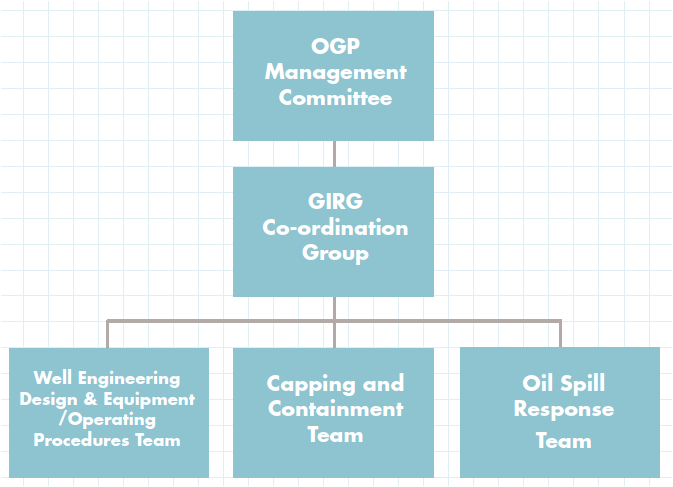
Today, the International Oil and Gas Producers (OGP) released the Global Industry Response Group (GIRG) reports.  GIRG was formed last July with the goal of better managing offshore safety risks. The organizational structure is illustrated below.
Deepwater Wells: Lessons and Recommendations focuses on the critical prevention programs, and is perhaps the most important of the GIRG reports. Since Macondo, the GIRG team and other industry committees have worked diligently on well planning and integrity issues, and are commended for their outstanding efforts. However, the recommendations presented in the GIRG report are surprisingly modest, and do not reflect the technological and management innovation that industry has demonstrated in pioneering offshore development.  The recommendations fail to break new ground, lack specifics, and, in some cases, appear to be a step backward. In short, the oil and gas industry is capable of much more.  Initial comments follow:

  • Incident data (problem): The absence of comprehensive and verified incident data is one of the “systemic” industry weaknesses identified by the National Commission. OGP has tried to address this problem for years, but has not had the industry-wide support needed to develop a credible program. GIRG has wisely recommended a Wells Expert Committee (WEC) to review selected incident data. However, the recommended program suffers from the same weaknesses that constrain existing OGP reporting programs. OGP must rely on “encouraging” its members to participate voluntarily, and non-members are not included. This type of voluntary program was not good enough before Macondo/Montara, and is certainly not good enough now.
  • Incident data (solution): Industry and regulators need an ironclad commitment that all operating companies will submit incident data in accordance with defined protocols. Contractor data must be included. Companies should execute binding agreements with OGP, or some other entity, to provide this information. The data must be managed by a completely independent entity that cannot, in any way, be directed by an industry advocacy group. Regulators and other independent representatives should be included on the management committee. Regulators should prohibit companies that don’t agree to submit these data from from operating within their jurisdictions. A comprehensive incident reporting and data management system is long overdue, and continued delays are not acceptable.
  • Montara: While GIRG is supposedly in response to both Macondo and Montara, the latter seems to have been largely ignored. The deepwater theme does not apply to the Montara platform, which was in only 80m of water. Despite the post-Macondo focus on water depth, shallow water was arguably a more significant contributing factor to the Montara blowout (batched completions using a cantilevered jackup, mudline suspensions, and two-stage platform installation) than deep water was at Macondo. Also, well capping, which was feasible and ultimately successful at Macondo, could not even be attempted at Macondo because of the manner in which these platform wells were suspended. Finally, GIRG  ignores the special gas migration and kick detection issues associated with horizontal completions like Montara, and the relief well rig availability and release issues that were never fully addressed during the Montara inquiry.
  • Emergency worldwide notification system: In conjunction with the incident reporting system, industry needs an emergency notification procedure that goes beyond safety alerts and requires the immediate attention of every operator and wells contractor. During the Montara inquiry, worldwide attention should have been drawn to the inability of the Montara operator to identify a hydrocarbons influx through the shoe track and into the production casing. Could an effective notification system have prevented Macondo? No one can say for sure, but the probability of a blowout at Macondo would have been greatly reduced if key BP and Transocean personnel had participated in discussions about Montara and the importance of proper negative pressure tests.
  • Dependence on regulator: On page 21 of the report, GIRG recommends that a company “carry out a more extensive programme of self-audit” when there is a lack of competent regulatory oversight. An operator should never depend on the regulator to verify its well or management programs, and should never relax its programs regardless of the level of regulation. Detailed regulatory reviews of specific drilling or management programs are never a substitute for operator diligence. Did the operators at Montara and Macondo rely on the regulator to protect them from themselves? Read the official investigation reports and make your own judgement.
  • Best practices: GIRG recommends “refraining from using the term ‘best industry practice’ until this definition is clarified; we prefer ‘good oilfield practice’ for the time being.”  Isn’t the clarification of best practices the role of groups such as this and industry standards committees? This attitude explains some of the technical recommendations in this report which may be “good oilfield practices,” but fail to raise the bar for safety achievement. Would you be satisfied with “good” if  family members were working on rigs or if operations were conducted off your coast? While “best practices” vary depending on the conditions and circumstances, it’s industry’s responsibility to identify those practices, and industry and regulators must set the bar high and keep raising it.
  • GIRG recommends established practices: Some of the GIRG recommendations, such as the “two-barrier” policy have been standard practice for most operators for years.
  • API RP 75: There are numerous endorsements of RP 75 as an important reference for management systems covering the design of wells and other activities.  RP 75 was a reaction to an MMS regulatory initiative 20-years ago to impose safety management requirements on offshore operators. BP, Transocean, and PTTEP had management systems that were generally consistent with the guidance in RP 75. GIRG needs to go beyond RP 75 and focus on improvements that will make safety management systems more effective.
  • API Bulletin 97, Well Construction Interface Document (WCID): Despite the complete absence of public attention, this is perhaps the most important post-Macondo initiative. It’s thus particularly disappointing that this document is now five months late. How does GIRG recommend the use of a document that is not complete and has not yet (to the best of my knowledge) even entered the balloting process? Another recommended and highly important document, updated RP 96 – Deepwater Well Design, has also yet to be finalized.
  • BOP recommendations: Nothing new or innovative is offered by GIRG. The report calls for 2 shear rams, but only one need have sealing capability, which means that the Deepwater Horizon stack met the GIRG specification. While many BOP advances require additional study, some (such as real-time function and pressure monitoring systems) already exist. Other GIRG technology recommendations are rather timid and generally in the form of suggestions for future study (e.g. study cement bond log technology).
  • Training: This section of the report is good, but doesn’t address deficiencies identified in the Montara inquiry and reviews of historical blowout data. Montara and other accidents have demonstrated that senior rig personnel may have limited understanding about well planning and construction practices. These topics are not covered in well control training programs. How does industry plan to address this major deficiency? While well planning is the responsibility of the operator (often a separate group than is represented on the rig), well control decisionmaking requires a fundamental understanding of well construction practices.  Also evident in the Montara testimony was the total absence of understanding on the part of operator, drilling contractor, and cementing personnel about the historical causes of blowouts. The cementers at Montara were unaware that gas migration/influxes during cementing operations were a leading cause of blowouts. Training programs need to be expanded to provide for the discussion of past accidents and how they could have been prevented.
					

Read Full Post »

PTTEP Exploration Plan

PTTEPAA, through its responsible and proactive response to the Incident has shown its commitment to responsible environmental management.

Comment: Those who read the Montara submissions and closely followed the official inquiry are likely to question this conclusion. Perhaps PTTEP should have emphasized the lessons learned and their commitment to better performance in the future.


Read Full Post »

While C-SPAN has broadcast some of the proceedings, the Deepwater Horizon Joint Investigation hearings have inexplicably not been streamed live by the Coast Guard (USCG) and Department of the Interior (DOI).  The National Commission and Chemical Safety Board streamed their hearings live, but the USCG and DOI have not done so.  Why? This is perhaps the most significant accident in the history of the US offshore oil and gas program, and the most notable worldwide offshore disaster since Piper Alpha in 1988. Eleven men died on the Deepwater Horizon.  Economic costs will total in the tens of $billions. Major regulatory changes, some of which don’t appear to address identified risks, are being imposed.

The upcoming hearings are particularly important because the BOP issues that will be discussed have enormous international significance. In this era, the world shouldn’t have to travel to New Orleans to observe the hearings, rely on sketchy press reports, or wait months for transcripts to be released. (And how is it that the Montara Inquiry Commission in Australia was able to post transcripts within hours after the conclusion of each day’s hearing?)

Accident prevention is dependent on complete and timely information.  Had more people paid attention to Montara, Macondo may have been prevented. The upcoming Deepwater Horizon BOP hearings are of critical importance, and should be streamed so that all interested parties can follow the proceedings.

Read Full Post »

The tragedy in Japan has added yet more uncertainty to nervous energy markets:
Japan will likely need more imported oil and natural gas due to closures of nuclear reactors caused by Friday’s earthquake and tsunami, but volumes can’t be calculated accurately as it is unclear how much industrial output has been affected by the disaster and how long power nuclear and thermal power plants will remain closed. Wall Street Journal
It’s much too early to gauge how the nuclear power industry, which some have touted as a model for safety achievement, will be affected.
    Standards news and discussion:
    Offshore Safety Institute?
    The CEOs of major oil and gascompanies will meet March 18 to decide how to proceed with the formation of a US offshore drilling safety institute, William Reilly, the co-chair of the National Oil Spill Commission, said March 8. Platts Oilgram News
    New twist in Cuban drilling drama – Petrobras relinquishes interest
    Marco Aurelio Garcia, foreign policy adviser to President Dilma Rousseff, told reporters in Havana exploratory work off Cuba’s northern coast had not shown good results and that Brazil wanted to concentrate on its own oil fields.
    Since BP’s disastrous Deepwater Horizon accident in the Gulf of Mexico last April, the risks of offshore oil drilling have been a hot topic. One place it isn’t questioned much is Brazil, whose oil production industry is one of the fastest-growing in the world because of vast new deepwater oil reservoirs discovered in the past five years.
    Mexican Deepwater Update (Platts Oilgram News)
    Pemex has just begun to explore in Mexico’s Gulf of Mexico waters deeper than 1,000 feet, but 28 billion undiscovered barrels of oilequivalent are thought to exist in that area, some of which borders US territorial waters. Pemex officials said the company is forging a development plan for its first deepwater field, Lakach, located northeast of the state of Veracruz in about 3,200 feet of water. First production is expected in 2015.
    Environmentalists are furious at a proposal by the petroleum company Shell to start exploration drilling off one of Western Australia’s most treasured reefs. Ningaloo Reef off the north-west coast, has been nominated for World Heritage listing.

Read Full Post »

Good Nola.com article on the well containment systems

Comments on well capping and containment:

  1. Capping and containment systems, while important and necessary, are for blowout response, not blowout prevention. Their use, successful or otherwise, would only occur after a series of unacceptable failures.
  2. Having two capping and containment consortia in the Gulf of Mexico (and none anywhere else in the world) does not seem to be very cost effective or efficient.
  3. What are the plans for subsea capping and containment systems elsewhere?
  4. A capping/containment capability would not have saved a single life on the Deepwater Horizon. Verified barriers must be in place to prevent flow from the well bore.
  5. The well responsible for our other major drilling blowout spill (Santa Barbara – 1969), was capped at the surface by closing the blind ram on the BOP shortly after flow began. However, capping doesn’t work if you don’t have a competent well bore. The well flowed through numerous channels back to the seafloor.
  6. Capping subsea wells is safer than capping surface wells.
  7. Capping the Montara blowout (2009) in only 80m of water was neither safe nor technically feasible because of the way the well was suspended. Despite the complete absence of a capping option at Montara, the capping of surface wells has received little attention.
  8. The more critical, but less publicized, post-Macondo initiatives pertain to well design, construction, and verification. In that regard, important new standards, including the Well Construction Interface Document, are scheduled to be completed soon. That work must not be delayed.
  9. While capping stacks and containment systems will only be used in the event of a series of major failures, design and construction procedures are critical every time a well is drilled. The importance of the initial design decisions continues into the production phase and beyond, even after the well has been plugged and abandoned.

Read Full Post »

Anthea Pitt, Executive Editor of the Petroleum Economist and a native Australian, recently wrote about her country and its historical dependence on natural resources:

Australia is well aware it relies on primary industries for its wealth. In the 19th century, the country proudly “rode on the sheep’s back”. More recently, iron ore, coal, bauxite and gold helped keep the worst of the sub-prime crisis at bay. Soon, a slew of large hydrocarbon developments off the country’s remote northwest coast will come on line, another rich seam flowing into Australia’s resources revenue stream.

The blowout at Montara was well-earned, and Australian and PTTEP were lucky even during a massive disaster. No one was injured, the well was at a remote location, and international attention was soon diverted to the spectacle of Macondo.

Evidence given to the inquiry showed exactly how fortunate Australia had been. It emerged that wells drilled at Montara failed to meet PTTEP AA’s internal well-construction standards, let alone satisfy regulatory requirements. The H-1 well, which had been suspended as a future producer during batch drilling operations, was open to surface for around a week before it blew out. Its downhole cementing job was flawed; there were no mechanical barriers in place. The rig’s blowout preventer was over another well at the time of the incident.

Although PTTEP has been given a pass by Australian Resources Minister Ferguson, the lessons of Montara must not be ignored. Deepwater drilling is not the problem; Montara was in 80m of water. Poor planning and execution are the problem, whether the well is in the Timor Sea, the Gulf of Mexico, the arctic, the North Sea or anywhere else in the world.

Read Full Post »

From the Australia Resources Minister’s Press Conference on 4 February in Canberra (click for the full transcript):

I might also say that I was in the United States last week and these issues were clearly top of mind in my discussions in Washington (l didn’t know he was here and have seen no US coverage of these meetings.)

I reinforced my previous commitment to work closely with the United States in terms of the consideration of the outstanding recommendations of the Macondo report and our determination to put in place a single national regulator in Australia

Discussions were also held with the companies and the US administration about an international conference we will hold in Western Australia in August of this year, focusing on the recommendations of the Macondo and Montara reports. That conference will be highly technical in nature.

It will in my opinion be a very important regulatory conference because it’s about basically having a look at where we are, what national and international responses can be coordinated, any specifications that might have to be changed so that we get a uniform approach to industry practice and the nature of equipment used. (Is the Minister unaware of the Vancouver conference and the ongoing work among regulators?)

(On the report about the Varanus Island explosion) Firstly I’d love to get my hands on it because I want to fully assess it. But I can’t get access to it at the moment because the WA government has determined it would be inappropriate to release it because it may impinge on potential legal proceedings.


Read Full Post »

Montara Blowout - Timor Sea

Link

PTTEP will have to report monthly and meet quarterly with Mr Ferguson under a binding agreement for the next 18 months.

Comment: That “penalty” is almost comical. What is the next level of punishment – weekly meetings with Ferguson? Also, shouldn’t the Minister let the regulator oversee PTTEP? Shouldn’t the Minister receive such reports and briefings from the regulator?

There is no disincentive, there’s no penalties. That’s what I think many Australians will be scratching their heads about. Paul Gamblin, WWF WA Director

Comment: I have to agree with the World Wildlife Federation. As one who has been following Monatara since the blowout was first reported and has read every page of the submissions and testimony, it seems inconceivable that PTTEP is able to continue its operations with no apparent penalty.

Read Full Post »

BOE’s Chery Anderson has alerted us that the Petrobras P-33 platform, which had been shut-in at the direction of the Brazilian regulators, has resumed production. Unfortunately, as has been the case with many post-Macondo articles, the author felt compelled to link the Petrobras problem to deep water.

…the accident once again raised concerns about the safety of deep-water oil output in the wake of last year’s disaster in the U.S Gulf of Mexico.

Contrary to popular opinion, water depth was a relatively minor factor in the Macondo blowout, and had nothing to do with the maintenance issues at the P-33 and other Campos basin facilities. Shallow water was a more significant contributing factor to the Montara blowout (batched completions, mudline suspensions, and two-stage platform installation) than deep water was at Macondo.

Read Full Post »

Australian Department of Resources, Energy, and Tourism

The Independent Review concluded that the Montara Action Plan effectively responds to the issues identified by the Montara Commission of Inquiry and sets PTTEP Australasia on the path to achieving industry best practice standards for both good oil field practice and good governance.

Comments:

  1. Perhaps the results of the “Independent Review” should have been released before PTTEP announced that it was moving ahead with development of the Montara field.
  2. Macondo was a model operation compared to Montara which was suspended for months with only a flawed casing shoe and a corrosion cap as barriers. When well activities resumed after the suspension, and the corrosion cap was removed, they could have tied back the 13 3/8″ casing and installed the BOP stack, but instead moved to another well so they could optimize efficiency. When the well began to flow, there was no means of even attempting to shut it in or install a surface cap.
  3. PTTEP has not been fined or penalized in any way by the Australian government. I wonder how Commissioner Borthwick and the folks who participated in the Montara Inquiry, which did an admirable job and was very critical of PTTEP, feel about that.

Read Full Post »

« Newer Posts - Older Posts »