Feeds:
Posts
Comments

Posts Tagged ‘methane’

Note: I have attached a PDF for those who want to download the charts and table. I have also added a “flaring and venting” category for easy access to these posts.

Minimizing flaring and venting is important from both environmental and resource conservation standpoints. Flaring and venting volumes are also good indicators of how well production systems are designed, managed, and maintained.

The best performance indicators are the percentages of produced gas that are flared and vented both for oil-well gas (OWG, also known as associated gas or casinghead gas) and gas-well gas (GWG or non-associated gas).

I compile monthly flaring and venting volumes for the Gulf of Mexico using data submitted to the Office of Natural Resources Revenue (ONRR). Reporting these data is mandatory and strictly enforced. Violators are subject to civil and criminal penalties.

In assessing performance trends, it’s important to segment venting and flaring volumes for both OWG and GWG production. Venting produced gas (mostly methane) is a more significant environmental concern from both air quality and greenhouse gas (GHG) perspectives. Reductions in methane emissions are a priority for regulators and leading operators.

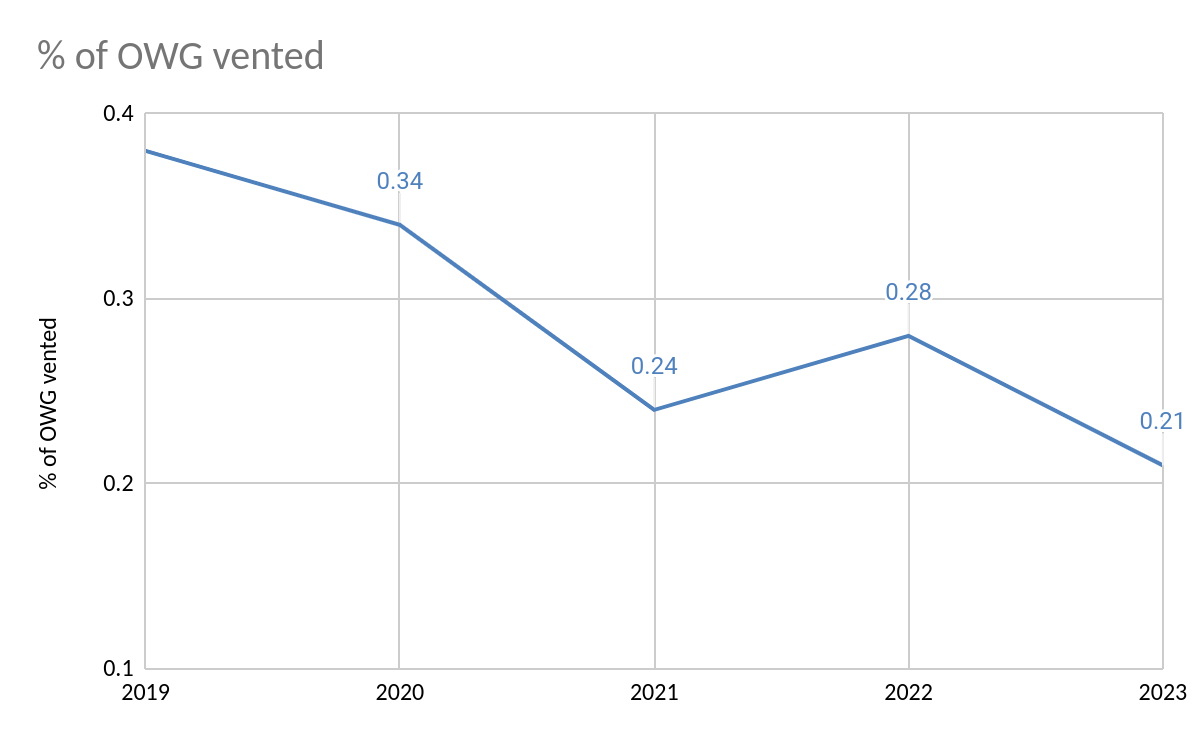
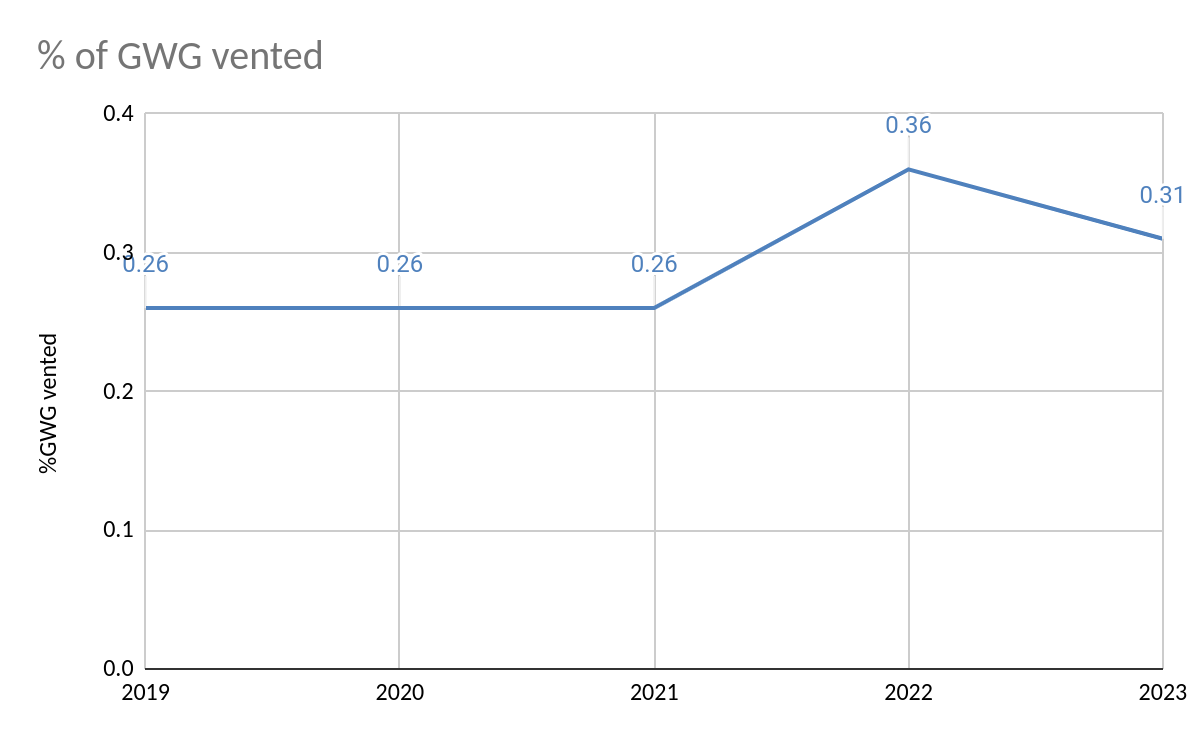
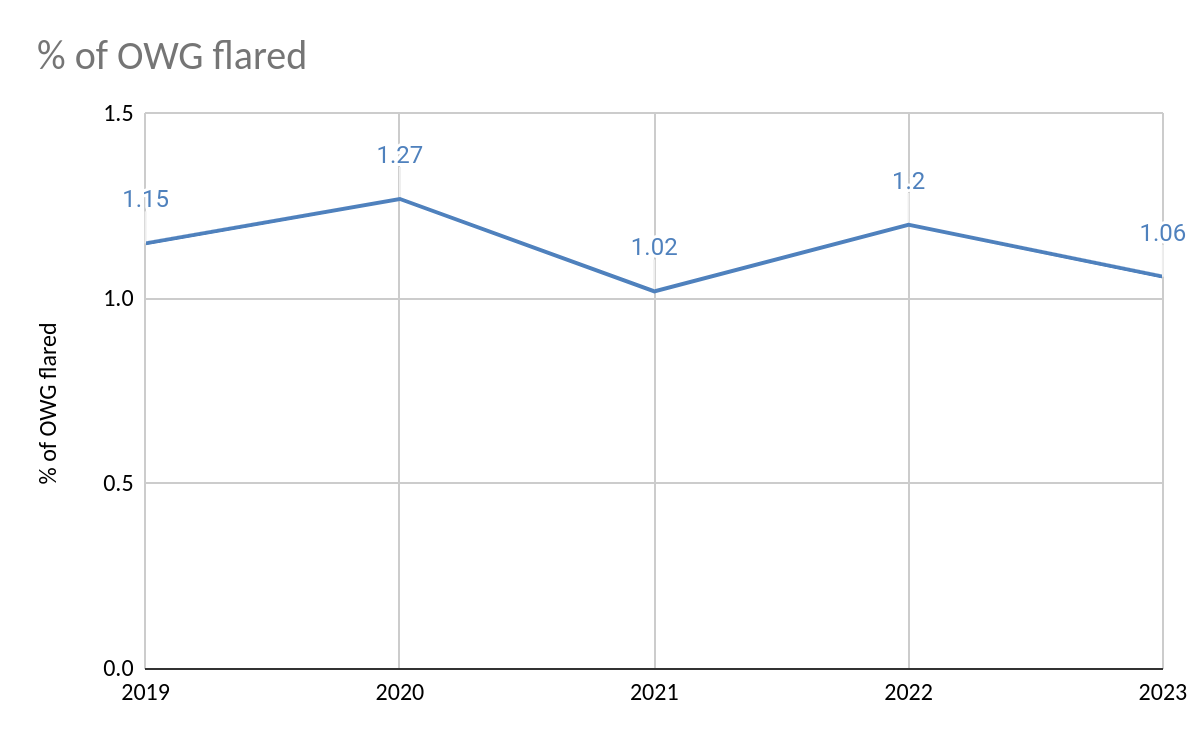
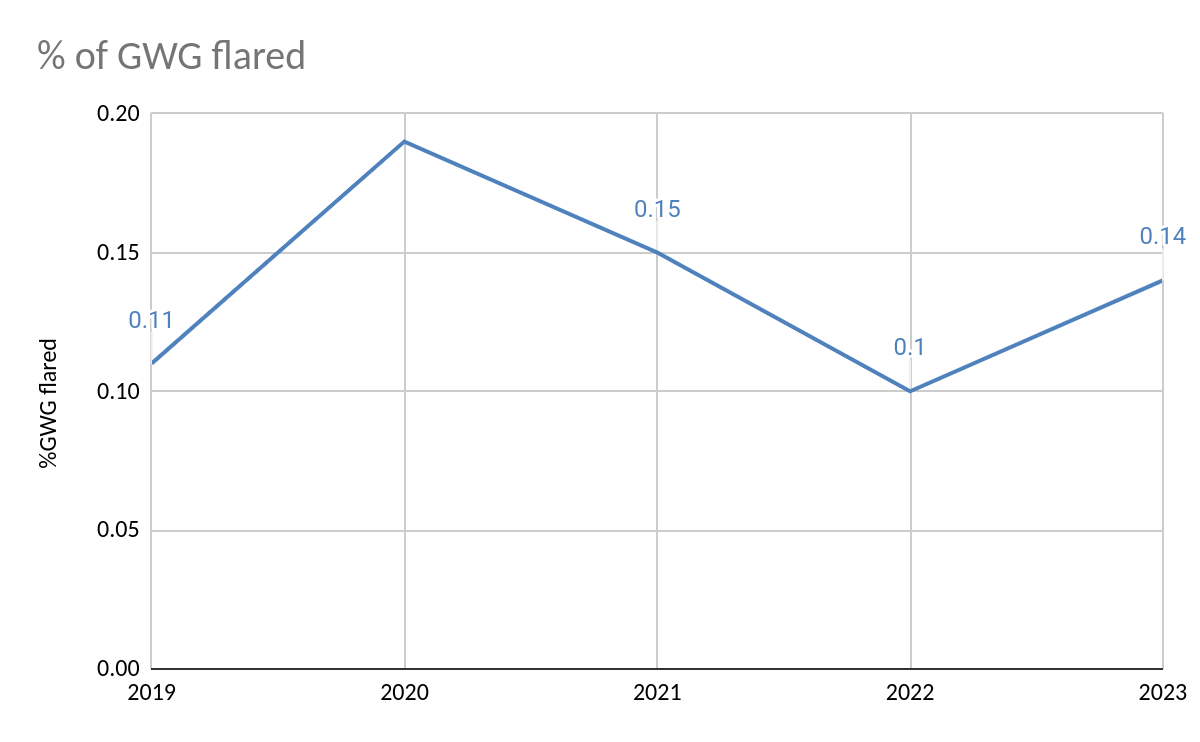
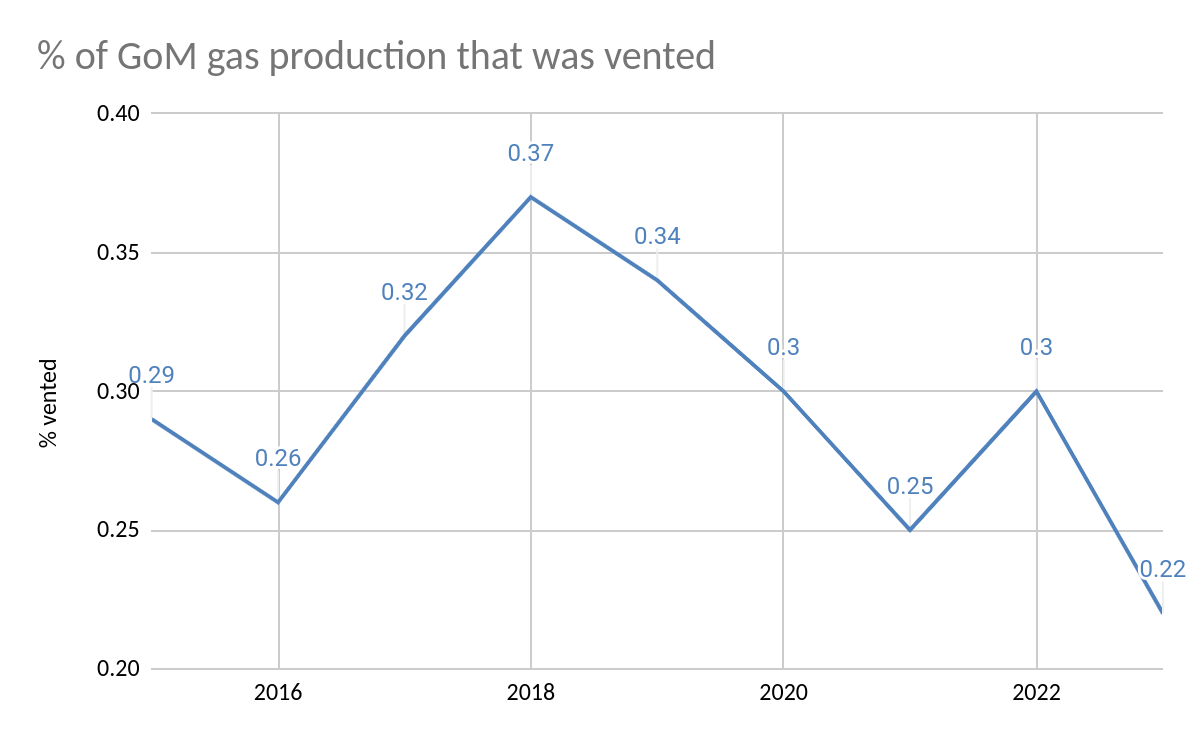
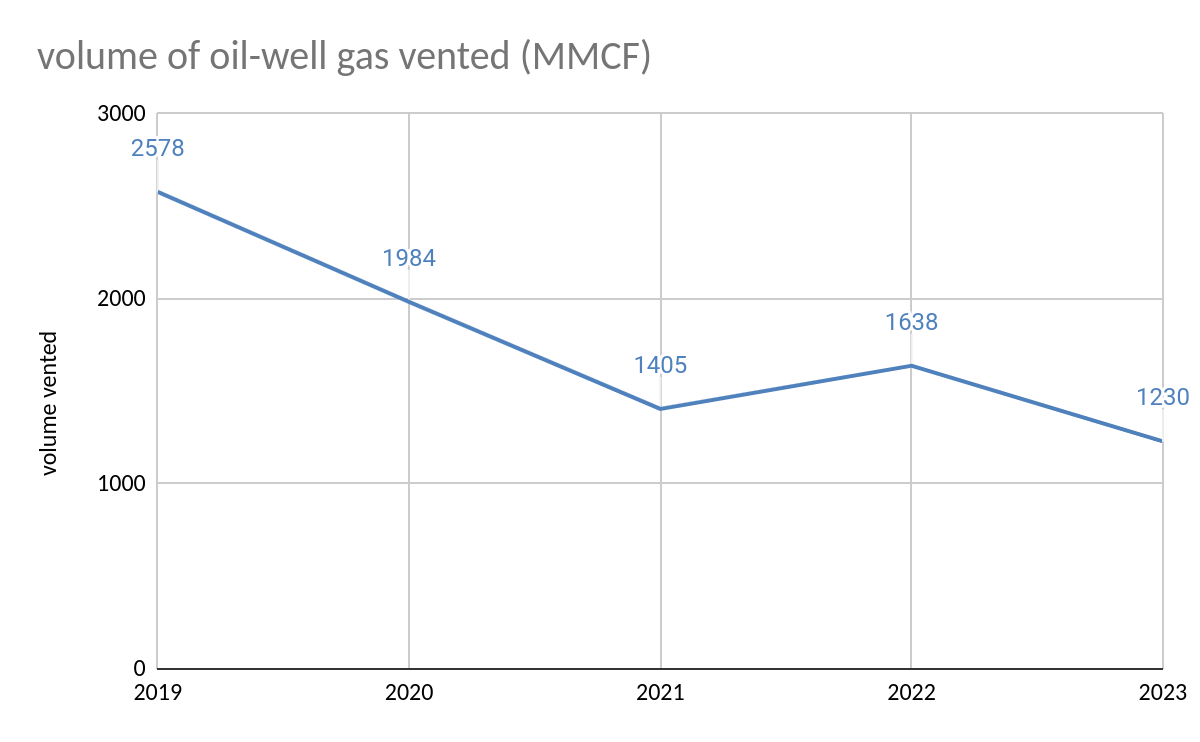
Flaring and venting data for 2019-2023 are summarized in the charts and table below. All volumes are in millions of cubic feet (MMCF). For the last chart (% of total gas production vented), I added ONRR data for 2015-2018 to provide a longer term perspective on overall venting performance.

Observations:

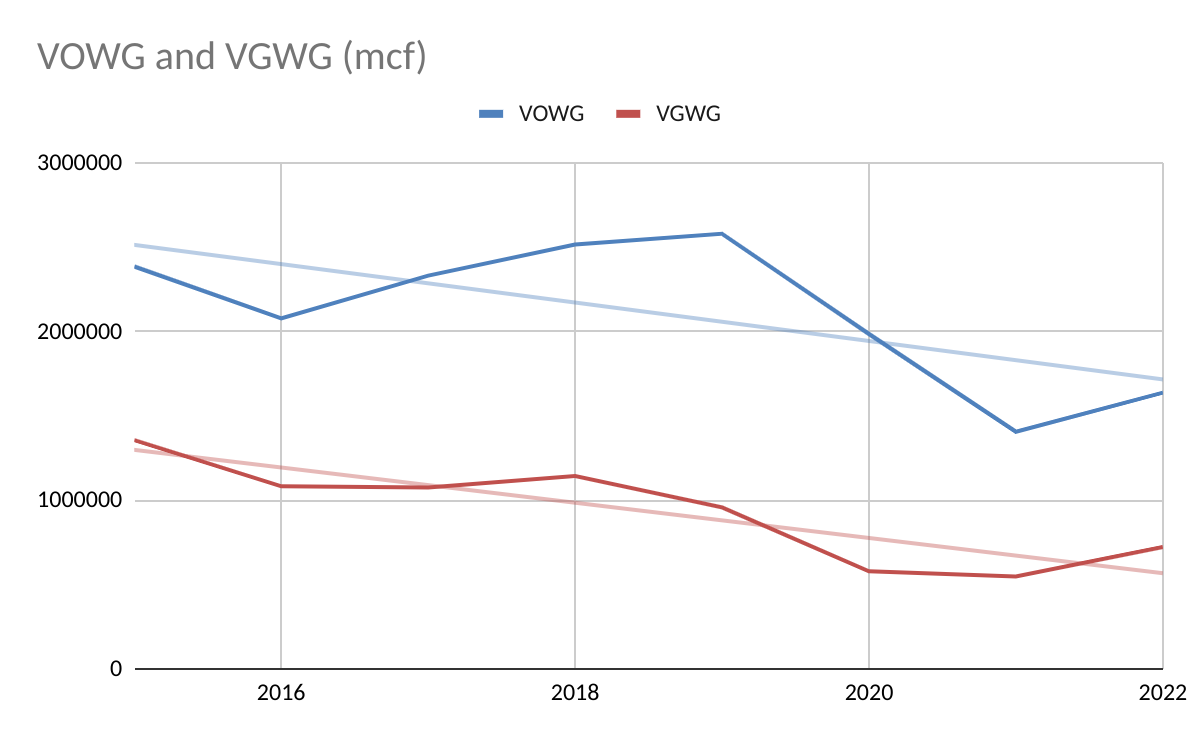
  • OWG venting has declined significantly both in terms of the total volume and % flared. Most OWG is now produced at modern deepwater platforms equipped with efficient flare stacks. Venting from these facilities is minimal. A performance target of <0.2% for OWG venting should therefore be achievable.
  • GWG venting volumes have declined sharply. However, given the parallel decline in GWG production, the % of GWG vented has actually increased. Most gas wells are on older shelf platforms where flare booms cannot be safely and economically added. Nonetheless, it’s disappointing that the % of GWG vented increased to > 0.3% in both 2022 and 2023.
  • OWG flaring has remained relatively constant both in terms of the volume and % flared. Given that most OWG is produced at deepwater facilities, reduction of the flaring % to <1.0 should be achievable.
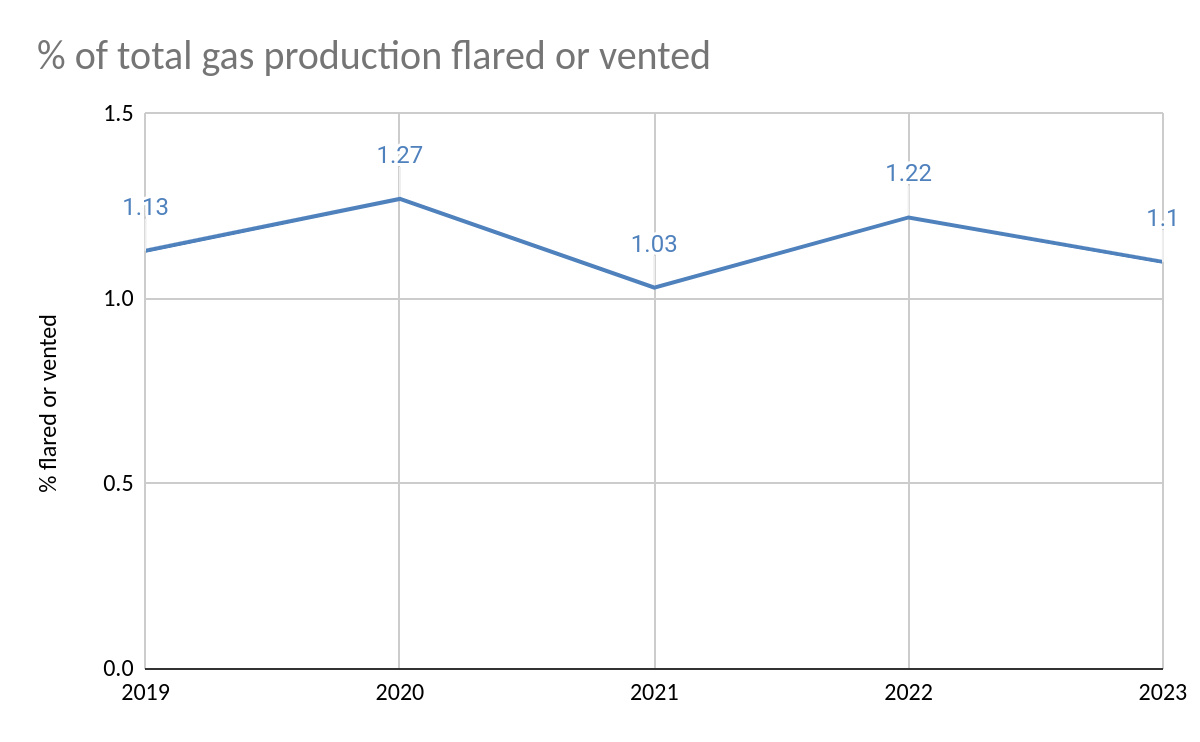
  • The % of the total gas flared or vented has remained relatively constant at >1.0%. Again, a target of <1.0% should be achievable.
  • In the table, the figures in blue are particularly encouraging and the figures in red are the most disappointing.
  • Overall, the numbers are good, but continuous improvement should be the objective. Reductions in GWG venting and OWG flaring should be prioritized.
  • As previously discussed, flaring/venting performance could be better assessed if information on large flaring/venting episodes was made publicly available. Explanations are needed for spikes in monthly ONRR flaring/venting volumes. Are these spikes associated with production startups, tropical storm restarts, major compressor issues, administrative/accounting corrections, or something else?
20192020202120222023
OWG flared77277385591969876342
OWG vented25781984140516381230
OWG produced670,699582,254582,824581,235598,005
% OWG flared1.151.271.021.201.06
% OWG vented0.380.340.240.280.21
GWG flared405432311213212
GWG vented958578548722468
GWG produced364,082224,808209,558203,342152,400
%GWG flared0.110.190.150.100.14
%GWG vented0.260.260.260.360.31
total flared and vented1166810233818395598252
total gas production1,034,782807,062792,382784,577750,405
% flared or vented1.131.271.031.221.10
total vented35362416195323601698
% vented0.340.300.250.300.22
total flared81327817623072006554
% flared0.790.970.790.920.87

OWG=oil well gas; GWG=gas well gas; all volumes are in MMCF
Read Full Post »

Regardless of one’s opinion about the causes of climate change, minimizing methane emissions makes good safety, conservation, and environmental sense. The emerging international consensus on methane emission reductions thus merits broad industry and governmental support.

Because of the resource conservation mandate in the OCS Lands Act, minimizing the waste of natural gas has been a point of emphasis in the US offshore program for 50+ years. If you couldn’t utilize or market the natural gas, your project wouldn’t be approved. This requirement delayed the entry of some floating production systems into the Gulf of Mexico, but the pipeline network ultimately expanded to support deepwater development with floating units. Those associated with the offshore program are rightfully proud of their success in prohibiting the waste of gas and minimizing flaring and venting.

Despite the historical commitment to restricting flaring and venting, the data suggest that further improvement may be needed. The concerns listed below are based on the compilation and review of flaring and venting data that operators are required to report to ONRR.

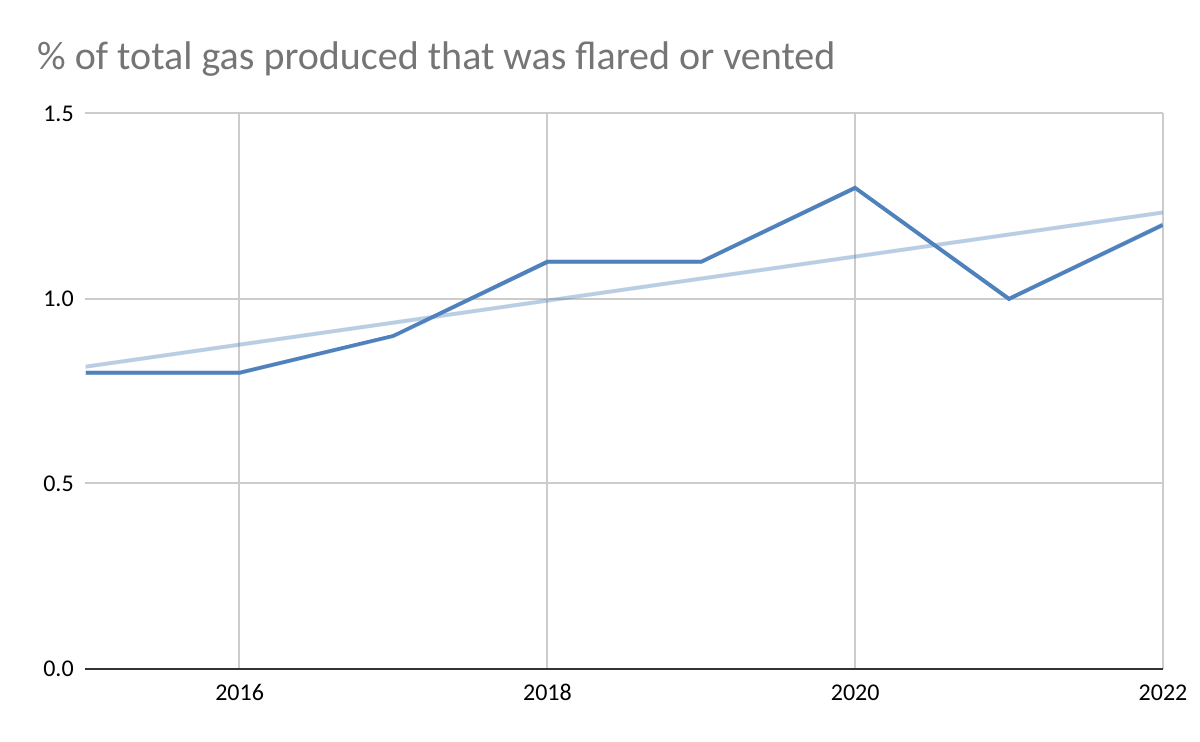
  • The % of US OCS gas produced that is flared or vented is trending upward (first chart below).
  • Both the gas flaring and venting volumes were higher in 2022 (vs. 2021) despite lower gas production.
  • 2022 oil well gas (OWG) flaring volume increased by 18% vs. 2022 despite nearly identical total oil production
  • More regulator/industry transparency on flaring episodes is needed, particularly in light of the PNAS paper and the June 2022 Inspector General Report.
  • In particular, there should be a process for explaining large spikes in monthly flaring and venting volumes. Were these spikes associated with production startups, major compressor issues, administrative corrections, or other factors?
  • Venting, which is a more significant environmental concern than flaring, increased by 407 million cu ft (21%) in 2023 vs. 2022. Although the overall venting trend is still favorable (second chart), the 2022 jump should be explained.
  • The previously noted inconsistencies in flaring data sets remain a concern.
  • The fact that more gas-well gas (GWG) is being vented then flared implies that most such venting is on older shelf platforms (where there are more gas wells).
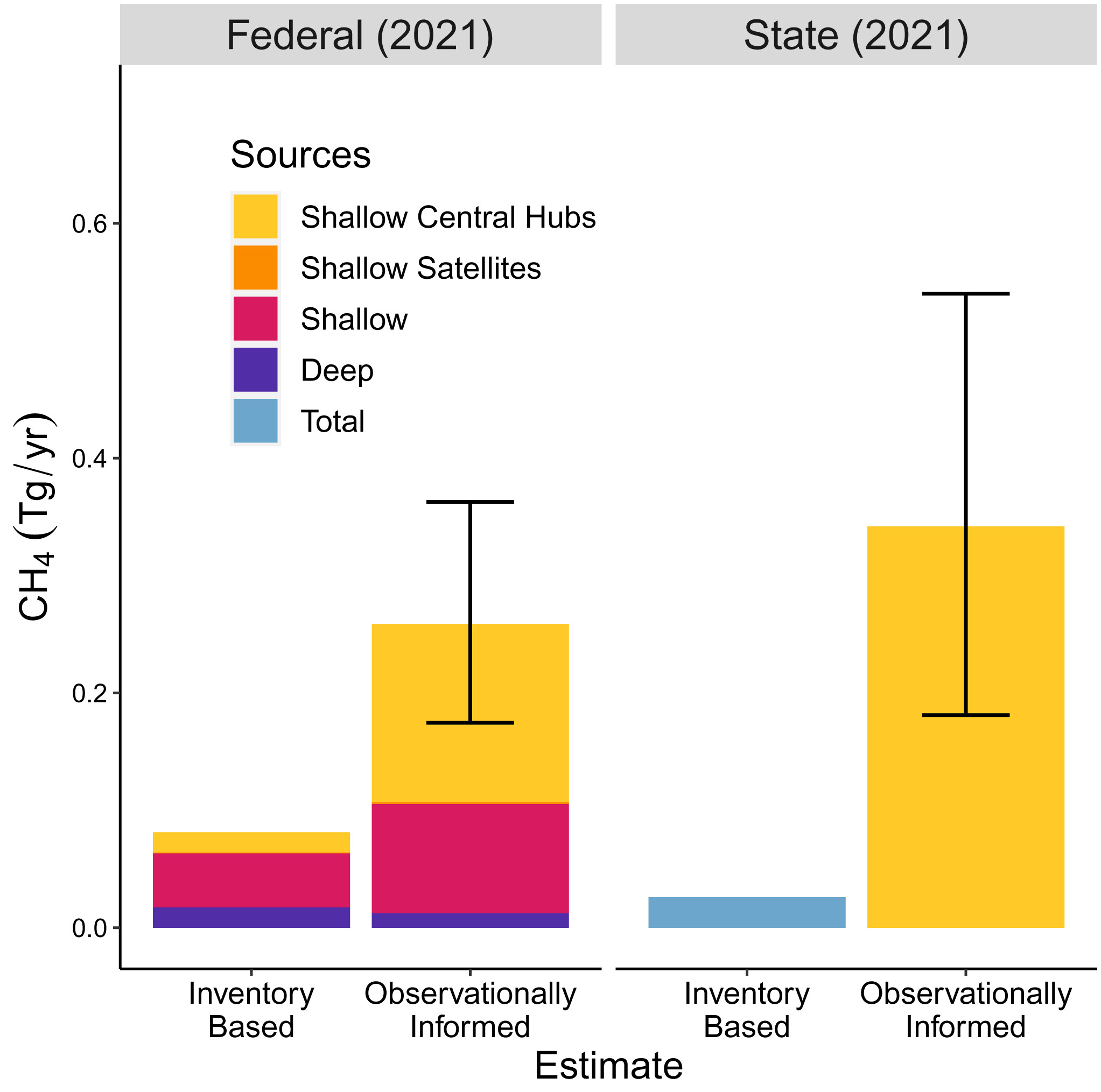
  • As summarized in the third chart below, deepwater facility methane emissions are consistent with the reported inventories, but shelf emissions in State and Federal waters differ significantly.
  • Regulating venting from older shelf platforms is difficult. About 15 years ago, the Federal government (MMS) considered requiring that older production platforms be retrofitted with flare booms, but safety, space limitations, and cost considerations precluded such a regulation. Instead, additional flaring/venting limits, and measurement and reporting requirements were imposed. What is next for these facilities?
  • Compiling and posting flaring and venting data should be a priority for BOEM/BSEE.
vented oil-well gas (VOWG) and vented gas-well gas (VGWG) vs. time
Total CH4 emissions for the GOM from inventories and observations for federal waters (Left) and state waters (Right). Observationally informed emissions are shown for the resampling of absolute flux rates (resampling approach A), with a mean and 95% confidence interval. The inventory estimates represent values adjusted for the year 2021. PNAS, 2023

Read Full Post »

Savvy marketing? Looking for mandates and incentives? Taxation opportunity?

Burps are the top source of methane emissions from cattle. Semex, the genetics company that sold Loewith the semen, said adoption of the low-methane trait could reduce methane emissions from Canada’s dairy herd by 1.5% annually, and up to 20%-30% by 2050.

The Canadian government currently offers no incentives for low-methane cattle breeding, but the agriculture department said in an email that Ottawa is working to introduce offset credits for reducing methane through better manure management.

New Zealand will begin taxing farmers for methane from cattle in 2025.

Reuters

Common sense reservations:

Juha Nousiainen, senior vice-president at Valio, a Finnish dairy, warned that breeding cattle to burp less methane could create digestive problems. Methane is produced by microbes in the cow’s gut as it digests fibre, not by the animal itself, he said.

We have our own genetically engineered livestock offshore. 😀

Read Full Post »

The Nord Stream sabotage likely released more methane than the complete lifecycle of a GoM lease sale (upstream and downstream). Also, the Nord Stream explosions may have released more methane than is emitted by all US offshore producers in an entire year. Here are the numbers:

Source of MethaneCH4 emissions (1000s of tons)
Nord Stream (probable range)100-400
Nord Stream (maximum)500
Nord Stream – first 48 hrs (CAMS est)175
all US offshore production in 2020 (EPA)193
all US on- and offshore exploration in 2020 (EPA)12
lifecycle upstream emissions from a typical GoM lease sale (BOEM)118
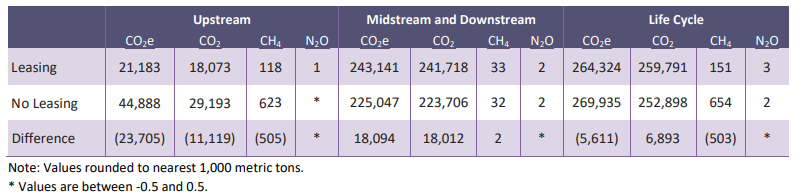
lifecycle up- and downstream emissions from a typical GoM sale (BOEM)151

Finally, remember that offshore oil and gas leasing results in a net reduction in GHG emissions.

The No Leasing scenario results in roughly double the CO2e emissions for upstream activities compared to those of the Leasing scenario, given that, collectively, the substitute energy sources have higher GHG emissions per unit of production (also known as “GHG intensity”) compared to the forgone domestically produced OCS oil and natural gas of the Leasing scenario.

BOEM

Even when mid- and downstream emissions are included, leasing is preferable to no leasing. See the table below from the BOEM report:

Bottom line: we need more energy leasing and less military aggression!

Read Full Post »

NASA has identified 50+ super-emitters of methane including sites in Turkmenistan (image below) that emit an estimated 111,000 pounds per hour.


By comparison, vented Gulf of Mexico methane emissions in 2021 totaled 1953 mmcf. This converts to 82 million pounds at atmospheric pressure and 60°F. The identified Turkmenistan sources would thus release the amount of methane in a month that all Gulf of Mexico facilities vent in a year (2021).

East of Hazar, Turkmenistan, a port city on the Caspian Sea, 12 plumes of methane stream westward. The plumes were detected by NASA’s Earth Surface Mineral Dust Source Investigation mission and some of them stretch for more than 20 miles (32 kilometers).

Read Full Post »

Among other provisions, EPA’s proposed rule, issued on 11/2/2021, specifies that associated gas be handled as follows:

Route associated gas to a sales line. If access to a sales line is not available, the gas can be used as an onsite fuel source, used for another useful purpose that a purchased fuel or raw material would serve, or routed to a flare or other control device that achieves at least 95 percent reduction in methane and VOC emissions.

Because the Dept. of the Interior has jurisdiction over air emissions on most of the Gulf of Mexico OCS, I assume this proposed rule does not apply to those facilities. However, the EPA proposal is not entirely clear in that regard. If the EPA proposal does not apply, will BOEM/BSEE be proposing similar restrictions in their regulations?

MMS/DOI considered prohibiting venting, but determined that adding flaring capability was not feasible for many shelf platforms, and for some platforms there would have been a net increase in emissions. That said, venting is not insignificant. A 2017 Argonne study indicated (table 2) that, for shelf platforms from 2011 through 2015, more than 3 times as much gas was vented as was flared. More recent data should be reviewed to get a better sense of the costs, benefits, and safety considerations associated with achieving further reductions in venting.

Current flaring/venting regulations for OCS facilities are here.

Read Full Post »

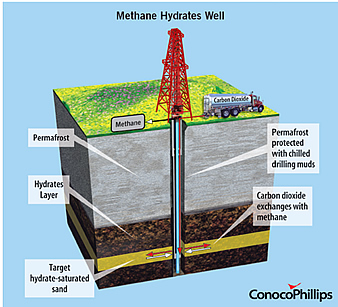
Cheryl Anderson forwarded this interesting Anchorage Daily News update on hydrate production research and linked information about the specific Department of Energy research projects.

The methane – carbon dioxide exchange project is particularly interesting and is summarized nicely by the Daily News:

Conoco Phillips will try injecting carbon dioxide into the hydrate. Laboratory tests show that injecting carbon dioxide displaces methane, which comes out of the hydrate as a gas. The idea is that the carbon dioxide molecules take the place of the methane molecules in the hydrate, keeping it stable.

This could be neat, if it works. Carbon dioxide would be permanently sequestered, or stored, underground, while the methane is extracted and the hydrate is left intact.

One question the Conoco Phillips production test will attempt to answer is whether this reaction in the hydrate can occur fast enough for methane production to reach practical volumes.

The comment below is an understatement, but the enormous energy potential justifies the research.
This isn’t a slam dunk, though. The technical challenges are considerable.

Read Full Post »