
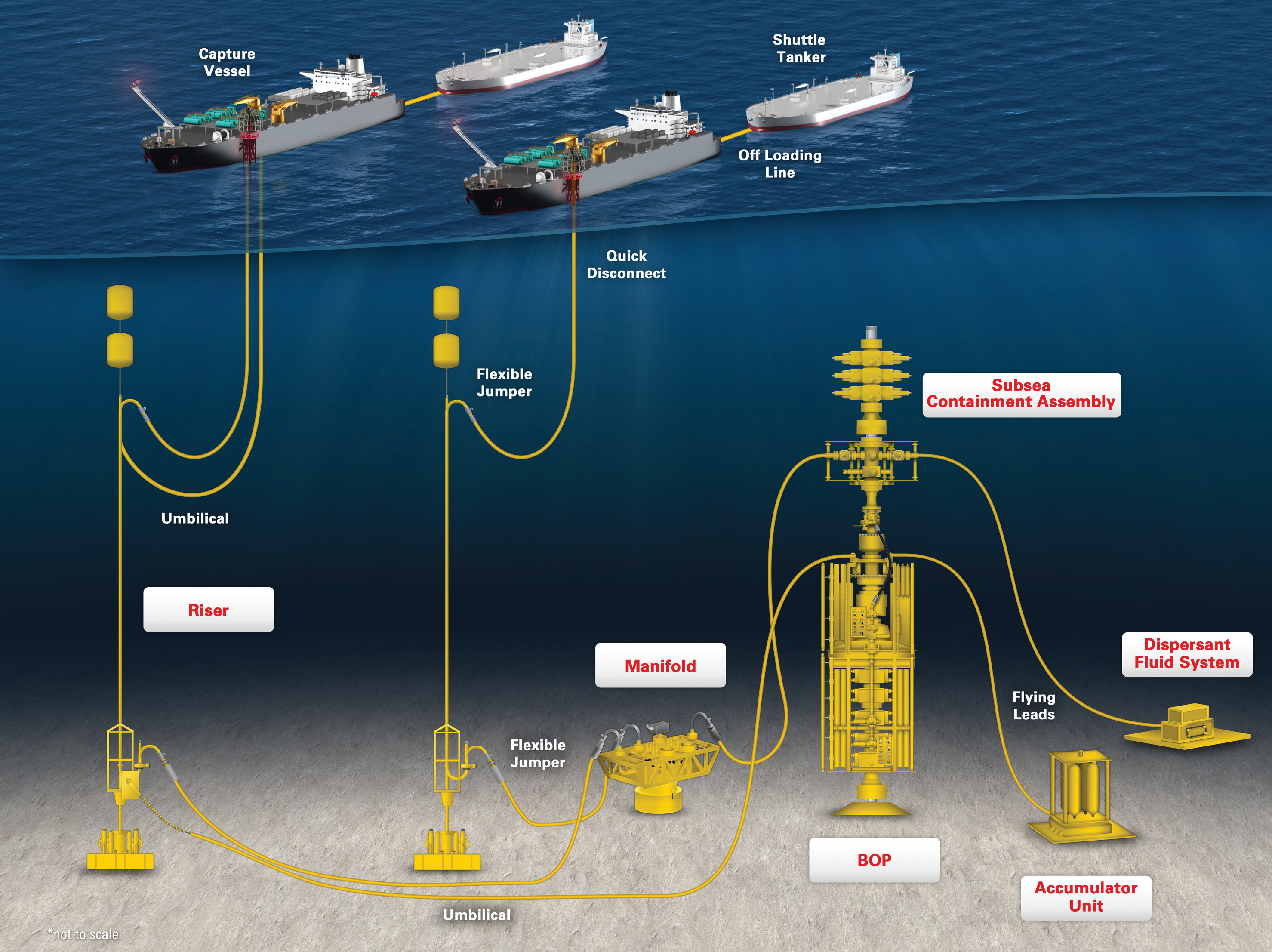
Good Nola.com article on the well containment systems
Comments on well capping and containment:
- Capping and containment systems, while important and necessary, are for blowout response, not blowout prevention. Their use, successful or otherwise, would only occur after a series of unacceptable failures.
- Having two capping and containment consortia in the Gulf of Mexico (and none anywhere else in the world) does not seem to be very cost effective or efficient.
- What are the plans for subsea capping and containment systems elsewhere?
- A capping/containment capability would not have saved a single life on the Deepwater Horizon. Verified barriers must be in place to prevent flow from the well bore.
- The well responsible for our other major drilling blowout spill (Santa Barbara – 1969), was capped at the surface by closing the blind ram on the BOP shortly after flow began. However, capping doesn’t work if you don’t have a competent well bore. The well flowed through numerous channels back to the seafloor.
- Capping subsea wells is safer than capping surface wells.
- Capping the Montara blowout (2009) in only 80m of water was neither safe nor technically feasible because of the way the well was suspended. Despite the complete absence of a capping option at Montara, the capping of surface wells has received little attention.
- The more critical, but less publicized, post-Macondo initiatives pertain to well design, construction, and verification. In that regard, important new standards, including the Well Construction Interface Document, are scheduled to be completed soon. That work must not be delayed.
- While capping stacks and containment systems will only be used in the event of a series of major failures, design and construction procedures are critical every time a well is drilled. The importance of the initial design decisions continues into the production phase and beyond, even after the well has been plugged and abandoned.
 Bud's Offshore Energy (BOE)