Feeds:
Posts
Comments

Posts Tagged ‘Lease Sale 257’

p. 643

(b) LEASE SALE 257 REINSTATEMENT.—
(1) ACCEPTANCE OF BIDS.—Not later 30 days after the date of enactment of this Act, the Secretary shall, without modification or delay—
(A) accept the highest valid bid for each tract or bidding unit of Lease Sale 257 for which a valid bid was received on November 17, 2021; and
(B) provide the appropriate lease form to the winning bidder to execute and return.

As predicted by BOE (with no inside information) on 5/27/2022. 😀

What about the CCS bids? More to follow.

Read Full Post »

  1. …that the SPR legislation authorized the sale of large volumes of oil for the purpose of easing worldwide prices. Per section 151 of the statute, which was passed following the oil embargoes in the 1970’s, the SPR was intended to diminish the vulnerability of the United States to the effects of a severe energy supply interruption.
  2. …that SPR oil could be sold to all entities including Chinese companies that are also buying oil from Russia, the country being boycotted. How absurd is that? (The confirmation of one such transaction is pasted below.)
  3. …that increased worldwide emissions from the consumption of SPR oil are okay, but emissions from the consumption of our offshore oil and gas are not. Remember that Lease Sale 257 was vacated because BOEM did not analyze the effect that lower prices (from increased US production) would have on GHG emissions. Why are EarthJustice et al silent on the SPR sales? Where is DOE’s environmental assessment of these sales?

Read Full Post »

When Congress seems slow to solve problems, it may be only natural that those in the Executive Branch might seek to take matters into their own hands. But the Constitution does not authorize agencies to use pen-and-phone regulations as substitutes for laws passed by the people’s representatives.

Justice Gorsuch in concurrence

Capping carbon dioxide emissions at a level that will force a nationwide transition away from the use of coal to generate electricity may be a sensible “solution to the crisis of the day.” New York v. United States, 505 U. S. 144, 187 (1992). But it is not plausible that Congress gave EPA the authority to adopt on its own such a regulatory scheme in Section 111(d). A decision of such magnitude and consequence rests with Congress itself, or an agency acting pursuant to a clear delegation from that representative body.

Justice Roberts for the majority

At first glance, the SCOTUS decision would seem to affect the regulation of GHG emissions on the OCS and possibly the Lease Sale 257 decision (now being appeal), which was based on BOEM’s failure to estimate the effect of reduced OCS production on GHG emissions outside the US.

Read Full Post »

Per their court filing, Montana, Alabama, Alaska, Arizona, Arkansas, Georgia, Kentucky, Mississippi, Missouri, Nebraska, Oklahoma, Texas, Utah, and West Virginia seek to protect oil and gas production in the Gulf of Mexico and throughout the United States. The States’ brief is rather political, which is not surprising given their support for offshore leasing and the apparent alignment of the Federal defendants and the plaintiffs in support of the decision by Judge Contreras to vacate the sale.

As was expected at the time of the ruling, the court decision on Sale 257 shut down offshore leasing for the remainder of the 2017-22 Five Year Plan. Secretary of the Interior Haaland has promised that a new proposed leasing plan will be released by 6/30/2022, but that is just the start of the lengthy planning process.

Interesting NEPA data from the States’ brief:

  • In 2018 CEQ found that, across the federal government, the average EIS completion time and issuance of a Record of Decision was over 4.5 years and the median was 3.6 years.
  • On average, Interior takes five years and the Department of Transportation 6.5 years to complete an EIS—and that’s not including the usual years of resulting litigation.
  • CEQ found that “across all Federal agencies, draft EISs averaged 586 pages in total, with a median document length of 403 pages.” As a result, “[t]he entire original purpose of doing NEPA analysis has been lost along the way to creating mountains of data and information in the hopes of successfully defending against inevitable litigation.”

Many thanks to the Texas AG for making the States’ brief readily available online. Unfortunately, that is not the case for the other briefs filed in support of the sale.

Read Full Post »

Per a very good OGJ update, API, Louisiana, Chevron, bp, Shell, NOIA, the EnerGeo trade group of geophysical contractors, 14 states filing jointly, and the US Chamber of Commerce have submitted briefs to the US Court of Appeals for the District of Columbia Circuit.

Don’t expect a decision soon. The environmental advocacy groups are not scheduled to file their responses until Aug. 26, after which replies can be filed. No decision is expected before November at the earliest.

Previous posts and background information on Lease Sale 257.

Read Full Post »

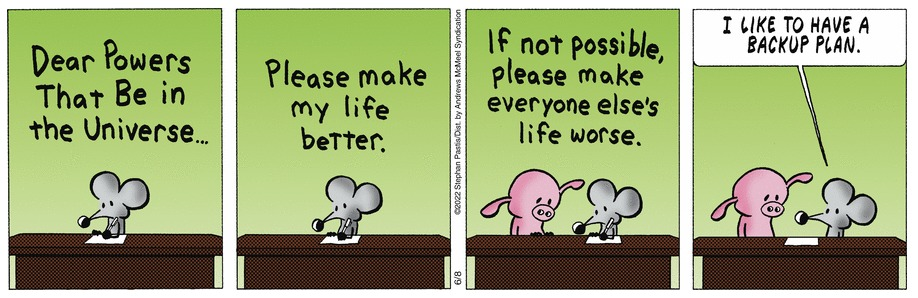
The primary goal of energy policy should be ample, reliable supplies that are sufficient to ensure reasonable consumer prices. The “Backup Plan” (below) is only acceptable in cartoons.

From an offshore energy policy standpoint, remember this:

Gulf of Mexico Lease Sale 257 was vacated on 1/27/2022 because DC Federal Court Judge Contreras ruled that BOEM failed to consider the “positive” effect that higher prices would have on reducing foreign consumption and the associated GHG emissions. Apparently the Court failed to consider that higher oil and gas prices would:

The Administration chose not to appeal that decision, although API and the State of Louisiana have. It has now been 575 days since the last Federal offshore oil and gas lease sale.

Read Full Post »

  1. Gulf of Mexico Lease Sale 257 was vacated on 1/27/2022 because DC Federal Court Judge Contreras ruled that BOEM failed to consider the “positive” effect that higher prices (the logical result of lower production) would have on reducing foreign consumption and the associated GHG emissions. Think about that in the context of the timing and magnitude of this ruling. Why did the court fail to consider the other logical consequences of tight oil supplies and higher prices – increased coal consumption and energy poverty? To avoid the latter, India, the world’s second largest coal producer and consumer, is boosting coal production to record highs.
  2. The Administration, which had only proceeded with Sale 257 because a prior court ruling invalidated the President’s leasing pause, chose not to appeal the decision by Judge Contreras. Why appeal a decision that is consistent with your agenda?
  3. The legislatively mandated 5 year leasing program, without which no Federal offshore leases sales may be conducted, expires at the end of June. This is why last week’s cancellation of the 3 remaining sales in the current 5 year program was rather meaningless. Despite bipartisan congressional support for prompt completion of a new 5 year plan, this does not appear to be a high priority for the Department of the Interior. The only hope for a sale this year might be a successful appeal by Lousisiana and API of Judge Contreras’s Sale 257 ruling.

Read Full Post »

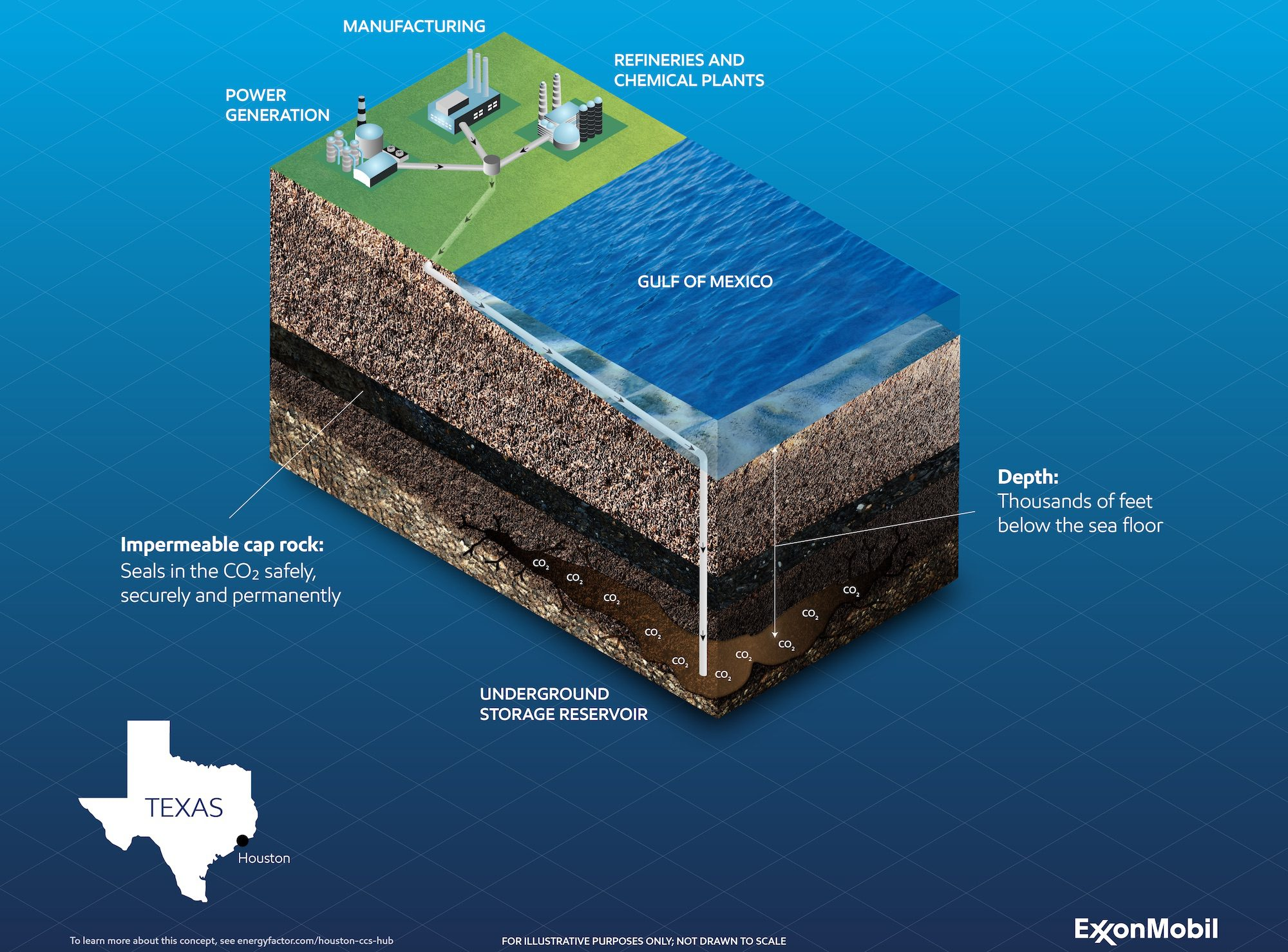
Background:

Questions:

  • What are the costs per ton of offshore carbon sequestration including emissions collection, offshore wells and platforms, the associated pipeline infrastructure, ongoing operational and maintenance costs, and decommissioning?
  • What is the timeframe given that the starting point is likely years away?
  • How long would CO2 sequestration continue.
  • Who pays? Polluters? Federal subsidies? Tax credits?
  • Who is liable for:
    • safety and environmental incidents associated with these projects?
    • CO2 that escapes from reservoirs, wells, and pipelines (now and centuries from now)?
    • decommissioning?
    • hurricane preparedness and damage?
  • For Gulf of Mexico sequestration, how much energy would be consumed per ton of CO2 injected? Power source? Emissions?
  • To what extent will these operations interfere with other offshore activities?
  • Relatively speaking, how important is US sequestration given:
  • What are the benefits of offshore sequestration relative to investments in other carbon reduction alternatives?
  • Will BOEM conduct a proper carbon sequestration lease sale with public notice (as required by BOEM regulations) such that all interested parties can bid?
    • What will be the lease terms?
    • Environmental assessment?
    • How will bids be evaluated?
  • What happens to the Exxon bids if the Judge’s Sale 257 decision is reversed?
  • What is the status of the DOI regulations mandated in the legislation with an 11/15/2022 deadline?
    • When will we see an Advanced Notice or Notice of Proposed Rulemaking?
    • Given that DOI has no jurisdiction over the State waters and onshore aspects of these projects, what is the status of parallel regulatory initiatives?
  • Finally and most importantly, how does drilling offshore sequestration wells instead of exploration and development wells increase oil and gas production?
highly simplified conceptual diagram

Read Full Post »

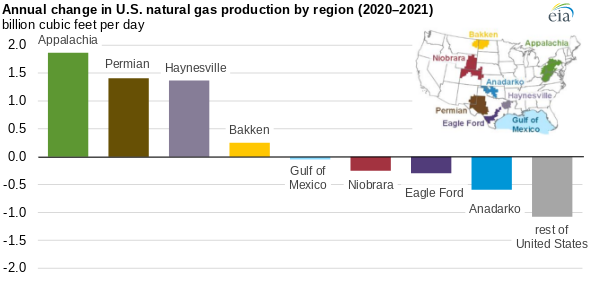
The administration has taken steps toward a resumption of leasing on Federal onshore lands, which account for only 7% of domestically produced oil and 8% of our natural gas. While this is a positive step, our economy is largely being driven by production on private lands, absent which we would have a serious supply crunch. This new EIA graphic illustrates where the growth in natural gas production has been, and most of that growth has been on private land.

The growth in US oil production has been largely dependent on the Permian Basin:

Industry leaders have raised concerns about the extent to which Permian production can continue to grow and the country’s over-reliance on shale production.

There are no private offshore lands, and the future of US offshore production is almost entirely in the hands of the Federal government. It has now been 525 days since the last offshore lease sale. The Administration chose not to appeal the DC Federal Court decision vacating Sale 257, leaving that to the State of Louisiana and API (parties that actually support offshore oil and gas leasing).

It’s disappointing that the reasoning behind the judge’s Sale 257 decision has received so little attention, especially given that it hinged on BOEM not analyzing the benefit of high oil prices. (i.e. <leasing = <production = >prices = <intl consumption = < CO2) The decision was issued as Russian troops were amassing on the Ukraine border only 28 days before the invasion. Oil prices (WTI) had already reached $87/bbl and would soon spike to $120/bbl, so the decision embracing higher oil prices was (at best) bad timing. Keep in mind that this was not a matter of BOEM failing to consider GHG issues; BOEM had conducted those assessments. The judge’s decision was specific to BOEM not analyzing the GHG benefits of reduced foreign consumption as a result of the higher prices associated with reduced leasing.

Meanwhile, The 5 year program, without which offshore leasing cannot proceed, expires in June. Fellow Democrats Manchin and Kelly sent a letter to the President on 31 March urging the Administration to develop and implement a new 5 year program without delay. There is no online evidence of a response. Presumably, the 5 year program issue will be addressed in the bipartisan energy legislation that Senator Manchin is drafting.

Read Full Post »

500 days (and counting) since the last US offshore oil and gas lease sale. Abbreviated chronology:

Read Full Post »

« Newer Posts - Older Posts »