Feeds:
Posts
Comments

Posts Tagged ‘JL Daeschler’

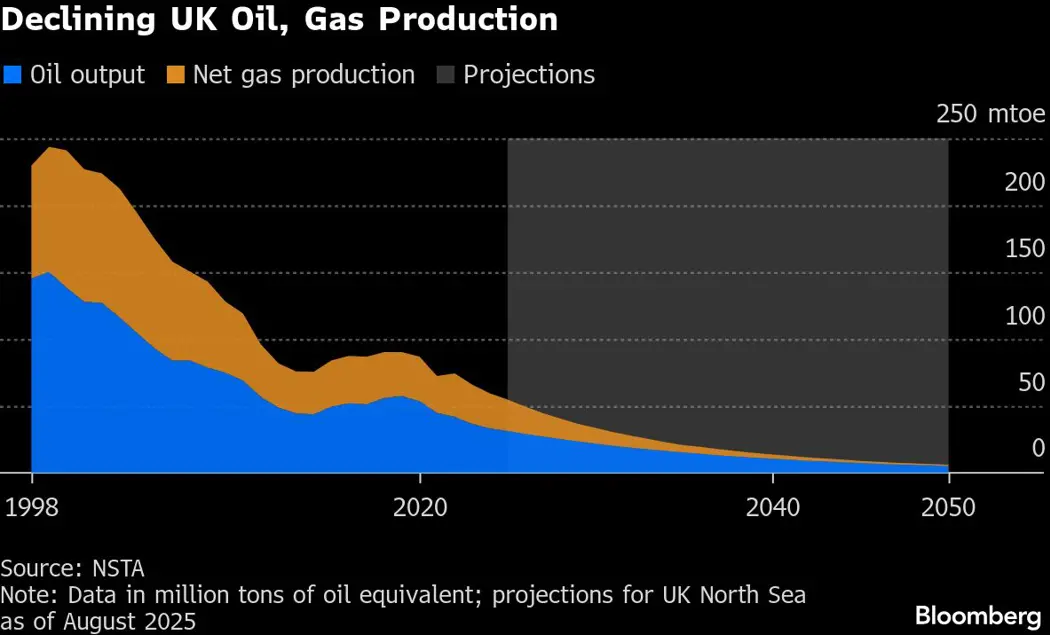
The sad state of UK North Sea production

JL Daeschler, other North Sea veterans, and those of us who once admired the UK offshore program, lament the sad plight of their oil and gas industry and the destruction of the economy in northeast Scotland.

Incomprehensibly, the UK has retained the Energy Profits Levy, which requires North Sea operators to hand over 78% of their diminished profits to the Treasury. Most have regrettably chosen to do business elsewhere. Investment in the UK North Sea is at a record low and a study from Robert Gordon University says jobs are being “quietly” lost at a rate of 1,000 a month.

The UK government is grudgingly allowing some tieback production to existing facilities, but this will do little to stem the industry’s decline. JL notes that this limited infield development is not the type of new field investment needed to grow production and sustain the service industry (rigs, boats, helicopters, equipment, etc.).

The UK Oil and Gas Authority rather smugly changed its name to the North Sea Transition Authority in 2022. Besides lower production and higher energy prices, what has the Transition Authority accomplished? As Dan Yergin correctly informs us:

“The term energy transition somehow sounds like it is a well-lubricated slide from one reality to another. In fact, it will be far more complex: Throughout history, energy transitions have been difficult, and this one is even more challenging than any previous shift.”

Related article in the WSJ: “Europe’s Green Energy Rush Slashed Emissions—and Crippled the Economy”

European politicians pitched the continent’s green transition to voters as a win-win: Citizens would benefit from green jobs and cheap, abundant solar and wind energy alongside a sharp reduction in carbon emissions. Nearly two decades on, the promise has largely proved costly for consumers and damaging for the economy.

Europe largely took an “or” strategy: It raced to replace fossil fuels with solar, wind and biomass by taxing carbon heavily, subsidizing renewables and closing scores of fossil-fuel power plants. Britain, which pioneered the use of coal for energy, last year became the first large industrialized country to shut all of its coal-fired power plants. It has also banned new offshore oil-and-gas drilling. Denmark plans to eliminate gas for home heating by 2035. Around one-fifth of Germany’s municipal utilities plan to shut down their gas networks in coming years, according to an October survey by the utilities’ trade association.”

Read Full Post »

JL Daeschler informs that UK offshore wind energy is 82% foreign-owned. Foreign companies are thus the primary beneficiaries of the UK’s generous renewable energy subsidies (chart below).

David Turner comments as follows in his informative piece on UK wind energy:

We have been warning for some time that it is crazy for a developed economy to try and run its electricity generation system using technologies that are dependent on the weather. Even though there has been only a relatively modest decline in wind output this year, the operators and owners of wind farms are learning the hard way that it is very difficult to run a business that is at the mercy of the vagaries of the weather. Many of these companies are up to their eyeballs in debt. They better hope the wind blows hard this Autumn and Winter so they can collect higher subsidies, or they will be in real trouble.

We have consistently raised concerns about decommissioning financial assurance for offshore wind facilities. Turner echoes those concerns noting that the wind industry’s perilous finances are an even bigger reason to insist that proper funds are set aside to fund decommissioning or the long-suffering taxpayer will be on the hook for another hidden cost of renewables.

Read Full Post »

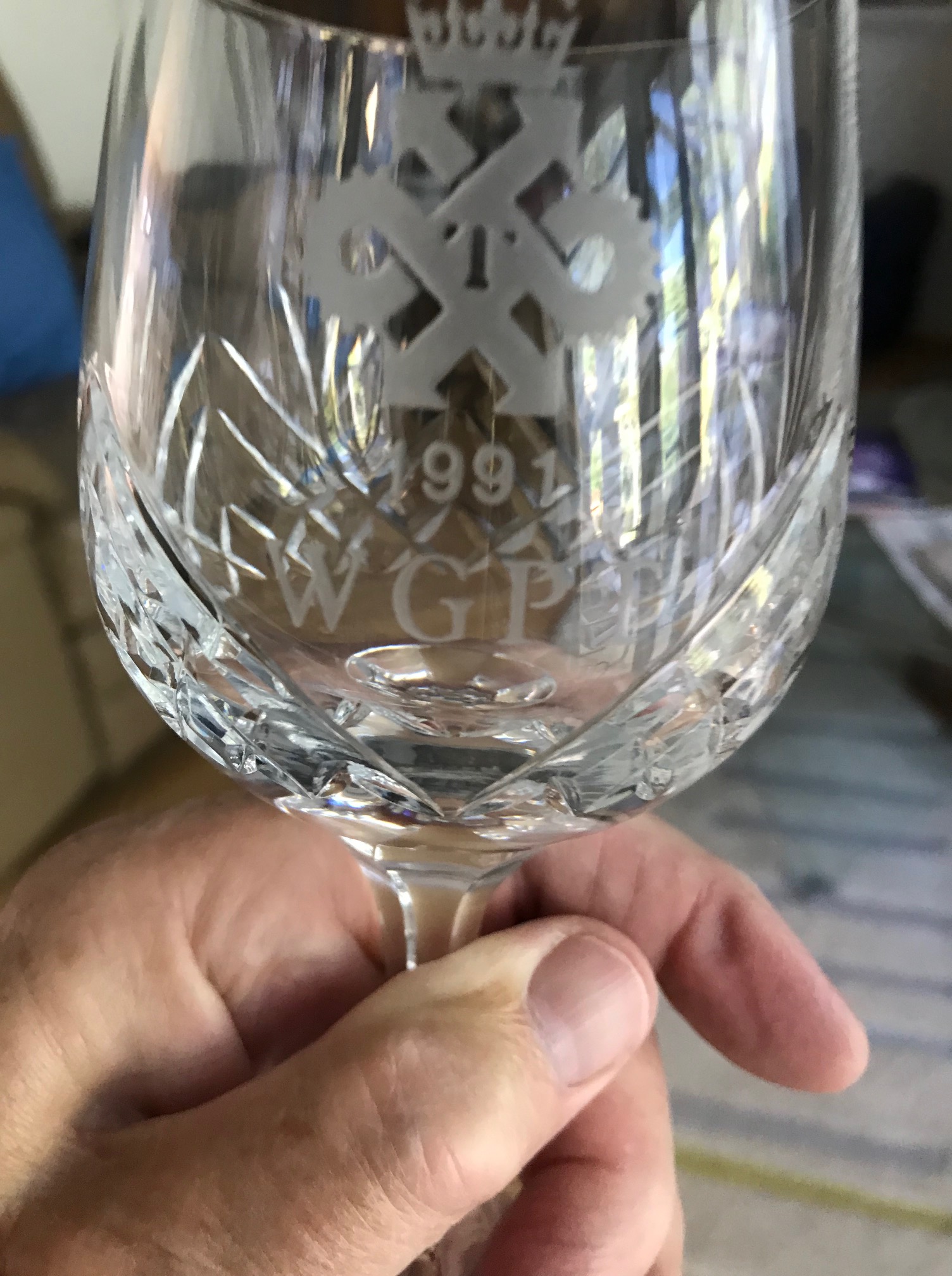
In 1991 Wood Group Production Technology (WGPT) received the Queen’s award for engineering innovation.

JL Daeschler, a pioneering subsea engineer who lives in Scotland, is saddened by the sale of the famous Wood Group engineering firm. After difficult financial losses, the Wood Group, headquartered in Aberdeen, has been sold at a cut-price to a Dubai based group.

Per JL: I knew Ian in the early North Sea development stage. He became Sir Ian Wood. We used to chat at various conferences in Houston, Stavanger, and Aberdeen. Ian was an energetic man, who had a friendly approach to our North Sea challenges. He was a true Aberdonian entrepreneur who employed 1000’s in offshore related disciplines worldwide.
The crystal glass above was a gift by a University student I sponsored who later worked for the Wood group. In 1991 Wood Group Production Technology (WGPT) received the Queen’s award for engineering innovation. We worked closely on the development of down hole pressure censors and temperature gauges in the 1980’s.

JL reports that oil & gas is a hot subject in Scotland, but political commentary dwarfs technical discussion. To fix the economy, the govt should look at where people are struggling, and energy costs are their no. 1 concern.

While some politicians are belatedly vowing to maximize North Sea production, that will be difficult given the loss of operators, rigs, ships, installation and pipeline vessels, shipyards, and experienced workers. The infrastructure in Aberdeen is back to 1970 levels, and it’s difficult to build back what has been destroyed.

Read Full Post »

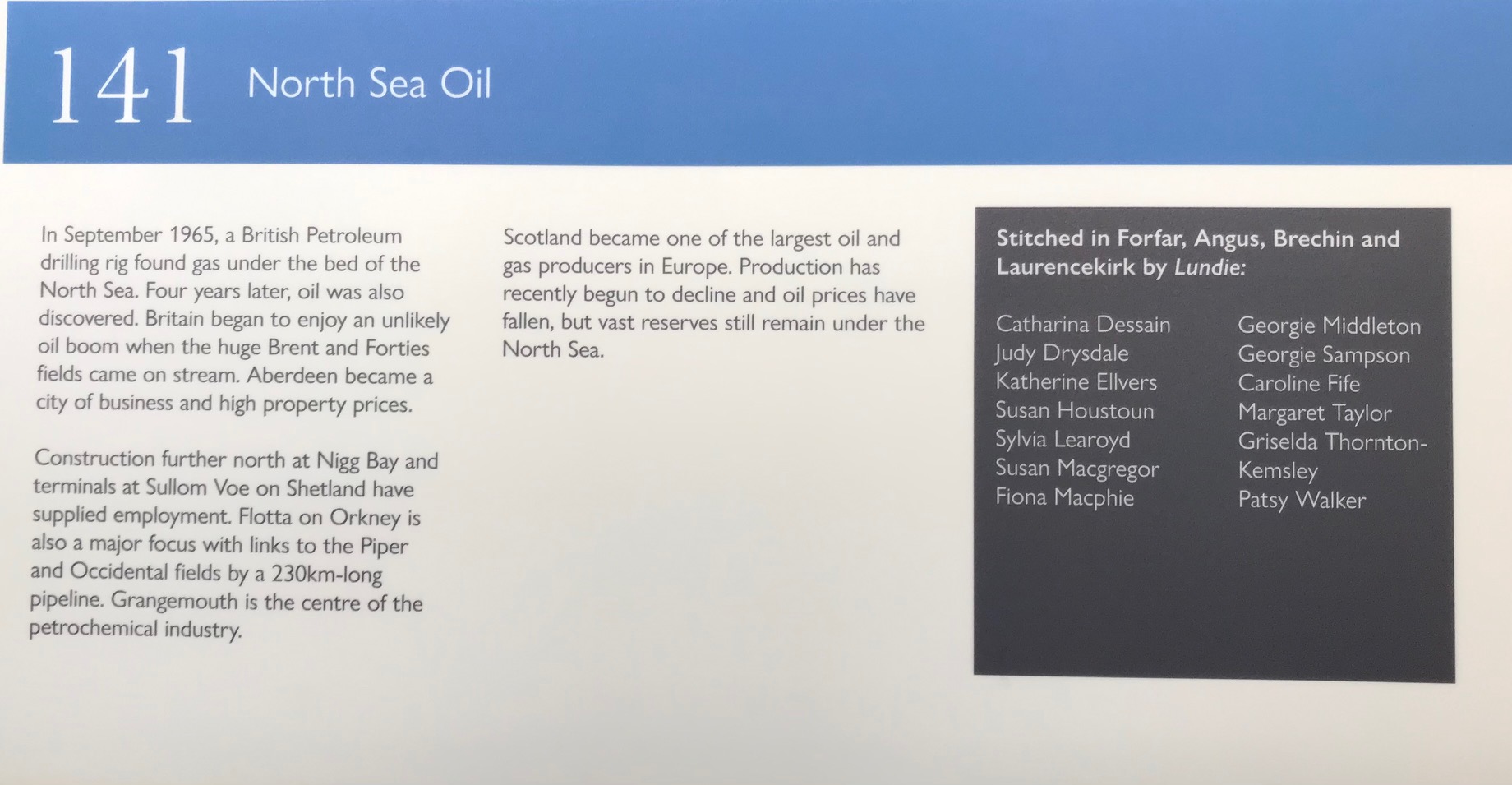
JL Daeschler, pioneering subsea engineer, artist, resident of Scotland, and BOE contributor, visited The Great Tapestry of Scotland exhibition in Galashiels. He shared this image of a tapestry tribute to North Sea workers.

JL reports that the Great Tapestry is 143 m long, and that more than 1000 people worked 50,000+ hours on the various historical panels!

Beneath the North Sea oil panel is some historical information and the names of those who did the stitching:

The Great Tapestry of Scotland

Read Full Post »

North Sea pioneer, JL Daeschler, reports from Scotland that more than 13,000 Scots oil and gas jobs have been lost in the space of just one year while over 40% of the UK’s energy needs is being imported.”

The UK’s self destructive energy policy, while sadly not unique, is particularly troubling because of the North Sea’s enormous contribution to the domestic economy over the past 50 years. As Gillian Bowditch aptly commented:

We all want to protect our environment and Scotland, with its vast natural resources and expertise in energy, should be leading the way. Instead, we have squandered an opportunity in favour of a facile show of moral posturing.”

Read Full Post »

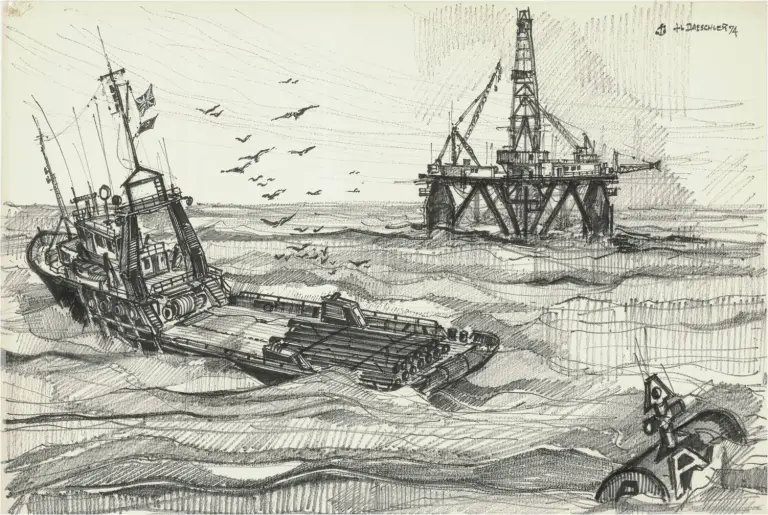
Waiting on Weather” by JL Daeschler

JL Daeschler, pioneering subsea engineer, outstanding artist, and BOE contributor, lives in Scotland. He shared these concerns about the state of the UK offshore industry:

Since projects have been shelved, contractors have left the country – so no drill rigs, no exploration, no pipelines, and no crane barges. The list of disciplines put out of work is far longer.
The big international operators have left looking for better opportunities overseas with milder environments and cheaper manpower support. Air travel, modern communication systems, and immediate electronic access to information and support facilitate operations anywhere in the world.
So what is left in the UK sector of the North Sea are the few installations running towards the end of production. Their years are numbered.
The North Sea could have had a sustainable greener and safer project profile if the momentum had been kept. It’s like an oil & gas pandemic, except you do not work from home if you operate rigs and vessels. No research, no strategy, and no money !!!

Read Full Post »

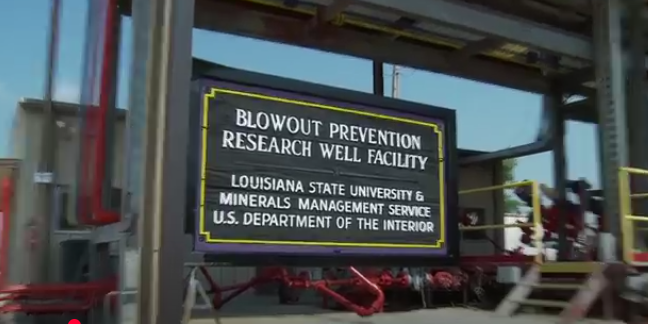
Pioneering offshore engineer J.L. Daeschler, a Frenchman who lives in Scotland and has worked on drilling rigs worldwide, shared his 1974 training certificate signed by Bill Hise, the first director of the Blowout Prevention and Well Control Training Center at LSU. JL recalls his training:

The LSU well control course was new and very well organized. Training options were limited at that time. LSU took a step forward and incorporated equipment donated by Cameron Iron Works, Armco Steel /National, VETCO, and others.

The course was split between indoor class room style and outdoor training on a live well to remind us of the real things, like hard hats, tally books, and safety shoes.

LSU had a 1200 ft vertical well and a small 2″ diameter gas injection line to create a bottom hole gas kick, using a nitrogen truck as the supply. (note: the live well was a first for any well control school.) You had a choice of several manual chokes.  I selected the Cameron Willis choke to circulate the gas kick out with no increase in mud weight (drillers method).

The mud return level, kick detection, and general management of the operation were realistic as if on a rig. The gas would whistle and escape thru a vent line.

The training was simple and effective in that proper well control procedures were learned. In the process, there were many errors. Mud was seen flying out of the mud shaker/pits. School management would bring things under control and explain the errors that were made !!!

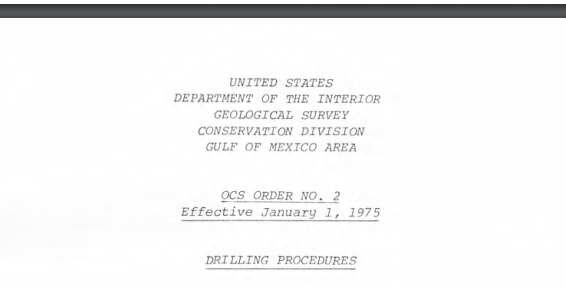
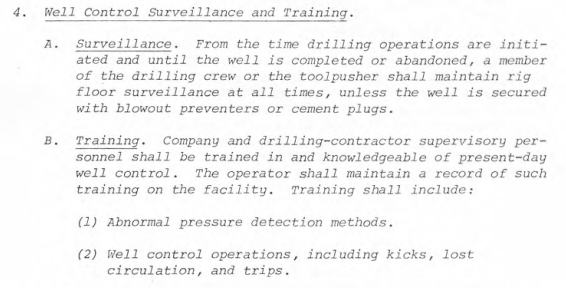
Given the importance of minimizing drilling risks, the Minerals Management Service (MMS) was the primary funder of the LSU facility. MMS predecessor, the Conservation Division of USGS, first established well control training requirements in 1975 (pasted below).

LSU’s well control center video:

Read Full Post »

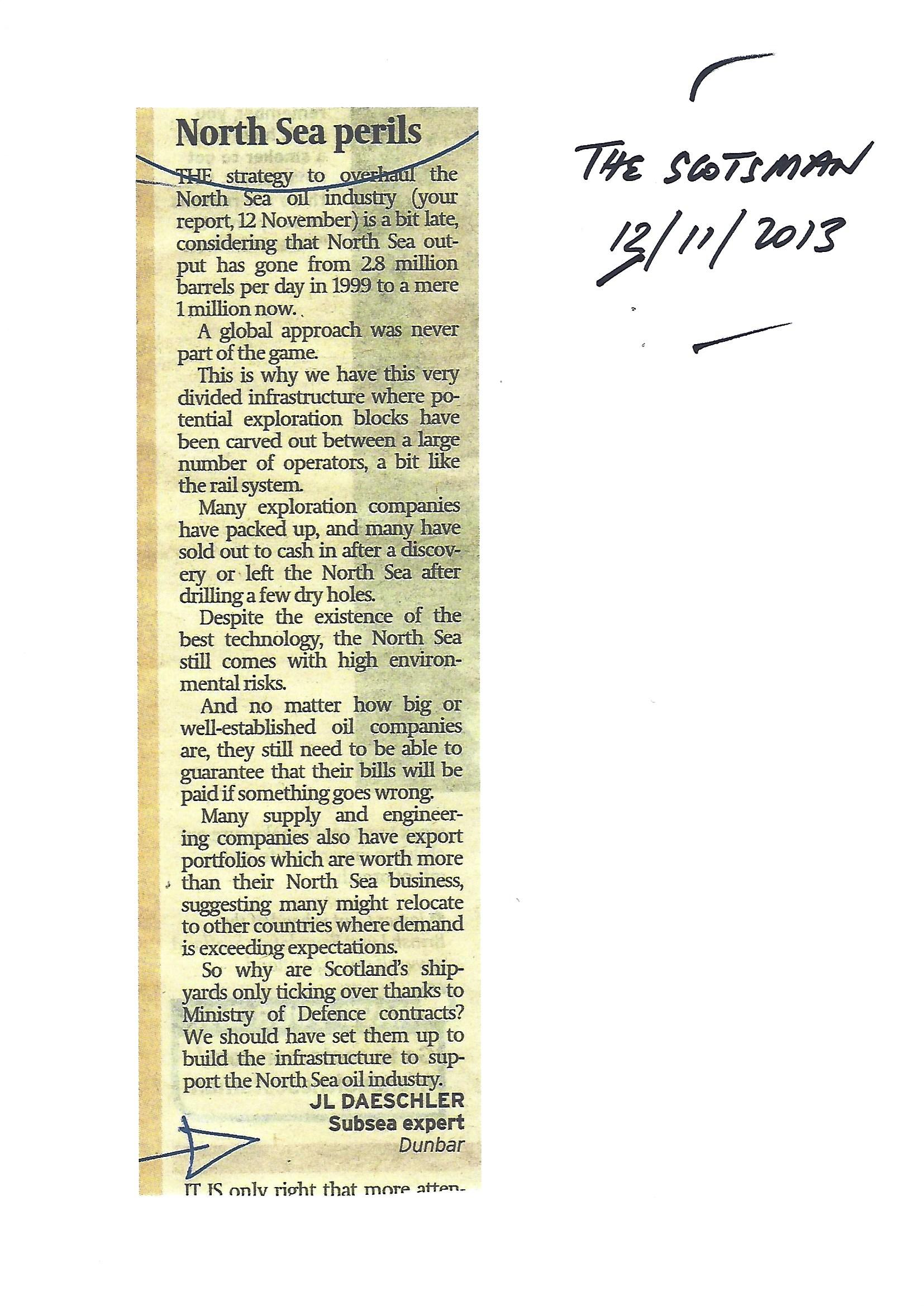
JL Daeschler, a BOE contributor, subsea engineer, and resident of Scotland, warned 11 years ago (see clip below) about the demise of North Sea infrastructure and the exit of important companies. JL now comments as follows:

“We have unfortunately taken down all the support facilities needed to conduct a complete offshore sequence – finding, engineering, and producing – even under a more favorable tax climate. We will have to call on Norway to do anything!”

Read Full Post »

JL Daeschler reports that there has been no wind for the past 4 days at his home in Scotland, and his wind gauge is droopy. (See his sketch below and read the fine print 😉)

Read Full Post »

Marine artwork by JL Daeschler and Karen Danenberger:

Pockets of Light at Dawn by JL Daeschler
Isle of May in the Sky by JL Daeschler
Provincetown Pier by Karen Danenberger
Evening Calm, Boat Meadow by Karen Danenberger

Read Full Post »

Older Posts »