Feeds:
Posts
Comments

Posts Tagged ‘Gulf of Mexico’

  1. Kudos: To Admiral Landry for a job well done.  Since April 20, she has had the most challenging and thankless job in America, and performed it very well.  I’m sure she is happy to return to her “day job.”
  2. Remarkable: The work done by the ROVs and the people who deploy and control them.  If you haven’t watched the feed, check it out.
  3. Impressive: Admiral Allen’s briefings.  His summaries are concise and informative.  His responses to questions are direct.  Not much repetitive boilerplate.
  4. Improved: More complete and detailed information is being provided on the the well intervention work.
  5. Prediction: The LMRP cap will be successfully installed and will soon be recovering most of the oil.  We should be able to observe the key operations on the ROV cameras.  This will be very interesting, particularly when the final cut is made and the cap is installed.

Read Full Post »

The Washington Salute - "You Did It!"

Not surprisingly, the finger pointing in Washington is as out-of-control as the well that precipitated it.  This public spectacle is now more closely followed than the actual spill response.  As a result, perceptions become reality and reality is altered to support perceptions.

If you want to participate in the bash-fest and dare to compete with Washington’s best, here are some tips:

  1. Shoot high; go after the top dogs.  Blast President Obama, President Bush, and every other President going back to James Buchanan.  Why did Buchanan allow Colonel Drake to drill the first oil-well in Buchanan’s home state of Pennsylvania in 1859.  Why wasn’t he more visible when the well started to flow?  Where was his leadership?  Did you see the mess? No wonder they call it Oil Creek.
  2. Criticize every Secretary of the Interior starting with Albert Fall who in 1922 leased, without competitive bidding, the Teapot Dome fields to Harry Sinclair of Sinclair Oil. Talk about the culture of corruption which Fall fostered and the Department’s inability to clean house.
  3. Humiliate every employee of the MMS.  When you are pointing the finger, don’t worry about getting the bureau’s name right (90% of the critics don’t).  Feel free to call it the Minerals and Mining Service, Marine Minerals Survey, Mineral Management Service (which mineral?), Minerals Management Services (which services?) or any other name you can say with a snarl.  Be sure to make some juvenile comment about how the MMS is literally in bed with industry.  Don’t bother to read the investigation reports which show how few people were actually involved and are much less sensational than the media accounts.
  4. Take a cheap shot at the Coast Guard by shouting that the military needs to take over the spill response.  Sadly, even some retired military officers have made such comments.  They should know better.
  5. Take shots at whale lovers.  If it weren’t for them we could go back to burning whale oil.
  6. Criticize alternative energy proponents for the slow pace of renewable energy development.  Point out how Cape Wind has been dragging their feet on the Nantucket Sound project.  (BTW, it was the maligned employees of MMS who took the initiative, on their own, to draft the legislation that provided a framework for offshore renewable energy development.  Were it not for their leadership, renewable energy development would have been even further delayed.)
  7. Take a few swipes at BP, Transocean, Halliburton, and Cameron, but save your best shots for other oil industry targets.  BP et al are too easy for the real pros.  Talk about your vast experience in working with this industry.  If that’s too big of a stretch, even by Washington standards, talk about your friend or relative who worked in the industry.
  8. Point to past incidents regardless of their relevance.  Disregard historical data that contradict your position.
  9. Don’t criticize US energy consumption, at least not if you have any political ambitions.  Consumption is fine; production is the problem.
  10. Lastly, take your shots with great confidence.  Style is more important than substance.  Be loud and certain.

Remember Harry Truman’s sage advice:

“If you want a friend in Washington,” he once said, “get a dog.”

Read Full Post »

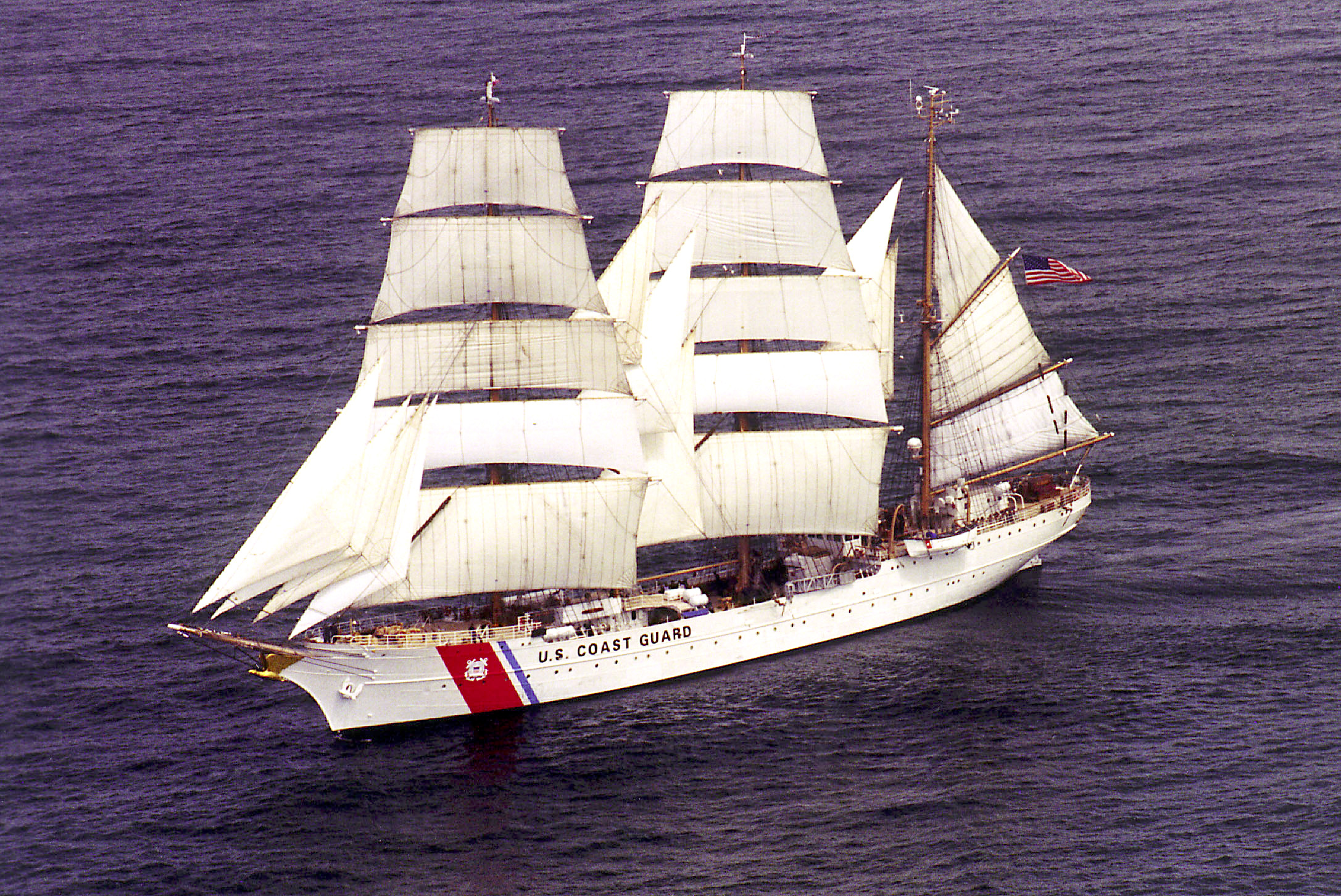
For almost 220 years the Coast Guard has been rescuing distressed mariners, defending our borders, protecting our maritime interests, and responding to environmental threats.  With regard to the latter, the Coast Guard is once again demonstrating outstanding leadership in directing the unprecedented national response to the Macondo spill.

I worked closely with Coast Guard personnel throughout my career, both in the field and at the headquarters level, and was extremely impressed with their dedication and professionalism.  This military service sometimes goes unnoticed and performs many thankless tasks, like the major spill response it is engaged in today.  On Memorial Day, we salute the Coast Guard for its sacrifice and public service.  Well done!

Coast Guard Eagle - tall ship and training vessel

Read Full Post »

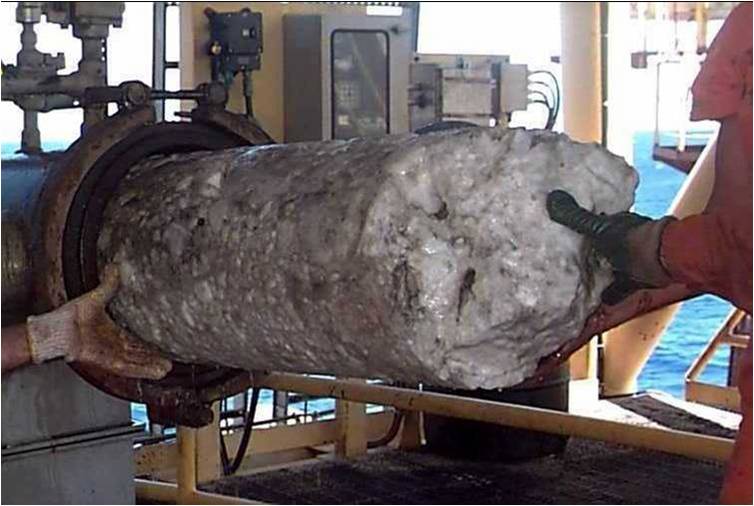
hydrate plug removed from pipeline

In a recent conversation, Colin Leach suggested an interesting plugging option for the Macondo well – hydrates.   Why not take advantage of nature and induce hydrate formation to plug the well?  We know that hydrates are difficult to prevent when methane mixes with water under the pressure conditions at Macondo.  Why not pump cold water down the choke line where it will mix with methane in the stack to form hydrates and plug the well?  To optimize the hydrate formation, methane could be injected down the kill line.

Hydrates would definitely form.  Chances are good that natural forces would form a solid hydrate plug that would prevent further flow from the well.  The only risk would be that the hydrates would form too slowly (unlikely given the experience with the seafloor containment chamber) or that they wouldn’t completely plug the well.    The presence of a hydrate plug would also require additional caution when the well is finally re-entered (after the relief well has secured the downhole flowpaths).   The best time to attempt the hydrate option would seem to be right now, after the more conventional BOP intervention attempts and before cutting the riser to install the cap.

Read Full Post »

The Top Kill Operation has been terminated.  The next step is to cut the riser above the lower marine riser package and install a cap above that.  Oil and gas will flow inside drill pipe to the support vessel.  A riser will also be installed and hot water will be pumped down the drill pipe riser annulus to prevent hydrate formation.

Read Full Post »

While I have great respect for the technical and operational teams who are conducting the well intervention work, their allies and supporters are being alienated by the people who are managing the news.  From Day 1, the information on the well intervention operations has not been good enough, not even close.  We received no details on the repeated ROV attempts to actuate BOPE, very little information about the design and operation of the ill-fated seafloor collection chamber, and are now being totally stonewalled on the critical and long awaited top kill operation.

This is not a private drilling program or research project.  This became a public operation when the well blew out on April 20th.  Public resources are threatened, and the regional and national economic implications are enormous.  How and why are the top kill and other technical data confidential?

The Unified Command needs to stop managing the news and tell us what is happening.  For each injection period, we need the starting time, ending time, pressure fluctuations, injection rates, and volume and types of materials injected.  For observation periods, we need pressure readings versus time.  This information is surely being collected and summarized.  Share those summaries with the stakeholders in this massive effort – the American people.

Read Full Post »

Why did BP stop mud injection for approximately 20 hours, starting at 2300 CT on the first day of the operation, not resuming until yesterday evening?  Prior to the start of the top kill operation, there was no indication that there would be a long pause after an initial pumping period, and according to BP there have been no equipment problems.  While stopping to monitor pressure data is understandable, the length of the pause is puzzling.

Why was no one advised that the long-awaited and enormously significant operation had been temporarily suspended? Apparently, Admiral Allen was not aware of the suspension when he spoke with the LA Times yesterday morning, so it is not surprising that no one else knew.  The media and other interested observers were watching the seafloor cameras all day looking for signs that the operation was having some effect.  Why didn’t someone simply advise that the operation had been temporarily suspended while data were being evaluated?

Read Full Post »

  1. Flow Rate Technical Group: The group has estimated the well flow rate at 12000-19000 bopd.  This appears to be a rigorous estimate.
  2. TKO – BP stopped injection last night at approximately 2300 CT to monitor data (first we’ve heard about that; that step was not discussed last night).  Phase 2 injection begins this evening.  BP will use bridging material and perhaps some junk shot.  Results are encouraging to date, and the hydrocarbon flow has been suppressed during mud injection.  However, hydrocarbon flow from the well continues.  Equipment is performing well.
  3. Seven in situ burns were conducted today.

Read Full Post »

Engineers have succeeded in stopping the flow of oil and gas into the Gulf of Mexico from a gushing BP well, the federal government’s top oil spill commander, U.S. Coast Guard Adm. Thad Allen, said Thursday morning.

Read Full Post »

  • TKO update: BP is wise not to declare victory prematurely, but the Top Kill Operation (TKO) seems to be proceeding as planned.
  • Better than a lava lamp?: I’ve heard from some people who can’t stop watching the live BOP and leakage videos.  Is this addiction treatable? 🙂
  • To those suggesting a military takeover of the response: The US Coast Guard is already in charge and is doing well.  The last time I checked the Coast Guard was still part of the military.
  • Why hasn’t the flow path been determined?:  There appear to have been so many well planning and construction mistakes that one can make a good argument for both backside (annular flow outside the production casing) and inside flow (up the shoe track and inside the casing).

Read Full Post »

« Newer Posts - Older Posts »