In addition to the obvious concerns about depleting the strategic petroleum reserve, further mortgaging our economic future, and increasing national security risks, the directive to withdrawal 1 million BOPD from the Strategic Petroleum Reserve for 6 months raises a few comments specific to US offshore production:
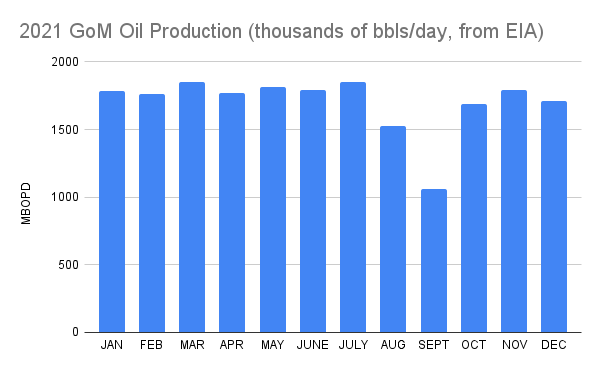
The 1 million BOPD withdrawal is equivalent to ~60% of the daily production from the entire Gulf of Mexico offshore sector. How will this massive 6-month withdrawal will effect regional markets and logistics?
Will the Dept. of Energy have to assess the GHG effects associated with their withdrawal of oil from the SPR? More specifically, will DOE be required to assess the increase in GHG emissions as a result of the increased foreign oil consumption that will result from the reduction in oil prices? This is what Judge Contreras ordered BOEM to do when he vacated Gulf of Mexico sale 257.
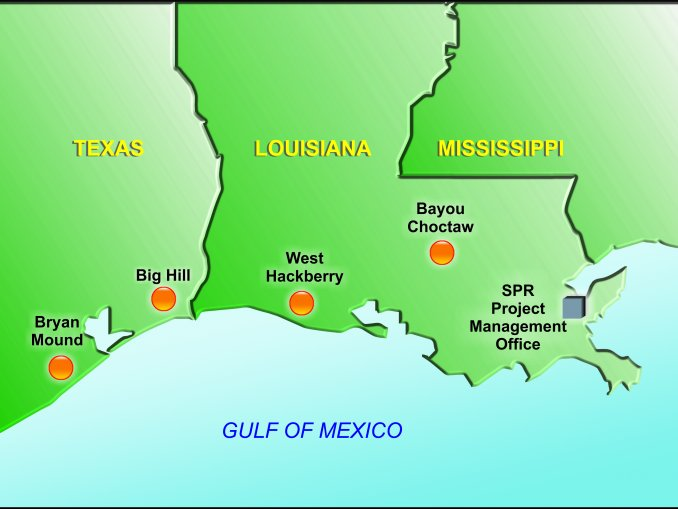
If it’s okay to produce and consume oil from the SPR facilities (mapped below), why is new leasing and exploration being constrained in the adjacent Gulf of Mexico?
Mr. Domangue began his career with BSEE in 1997 and has more than 30 years of experience in the oil and gas industry. He has served as the Deputy Regional Director for Districts, Investigations, Environmental, and Enforcement (DIEE), as Senior Technical Advisor for the BSEE Gulf of Mexico Region and was the Acting Chief of the National Offshore Training Center. Mr. Domangue also previously served as Office Supervisor for Regional Operations, and as District Manager for the Houma District Office of the BSEE Gulf of Mexico OCS Region. He holds a BS degree in petroleum engineering from Louisiana State University.
Nice bounce in Texas where 320 rigs are now active, up 12 from last week and up 117 from a year ago. Rig activity in New Mexico, where (unlike Texas) most of the Permian is on Federal land, has been less robust. The number of rigs operating in NM actually dropped by 1 to 98.
Linked below is an excellent compliance and incident data update by Jason Mathews. COVID-19 statistics are included. Kudos to BSEE’s Gulf of Mexico Region for their timely and comprehensive reviews and safety alerts.The collection, analysis, and timely publication of incident data are critical to safety achievement and continuous improvement.
BSEE has posted the slides and presentation video announcing their draft Request For Proposals (RFP) to contract for the decommissioning of facilities on five Gulf of Mexico leases. Phase 1 involves the plugging of 15 wells. Per the presentation, this work would be paid for using “orphan well” funds appropriated in the 2021 Infrastucture bill.
Per BSEE’s online borehole file, the wells in question were drilled by Matagorda Island Gas Operations, Anglo-Suisse Offshore Partners, and Bennu Oil and Gas. Matagorda and Bennu declared bankruptcy and are no longer in business. The status of Anglo-Suisse is not entirely clear, but presumably they are no longer financially accountable.
Looking at BOEM online data, these leases had other owners including two US super-majors. However, the wells identified by BSEE were drilled after these and other financially strong companies had assigned their interest. They are thus not legally accountable, which is presumably why these wells were chosen for the RFP.
The unprecedented use of Federal funds for decommissioning reflects poorly on the offshore industry and Federal lease management practices. The financial risks associated with decommissioning have been apparent for more than 30 years (see the July 1991 Forbes article below). Why have these issues not been effectively addressed? Some thoughts:
Operating companies showed little interest in private industry-wide solutions. Rod Pearcy, one of the most respected managers in the history of the Federal offshore program, advocated an industry funded and managed entity to ensure financial assurance and guarantee well and facility decommissioning. This concept never gained traction.
Industry factions disagreed strongly on the regulatory approach that the Federal government should take. Simply put, “majors” wanted to limit future liability for leases they assigned. “Independents” wanted the assigning companies to retain liability such that their financial assurance requirements were minimized. These divisions continue to this day and are the main reason financial assurance regulations are so difficult to update.
Decommissioning costs vary wildly depending on the particular circumstances, making it difficult to establish the amounts of financial assurance to be required. For example, storm damage typically increases well and structure decommissioning costs by a factor of at least 10. Requiring worst case financial assurance amounts would preclude many assignments and the associated increase in oil and gas recovery.
Realistic amounts of bonding and other forms of financial assurance are routinely challenged by lessees and their political representatives.
Poor lease assignment and financial management decisions have significantly increased the risk exposure of predecessor lease owners and taxpayers. The troubling case of Platforms Hogan and Houchin, Santa Barbara Channel, demonstrates the implications of questionable lease assignments and the irresponsible use of decommissioning funds.
Government funded decommissioning will likely be more expensive and will subject the public to unforeseen costs and future liabilities should the operations not go as planned.
The future decommissioning of wind turbines is already a major issue, and measures must be taken to ensure that liability is clearly established and operator funding is assured.
In the past, the regulators, operating companies, and insurers have found ways to ensure that decommissioning costs did not fall on the taxpayer. BSEE continues to be resourceful in that regard. Private solutions should always be the objective. The proposed RFP opens the door to the potential for far greater Federal liabilities down the road, particularly given the uncertainty about predecessor liability in some important cases.
December 2021 oil production averaged 1.713 million bopd, lower than expected and down from 1.794 million bopd in Novermber. Given that the production lost during Hurricane Ida was to have been fully restored, BOE expected production to average greater than 1.8 million bopd.
January data will be helpful but won’t be available until 31 March. GIven the importance of these data and advances in information management, more timely updates should be an objective. We note that Norway released January production data on 22 February.


 Bud's Offshore Energy (BOE)