Feeds:
Posts
Comments

Posts Tagged ‘energy transition’

Quaise Energy: “Millimeter wave drilling is the most transformational drilling technology since the drill bit was introduced to the world in the 1930s. It’s the key that finally unlocks superhot geothermal energy worldwide, and we’re already getting started on our first power project in the western United States.

Millimeter wave drilling is what makes geothermal universal, not niche. It’s far more than just a new tool. It’s as consequential as peering into the atom, going into orbit, and mapping the human genome. And, it can open the door to terawatts of geothermal power for the entire world.

Ultradeep & Superhot!

Read Full Post »

Aberdeen: once the proud Oil Capital of Europe

JL Daeschler comments that after crucifying the North Sea oil workers who saved the country in the 1970’s, the perpetrators are calling for £1.9 billion in emergency funding to help their victims transition to green energy jobs. How noble of them! How much of the funding will be provided by those responsible for the industry’s premature death? 😡

Times columnist Gillian Blowditch got it right:

It is difficult to imagine a world in which it makes sense to import oil and gas but not produce it, while forcing our skilled workforce to work offshore in far flung corners of the globe, especially when we are importing from Norway, which is extracting oil and gas from the same seabed for which we are refusing to grant licences.”

How many jobs are being created by government-driven energy transitions that seem to be moving in reverse? Where are those jobs?

Read Full Post »

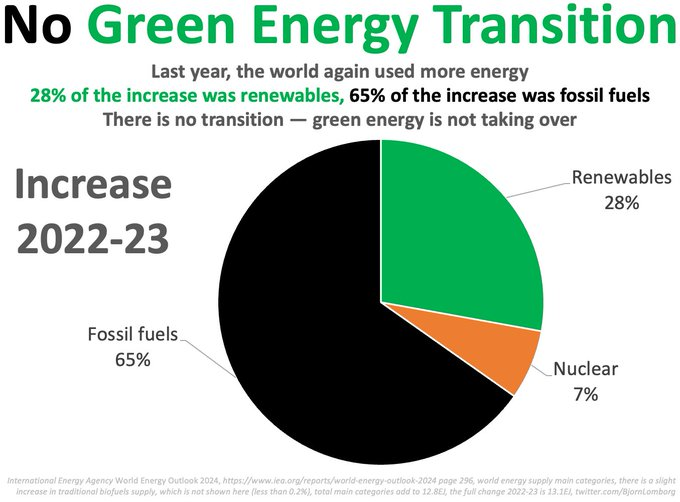
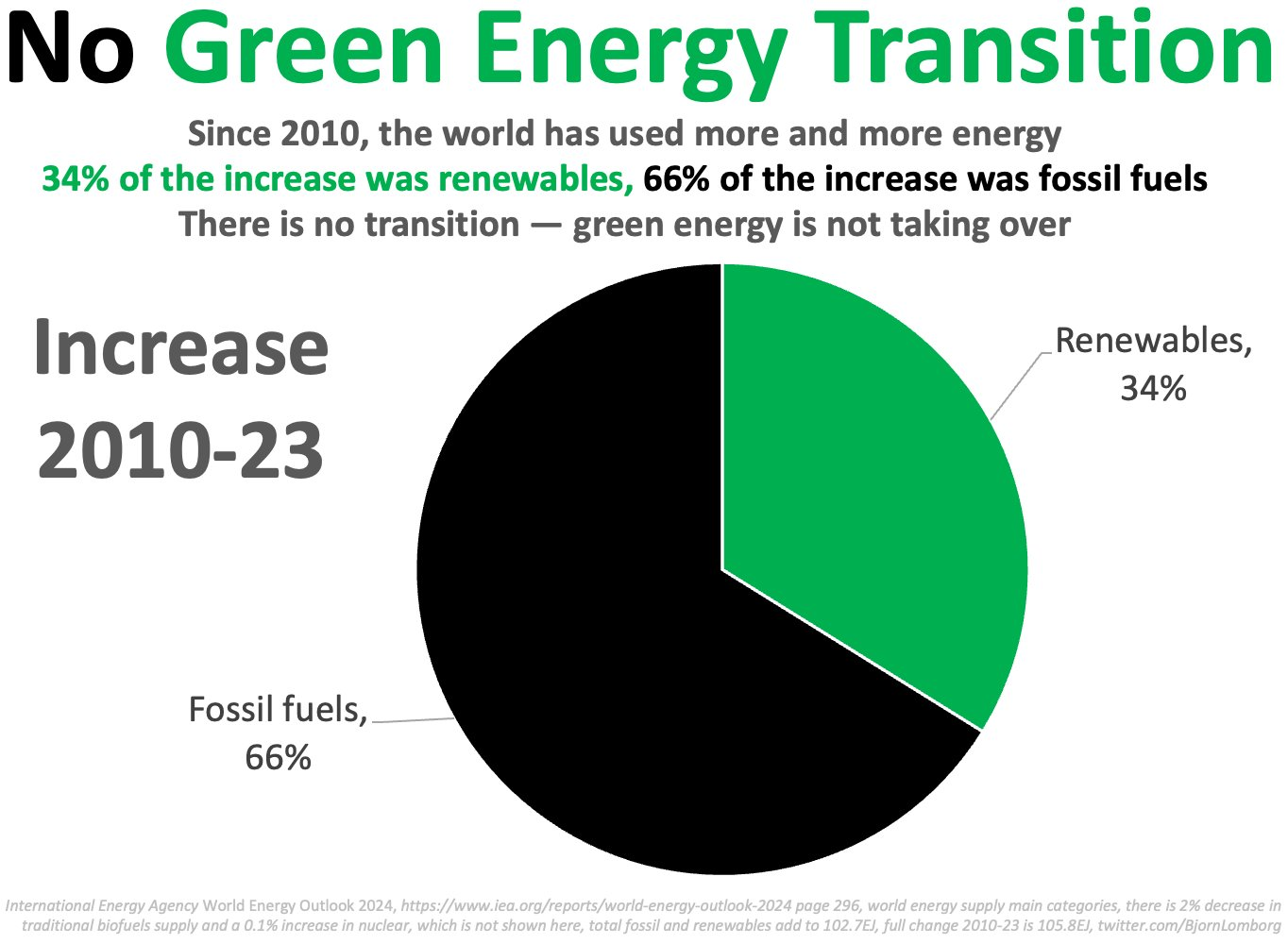
Bjorn Lomborg graphics using IEA data:

Wisdom from Dan Yergin:

The 19th century is known as the “century of coal,” but, as the technology scholar Vaclav Smil has noted, not until the beginning of the 20th century did coal actually overtake wood as the world’s No. 1 energy source. Moreover, past energy transitions have also been “energy additions”—one source atop another. Oil, discovered in 1859, did not surpass coal as the world’s primary energy source until the 1960s, yet today the world uses almost three times as much coal as it did in the ’60s.

Aissatou Sophie Gladima, the energy minister of Senegal, put it more pithily: Restricting lending for oil and gas development, she said, “is like removing the ladder and asking us to jump or fly.”

Christyan Malek, JPMorgan’s top energy strategist: That intrinsic demand that is not visible is so significant that we don’t see demand peaking – I don’t think we’ll see [oil] demand peaking in our lifetimes,” he said. “Particularly as demand growth in [emerging markets] continues to surprise the upside.” 

Alex Epstein graphic:

Read Full Post »

DUBAI, June 13 (Reuters) – OPEC does not see a peak in oil demand in its long-term forecast and expects demand to grow to 116 million barrels a day by 2045, and may be higher, the secretary general said on Thursday.

The International Energy Agency said in a report on Wednesday it sees oil demand peaking by 2029, levelling off at around 106 million barrels per day (bpd) towards the end of the decade.

Hathaim Al Ghais, writing in Energy Aspects, called the IEA report “dangerous commentary, especially for consumers, and will only lead to energy volatility on a potentially unprecedented scale”.

IEA’s credibility has been questioned in recent years, while OPEC’s forecast have been reasonably accurate.

Perhaps the most likely path to oil demand peaking by 2029 is a worldwide recession that the energy policies encouraged by IEA could precipitate. Energy policy in the US and elsewhere suffers from the illusion that a transition to an economy based on intermittent energy sources is imminent. Remarkably, the authors of our 5 year offshore leasing plan were concerned that offshore production would continue for too long. That line of thought led to a 5 year plan no lease sales except for 3 that are a prerequisite to issuing new wind leases.

Read Full Post »

COP28:

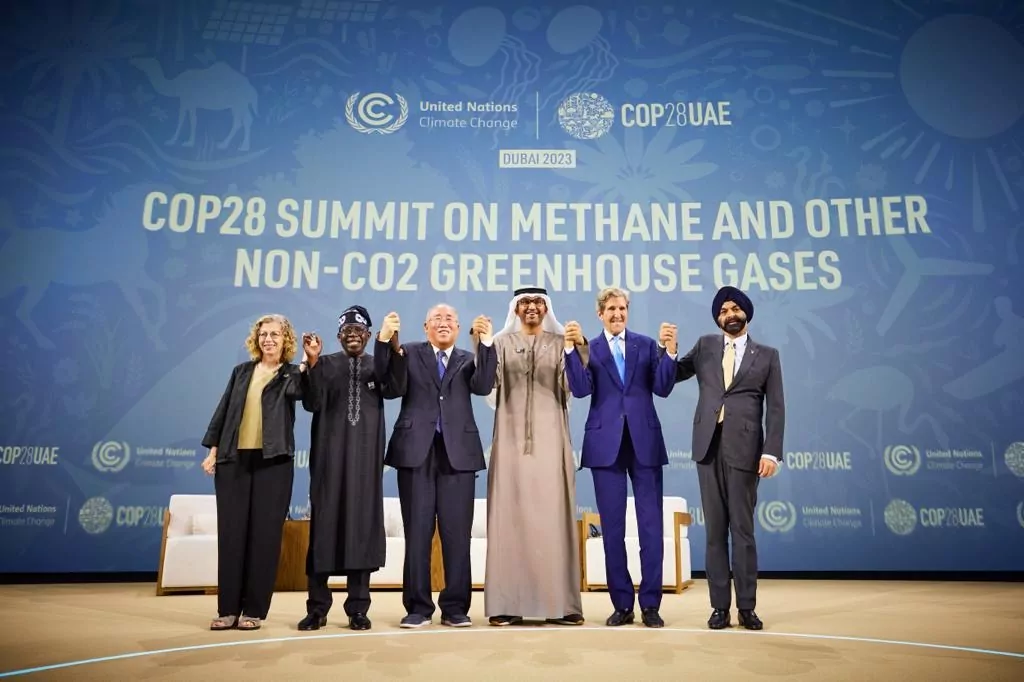
The United Nations Climate Change Conference (COP28) closed today with an agreement that signals the “beginning of the end” of the fossil fuel era by laying the ground for a swift, just and equitable transition, underpinned by deep emissions cuts and scaled-up finance.

UN Climate Change News, 12/13/2023

Real world:

“That intrinsic demand that is not visible is so significant that we don’t see demand peaking – I don’t think we’ll see [oil] demand peaking in our lifetimes,” he said. “Particularly as demand growth in [emerging markets] continues to surprise the upside.” 

Christyan Malek, JPMorgan’s top energy strategist

The 19th century is known as the “century of coal,” but, as the technology scholar Vaclav Smil has noted, not until the beginning of the 20th century did coal actually overtake wood as the world’s No. 1 energy source. Moreover, past energy transitions have also been “energy additions”—one source atop another. Oil, discovered in 1859, did not surpass coal as the world’s primary energy source until the 1960s, yet today the world uses almost three times as much coal as it did in the ’60s.

Dan Yergin

You be the judge.

Read Full Post »

Comments on 2022 oil production:

Read Full Post »

Nothing new or surprising, but an interesting read nonetheless.

All you need to know about how the vaunted ‘energy transition’ is going as 2022 comes to its merciful close is to read the headline of a Reuters story published last week: “Global coal consumption to reach all-time high this year – IEA”.

That isn’t how the narrative surrounding the energy transition assumed this would all be going in the year 2022. Certainly, it isn’t how IEA head Fatih Birol has wanted it to go, given his insistence that “more wind and solar” is the answer to seemingly every energy-related question.

Read Full Post »

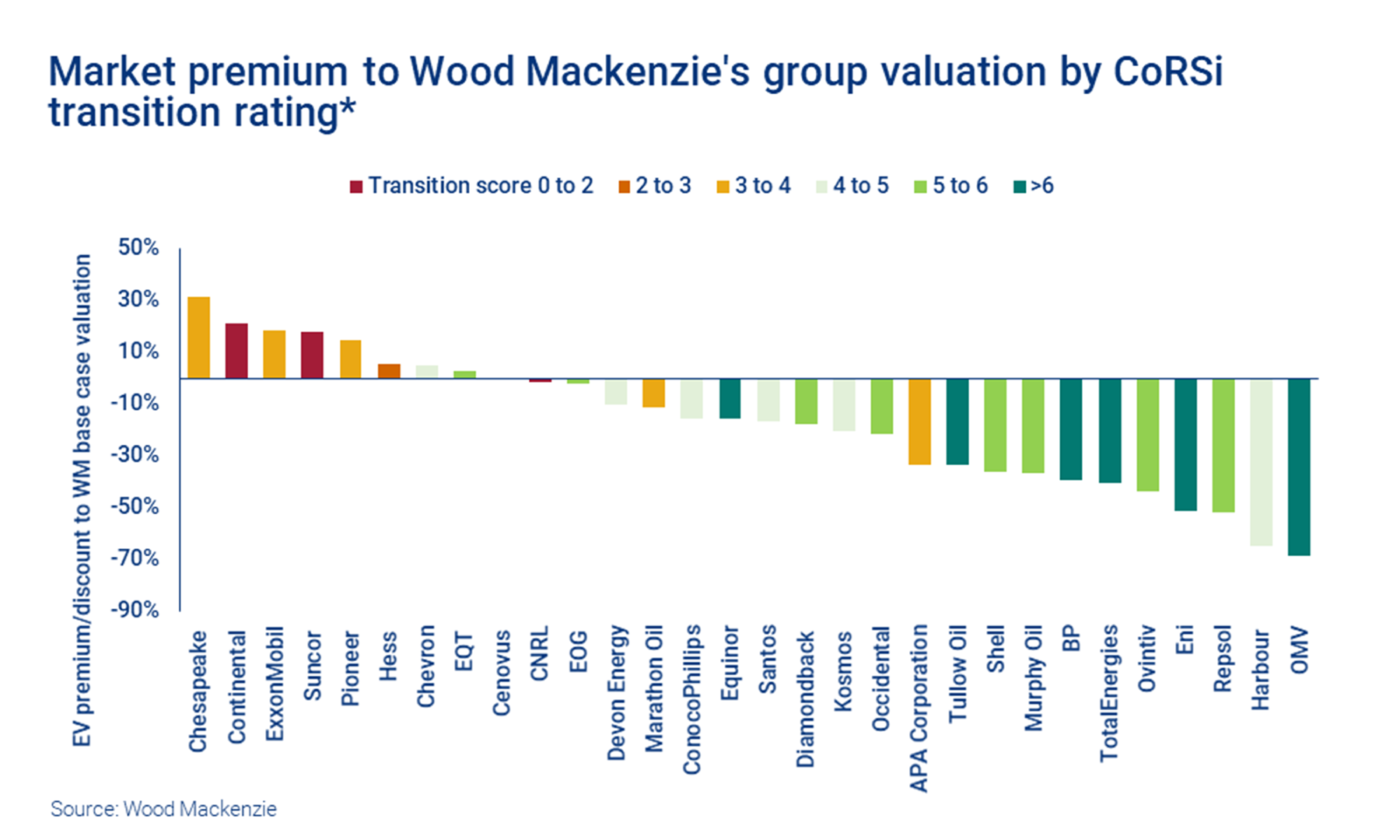
Per Wood Mackenzie, companies with low transition scores (i.e. the purer oil and gas plays) command higher valuations. I’d like to see the scores for other US independents.

First, investors piled into the pure play oil and gas producers that are most leveraged to oil prices, much as they would in any upcycle. US independents led the sector rise through early June before the oil price and shares fell back over the last month.

Euro Majors are also reaping the earnings and cash flow boom. Share price performance has been strong relative to the wider stock market, but most have lagged their US peers. US Majors have long commanded a premium rating to their European counterparts, partly a function of the relatively high rating of the US stock market. The gap though has widened.”

Wood Mackenzie

Read Full Post »

From Reuters article:

  • bp: Only 15% of shareholder votes backed a call for the company to accelerate its energy transition, compared with the 21% in favor in a similar vote last year.
  • Oxy: Only 17% of investors backed a call for emissions-reduction targets. (I wonder how Buffett voted 😀)
  • Marathon: 16% supported a measure calling for the company to report on how its transition plans affected workers and communities
  • ConocoPhillips: 42% supported an emissions-reductions targeting measure vs. 58% last year.

Exxon, Shell, and Chevron are on deck!

Read Full Post »

  • While the text of the announcement implies otherwise, the new name prioritizes the “transition” over concerns about energy supply, security, and reliability. In that regard, the timing seems questionable.
  • Why not the North Sea Energy Authority (NSEA) or UK Offshore Energy Authority (UKOEA)?
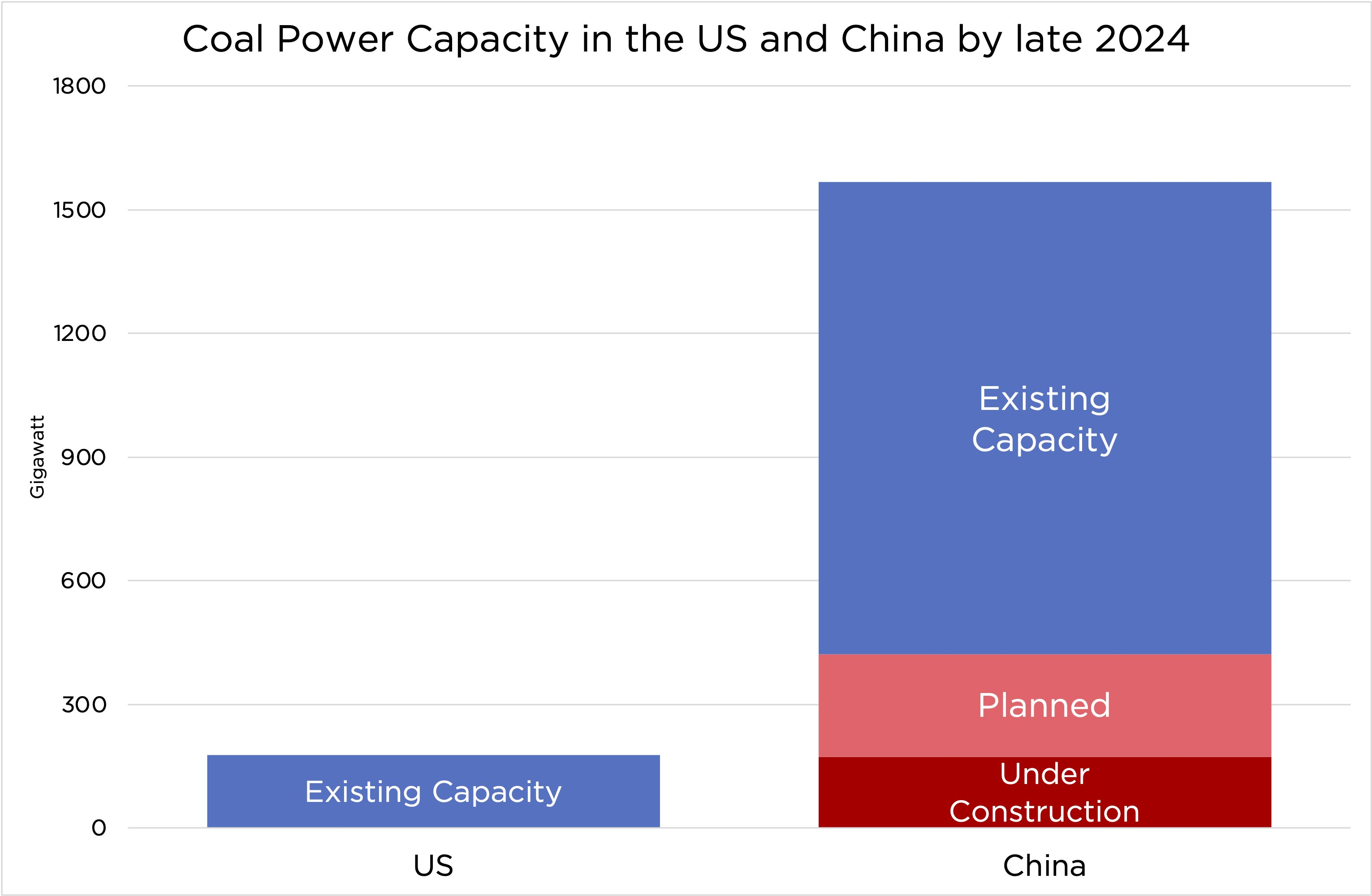
  • Will OPEC+ be impressed? Perhaps China will add a few coal-fired power plants in honor of the name change.
  • Dan Yergin understands that energy transitions are complicated. Quoting Yergin’s outstanding article in the Atlantic:

The term energy transition somehow sounds like it is a well-lubricated slide from one reality to another. In fact, it will be far more complex: Throughout history, energy transitions have been difficult, and this one is even more challenging than any previous shift.

The 19th century is known as the “century of coal,” but, as the technology scholar Vaclav Smil has noted, not until the beginning of the 20th century did coal actually overtake wood as the world’s No. 1 energy source. Moreover, past energy transitions have also been “energy additions”—one source atop another. Oil, discovered in 1859, did not surpass coal as the world’s primary energy source until the 1960s, yet today the world uses almost three times as much coal as it did in the ’60s.

Read Full Post »

Older Posts »