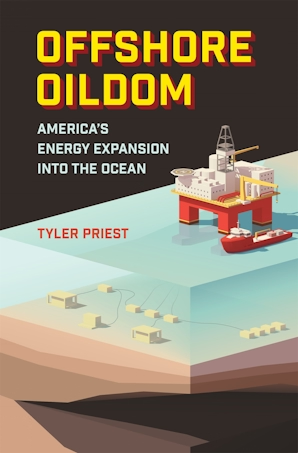
Tyler Priest, the leading historian on US offshore oil and gas operations, has informed me that his much anticipated book, “Offshore Oildom,”is now available for order from LSU Press.Tyler’s book is a fascinating account of the history of the technologically innovative and economically important, yet controversial, OCS Oil and Gas program. See the attached flyer.
Consider this recommendation by Daniel Yergin:
“Tyler Priest, a preeminent historian of energy and the environment, explores how a single well drilled off a pier near Santa Barbara in 1898 gave rise to a major American industry—offshore oil and gas. In spirited prose, Priest demonstrates how this U.S. industry was created not only by innovation, creative engineering, and complex execution; it was also the result of fierce political battles.” ~Daniel Yergin, Pulitzer Prize–winning author of The Prize: The Epic Quest for Oil, Money, and Power and The New Map: Energy, Climate, and the Clash of Nations.
The Danish government will “initiate a process” to look at possibly extending one or more production licences in the Danish North Sea until 2050, to contribute to European energy security and independence, it said.
The government has asked the Danish underground consortium (DUC) — which operates the Tyra hub — to “explore an extension” beyond the current 2042 expiry.
Europe is in dire need of energy independence, and while renewables expansion can help the bloc achieve that goal, natural gas will still play a significant part of the energy mix in the coming year, the Danish government said. “Europe must stand on its own two feet,” Danish industry and trade minister Mortern Bodskov said
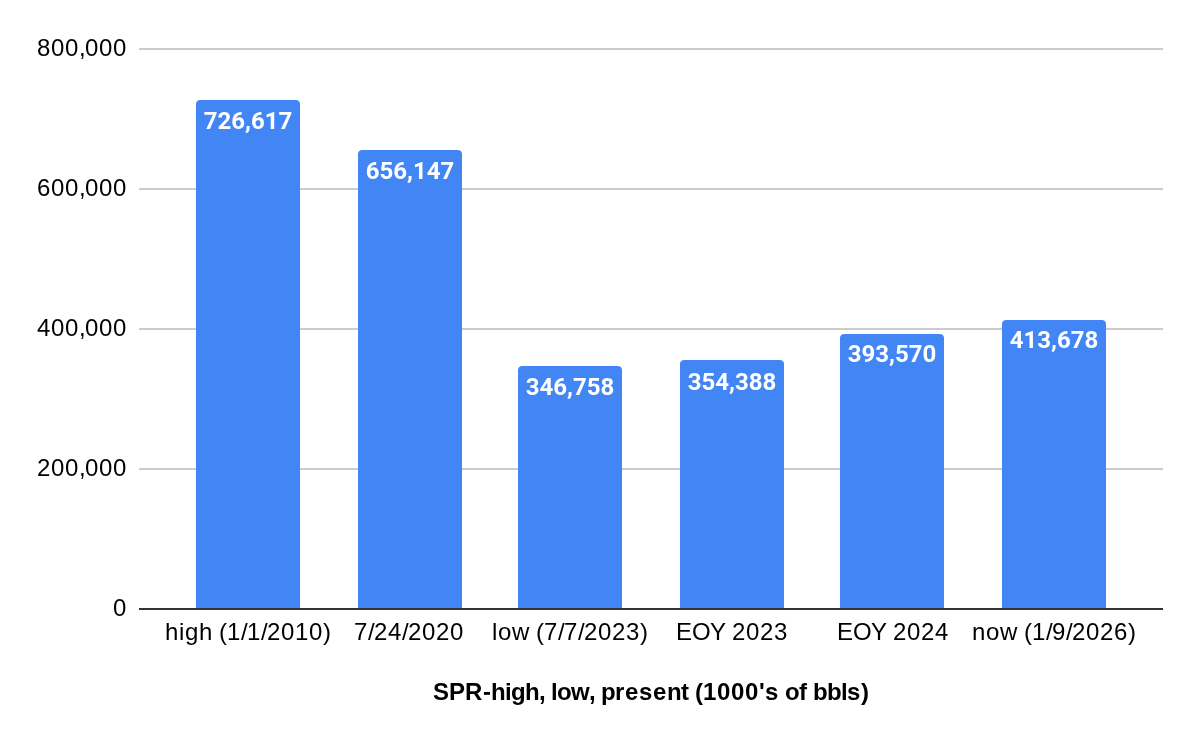
10 million bbls were added in 2025. Only 67 million bbls (<10% of capacity) have been added since the 7/7/2023 nadir. Unsurprisingly, It’s easier to deplete strategic national assets than replace them.
Note: In light of last night’s events, I’m re-posting this 10/13/2025 BOE post.
Nobel Peace Prize winner Maria Corina Machado wisely calls for privatizing Venezuela’s oil and gas industry, which was highly respected prior to the Chavez regime. The national oil company, Petróleos de Venezuela (PDVSA), is now a corrupt arm of the Maduro government.
“The whole Board is responsible for the loss of about 800,000 barrels per day of oil production; for the fraudulent certification of “proven oil reserves” in the Orinoco heavy oil region; for the irregular contracting, with a ghost company, of the offshore drilling barge Aban Pearl for twice the amount really paid to the owners of the barge; for the importing of 180,000 tons of food that later went to rot in Venezuelan ports but provided some of the members of the board with millions of dollars in criminal profits; and in numerous other corrupt practices that are well documented.“
Machado’s oil and gas platform is pasted below. She has a good perspective on the proper role of govt.
Privatization and reactivation of oil and gas production by attracting specialized international and national companies. Venezuela has one of the world’s largest reserves of oil and natural gas. As per the Organization of Petroleum Exporting Countries (OPEC) and the International Energy Agency (IEA), the country has reserves of over 300 billion barrels of oil and 200 trillion cubic feet of natural gas. The goal in this area is to steadily increase oil and gas production in order to leverage the window of opportunity that exists in today’s global demand for hydrocarbons. Achieving this objective will require enormous investments that the Venezuelan State cannot undertake. The solution is to attract private capital, and the strategy to achieve this end is the industry’s privatization. Where appropriate, all the industry’s productive activities will be privatized in order to secure massive private investments and a sustained increase in production, under conditions that guarantee legal certainty and an environment that is attractive for investors. The State will continue to receive fiscal income in the form of royalties and taxes, and will ensure that an operational framework exists in which private companies can increase production in the shortest possible timeframe. A Venezuelan Energy and Petroleum Agency will be established to exercise the role of industry regulator. Oil privatization will allow Venezuela to regain its position as a safe and reliable supplier, and will provide unparalleled investment opportunities in the industry.
On my favorite holiday, I’m sending best wishes to BOE readers of all persuasions. Offshore energy issues can be divisive, even among friends, and I’m grateful for the opportunity to share information and opinions.
My wife and I will be spending Thanksgiving with my daughter’s family including our 6 grandchildren, none of whom have expressed interest in being offshore safety regulators (no higher calling 😉).
Belated holiday wishes to our friends in Canada where Thanksgiving is celebrated in October, and cheers to those living where a similar fall holiday is observed.
Trinidad’s Prime Minister Kamla Persad Bissesar: “Trinidad will not wait for the end of any energy era,” she said. “Our principle is simple: investment goes where it is welcomed and stays where it is well treated.”
The PM of a country with an oil production history that predates the Drake well in Pennsylvania leaves no doubt about her support for deepwater development. Her candid and clear messaging is most refreshing.
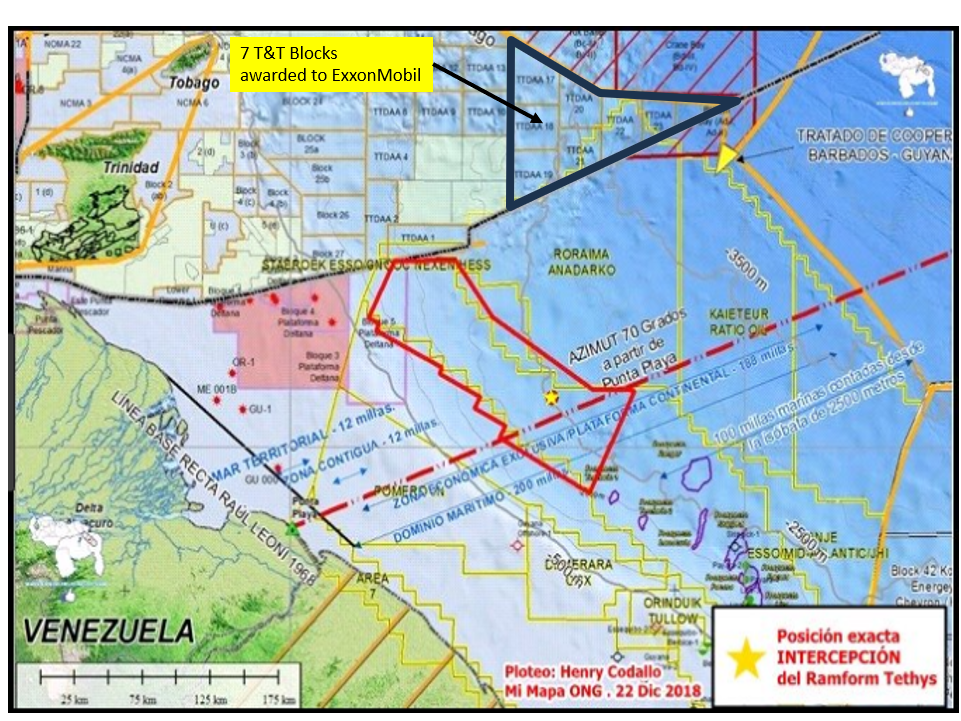
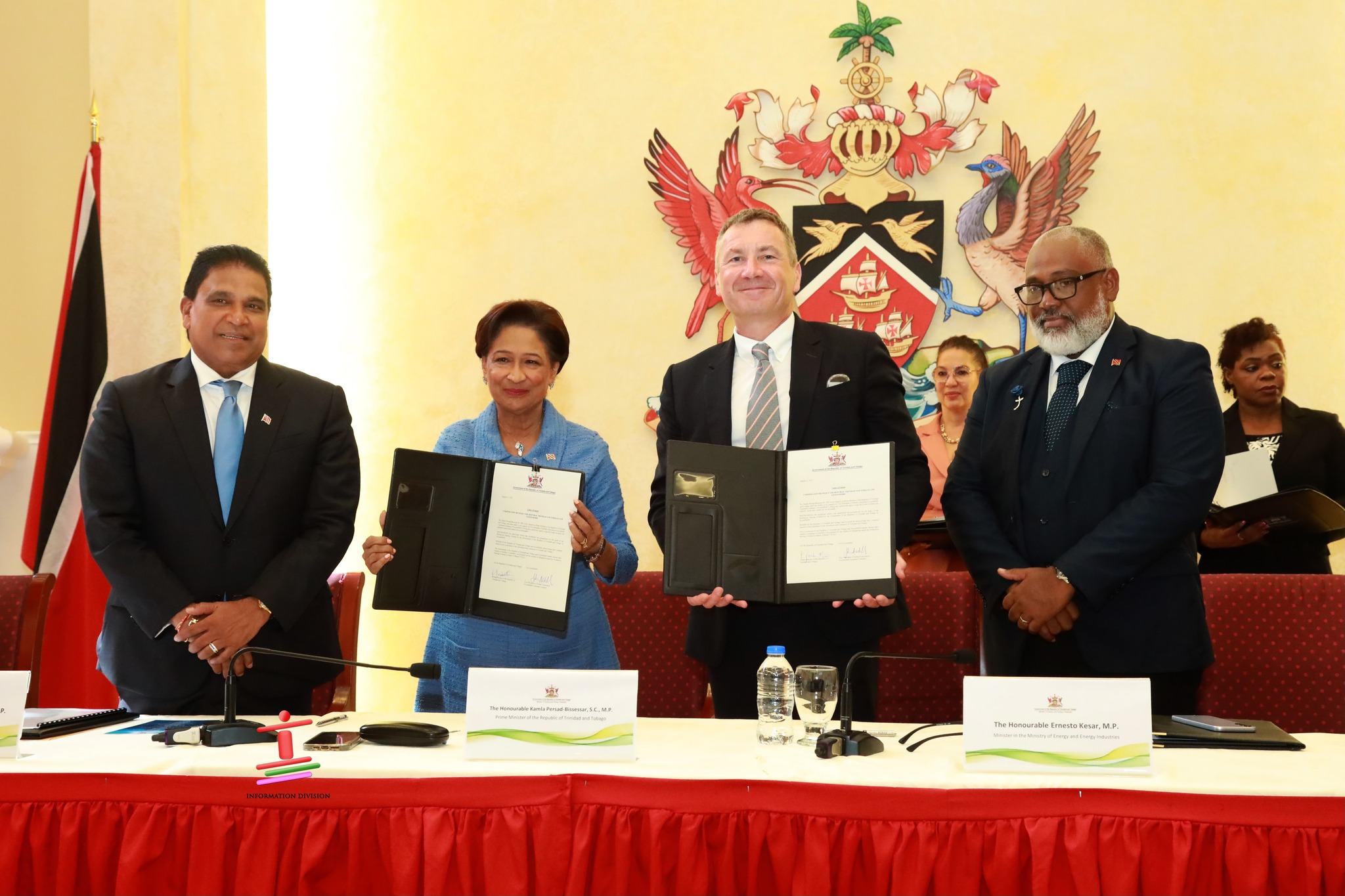
Consistent with her policy guidance, T&T signed a Production Sharing Contract with Exxon for a massive deepwater tract (Block Trinidad and Tobago Ultra Deep 1, map below). Per Ms. Persad Bissessar:
“Today’s signing underscores our government’s commitment to strengthening national energy security and to unlocking the full value of our hydrocarbon resources through discipline, policy, competitive terms and trusted partnerships.”
Although another Guyana is unlikely, the enormous lease block presents a great opportunity for Exxon. The consolidated block spans 7,765 square kilometers in the Eastern Tobago Basin in water depths exceeding 2,000 meters. By comparison, Trinidad and Tobago’s total surface area is about 5,128 square kilometers and a typical Gulf of America lease block is only 23 sq km. (Think about that! The size of US offshore lease blocks, which are the world’s smallest, needs to be reconsidered.)
Based on press reports, Exxon will carry out seismic acquisition within 12 months, followed by geological and geophysical studies, and drill up to 2 exploratory wells during the initial phases of the contract. (Reports differ as to whether one of those wells is mandatory, but presumably that won’t be an issue.)
Does this impressive deal reduce the likelihood that America’s largest oil company, which has essentially abandoned the Gulf of America except for its (fading?) carbon disposal ambitions, will participate in the upcoming Gulf lease sale? Politically, failure to participate would not seem to be very astute given the Administration’s promotion of domestic production and energy dominance.
We preferred the House version, but the Senate Parliamentarian killed the provisions that reduced the risk of litigation and processing delays.
Whether justified or not, the royalty rate is now capped at 1/6 and a 10-year deepwater lease term is locked in.
The favorable terms and assurance of regular GOA lease sales put the ball squarely in industry’s court. We are looking for a good showing at Sale 262, including some new bidders and the return of some prominent companies.
Our Scottish contributor, JL Daeschler, brought this brilliant Sunday Times piece by Gillian Blowditch (pictured) to my attention. A few excerpts follow, but I recommend that you read the entire column.
“I’m writing this column from Applecross in the Scottish Highlands, where the view from the window is of the Cuillins. These immutable behemoths squat beneath an expanse of sky in which the light is invariably diffuse. It never gets old.” (I second that emotion!)
“Renewables are a vital part of our energy mix, but they require gas-fired back-ups. Yet, instead of tapping into our North Sea reserves, we’re committed to importing foreign gas. It’s not just an issue around energy security and cost, it affects our trade deficit and competitiveness against countries using cheaper, home-grown supplies. It increases our dependence on foreign supply chains.”
“Meanwhile, we risk losing the valuable skills and expertise we have built up over 50 years of North Sea exploration. We are all paying the price for this obsession through higher energy bills and job losses.”
“It is difficult to imagine a world in which it makes sense to import oil and gas but not produce it, while forcing our skilled workforce to work offshore in far flung corners of the globe, especially when we are importing from Norway, which is extracting oil and gas from the same seabed for which we are refusing to grant licences.”
“According to a Survation poll commissioned by the Aberdeen & Grampian Chamber of Commerce and published last week, 68 per cent of voters want the country’s demand for oil and gas to be produced domestically, rather than imported.”
“We all want to protect our environment and Scotland, with its vast natural resources and expertise in energy, should be leading the way. Instead, we have squandered an opportunity in favour of a facile show of moral posturing.”
The announcement was during an interview this morning (4/4/2025) with Lawrence Jones on Fox News, and is consistent with expectations and the current 5 year leasing plan.





 Bud's Offshore Energy (BOE)