Engineers have succeeded in stopping the flow of oil and gas into the Gulf of Mexico from a gushing BP well, the federal government’s top oil spill commander, U.S. Coast Guard Adm. Thad Allen, said Thursday morning.
Posts Tagged ‘drilling’
TKO Success per Admiral Allen
Posted in accidents, well control incidents, tagged accidents, admiral allen, blowouts, Deepwater Horizon, drilling, Gulf of Mexico, macondo, offshore oil, oil spill, safety, top kill, well control on May 27, 2010| 1 Comment »
TKO on Track
Posted in accidents, well control incidents, tagged accidents, blowouts, Deepwater Horizon, drilling, Gulf of Mexico, macondo, offshore oil, oil spill, safety, well control on May 27, 2010| Leave a Comment »
- TKO update: BP is wise not to declare victory prematurely, but the Top Kill Operation (TKO) seems to be proceeding as planned.
- Better than a lava lamp?: I’ve heard from some people who can’t stop watching the live BOP and leakage videos. Is this addiction treatable? 🙂
- To those suggesting a military takeover of the response: The US Coast Guard is already in charge and is doing well. The last time I checked the Coast Guard was still part of the military.
- Why hasn’t the flow path been determined?: There appear to have been so many well planning and construction mistakes that one can make a good argument for both backside (annular flow outside the production casing) and inside flow (up the shoe track and inside the casing).
Top Kill Operation (TKO) Briefing – 2000 ET
Posted in accidents, well control incidents, tagged accidents, Admiral Landry, blowouts, Deepwater Horizon, Doug Suttles, drilling, Gulf of Mexico, macondo, offshore, offshore oil, oil spill, safety, well control on May 26, 2010| Leave a Comment »
I watched the live stream of the Unified Command Press Conference. My impressions:
- Admiral Landry (USCG) and Doug Suttles (BP) have impressed me throughout this ordeal. They have kept their heads under very difficult circumstances. I salute them for their leadership.
- While it’s too early to make a call on Top Kill, the early signs are encouraging. There have been no apparent system or operational glitches. Also from some of the camera shots, the mud seems to be “outrunning” the oil and gas – a positive sign.
- We should know a lot more in the morning.
Interesting Report on the House Energy and Commerce Site
Posted in accidents, well control incidents, tagged accidents, blowouts, Deepwater Horizon, drilling, Gulf of Mexico, macondo, Montara, offshore oil, oil spill, safety, well control on May 26, 2010| 1 Comment »

Also, per yesterday’s Top Kill technical briefing the flow path from the reservoir has still not been determined. While the consensus among informed observers seemed to be that the flow was outside the production casing, information in the BP memo suggests a possible shoe failure. The float collar issues (see BP memo) are eerily Montara-esque.
Important Macondo Documents
Posted in Uncategorized, tagged accidents, blowouts, Deepwater Horizon, drilling, Gulf of Mexico, House Energy and Commerce, macondo, offshore oil, ohmsett, oil spill, safety, Senate Energy and Natural Resources, well control on May 12, 2010| 5 Comments »
I haven’t posted recently for a variety of reasons, but I see that folks are still visiting the blog. Thanks for checking-in. For those who are formulating their own views about what really happened and why, the documents at the House Energy and Commerce Committee site are mandatory reading.
Also, many thanks to those who have asked about my testimony before the Senate Committee on Energy and Natural Resources. My statement is here. Kudos to Chairman Bingaman and the very capable committee staff for their thoughtful and professional approach to these hearings.
With regard to the 38 reported sea turtle strandings:
Posted in accidents, well control incidents, tagged accidents, blowouts, Deepwater Horizon, drilling, Gulf of Mexico, macondo, offshore oil, oil spill, turtles, well control on May 5, 2010| Leave a Comment »
Based on careful examination, NOAA scientists do not believe that these sea turtle strandings are related to the oil spill. NOAA and its partners have conducted 10 necropsies so far – none of ten turtles showed evidence of oil, externally or internally. ~Barbara Schroeder, NOAA national sea turtle coordinator.
Macondo – 5 May Update
Posted in accidents, well control incidents, tagged accidents, blowouts, Deepwater Horizon, drilling, Gulf of Mexico, macondo, offshore oil, oil spill, safety, well control on May 5, 2010| Leave a Comment »

-The responders have successfully installed a valve on one of 3 leak points – the drill pipe protruding from the riser.
–Installation of the first pollution dome will begin today. This is really a production system and more information on the design will presumably be forthcoming.
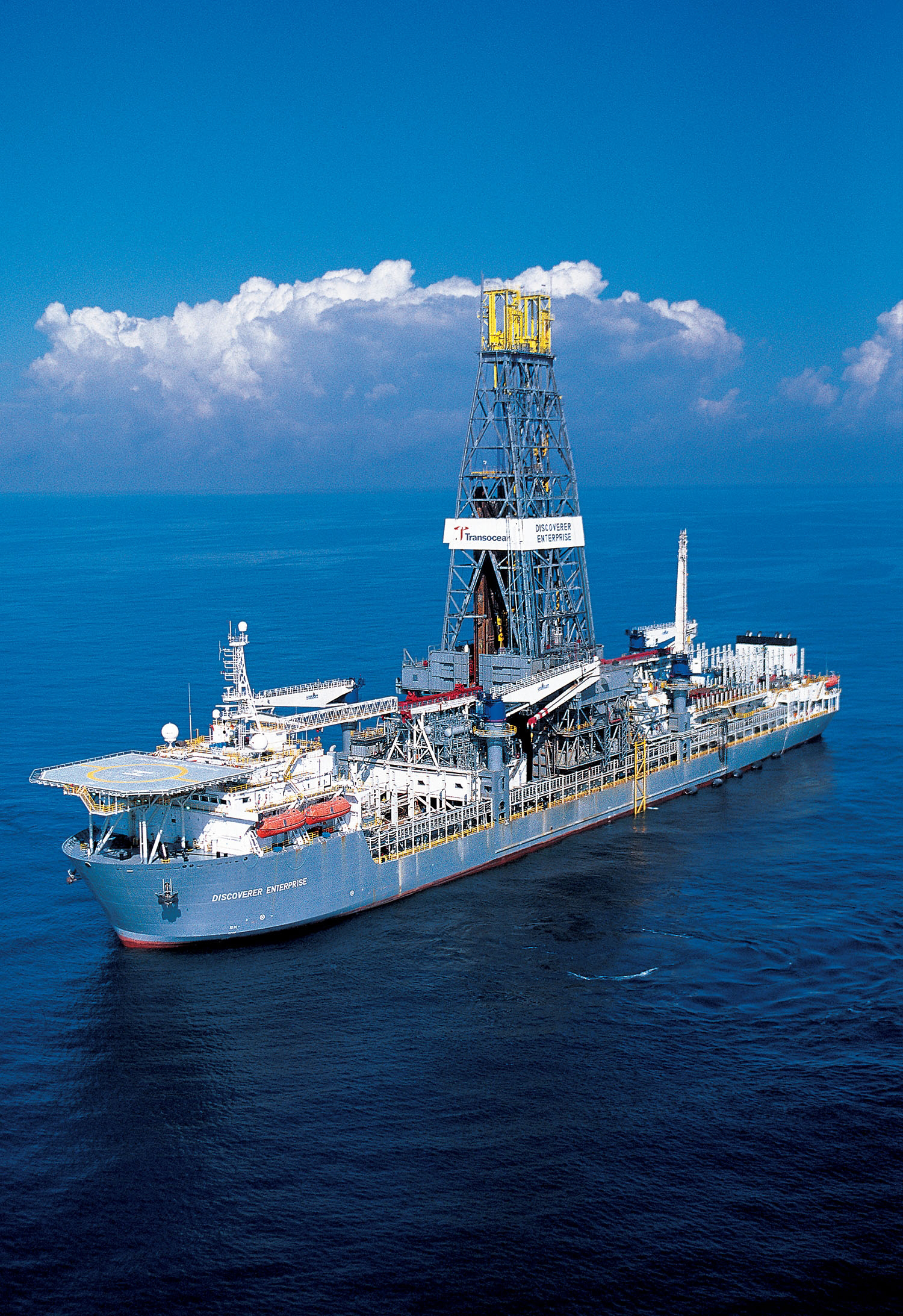
Discoverer Enterprise
I assume there will be some type of pipeline riser connecting the dome to the Enterprise through the moon pool, that the rig’s tensioning system will be used to keep the riser taut, that the oil and gas will be processed on the enterprise, that the gas will be flared, and that the oil will be stored on the rig and offloaded to a shuttle tanker. In essence, the Enterprise will serve as a temporary FPSO.
Petroleum Safety Authority Norway Releases Statement on Macondo Blowout
Posted in accidents, Norway, well control incidents, tagged accidents, blowouts, Deepwater Horizon, drilling, Gulf of Mexico, macondo, offshore oil, oil spill, PSA on May 4, 2010| 4 Comments »
The tragic events on the Deepwater Horizon rig in the Gulf of Mexico have attracted great international attention, and have also promoted a flood of questions to the Petroleum Safety Authority Norway (PSA).
The PSA Norway has issued a statement on the Horizon incident, and has appropriately avoided responding to the “can it happen here?” question. Their interest and support are greatly appreciated.
Macondo – Relief Well Spudded, Dome Ready, BOP Questions Remain
Posted in accidents, well control incidents, tagged accidents, blowouts, Deepwater Horizon, drilling, Gulf of Mexico, macondo, offshore oil, oil spill, safety, well control on May 4, 2010| Leave a Comment »

The Deepwater Driller III (pictured) has spudded the first relief well.
Discoverer Enterprise will support seafloor contaiment system.
While BOE’s eager but poorly managed staff struggles to keep pace, Upstream is providing excellent coverage of the well intervention, relief well, and seafloor containment system stories. This is the news of greatest interest to our small, but highly sophisticated readership. (For extensive coverage of news celebrities standing near the shore or bravely venturing into streamers of oil, turn your attention to the network news.)
Anyway, lots of new developments: the relief well was spudded, another rig is on the way to drill a second relief well, the seafloor containment system is ready to be transported to the site, and plans to install a second BOP stack (on top of the first) proceed. But perhaps of greatest interest to BOE readers is the report that BP had closed the rams but did not stem the flow. The BP spokesman suggested that the rubber portions of the rams may have been eroded and were thus unable to seal the well. This makes sense for the pipe rams and annular preventers (although some flow reduction would still be expected), but what about the shear ram? Was it closed? Was it unable to cut pipe that was inside the stack? What happened when the crew attempted to shut-in the well prior to evacuation? When can we expect a statement from Cameron, the BOP manufacturer?
Searching for Positives
Posted in accidents, well control incidents, tagged accidents, blowouts, Deepwater Horizon, drilling, Gulf of Mexico, macondo, offshore oil, oil spill, safety, well control on May 3, 2010| Leave a Comment »
This blowout is a national tragedy with 11 fatalities, 3 critical injuries, many lives disrupted, and a major ongoing oil spill. Nonetheless, as with every disaster, there are some positives. A few come to mind:
- 115 workers were rescued following the initial explosion.
- The first ever deepwater oil containment and collection system is being built. Should the responders not be able to soon stop flow from the well, this system will be deployed and evaluated.
- An innovative and unprecedented attempt may be made to install and operate a second BOP (above the failed stack).
- New spill cleanup options such as underwater dispersants are being studied. The resulting data will be very useful to oil spill researchers.
- Lessons from Macondo are likely to trigger improvements in BOP systems and well integrity assurance procedures.
 Bud's Offshore Energy (BOE)