Feeds:
Posts
Comments

Posts Tagged ‘Canada’

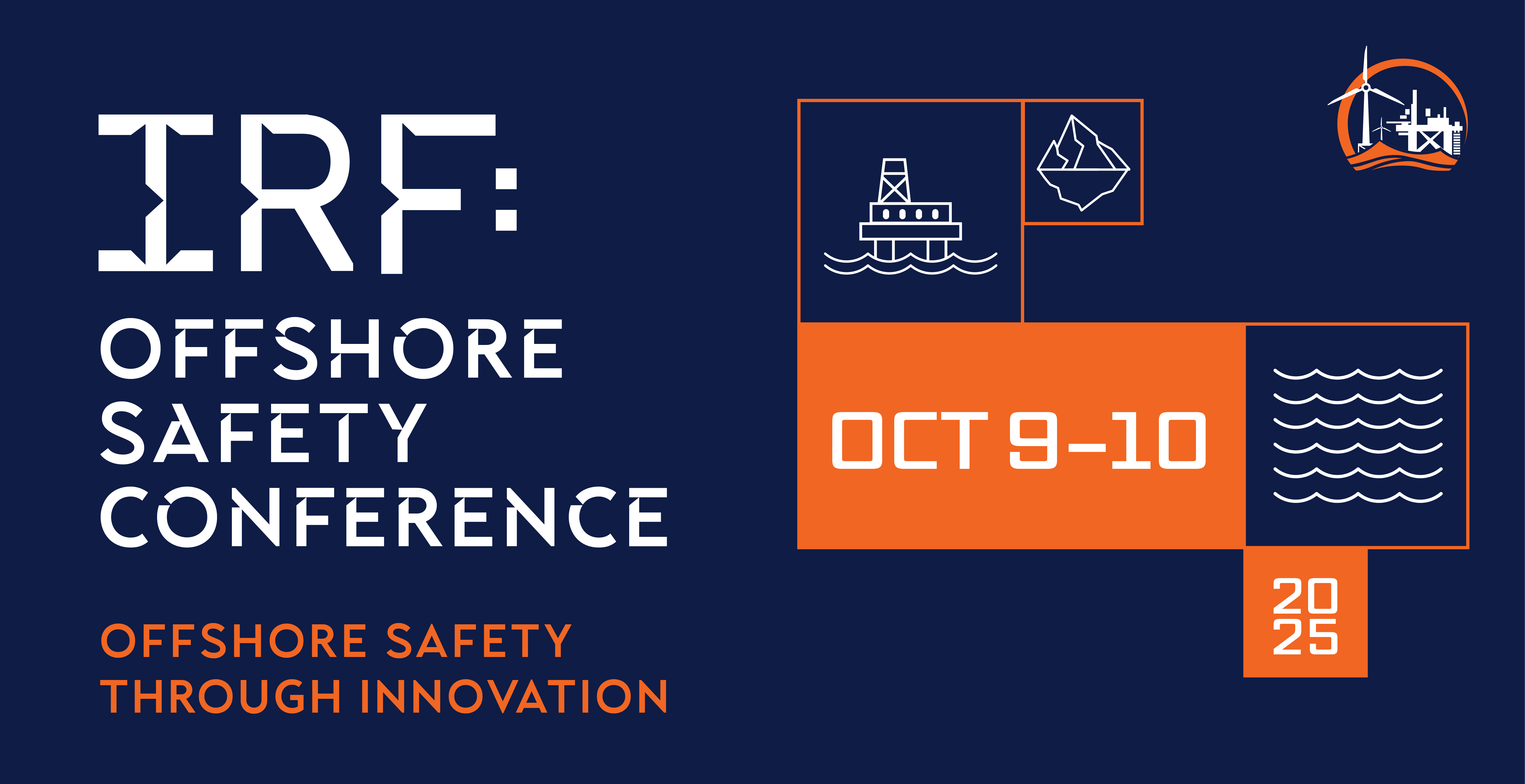
The International Regulators’ Forum Offshore Safety Conference, Oct. 9-10 in St. John’s Newfoundland, has an impressive agenda focusing on safety through innovation. Among the topics that caught my eye:

  • Human Factors & AI
  • Managing New Tech with Old Regulations
  • Regulatory Sandboxes: Capture vs. Collaboration
  • How can AI and emerging technologies be used in risk management trending and operations?
  • Why are we not learning from accidents?
  • Breakthroughs in investigation techniques and sharing

The first IRF Conference was held 20 years ago in London followed by the 2007 conference at the Trump International Resort in Miami (little did we know 😀). More historical background.

The informed, diverse viewpoints about managing and regulating offshore operations sets these conferences apart from your typical professional events. The 2025 conference is highly recommended for those interested in offshore operations, risk mitigation, and regulatory policy.
Read Full Post »

Scotian Shelf gas production ended in 2018, but Nova Scotia Energy Minister Trevor Boudreau (Acadian with many relatives in Louisiana?😉) says he is encouraged by preliminary expressions of industry interest in new licenses. The Provincial/Federal authority has issued a call for bids:

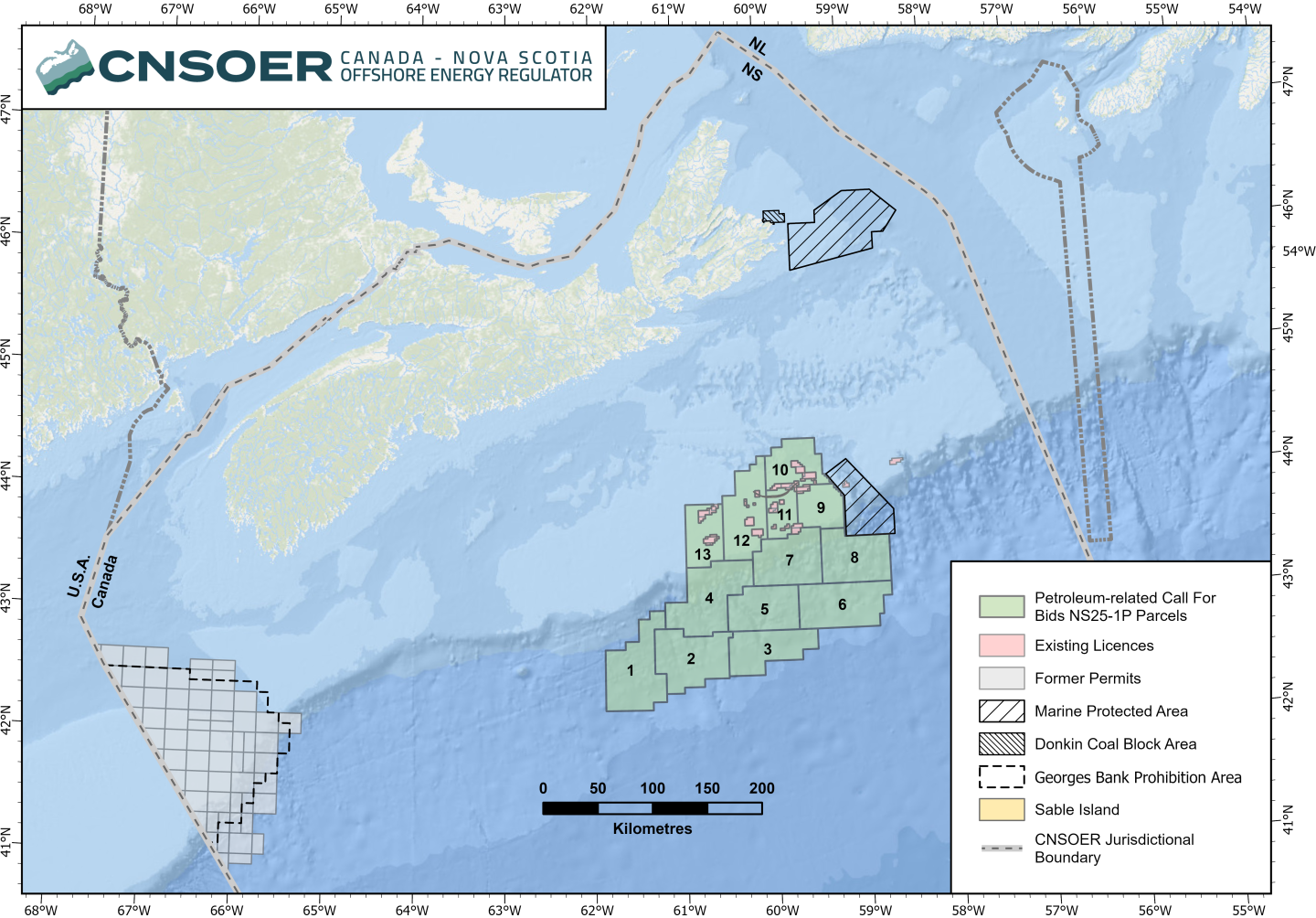
The Canada-Nova Scotia Offshore Energy Regulator (CNSOER) has issued a petroleum-related Call for Bids NS25-1P, which includes 13 nominated parcels. Bids must be received by April 28, 2026, before 4:00 p.m. Atlantic Time. Successful bidder(s) may be awarded Exploration Licences (ELs), subject to the federal and provincial Ministerial review and approval process set out in legislation.”

The petroleum-related Call for Bids NS25-1P nominated parcels are located on the central Scotian Shelf and Slope. Parcels 1 to 8 are located in deepwater on the Scotian Slope, in water depths from 200 to 4,300 metres. Parcels 9 to 13 are located on the Scotian Shelf, in water depths less than 200 metres, in the region where all historic gas, and to a lesser extent, oil production, has taken place. The shelf parcels are located near the Sable Island National Park Reserve and west of the Gully Marine Protected Area. No petroleum-related activity can take place within one nautical mile (or 1.85 kilometres) of the Sable Island National Park Reserve.

Read Full Post »

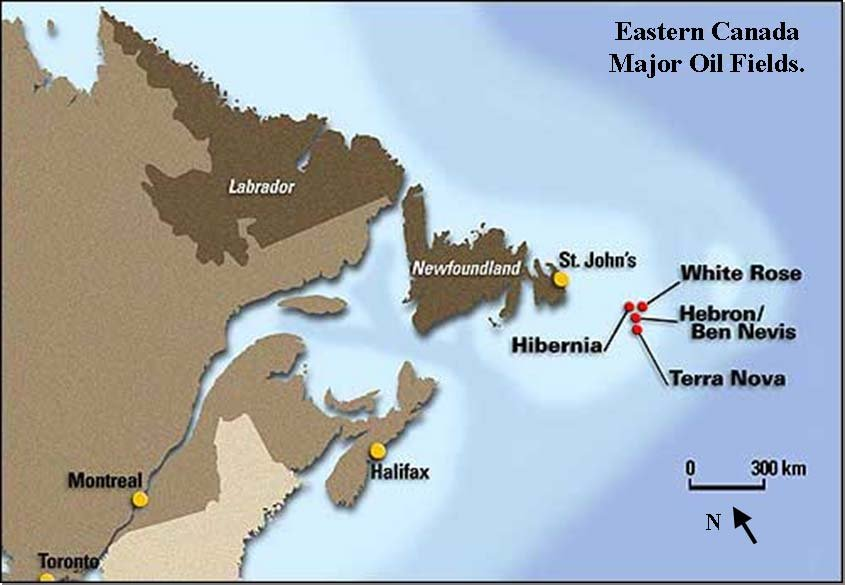
Offshore Newfoundland, a particularly hostile operating environment (“North Sea plus icebergs“), continues to be the only producing area in the North American Atlantic, a distinction that is unlikely to change for at least the next decade.

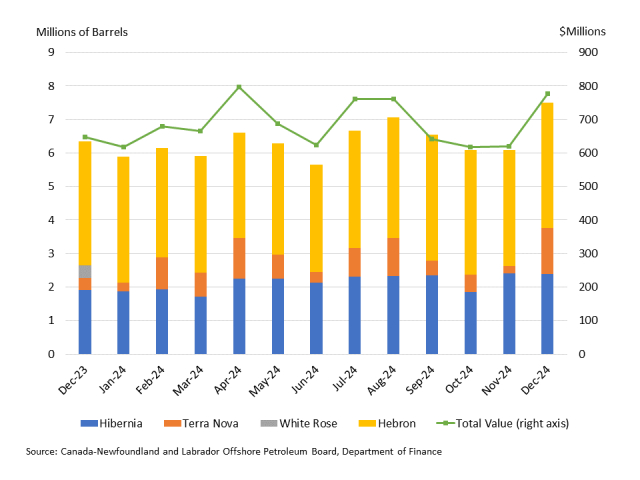
Production is holding firm and there was a nice bounce in December when 7.5 million barrels were produced (242,000 bopd ave.). December’s production was the highest since May 2022 and and was a respectable 57% of the May 2007 peak.

Most impressively, according to CNLOPB data, no fatalities or significant injuries occurred over the past 3 years.

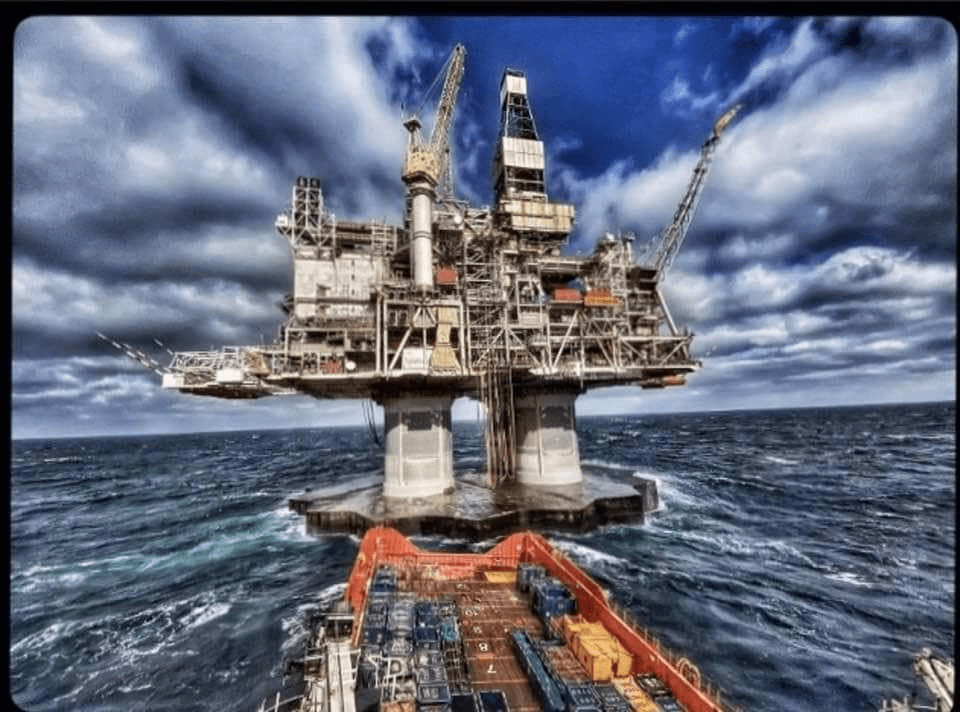
The pioneering Hibernia platform (pictured above), where Newfoundland offshore production began in Nov. 1997, keeps chugging along at 60 to 80,000 bopd. The Hibernia field has produced more than double the original resource estimate of 520 million barrels. Very impressive!

Hebron, the current top producer, continues to produce 100,000+ bopd

The Terra Nova field contributed ~40,000 bopd in Dec., the highest output since production resumed in late 2023 after extensive downtime to refurbish the FPSO.

Production remained offline at the White Rose project, which was shutdown at the end of 2023 for refurbishment of the SeaRose FPSO. Production is expected to resume during the first quarter of this year.

Newfoundland production data:

Read Full Post »

Quotes from Nantucket Current article (emphasis added):

“While we continue to work to finalize our root cause analysis, our investigation to date indicates that the affected blade experienced a manufacturing deviation,” said GE Vernova CEO Scott Strazik. “We have not identified information indicating an engineering design flaw in the blade or information of a connection with the blade event we experienced at an offshore wind project in the UK, which was caused by an installation error out at sea. We are working with urgency to scrutinize our operations across offshore wind. Pace matters here. But we are going to be thorough, instead of rushed.”

“It’s been 11 days since the event, and just to reinforce from the start, we have no indications of an engineering design flaw,” Strazik said. “We have identified a material deviation or a manufacturing deviation in one of our factories that, through the inspection or quality assurance process, we should have identified. Because of that, we’re going to use our existing data and reinspect all of the blades we’ve made for offshore wind. For context, this factory in Gaspé, Canada where the material deviation existed we’ve made about 150 blades. 

Any comments from the CVA, assuming there was one?

Meanwhile, Nantucket will renegotiate their “Good Neighbor Agreement” with Vineyard Wind. Is this a lesson for other municipalities?

Read Full Post »

Last year, there were reports that a level 3 geomagnetic solar storm rendered GPS signals unreliable and caused the brief suspension of at least one drilling operation in Canada (tweet below).

This weekend’s solar storms were level 5, the highest category (see chart below), but there have been no public reports to date of suspended drilling operations.

Read Full Post »

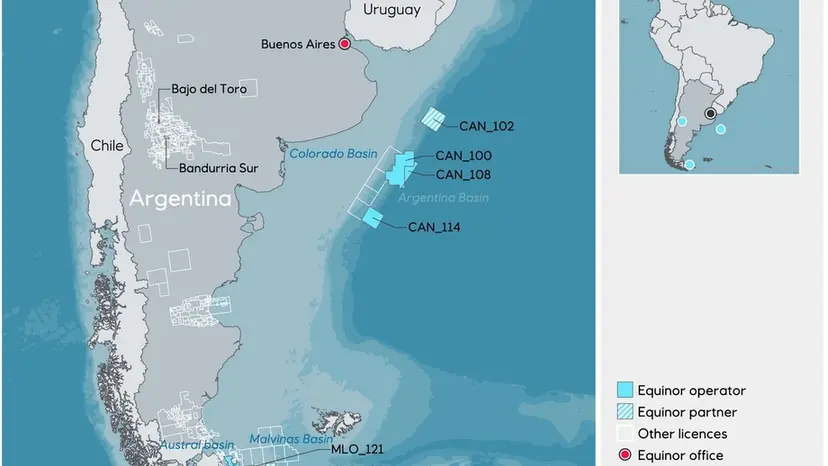
The Valaris DS-17 drillship is now on location to drill the Algerich-1 well for Equinor 315 km from Mar del Plata in 1527 m of water at Block CAN 100.

Concurrently, at the opposite end of the Pan American continents, the Stena DrillMAX is closing in on Exxon’s Orphan Basin location offshore Newfoundland to drill another high potential well.

Meanwhile, the US Atlantic is “wind-only,” despite high deepwater oil and gas potential. The late Paul Post, an esteemed colleague and the leading expert on the petroleum geology of the US Atlantic, believed the deepwater US Atlantic could contain >20 billion BOE. No other Pan American nation has completely closed its Atlantic margin to oil and gas exploration.

Can a nation with a debt of $35 trillion afford to ignore oil and gas resources that will remain in high demand for decades?

Read Full Post »

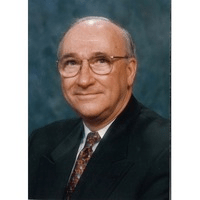
The offshore world lost an important figure over the weekend with the passing of John Gregory Fitzgerald. As Chairman and CEO of the Canada Newfoundland Offshore Petroleum Board in the late 1990’s, John presided over the first production from the massive Hibernia field. He also approved the pioneering Terra Nova project, the first FPSO development in a harsh, iceberg laden environment.

John worked closely with his international counterparts and hosted an important offshore safety meeting in St. John’s in 1996. It was an honor to be associated with such an outstanding individual and dedicated safety leader.

RIP John, your contributions will not be forgotten.

Read Full Post »

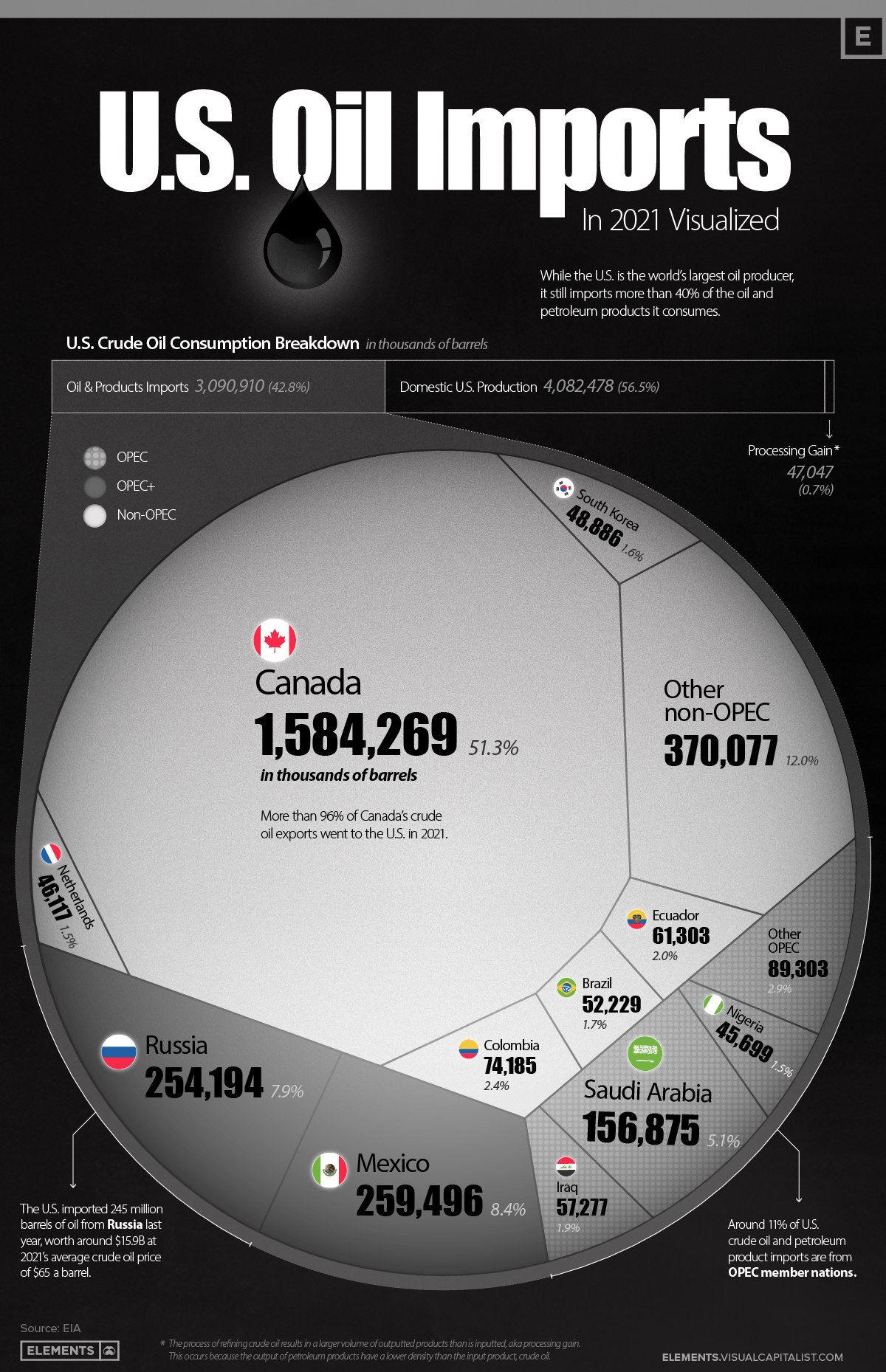
This graphic uses 2021 EIA data to compare the volumes of crude oil and petroleum products imported by the US from other countries.

Read Full Post »

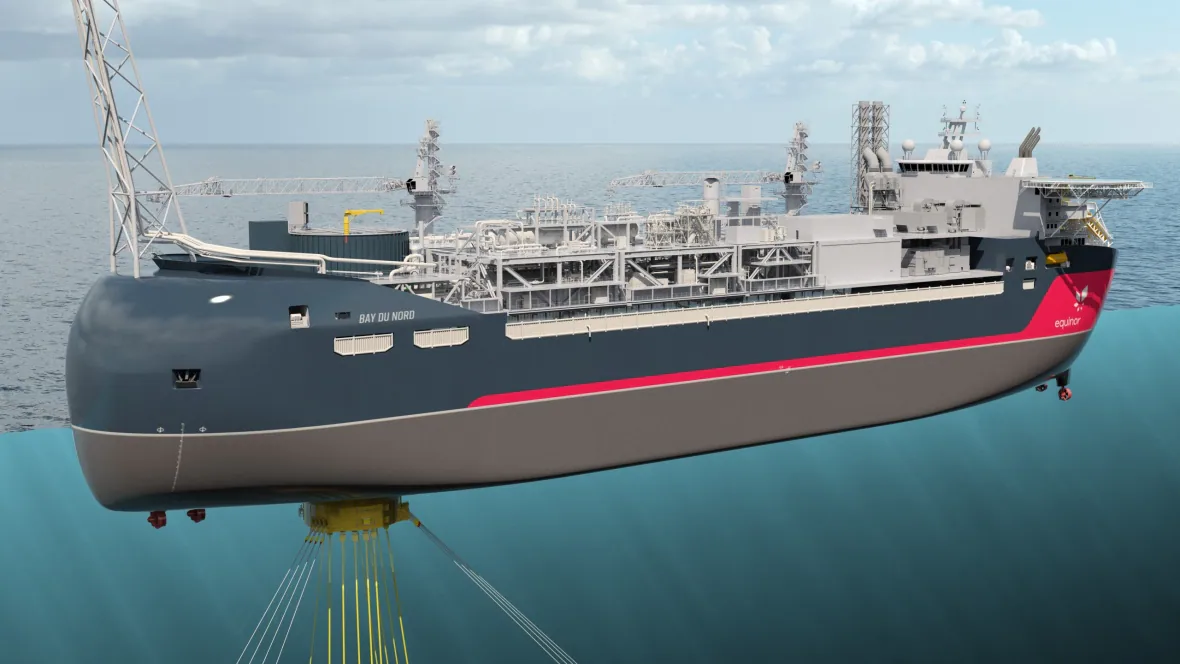
Bay du Nord FPSO planned for 500 km offshore St. John’s in 1200 m water depth

Federal Environment Minister Steven Guilbeault formally approved the Bay du Nord offshore oil megaproject Wednesday, making a decision that will infuriate environmentalists but boost the Newfoundland and Labrador economy.

CBC News

Previous post on this project.

Read Full Post »

Howard Pike forwarded this comprehensive Ocean Ranger video. Worth watching.

Read Full Post »

Older Posts »