- They spent the week fishing (for drill pipe) at Macondo, without much success.
- More negative pressure tests have confirmed that the well is dead.
- The objectives of the relief well intercept are still a bit of a mystery. As we have previously discussed, there are other (better?) means of ensuring that the production casing annulus is plugged. Is the intercept just a risky and expensive ceremony? Not according to BP CEO Bob Dudley who offered the following explanation: “there are several reasons for the relief well to be completed, including demonstrating that the difficult procedure can be done, providing more scientific data about the leak and giving closure to an oil-weary public.” The first and third reasons confirm the “ceremony” theory. We don’t need to prove that you can complete a relief well, and the public needs solutions, not symbolic gestures. With regard to the “scientific data” argument, the intercept may provide some limited information on the condition of the annulus that will help to better understand the cause of the blowout. Whether that information is sufficiently important to justify the delays and added risks remains to be seen.
- The hurricane season continued to be kind. Will the good luck hold? While time has been less critical since the well was capped on 15 July and the endgame should not be rushed, we are surprised by the absence of urgency.
- We continue to wonder what the response would have been like if the responsible party was not a supermajor.
- BP and the Unified Command have still not given us their latest thinking on the Macondo flow path, even though some legislative and regulatory actions are being driven by flow path assumptions and speculation.
- Another garbage article about MMS’s “flawed culture” appeared in a major newspaper. These articles are great theater; too bad their major premise isn’t true.
- A few former government officials, who showed little or no interest in offshore safety during their careers, have emerged to criticize the OCS oil and gas program. Where was the criticism during the 40-year period when all was going well? Why are the officials who have publicly voiced strong support for MMS personnel not being quoted? These supportive comments have received almost no coverage. Also, why are the Inspector General quotes limited to those that paint the worst possible picture of the offshore program and MMS? These same Inspectors General have praised the overwhelming majority of MMS personnel. Finally, those calling for more inspectors and other regulatory personnel might want to start by showing some respect and support for the staff that is already onboard.
- More silly comments about the evils of “industry standards” have appeared in the press. BOE will address this nonsense later in the week.
Posts Tagged ‘BOE’
While BOE was on vacation
Posted in accidents, well control incidents, tagged accidents, blowouts, BOE, Deepwater Horizon, drilling, Gulf of Mexico, macondo, offshore oil, safety, well control on August 30, 2010| Leave a Comment »
Aban Pearl and Other Pending Investigations
Posted in Uncategorized, tagged aban pearl, accidents, Bayou St. Denis, BOE, crane, Jack Ryan, safety, transocean, venezuela on August 13, 2010| Leave a Comment »
Aban Pearl
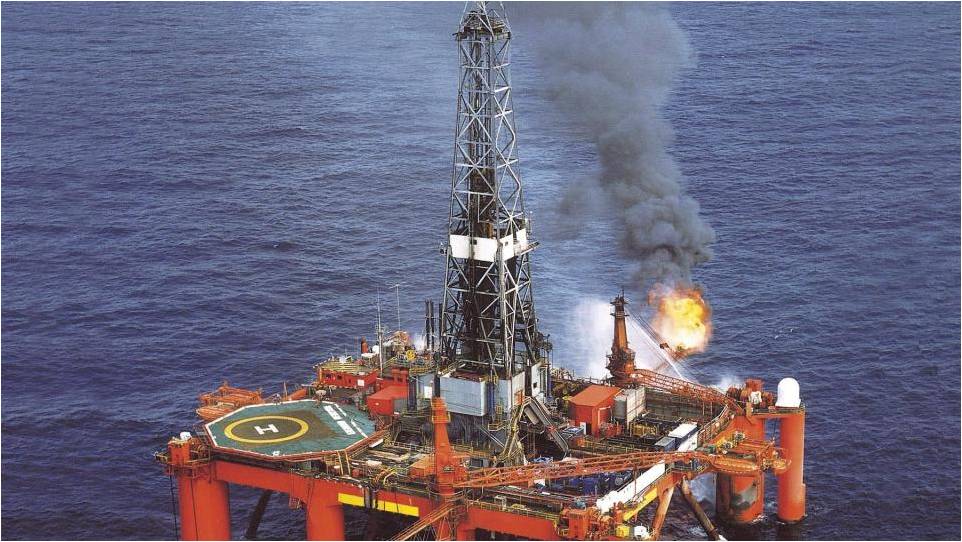
According to our 15 May post, Venezuela established a special commission to investigate the sinking of the Aban Pearl, a semi-submersible rig that sank on 13 May 2010. In the subsequent 3 months, we have not seen any updates on that commission or the status of the investigation.
BOE will also be tracking any reports on the recent crane failure and apparent fatality on the Jack Ryan, and the Bayou St. Denis blowout. Let us know if there are other major offshore accidents that we should be tracking. With regard to the Jack Ryan, a description of the tragic crane accident is posted in a thread on the Oil Rig Photos site (see the 3 August post).
Deep Water is Not the Problem
Posted in accidents, well control incidents, tagged accidents, Australia, blowouts, BOE, Deepwater Horizon, drilling, Gulf of Mexico, macondo, Montara, offshore oil, oil spill, relief well, safety, well control, well integrity test on July 27, 2010| 1 Comment »
In the Gulf of Mexico, deepwater drilling is more risky because that is where the high-rate wells are, not because the water is deep.
- Water depth had little to do with the well integrity problems at Macondo. Similar errors in planning and execution would have yielded similar results in any water depth or on land. Has Montara already been forgotten?
- Subsea BOP stacks have a much better performance record than the surface stacks used in shallow water drilling (more on this later in the week).
- Historical data indicate that blowouts occur less frequently in deep water, not more frequently (more to follow).
- Obviously, blowouts involving high-rate wells are likely to do more damage. This applies regardless of the water depth. You can reduce the spill risk by prohibiting drilling in the areas with the highest production potential, but that wouldn’t be very sound energy policy and you won’t find many buyers for the leases.
- It is safer to conduct intervention and capping operations on subsea wells. Regulators would not even allow surface capping to be considered at Montara because of the high risk to workers. The subsurface ROV work is perhaps the biggest Macondo success story.
- If the Macondo well was in shallow water (with the wellhead above the water surface), and well integrity concerns precluded a risky surface capping operation, how would the flow have been contained and collected?
- Other things being equal, the environmental risk is less at deepwater locations which tend to be farther from shore.
Water depth is just one well planning consideration. Abnormal pressures and temperatures, shallow gas, hydrogen sulfide, ice, permafrost, storms, currents, extended reach targets, and horizontal completions are some of the others. To prevent another Macondo, in the US or anywhere else in the world, we need to focus our attention on the 3 categories of issues listed below. These issues are important in all water depths and in all environments.
- Well integrity including design, construction, barriers, verification, and monitoring.
- BOPE performance and reliability under all conditions.
- Capping, containing, and collecting oil in the event of a blowout.
Thank you Admiral Allen
Posted in accidents, Uncategorized, well control incidents, tagged accidents, admiral allen, blowouts, BOE, Deepwater Horizon, drilling, Gulf of Mexico, macondo, offshore oil, safety, well control on July 9, 2010| Leave a Comment »
Regarding the relief wells, Development Driller III, which is the lead drilling rig for the relief wells is now at 17,780 feet measured depth, within a couple hundred feet of the proposed penetration point of the wellbore.
Admiral Allen: Thank you for reading BOE and responding to our request. You even specified “measured depth!”
Relief Well Team: Great work! Time to finish the job!
More Montara and Macondo
Posted in accidents, well control incidents, tagged 76, Australia, blowouts, BOE, Deepwater Royalty Relief Act, macondo, Montara, offshore oil on June 28, 2010| Leave a Comment »
-The duration of the Montara blowout was 75 Days. Ironically, Day 76 of the Macondo blowout will be the 4th of July.
-Eleven days have elapsed since the Montara Report was presented to Minister Ferguson, who has apparently retained his cabinet position in the new government. Now that the cabinet has been settled, perhaps there will be more public clamor for the report?
-Cap Summit in DC? – According to Admiral Allen, government and industry experts will convene on Wednesday to decide whether to change the collection cap. Other designs would provide a better seal and facilitate higher recovery rates via free-standing risers, but the well would flow unabated during the changeover.
-More Macondo irony: Since the oil spilled is “avoidably lost,” royalties will presumably be due on both the oil spilled and the oil “produced” at Macondo. However, for fields in water depths greater than 800m, the Deepwater Royalty Relief Act of 1995 exempts the first 87.5 million barrels of oil equivalent from Federal royalties. Court interpretations of this poorly written legislation have determined that this relief must be applied on a lease (not field) basis, making the royalty exemption much more generous. Ironically, Kerr McGee (now part of Macondo partner Anadarko) filed the law suit that resulted in this favorable decision for industry. MMS, which has been repeatedly (and incorrectly) denounced for being “too cozy with industry,” fought hard for the less generous interpretation.
Major Honor for BOE – New Agency Named In Our Honor
Posted in Uncategorized, tagged BOE on June 24, 2010| 1 Comment »
As some of you know, my wife wouldn’t let me name our wonderful daughter Elmer IV (or even Elmira!). This disappointment has now been completely forgotten thanks to the stunning announcement that the Department of the Interior’s newest bureau has been named after our modest blog. Congratulations have been pouring into BOE headquarters from around the world.
We don’t know how the Bureau of Ocean Energy Management, Regulation and Enforcement got shortened to BOE. Have Management, Regulation, and Enforcement already lost status? Nonetheless, BOE Senior is flattered by the endorsement and welcomes its namesake (BOE Junior?) to the BOE family 🙂
Interesting Comments from Admiral Allen
Posted in accidents, well control incidents, tagged accidents, blowouts, BOE, Deepwater Horizon, drilling, Gulf of Mexico, macondo, offshore oil, oil spill, safety, well control on June 23, 2010| Leave a Comment »
I believe they’re going to try and intercept somewhere around between 16,700 and 17,000 feet. We will confirm that for you and put out a statement tomorrow.
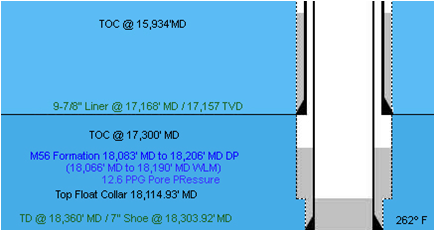
Comment: I pasted that portion of the well cross-section above. It looks like the plan is to drill into the 7″ x 9 7/8″ annulus (the most likely flow path) and secure that annulus. Based on the float and casing shoe issues that have been reported, the flow could also be inside the 7″ production casing or both inside the casing and in the annulus. (Also, sealing the annulus could force flow through possible shoe channels inside the production casing). They will presumably have to drill through the 7″ casing (after the annulus has been secured?) and set a cement plug inside the casing.
They decided not to use the blowout preventer because of the uncertainty regarding the status of the wellbore and what pressure might do going down. That’s the reason they abandoned the Top Kill and the capping exercise at that point.
Comment: Admiral Allen confirms reports that the second BOP option was dropped because of downhole issues. Poor well integrity sure makes things difficult. Concerns have been raised about the strength of the 16″ casing, and possible fracture paths outside casing. If the ROV had been able to actuate the BOP and seal the well, would casing failure and formation fracturing have occurred; or are subsequent events (erosion?) the primary reason for these well integrity concerns?
Secretary Salazar and Secretary Chu had a meeting last week in Washington with other industry representatives beyond BP, other oil-producing companies that are out there, and we’ve actually identified a couple of platforms that are in the area that might be capable of taking the product coming out of the wellbore through pipelines and either producing it or putting it back down into the reservoir. We’re exploring that over the next couple of days.
Comment: Yikes!
Unintended Consequences
Posted in accidents, well control incidents, tagged accidents, blowouts, BOE, drilling, Gulf of Mexico, macondo, offshore oil, oil spill, safety, well control on June 22, 2010| 1 Comment »

OMNI-MAX Anchor
Pasted below is a note from Evan Zimmerman that I am posting with his approval. As many of you know, MODU station-keeping has historically been a major problem during hurricanes. For the past 5 years, industry and government leaders have worked hard to improve hurricane and deepwater mooring capabilities. Evan has been a key participant in this effort. His company developed advanced anchors (see above picture) and mooring lines, and new risk assessment tools for assessing mooring system failure probabilities and their consequences. The Gulf of Mexico will not be a safer place if deepwater technology leaders like Delmar are forced to close or move their equipment and personnel overseas.
The moratorium on drilling has put more than 70% of all that risk reducing mooring equipment on its way to the beach without contracts. For a company like Delmar that derives more than 95% of its income from deepwater OCS drilling activity, its clear that we will have to immediately start shipping equipment outside of the US to find work. Its my expert opinion that without a doubt, the offshore station keeping safety options will be reduced once drilling activities resume. Its also clear the longer the moratorium continues, the fewer moored rigs will be left to drill not only the intermediate water depth areas the DP rigs cannot, but also the ultra deepwater wells they have been so busy drilling safely. The longer this moratorium continues, the higher the station keeping risks for both DP and moored rigs the MMS will have to approve to keep the few rigs left in the Gulf working. It’s the single biggest disappointment in my career to see all the hard work that MMS, Delmar and industry have done to increase station keeping safety quickly slip between our fingers here domestically. I leave overseas again week after next to try to secure work for half (two sets) of OMNI-Max anchors as well as most of our other risk reducing equipment that now is no longer on contract due to the moratorium.
We are the last US owned deepwater anchor handling company that has brought the safest and most technically advantageous equipment to the mooring industry, and it looks like we will have to drastically change inclusive of cutting jobs domestically and moving outside of the US.
BOE on CNN
Posted in Interviews, Uncategorized, tagged BOE, CNN on April 23, 2010| Leave a Comment »
 Bud's Offshore Energy (BOE)