Feeds:
Posts
Comments

Posts Tagged ‘accidents’

I awoke to an email message from Odd Finnestad linking the BP announcement.  It’s only fitting that Odd delivered the news. He and I have been following Montara and Macondo on a daily basis since August 21, 2009, the day the Montara well blew out in the Timor Sea.  A few thoughts:

  • The real end date for the blowout was July 15th, when the containment cap shut-in the well.  It was an uncertain ending with the capping described as a temporary integrity test and talk about re-opening well vents. Fortunately, good judgement and common sense prevailed, and the well remained shut-in.
  • The efforts to prevent recurrence can now proceed with fewer distractions. It’s difficult to calmly address the issues while video images of oil gushing into the Gulf are being broadcast worldwide.
  • We need to do more than react to Macondo, and every offshore operator and contractor needs to be involved. Only 20% of Gulf of Mexico operators attended a critical industry-government hurricane conference after Katrina and Rita.  (No, I’m not going to stop ranting about this!)
  • Industry needs to look at EVERY aspect of offshore operations, not just the drilling issues associated with Macondo.  Fixing what happened at Macondo doesn’t prevent production, pipeline, and other types of drilling disasters.  Helicopter safety, lifting operations, and workplace safety issues also need to be further addressed.
  • This is a major effort and everyone needs to participate.  If you aren’t committed to improving overall safety performance, in the US and worldwide, you shouldn’t be in the business.
Read Full Post »

Upstream reports that a worker is missing from Transocean’s Jack Ryan drillship which is working in the Akpo field offshore Nigeria. Two other workers were recovered from the water.  The accident occurred on Saturday, but neither TO nor the Nigerian Petroleum Corporation are providing any details.  Hopefully, more information will be forthcoming in the near future.

Read Full Post »

Those are the latest official numbers provided by the Unified Command’s Scientific Teams. Once again, no assumptions or calculations are provided. Why? What was the range of estimates for the different methods (videos analyses, reservoir modeling, acoustics, and extrapolations based on recovery volumes)? Show us the data!

Read Full Post »

End game mysteries?:  As BP prepares for the static kill operation, the well’s flow path is still not clear.   While the consensus seems to be that the flow originates in the annulus outside the production casing, irregularities during the cementing and testing of that casing suggest the possibility of flow inside the casing.  The condition of the well bore and casing strings is also uncertain. Perhaps of greatest importance will be the inspection of the BOPE after the well is plugged and the stack is pulled.  This inspection process should be closely supervised by the regulators.

Press conference etiquette?: After admitting that they joined yesterday’s Unified Command press briefing late, two reporters asked questions that had been answered earlier.  Perhaps they think their time is more important than Admiral Allen’s, or that of the other attendees, viewers, and listeners.  One of these questioners asked when the static kill operation would begin.  Admiral Allen, who answered the question politely and patiently, should have asked when it would be most convenient for the reporter. Surely, the Unified Command would want to accommodate the reporter’s busy schedule. 😉

Dispersants: As has been demonstrated at oil spill workshops and conferences for the past 30 years, you can always stir up passions by questioning the use of dispersants.  Dispersants, unlike burning and skimmers, don’t remove oil from the water (at least not directly).  The On-Scene Commander (OSC) must consider the tradeoffs and make the decisions that he or she thinks will minimize the net impact of the spill.  Given the magnitude of location of the Macondo spill, I think the OSCs made the correct calls.  Dispersants were also used (not without controversy of course) in responding to last year’s Montara blowout in the Timor Sea.

Read Full Post »

AP Photo/Patrick Semansky

From NOLA.com:

CEDYCO Inc. of Houston owns the wellhead, but the company declared it “orphaned” under the Louisiana Department of Natural Resources “orphaned well” program in 2008.
That program allows companies to abdicate some responsibility for the well and gives the state permission to plug it and prepare the site for redevelopment.

Comments:

  1. Lots of explaining to do on this one.  What barriers were in place in the well bore?
  2. How can you “orphan” a well that hasn’t been temporarily abandoned or equipped with downhole plugs, especially in an area with vessel traffic?
  3. No “deep pockets” responsible party on this one.  Cleanup costs will be paid from the Oil Spill Liability Trust Fund.  Good luck collecting damage costs.
  4. Bad practices yield bad results, regardless of location or water depth.

Read Full Post »

Fighting Deepwater Horizon Fire

This question is receiving a lot of attention since the topic was discussed at the Department of the Interior – Coast Guard investigation.

To the best of my knowledge, this concern was first raised by a one of our very smart and experienced contributors, Dr. Malcolm Sharples, who did not wish to be identified at the time.  Malcolm is now comfortable being identified, and I thought I would draw attention to his insightful comment.  See item 3 in this 30 April post.

Read Full Post »

In the Gulf of Mexico, deepwater drilling is more risky because that is where the high-rate wells are, not because the water is deep.
  • Water depth had little to do with the well integrity problems at Macondo. Similar errors in planning and execution would have yielded similar results in any water depth or on land.  Has Montara already been forgotten?
  • Subsea BOP stacks have a much better performance record than the surface stacks used in shallow water drilling (more on this later in the week).
  • Historical data indicate that blowouts occur less frequently in deep water, not more frequently (more to follow).
  • Obviously, blowouts involving high-rate wells are likely to do more damage.   This applies regardless of the water depth.   You can reduce the spill risk by prohibiting drilling in the areas with the highest production potential, but that wouldn’t be very sound energy policy and you won’t find many buyers for the leases.
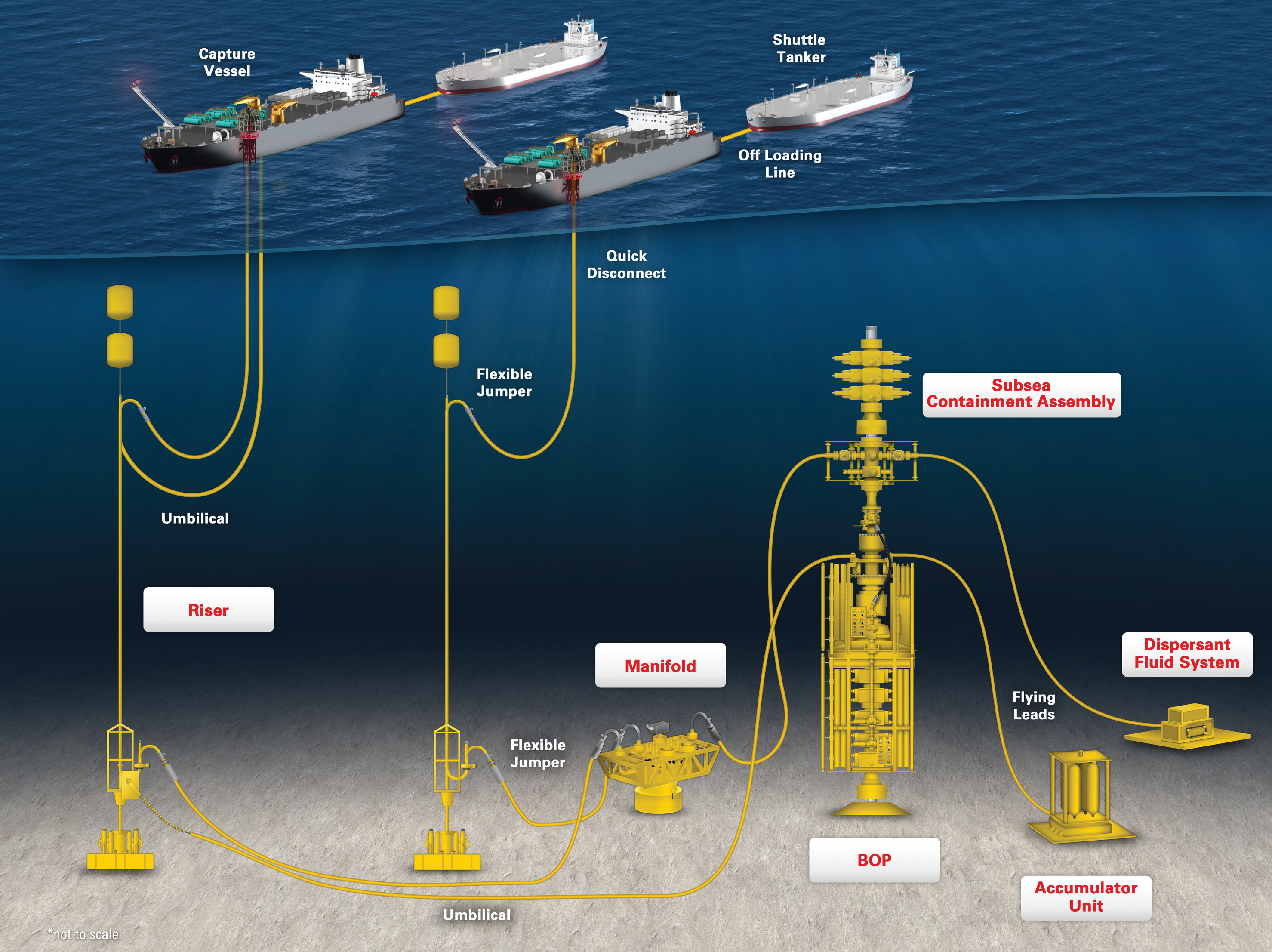
  • It is safer to conduct intervention and capping operations on subsea wells.  Regulators would not even allow surface capping to be considered at Montara because of the high risk to workers.  The subsurface ROV work is perhaps the biggest Macondo success story.
  • If the Macondo well was in shallow water (with the wellhead above the water surface), and well integrity concerns precluded a risky surface capping operation, how would the flow have been contained and collected?
  • Other things being equal, the environmental risk is less at deepwater locations which tend to be farther from shore.

Water depth is just one well planning consideration.  Abnormal pressures and temperatures, shallow gas, hydrogen sulfide, ice, permafrost, storms, currents, extended reach targets, and horizontal completions are some of the others.  To prevent another Macondo, in the US or anywhere else in the world, we need to focus our attention on the 3 categories of issues listed below.  These issues are important in all water depths and in all environments.

  1. Well integrity including design, construction, barriers, verification, and monitoring.
  2. BOPE performance and reliability under all conditions.
  3. Capping, containing, and collecting oil in the event of a blowout.

Read Full Post »

Energy Training and Resources Macondo Well Diagram

A former colleague sent me a link to this comprehensive ETR report on Macondo.  The report provides a good primer on drilling and the issues associated with the blowout. Nicely done!

Read Full Post »

Click on photo to enlarge.  MWCC information sheet.

Read Full Post »

Platts has an interesting report on yesterday’s hearing:

Guide said the decision to use a long string of casing instead of a liner
was made because it provided better long-term well bore integrity, not because a liner would have cost an additional $7 million to $10 million. He said the liner would have added only one additional barrier in the well.
  John Guide, BP’s Well Team Leader 

Comment:  One additional barrier is very significant when you only have 2 others and there are issues with the primary barrier (production casing cement).

Jason Mathews, a BOEM panel member, asked Guide if he knew that in the past year, Schlumberger had been brought to rigs 74 times for cement bond logs, and only three times they had been sent away without doing the logs; in two instances BP, sent the crews away.

Comment: Interesting statistic; good research by Jason and the BOEMRE team.

Read Full Post »

« Newer Posts - Older Posts »