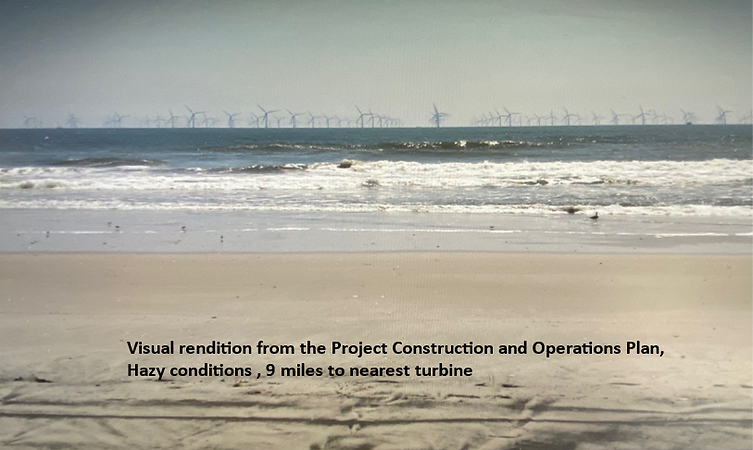
As a boy, my grandfather owned a home “down the shore” on Long Beach Island (LBI). From the beach, all we saw were swimmers, surf fishers, porpoises, and an occasional vessel on the horizon. The offshore wind industrialization will change the island dramatically.
Attached is the release announcing Save LBI’s intent to sue. Their issues are summarized below:
Constructing and operating hundreds of wind turbines directly in a prime migration path for the critically endangered North Atlantic right whale.
Operational noise from the larger and noisier turbines Atlantic Shores plans to build.
Cumulative impact of the East Coast wind-turbine projects on the right whale’s migration.
Interference with other uses of the ocean including fishing and national security.
No plan or capability, technically or monetarily, to remove turbines and other facilities at the end of their useful life, upon their failure during normal operation, or in the aftermath of a hurricane or other extreme storm event.
Failure to account for structural failures such as the Vineyard Wind turbine blade incident, the damage from such failures to the ocean and beaches, and how that damage will be remediated.
Excessive electric bill increases under the State’s Offshore Wind Energy Development Act.
The Endangered Species Act issues are similar to those that the Nantucket group ACK for Whales is trying to elevate to the Supreme Court.
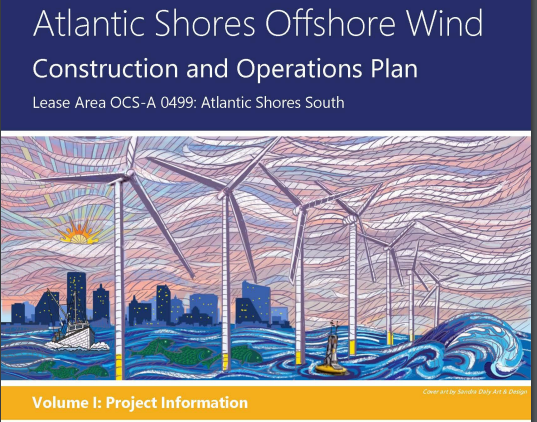
Perhaps not the best choice of graphic if you want to sell the project as being environmentally benign and compatible with other uses.
Some of us are long-time observers of North Sea operations. Others like JL Daeschler are pioneers who were involved with North Sea exploration and development from the outset. It’s sad to see what is happening to the UK offshore industry.
And for what purpose? Virtue signaling by politicians? Pandering to the international climate cartel? Shutting down North Sea production will have no measurable effect on our climate.
Now that the entire U.S. Atlantic and Pacific, and nearly all of offshore Alaska, are closed to oil and gas leasing, the goal of some is to shut down the Gulf of Mexico. That intent is clear in the 5 year leasing plan that provides for a maximum of 3 sales, the fewest of any 5 year plan in the history of the US offshore program. This is really a 5 year moratorium, not a 5 year leasing plan.
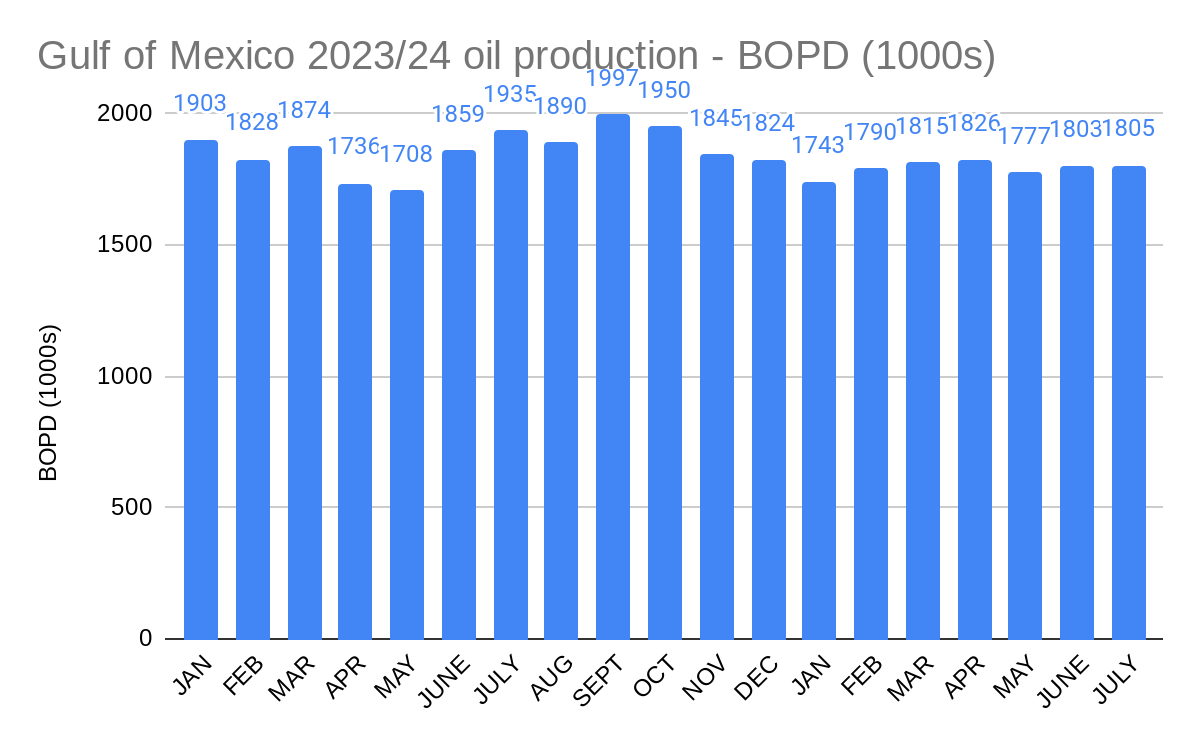
As noted in the post below, GoM production is 1.8 million bopd. BOEM’s reasonable forecast of >2 million bopd through 2027 will not be achieved because of policy decisions, not resource limitations or technical capabilities.
And shame on those who are attributing Hurricane Helene’s destruction to GHG emissions. This is uninformed opportunism at its worst.
This video shows the real cost of Ed Miliband’s plans to shut down the North Sea.
200,000 workers left stranded, billions in tax revenue lost, and clean energy investment deterred.
The stability in Gulf of Mexico oil production rates, as noted when the data for June were released, continued into July. Oil production once again remained remarkably consistent at 1.8 million bopd.
Average daily production was within 1.4% of 1.8 million bopd for each month from February to July. As previously observed, this is as stable as production has been for any 6 month period in the past 10 years.I’m not sure this observation is terribly significant, but it’s interesting nonetheless. 😀
If the streak didn’t end in August, it most certainly did in September given the shut-ins for Hurricanes Francine and Helene.
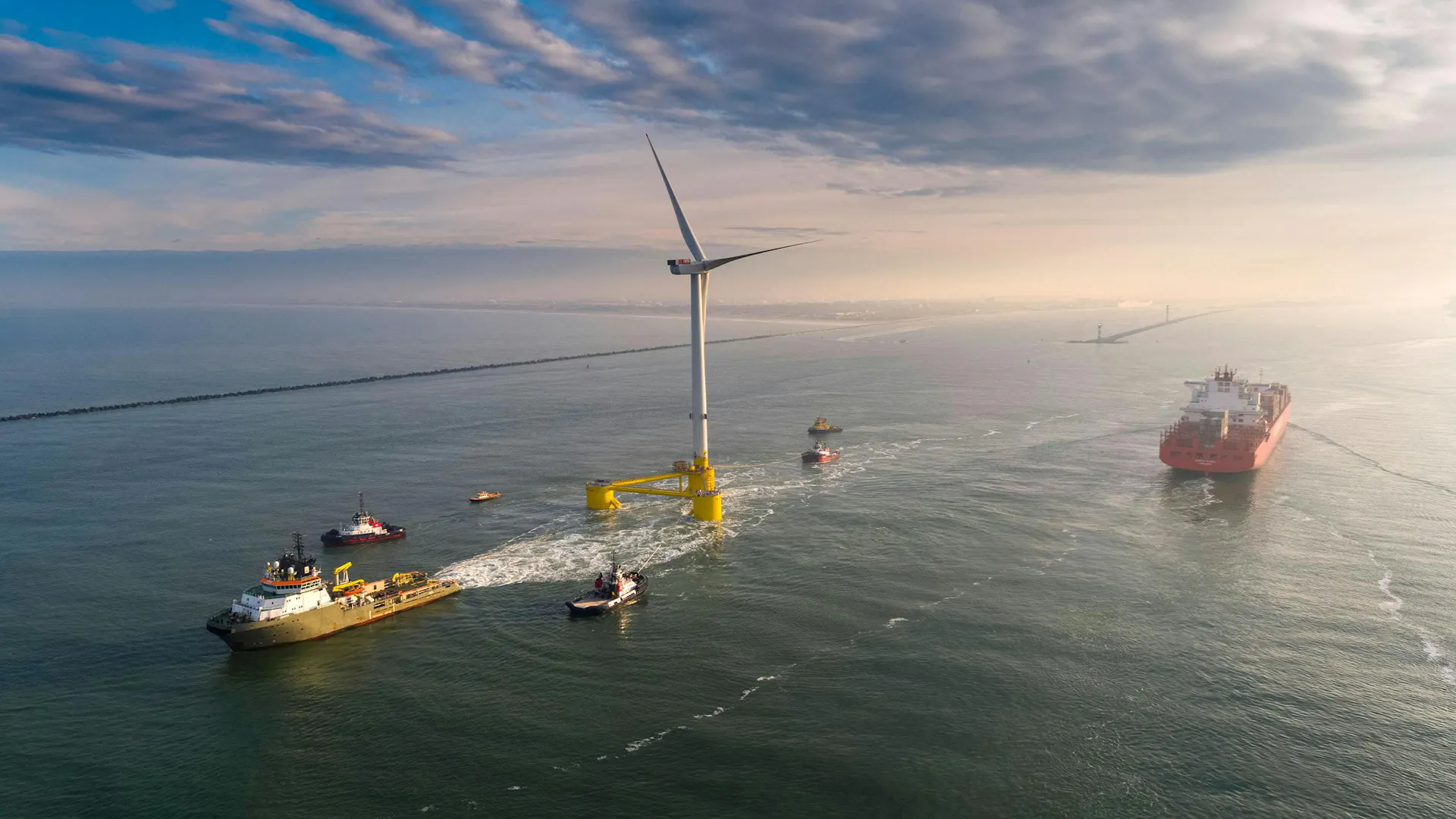
floating turbine being positioned in Kincardine wind farm
The 50 MW Kincardine Offshore Windfarm, which is billed as the “world’s largest floating wind farm,” experienced a £30 million loss in 2023 following a £18 million loss in 2022. The turbines are located 15 km off the coast of Aberdeenshire, in water depths ranging from 60 m to 80 m.
The graphic below summarizes the 2023 financial results, which were even worse than those for the prior years of operation. For those who want more detail, I have attached the 2023 audited financial statement for the wind farm. You can also view audited statements for prior years.
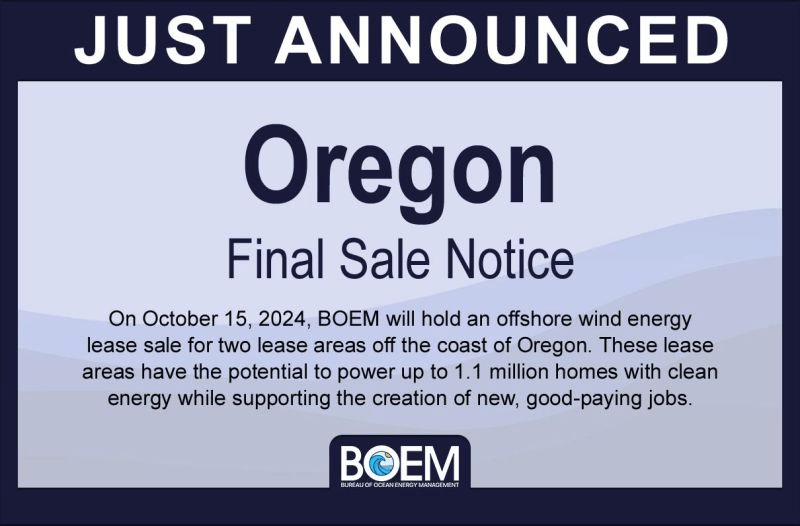
Although BOEM was forced to “postpone” the Oregon wind sale given the absence of bidders, opposition from tribes and county governments, and a last minute letter from the Governor (political cover?), California still seems to be all in on the development of the 5 deepwater wind leases in Federal waters.
It cost them 46 million quid to make 13 million quid's worth of electricity!
This text message from a close friend of my wife gives you a sense of the enormous challenges being experienced by so many in the wake of the flooding. As background, she lives in the Asheville area. Her home and car were completely destroyed. She was rescued by her brother (subject of the update below), who lived an hour away.
“Thank you. I am at ER. My brother began getting chest pains. Emt came and carted him out on a stretcher. Changed from emergency vehicle to ambulance a few miles down the road. He hasn’t even got here yet. I’ll be called when he is checked in. Fireman drove me here in his truck. Ushered me through the hospital p-lot maze then the long winding path to ER. Thanx for letting the others know. The hospital has a good signal. Even a few blinking traffic lights. The area where I live is devastated. We evacuated to the upper hills where the folks living there took us in. We were completely stranded 2 days until the younger, stronger people devised a path and bushwhacked a way out for cars already on the hill the first car got out this morning. More later…love and thanks to all.♥♥♥“
The Nantucket non-profit ACK for Whales (ACK is the FAA abbreviation for Nantucket Airport) has petitioned the Supreme Court to review the 1st Circuit’s ruling on the Vineyard Wind project. Per the Supreme Court filing (full document attached):
Despite the agencies’ explicit statutory duty to consider all “best information available,” regarding the impacts its actions might have on an endangered or threatened species and those habitats, the National Marine Fisheries Service (NMFS) and the Bureau of Ocean Energy Management (BOEM), did not consider the cumulative impacts of other planned projects when they authorized and issued permits to construct the Vineyard Wind 1 Project.
Will the Supreme Court accept the case?
“Hail Mary:” Per the Nantucket Current, the odds that the Supreme Court justices will accept the case are exceedingly slim. Of the 7,000 cases that the Supreme Court is asked to review each year, only 100 to 150 of them – about 2 percent – are accepted.
“Really good chance:” Per Val Oliver, ACK for Whales founding director, “In light of the recent Chevron decision, we think we have a really good chance. That was about government overreach and that is what this (Vineyard Wind) has felt like since the beginning: go, go, go, and we’ll figure it out as we go. That’s just not responsible.“
Regardless of the outcome of this case, there is a profound inconsistency in the administration of the Endangered Species Act as evidenced by our comparison of the operating restrictions for the Right whale (Atlantic wind) and Rice’s whale (Gulf of Mexico oil and gas). Note that the more onerous Rice’s whale restrictions were removed by court order.
Just when the media seemed to be settling on rogue Ukrainians in a rented yacht being responsible for the sabotage of the Nord Stream pipelines, comments by a Danish harbor master have muddied the waters.
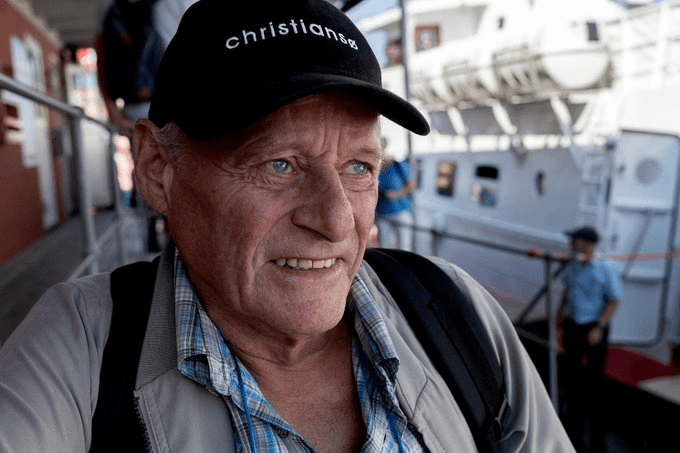
On the second anniversary of the Nord Stream pipeline sabotage, the Danish publication Politiken posted comments from John Anker Nielsen, harbor master on Christiansø, the small Danish Island near the explosion sites.
“For the first few days, the harbor master said he was “not allowed to say a thing”. But today, John Anker Nielsen can reveal that four or five days before the Nord Stream blasts, he was out with the rescue service on Christiansø because there were some ships with switched-off radios. They turned out to be American naval vessels, and when the rescue service approached, they were told by Naval Command to turn back.Therefore, the harbor master has some faith in the theory that American star journalist Seymour Hersh, among others, has put forward without any documentation: that the US was behind the sabotage. The Americans have these small unmanned submarines that can solve any task, John Anker Nielsen has been told.”
Erik commented further:
The harbor master isn’t making this up. He wasn’t alone on the rescue vessel ordered to stay clear of the American warships.
Update: BSEE reports that as of 9/29/2024, essentially all production had been restored.
As of 9/28, 210,000 BOPD remained shut-in with only 4 platforms still evacuated. Presumably, production had not resumed (or had only partially resumed) on some high rate deepwater platforms.
BSEE shut-in, evacuation, and relocation data in the table below are as of 12:30 p.m. ET on the specified date.
“I am disappointed that BOEM’s accelerated process over the last year has further divided stakeholder communities, and put the Confederated Tribes of the Coos, Lower Umpqua and Siuslaw Indians in the position of challenging BOEM in federal district court. Oregon’s legislative Coastal Caucus is likewise now in full opposition to BOEM’s proposed lease.“
Despite the usual hype about the number of homes that could be powered and “good-paying jobs,” the upcoming Oregon wind lease appears to be very much in doubt. If legal action by Oregon tribes doesn’t halt or delay the sale, the absence of bidders may.
OregonLive reports that only one company, NewSun Energy, continues to be interested in participating in the sale. NewSun is primarily a solar energy developer with no apparent offshore wind experience.

 Bud's Offshore Energy (BOE)