September 21, 2010 by offshoreenergy

Max Ruelokke
As a precaution in advance of Hurricane Igor, all personnel were removed from two Transocean rigs operating offshore Newfoundland. The rigs are the GSF Grand Banks and the Henry Goodrich. Igor headed for Newfoundland after battering Bermuda yesterday.
Max Ruelokke, Chairman and CEO of the Canada-Newfoundland and Labrador Offshore Petroleum Board, told BOE that this is the first time he can recall a Grand Bank’s rig being down-manned to zero in advance of a storm. Personnel are expected to return to both rigs tomorrow.
Posted in Uncategorized | Tagged Grand Banks, Igor, Newfoundland, Ruelokke, transocean | Leave a Comment »
September 20, 2010 by offshoreenergy
Why is action needed?
- Accidents happen for a reason; they are not mere matters of chance. By better understanding their causes, we can prevent their recurrence.
- International data on accidents at offshore oil and gas facilities are incomplete and inconsistent.
- Some governments release little or no information about accidents within their jurisdiction, and may not even confirm that investigations are being conducted.
- Some companies provide little or no information about their accidents.
- Prosecutions, legal actions, and domestic politics impede investigations and delay or prevent a complete understanding of how accidents happened.
What should be done? Governments should support an international treaty to improve data gathering and analyses and help prevent future disasters at offshore facilities. Here are some suggested provisions for such a treaty:
- Nations agree on accident reporting criteria, definitions, and information collection procedures.
- Nations agree to investigate any accidents within their jurisdiction that exceed specified casualty, pollution, or damage thresholds.
- Nations agree to release investigative reports within specified time frames.
- Nations agree to assist each other with investigations.
- Nations agree to delay prosecutions and enforcement actions until the official accident investigations are completed.
We have been talking about accident investigation and information shortcomings for decades. It is time to do something!
Posted in accidents | Tagged accidents, international treaty | 1 Comment »
September 19, 2010 by offshoreenergy
Now that Admrial Allen has officially confirmed that the dead Macondo well is in fact dead, what is the legacy of the relief well?
- The relief well was Macondo’s opposite – a technological marvel that was flawlessly planned and precisely drilled without incident.
- The relief well verified new sensing and ranging tools for locating a well.
- The relief well contributed to the “burial” of Macondo by further cementing and pressure testing the annulus
- Perhaps most importantly, the relief well provided further confirmation that Macondo flowed inside the production casing and not in the annulus surrounding that casing. Was this an unstated BP objective in supporting the decision to complete the intercept operation? Remember that after the top kill cementing operation killed the well, BP requested that the Unified Command “consider foregoing the relief well.” This was an appropriate request since the annulus could have been secured through conventional plugging and abandonment practices. Whether or not BP changed positions on the intercept, the completion of that operation seems to have helped the BP legal defense. Misinterpreting negative pressure tests, missing signs of flow, and mis-routing that flow would seem to be more defensible than improperly designing the well, ignoring centralizer recommendations, and foregoing the cement bond log.
Posted in accidents, well control incidents | Tagged accidents, blowouts, Deepwater Horizon, Gulf of Mexico, macondo, offshore oil, oil spill, relief well, safety, well control | 1 Comment »
September 19, 2010 by offshoreenergy
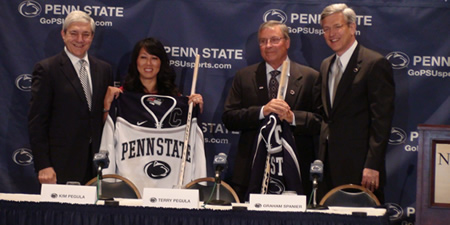
Kim and Terry Pegula flanked by PSU President Graham Spanier and Athletic Director Tim Curley
Penn State, often known as Happy Valley, is now also Hockey Valley, thanks to an $88 million donation to fund a new ice arena and establish NCAA Division I hockey programs for men and women. The donation was made by Terry Pegula, a Penn State petroleum and natural gas engineering graduate, and his wife Kim. The Pegulas recently sold their exploration and development company, East Resources, to Shell for a reported $4.7 billion. East Resources has extensive holdings in the Marcellus Shale, a major component of the emerging “natural gas revolution” in the US.
Although Terry and I had the same major at Penn State, he graduated two years after me and I did not know him. Nonetheless, I want to congratulate Terry for his phenomenal success and generosity. The Pegulas’ unprecedented contribution will have major recreational, economic, and social benefits for Happy Valley and all of Central Pennsylvania.

Posted in Uncategorized | Tagged East Resources, Happy Valley, Hockey Valley, ice hockey, Kim Pegula, Marcellus Shale, Penn State, Shell, Terry Pegula | Leave a Comment »
September 18, 2010 by offshoreenergy
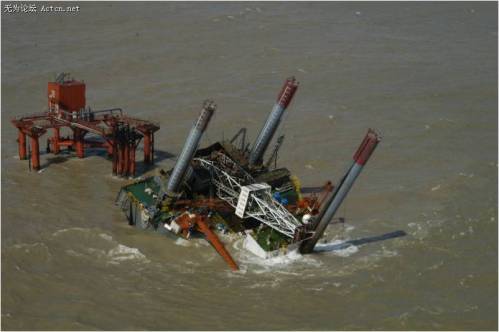
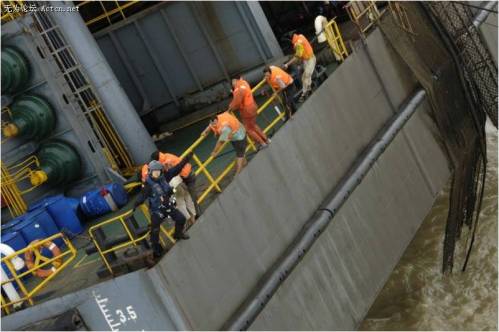
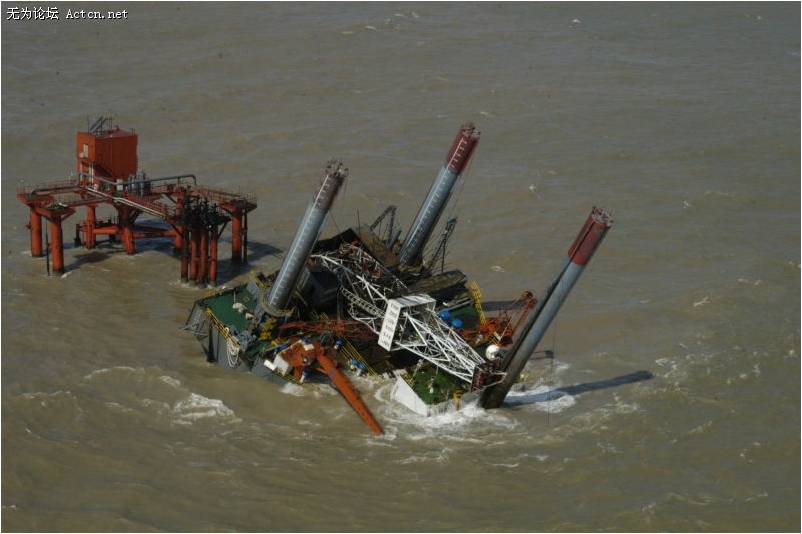
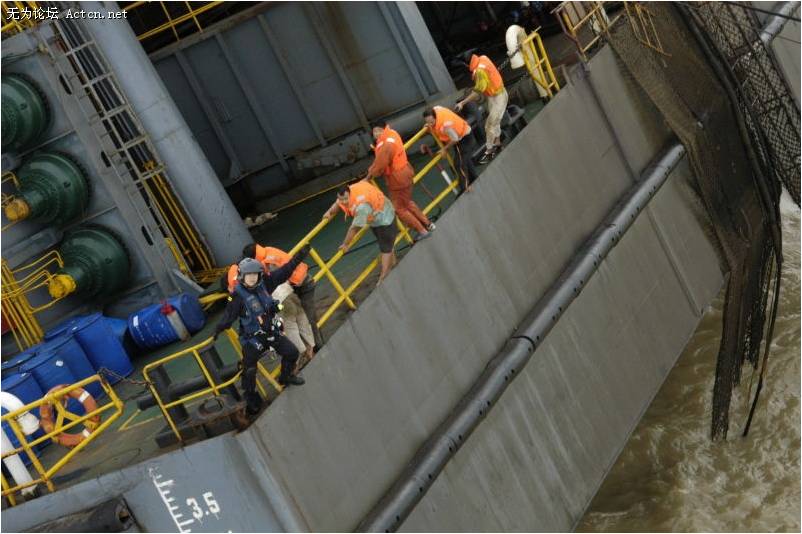
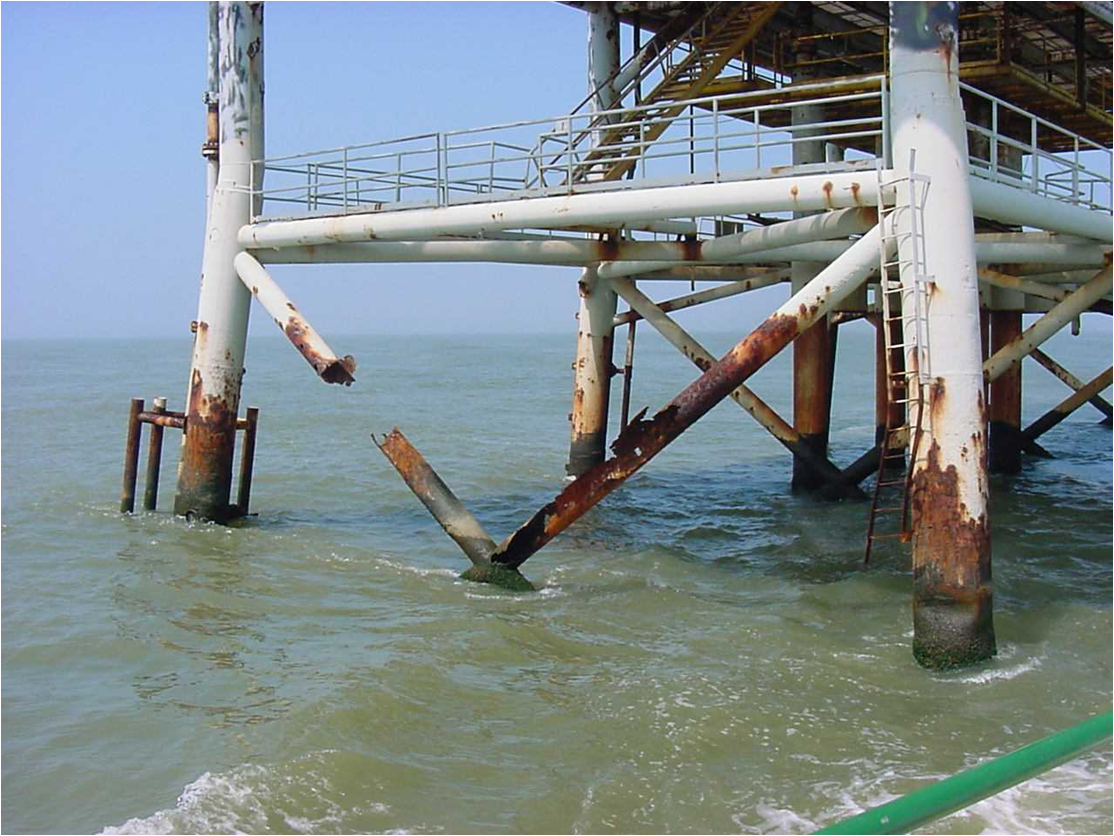
BOE received these pictures of a jackup rig failure offshore China. The rig may have been working at the well platform that is also pictured. Sinopec reported a drilling platform accident during a recent typhoon. Apparently, these are pictures of that accident. We assume that some combination of hull inundation, wind forces, and foundation failure caused the jackup to topple. Two workers were reported to be missing.
A lot of work has been done in recent years to address jackup failures during hurricanes, including this important study by Malcolm Sharples. If we have any readers in China, we encourage them to advise Sinopec about these reports. We also hope that representatives from China are able to join us at the International Regulators’ Offshore Safety Conference in Vancouver to discuss these and other important offshore safety issues.
Posted in accidents | Tagged accidents, China, jackup rig, offshore oil, Sharples, Sinopec, vancouver | Leave a Comment »
September 17, 2010 by offshoreenergy
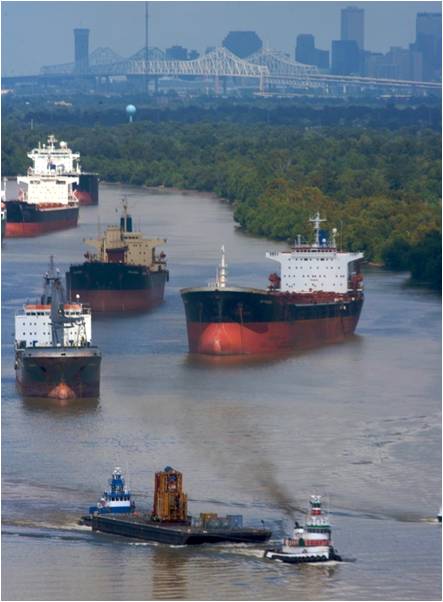
who 'dat?
The BOP stack from the Macondo well is pictured in the foreground while being transported up the Mississippi River. New Orleans is in the background.
Posted in accidents, well control incidents | Tagged BOP, macondo, Mississippi River, New Orleans | Leave a Comment »
September 17, 2010 by offshoreenergy
Admiral Allen’s statement:
I have received extensive briefings over the last 24 hours regarding the final effort to intercept the Macondo well. Through a combination of sensors embedded in the drilling equipment and sophisticated instrumentation that is capable of sensing distance to the well casing, BP engineers and the federal science team have concluded that the Development Driller III relief well has intersected the Macondo well. This determination was made based on a loss of drilling fluids that indicated communication had been established beyond the relief well, the pressure exerted against the drill bit as it came in contact with the well casing and, finally, an increase in pressure in the choke line of the Macondo well blow out preventer. While each of these indicators taken separately would not necessarily be conclusive, the aggregate data available supports the conclusion that the two wells are joined. It is also important to note that none of the measurements supported a scenario where the annulus of the well is in communication with the reservoir. Accordingly, we intend to proceed with preparation to cement the annulus and complete the bottom kill of the well. Further information will be provided as cementing procedures are completed.
Observations:
- The relief well engineering team and crew performed exceptionally despite the many distractions and interruptions. Outstanding work.
- The new ranging and sensing equipment, combined with real-time measurement-while-drilling technology, made this complex operation seem routine.
- The above report seems to confirm that the annulus had been sealed with cement above the producing reservoir. This was accomplished either when the production casing was cemented prior to the blowout or during the top-kill operation, presumably the former.
- There was no report of oil in the mud returns or other evidence of of oil in the annulus surrounding the production casing. If no oil was encountered in the annulus, this would seem to confirm BP’s conclusion that the well flowed inside the production casing.
- Flow was stopped by the capping stack on July 15, and the Macondo well was killed when mud and cement were injected during the top-kill operation. Since the well was already dead, the cementing of the annulus that will follow is actually part of the plugging and abandonment operation. While the annulus could have been secured through more conventional plugging procedures, this does not detract from the relief well team’s extraordinary achievement.
Posted in accidents, well control incidents | Tagged accidents, blowouts, Deepwater Horizon, drilling, Gulf of Mexico, macondo, offshore oil, relief well, safety, well control | Leave a Comment »
September 16, 2010 by offshoreenergy
If you haven’t heard BP executives answer the same questions (long string, centralizers, cement bond log, BOP failure, etc, etc) often enough during appearances before Congress, you can watch a UK House of Commons committee ask them to Tony Hayward and Mark Bly on cspan’s recording of yesterday’s hearing. This excellent legislative teamwork is further evidence of that special relationship between the US and UK.
I do wish that both government’s would show more interest in some of the lower profile incidents that also have major international significance. Perhaps they can coax Venezuela to release information about the Aban Pearl sinking. Even though I follow Hugo Chavez’s tweets :), I’ve learned nothing of significance about that accident.
In light of yesterday’s post about negative pressure testing, I was interested in this comment by Tony Hayward at the Common’s hearing:
We clearly have taken a lot of action to clarify and provided much greater rigor around the assessment of the negative pressure test.
Can BP tell us more?
Posted in accidents | Tagged accidents, bly, bp, Commons, Gulf of Mexico, Jack Ryan, macondo, offshore oil, oil spill, safety, Tony Hayward, UK, well control | Leave a Comment »
September 16, 2010 by offshoreenergy
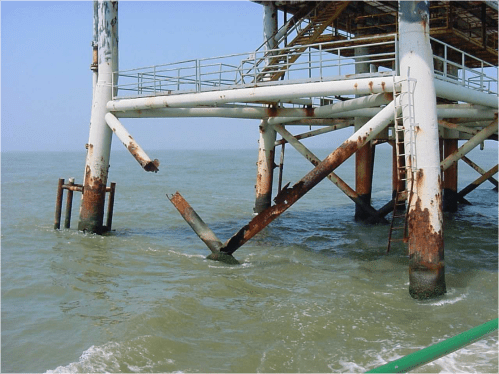
The Bureau of Ocean Energy Management, Regulation, and Enforcement (BOEMRE) has issued a Notice to Lessees and Operators (NTL) that specifies deadlines and other requirements for plugging and abandoning non-producing wells and removing platforms that no longer have utility. In my view, this regulatory action is necessary, appropriate, and consistent with authority provided in the Subpart Q (for quit :)) Decommissioning regulations. Post-hurricane experiences have demonstrated the enormous costs, operational challenges, and safety and environmental risks associated with plugging damaged wells and removing toppled platforms.
Posted in accidents, Offshore Energy - General, Regulation | Tagged abandonment, BOEMRE, decommissioning, Gulf of Mexico, idle iron, safety | 1 Comment »
September 15, 2010 by offshoreenergy
Despite the vast differences in location and water depth, both the Montara and Macondo blowouts would have been prevented if negative pressure tests had been properly conducted and interpreted after the production casing had been set.
A negative pressure test simulates an underbalanced condition in which the formation pressure exceeds the pressure exerted by the fluid column. The purpose of the test is to determine if there are leaks in the casing shoe track, casing, or seal assembly. At Macondo, the test was conducted and the evidence of inflow is quite clear. Unfortunately, that evidence was misinterpreted. See slides 14-17 in the linked presentation.
At Montara, the testimony suggests that a negative pressure test was not properly conducted. PTTEP therefore had a false sense of security regarding the integrity of the casing shoe. See page 9 of this transcript.
Both wells subsequently flowed through the shoe track and inside production casing for a combined duration exceeding 5 months.
There are currently no industry standards for conducting and interpreting negative pressure tests.
Posted in accidents, well control incidents | Tagged accidents, Australia, blowouts, Deepwater Horizon, drilling, Gulf of Mexico, macondo, Montara, negative pressure test, offshore oil, oil spill, safety, standards, well control | Leave a Comment »
« Newer Posts - Older Posts »