We need real teamwork! Have a nice weekend!

This post merits home page attention before being moved to its rightful location on the Way Offshore page.
Posted in Uncategorized on January 27, 2011| 1 Comment »
We need real teamwork! Have a nice weekend!
This post merits home page attention before being moved to its rightful location on the Way Offshore page.
Posted in Uncategorized, tagged accidents, Deepwater Horizon, offshore oil, President Obama, safety, salmon, Senate Energy and Natural Resources, State of the Union on January 26, 2011| Leave a Comment »
From the State of the Union address:
The Interior Department is in charge of salmon while they’re in fresh water, but the Commerce Department handles them when they’re in saltwater. I hear it gets even more complicated once they’re smoked. President Obama
While this comment drew laughs from the audience, the regulation of salmon is rather straightforward compared to the extraordinarily complex regulatory regime for offshore facilities and pipelines. The first and most important recommendation in my testimony before the Senate Energy and Natural Resources Committee last May was as follows:
Streamline the OCS regulatory regime to minimize the potential for gaps, overlap, and confusion. Because of the complexity of the OCS regime, regulatory and industry personnel spend too much time resolving and coordinating administrative and procedural matters. This time would be better spent focusing on mission critical safety issues. A single agency should be responsible and accountable for safety and pollution prevention at offshore facilities, and should draw on the expertise of other agencies and organizations as necessary to achieve performance objectives.
If we are to achieve our safety, pollution prevention, efficiency, and energy production objectives, the OCS regulatory regime must be consolidated and simplified.
Posted in Uncategorized, tagged accidents, blowouts, Deepwater Horizon, drilling, Gulf of Mexico, huckster, oil spill, well control on January 21, 2011| Leave a Comment »
A Detroit Lakes, Minn., man who fabricated a story last summer that he had invented the cap that fixed the Deepwater Horizon oil spill is facing three unrelated felony theft charges.
You may recall the parade of snake oil salesmen and other hucksters who appeared on TV during the blowout. Apparently, this guy was one of them.
In July, several local news outlets, including KARE-TV and KSTP-TV, reported that Mastin had invented the cap that eventually plugged the oil spill in the Gulf of Mexico. But the Pioneer Press found that BP had not bought the device from Mastin.
Posted in Uncategorized on January 19, 2011| Leave a Comment »

Our vision on the Rigs-to-Reefs ++ page is becoming a reality (only without the rigs :)). BOE’s Cheryl Anderson sent us an update from an undisclosed location. Hmmm…..
A Florida couple is making plans to live in the first permanent undersea colony. Fox.com

Posted in Uncategorized on January 7, 2011| Leave a Comment »
Jokes about national disasters are not very funny to most of us, so I think Dave Barry’s flip comments about the blowout were ill advised. Perhaps Dave, like many others, never noticed or has forgotten that the blowout killed eleven workers. Despite the continuous coverage of oil flowing into the Gulf, this reality show wasn’t for amusement purposes.
That said, one comment in Dave’s review did make me smile. This line has been recycled for years in various forms, but always draws a reaction:
Meanwhile, Congress holds televised hearings that establish, beyond any reasonable doubt, that Congress is very upset about, and totally opposed to, large oil spills.
Posted in Norway, Offshore Energy - General, Uncategorized, tagged Norway, offshore drilling, PSA, safety on January 5, 2011| Leave a Comment »
Posted in Uncategorized, tagged BOE, Colin Leach, Malcolm Sharples, Odd Finnestad on January 4, 2011| 2 Comments »

WordPress.com added:
The Louvre Museum has 8.5 million visitors per year. This blog was viewed about 71,000 times in 2010. If it were an exhibit at The Louvre Museum, it would take 3 days for that many people to see it.
In 2010, there were 470 new posts, not bad for the first year! There were 412 pictures uploaded, taking up a total of 97mb. That’s about 1 pictures per day.
We did okay for an obscure blog that accepts no sponsorships, advertisements, or donations, and focuses on niche safety and regulatory issues. Thanks for your support.
Among the many BOE contributors, special thanks go to Odd Finnestad, Colin Leach, and Malcolm Sharples. These internationally recognized experts have voluntarily provided suggestions, data, and and informed analyses. It’s a pleasure working with them and the others who have contributed, some of whom prefer to remain anonymous.
Over the past year, I have heard from many dedicated energy professionals and safety leaders. Because of their commitment and enthusiasm, I am optimistic that we will resolve our issues and move forward in a manner that benefits the offshore industry and society.
Posted in Uncategorized, tagged Michael de Vos on January 4, 2011| Leave a Comment »

Michael de Vos
Posted in Uncategorized on January 3, 2011| Leave a Comment »
Almost 10 years ago, Brazil experience its own offshore tragedy when the P-36 floating production facility exploded and sank killing 11 workers (sadly, the same number of lives that were lost on the Deepwater Horizon). Brazil has recovered to become a world leader in deep water production and technology. Ten years from now, will the US still be mired in Macondo litigation, reforms, and access and permitting snarls; or will we once again be a leader in deep water innovation and production?
Malcolm Sharples sent 3 excellent articles which have been translated from Portugese. Links to the articles and excerpts are posted below: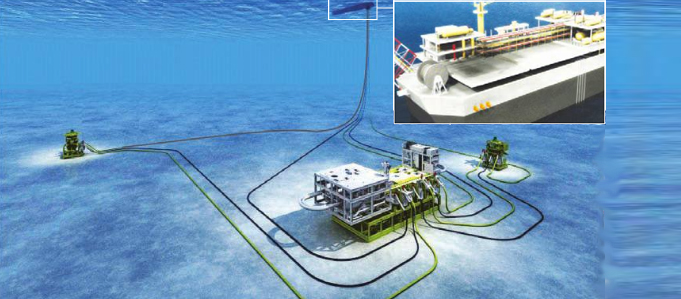
The legend of Atlantis, the Lost City, was widely portrayed in books, drawings and film in the twentieth century. In the real world in the XXI century, Petrobras is preparing to create real cities underwater, which will mark a new phase in the exploration and production of oil at great depths, in the pre-salt. On the seabed, more than 2000 meters under the surface, they will install the major equipment that now operate on the platforms, allowing them to become smaller, lighter and, most importantly, cheaper. The entire system will have a high degree of automation, with part of the operation controlled remotely.
The underwater cities of Petrobras will be inhabited by machines, equipment and giant robots tasked to inspect production systems to extract millions of barrels of oil. Sounds like science fiction, but it is one of the most important aspects of research carried out by Petrobras in partnership with universities and suppliers. “Our goal in ten years is to not depend on platforms,” said Carlos Tadeu Fraga, executive manager of Petrobras Research Center (Cenpes). Whether this is possible, only time will tell. He tells of an ambitious objective which is to put on the seabed in a horizon of ten years, the processing plants, compression systems, separation equipment (oil, gas, water and sand) and even energy generation modules needed to make everything work.
The Offshore Industry’s Silicon Valley
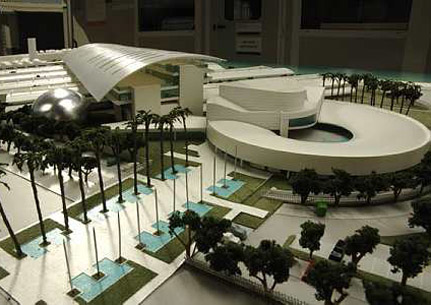
Petrobras Research Center
If California has its Silicon Valley, a region that brings together high-tech companies, Rio moves to create a Pre-Salt Valley or Valley Energy. This hub, which brings together the experts of oil, is under development in the technology park at the Federal University of Rio de Janeiro (UFRJ), in Fundão Island, where Petrobras inaugurated the new building, expanding its research center. There are technologies being studied for electromagnetic characterization of deep reservoirs, nuclear magnetic resonance and special equipment to drill the pre-salt in a safe and fast.
Brazil will be the technological center of oil and gas in the next decade. Petrobras has a contractual obligation with the National Petroleum Agency (ANP) to invest at least 1% of gross revenue of fields to pay in special participation in R & D projects.
Among the developments currently underway are two software systems: Environ, where you can view details of equipment platforms in 3D; and integrated exploration and production system (Siviep), which shows the fields and geological formations below the seabed. And both should have the first versions available for use in July 2011.
Posted in Uncategorized on December 31, 2010| Leave a Comment »

Memories of 2010 will not soon be washed away, nor should they be. These memories will help guide us into the future.
Obviously, big challenges lie ahead for the offshore oil and gas sector. Open and honest communication will be especially critical in 2011. No company or agency can resolve the issues independently, and everyone must be willing to participate.
As always, I’ll celebrate at midnight GMT, and will be fast asleep when the new year officially arrives at BOE World Headquarters :). Here’s to a successful and fulfilling 2011!


