Here is the link. I took the liberty of copying this response from the Petroleum Safety Authority Norway because it succinctly captures Charles’ collaborative spirit and so effectively characterizes his career in the offshore energy world.
We are very sorry to hear of Charles death. The international petroleum industry, and particularly the Petroleum Safety Authority of Norway are in great debt to him for his important work in establishing arenas for interactions and cooperation between regulators. Particularly the international research and development network ICRARD, but also the international regulators forum (IRF). He was a master of building such professional networks, and he always made sure that the learnings were shared with other regulators. He has for many years been regarded as a friend to the Petroleum Safety Authority Norway, previously the safety division of the Norwegian Petroleum Directorate. I got to know him as a caring and helping person when I started working for the Norwegian Petroleum Directorate. I had the pleasure to meet with him several times during OMAE conferences where he was a key member of the organizing team and regular contributor to the conference. Øyvind Tuntland and I also had the pleasure to get to know his wife, Elaine. Øyvind remembers kindly staying with Charles and Elaine at their home. We want to express our deepest condolences to Elaine and the family for their loss. We will miss him deeply as a friend, mentor and a knowledgeable colleague. Gerhard Ersdal on behalf of the Petroleum Safety Authority Norway, 13 December 2021.
I’m very sad to report the passing of a leading offshore safety researcher and long-time colleague, Dr. Charles Smith. Charles was a pioneering structural engineer who joined the US Geological Survey’s Conservation Division (then the offshore safety regulator) in ~1977 to establish the Technology Assessment and Research (TAR) Program. With the thinnest of budgets, Charles formed partnerships that addressed the gamut of offshore safety issues. Some of his accomplishments:
Working with the Offshore Technology Research Center (Texas A&M) and others, Charles sponsored projects that led to the successful investigation of deepwater production concepts including TLPs, Spars, FPSOs, and semisubmersibles. These designs are now the mainstays of deepwater development worldwide.
Organized well control projects that included the establishment of the deepwater well control research facility at Louisiana State University.
Conducted research that led to new hurricane design standards for offshore structures and topsides equipment.
Working with colleagues at Berkeley and Stanford, conducted groundbreaking research on human and organizational factors affecting offshore safety. This was the basis for important safety culture studies that followed.
Studied pipeline risks and corrosion management for structures and pipelines.
Studied decommissioning options and their comparative environmental effects.
Assessed arctic development options including gravel and ice islands and monopod concepts.
Participated on organizing committees for the International Conference on Ocean, Offshore, and Arctic Engineering (OMAE).
Along with representatives from Norway, the UK, Brazil. Canada, Mexico, Australia, and New Zealand, founded the International Committee on Regulatory Authority Research and Development (ICRARD).
Charles was the only offshore regulatory engineer to be selected as one of 10 finalists for the prestigious NSPE Federal Engineer of the Year award. (Keep in mind that the US government employs more than 130,000 engineers.) In 2009, the year of his retirement from Minerals Management Service, he was inducted into the Offshore Energy Center’s Hall of Fame (Galveston, TX) as as a Technology Pioneer for Health, Safety, and the Environment.
After retirement Charles moved to Newfoundland and continued working on offshore safety issues with Memorial University, Canadian regulators, and industry representatives. He and his wife Elaine built a lovely home overlooking the water in Bay Roberts. He was proud to be a citizen of both the US and Canada, and both countries were beneficiaries of his long and enormously successful career. Here is his obituary.
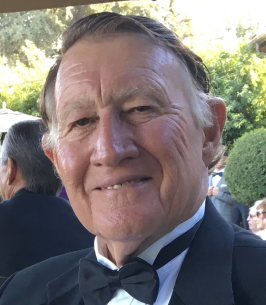
Charles and his wife Elaine with my wife and me and John Gregory and his wife at the Offshore Energy Center Hall of Fame induction gala (Houston, 2009). Bud
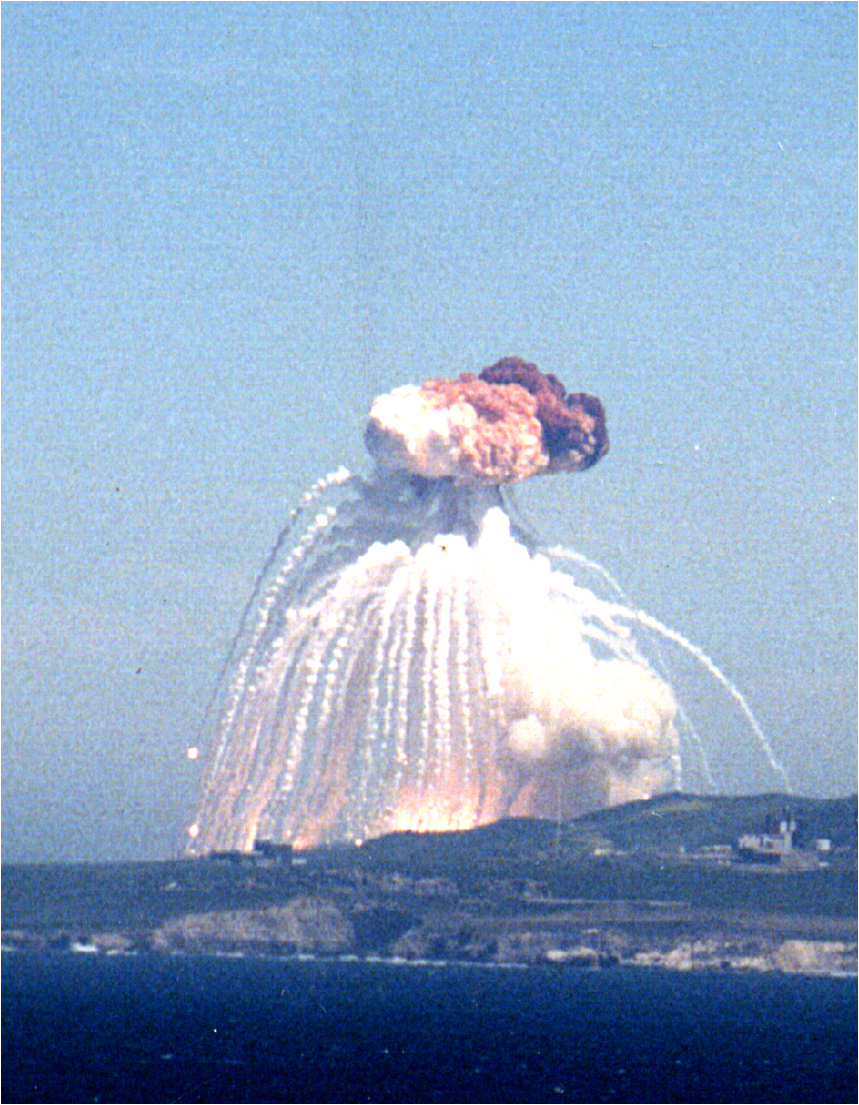
Last week’s successful Falcon 9 launch from Vandenberg Space Force Base (formerly Air Force Base) brought back memories of a less successful Vandenberg launch on April 18, 1986. I was just offshore from the base on Texaco’s Platform Harvest at the time. That is where the photo below was taken.
The Titan rocket carrying a secret spy satellite exploded in a huge orange cloud seconds after the launch. Because this was a classified mission, few residents knew that a launch was occurring. Fifty-eight people were treated for skin and eye irritation. Not a shining moment for the space program, particularly given the Titan failure the previous August and the tragic Challenger disaster earlier in 1986.
Which platform is pictured in the International Space Station photo (re-posted below)? It is clearly a spar (basically a large vertically floating cylinder), and like most GoM spars appears to be the truss type (see diagram below depicting spar types). There are currently 18 GoM spars (list in table below). Looking at photos of these spars, my guess is that the SpaceX Dragon is pictured above Perdido (bottom photo).
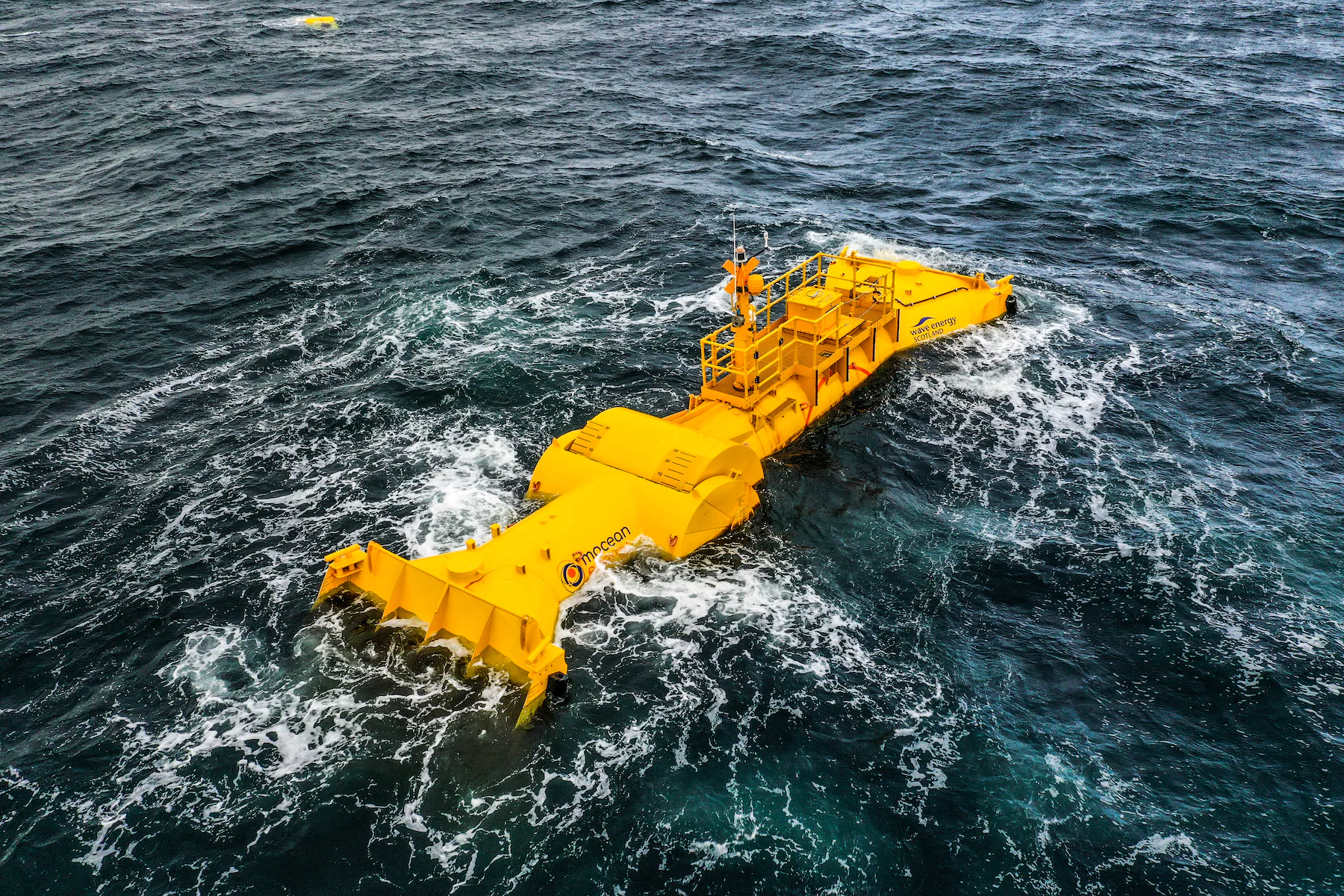
Conceptually, these projects have great promise. To date, the main challenges have been durability, mooring system integrity, and space preemption. As noted in the Post article:
The idea is simple; execution less so. As these devices — and their computers, turbines and hydraulics — must survive in some of the harshest conditions on Earth.
As we await the outcome of the nationally important gubernatorial race here in the Commonwealth of Virginia, I wanted to acknowledge the political appointees whom I had the opportunity to work for in the OCS oil and gas program. While they had different backgrounds and interests, all respected the importance of the program and were committed to safe operations and protection of the marine environment. Remarkably, they all managed the OCS program in a rather non-partisan manner.
Republican Appointees
Democrat Appointees
Notes
Harold Doley
Don Kash
Dr. Kash was Chief of the Conservation Div. (USGS), which was roughly the equivalent of BSEE Director
Bill Bettenberg
Tom Fry
Bill Bettenberg was a career Federal employee appointed as MMS Director by a Republican administration
Bob Kallman
Cynthia Quarterman
Barry Williamson
Walt Rosenbusch
Scott Sewell
Tom Kitsos
Dr. Kitsos was a career Federal employee appointed MMS Director by a Democrat administration
The Public Investment Fund (PIF) announced today the launch of “THE RIG.”, a new tourism project. Inspired by offshore oil platforms, “THE RIG.” will be located in the Arabian Gulf and will span a combined total area of more than 150,000 square meters and provide a multitude of hospitality offerings, adventures, and aquatic sporting experiences.
The House Oversight Committee has requested that executives from Exxon, Shell, Chevron, BP, and testify on October 28th.
“We are deeply concerned that the fossil fuel industry has reaped massive profits for decades while contributing to climate change that is devastating American communities, costing taxpayers billions of dollars and ravaging the natural world,” Oversight Chairwoman Carolyn Maloney, D-N.Y., and Rep. Ro Khanna, D-Calif., wrote in a letter to oil executives.
Expect moral outrage, sloganeering, and finger pointing (the Washington salute). A link for viewing the hearing will be posted at the committee website.







 Bud's Offshore Energy (BOE)