Feeds:
Posts
Comments

Archive for the ‘UK’ Category

On Sunday, the Norwegian government announced that its sovereign wealth fund, the world’s largest, wwould divest its Russian assets, worth around 25 billion Norwegian crowns ($2.80 billion).

Reuters

“In the current situation, we regard our position as untenable,” Equinor Chief Executive Anders Opedal said in a statement. “We will now stop new investments into our Russian business, and we will start the process of exiting our joint ventures in a manner that is consistent with our values.”

Reuters

British oil giant BP said Sunday that it is “exiting” its $14 billion stake in Russian oil giant Rosneft over Moscow’s invasion of Ukraine in one of the biggest signs yet that the Western business world is cutting ties over the Kremlin’s invasion of Ukraine.

Washington Post

Read Full Post »

Britain sees a “good, solid” future for the North Sea’s oil and gas industry and will issue new licences to expand output in the future, Energy Minister Greg Hands said on Tuesday.

“We need continued investment into the North Sea,” Hands told the International Energy Week online conference.

Reuters

Meanwhile, the US government seems intent on supporting legal and administrative actions that stymie offshore exploration and development. The US is sanctioning its own offshore industry during an international crisis centered around energy.

2021 was the first year in the history of the US offshore program dating back to the passage of the OCS Lands Act in 1953 without a single oil and gas sale, and there is no lease sale on the horizon. Most years have had multiple sales, regardless of the party in power. The only attempted 2021 sale (no. 257) was required by a Federal Court decision in Louisiana. That sale was annulled by a questionable DC court decision that the Federal government chose not to appeal.

Read Full Post »

Oil and gas workers’ union, Unite Scotland, has demanded intervention by the Scottish government in response to Canadian Natural Resources (CNR) International introducing mandatory vaccinations, calling these measures “draconian.”

offshore-energy.biz

As previously reported, a Norwegian union criticized the absence of consultation before Aker BP imposed vaccine requirements at their facilities.

Read Full Post »

By the end of 2022, Germany will have switched off its last 8.1 GW of nuclear power. Another 6.4 GW of coal capacity are scheduled for shuttering by 2023. Recent events and publications have given ammunition to those who fear a collapse of the system.

In 2018, Germany’s influential energy industry association BDEW said that Germany would run into a “shortfall in secured capacity by 2023 at the latest”, and that the country shouldn’t rely on its neighbors to make up the difference. Three years later and a lot closer to the nuclear phase-outBDEW head Kerstin Andreae says: “For a secure energy supply, we also need new gas-fired power plants, as this is the only way to obtain the required controllable power.”

Clean Energy Wire

Germany will need back-up and supplemental power from gas plants, but the EU has excluded gas-fired energy generation from the list of sustainable investments and the associated incentives. Per Kerstin Andreae of the BDEW:

“We need to build these new power plant capacities now. Although they will initially run on natural gas, they are already capable of using hydrogen as an energy source in the future and will thus ultimately become climate neutral,” she said. But without a clear decision from the Commission „ important energy transition investments are at risk”

Clean Energy Wire

Meanwhile, oilprice.com reports that “UK peak-hour power prices for Monday evening through 6 p.m. surged to the highest level in a month due to low wind power generation during the weekend.” In what is becoming a familiar story:

Coal closures and no immediate replacements for nuclear power have exposed the UK’s vulnerabilities to the whims of the weather, with cold winters stoking natural gas demand and still weather lowering wind power generation.

oilprice.com

Daniel Yergin reminded us that energy transitions take time. Countries that ignore those realities are likely to suffer the consequences, both economically and environmentally. Per Aissatou Sophie Gladima, the energy minister of Senegal:

Restricting lending for oil and gas development, she said, “is like removing the ladder and asking us to jump or fly.”

Read Full Post »
link

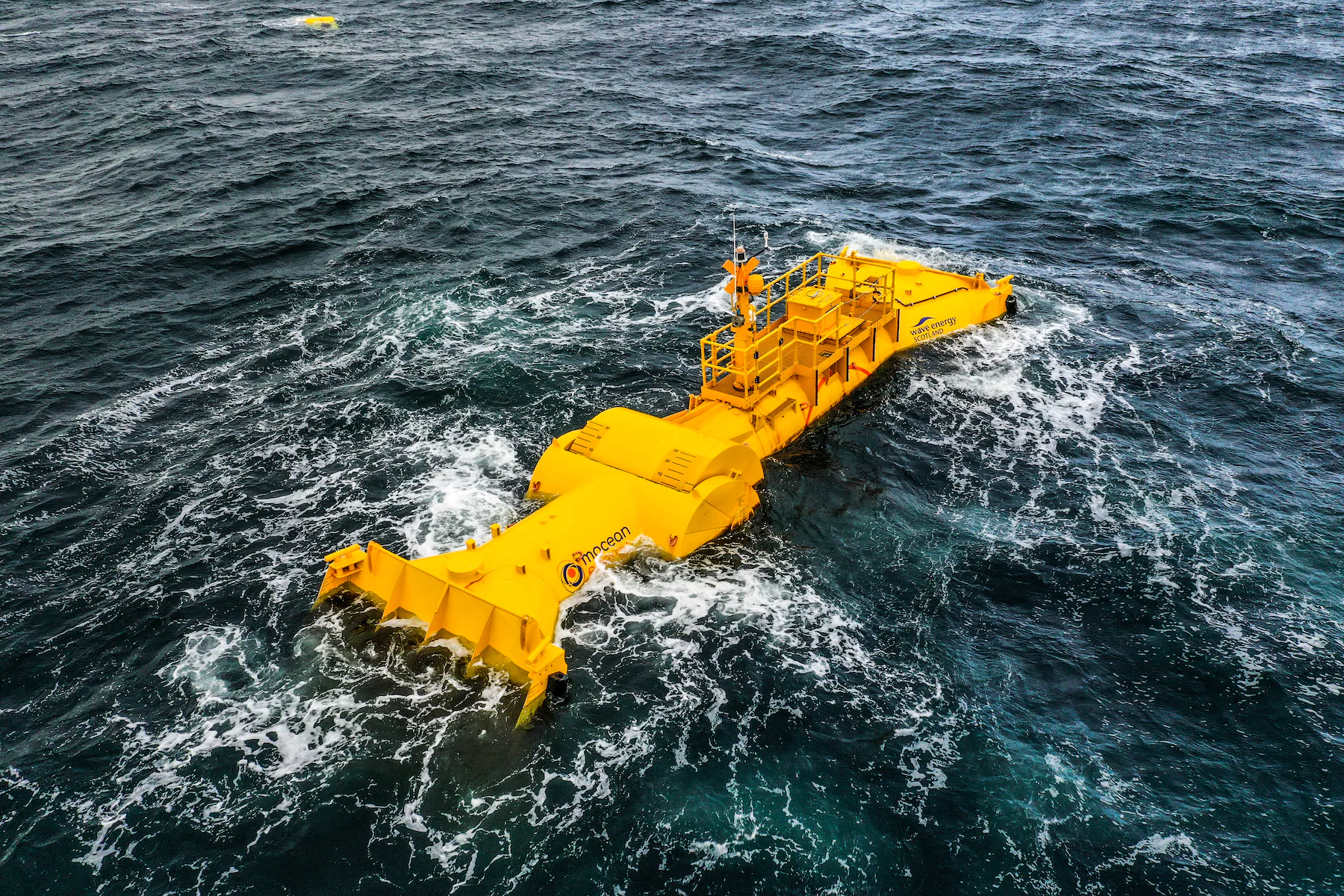
Conceptually, these projects have great promise. To date, the main challenges have been durability, mooring system integrity, and space preemption. As noted in the Post article:

The idea is simple; execution less so. As these devices — and their computers, turbines and hydraulics — must survive in some of the harshest conditions on Earth.

Read Full Post »

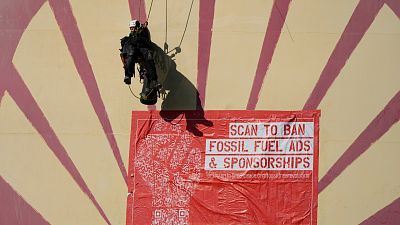
Greenpeace climate activists stage a protest at a Shell refinery in Rotterdam, Netherlands
EuroNewa.green

Oil firms have been banned from taking an active role in the upcoming COP26 summit.

The news is a seismic victory for climate activists.

It stops Big Oil companies from sponsoring the conference and steering the narrative away from their culpability in the climate crisis.

Euronews.green

Comments:

  • This decision is more about exercising political power than advancing our energy future, which is dependent on collaboration among all sectors of the energy industry.
  • Oil and gas producers are “banned,” but major energy consumers are welcome to support the conference.
  • The 3 oil companies mentioned in the article are major investors in offshore wind and other renewable energy projects. These companies have spent hundreds of millions of dollars to purchase US offshore wind leases and will spend much more on the projects that follow. They are also major investors in low carbon intensity offshore oil and gas production.
  • Does the US government, which (at taxpayers expense) is sending a very large delegation to COP26, support this type of discriminatory behavior toward major contributors to our economy?
  • While the delegates are attending the conference, the folks at home are seething about gasoline prices and inflation.

Read Full Post »

A Maersk Oil-owned FPSO which was damaged during heavy storms in the North Sea in February will be out of action for another year as it heads for drydock repairs. Upstream

More on the Gryphon Alpha incident.

Read Full Post »

The HSE has told Shell to submit a revised safety case for the Brent Charlie platform after gas was detected on its topsides following leaks on 12 January this year and 27 September 2010, Upstream can reveal.

Shell, which took the decision itself to close the platform after the January incident, has been battling for some time to resolve technically complex issues related to the venting of gas from inside one the platform’s huge concrete legs — Column 1 (C1) — and dispersing it effectively away from the platform.

The operator now expects the ageing Brent field to remain shut down for several more months.

Read Full Post »

Per the Evening Express in Aberdeen:

A DIVER working for an oil company has died at sea.

The 49-year-old oil worker took ill while diving with the Acergy Osprey, operated by Subsea7 which is based in Westhill.

No other information is available at this time.

Read Full Post »

John Milne Book Launch

John C Milne

“Dubs” is a term used in Aberdeen and northeast Scotland to describe all varieties of mud. That is the first thing I learned in reading John Milne’s excellent book “DUBS, How the Oil Came North.”  John’s first job in the offshore industry was with a drilling mud supplier back in 1969 when he was still a college student.  John presents a series of amusing and informative anecdotes about hie work experiences between 1969 and 1973 during the early years of North Sea offshore exploration. The book is available through the publisher, PlashMill Press. Good read!

I also recommend Bjørn Vidar Lerøen’s excellent book “Drops of Black Gold,” which

Drops of Black Gold - Statoil

chronicles the history of Statoil and Norwegian offshore oil and gas development. The book includes a now famous 1962 letter from Phillips Petroleum to the Norwegian government. In the letter, Phillips seeks exclusive rights to the entire Norwegian continental shelf in return for conducting a seismic survey program. Hey, nothing wrong with asking! 🙂

Read Full Post »

« Newer Posts - Older Posts »