Feeds:
Posts
Comments

Archive for the ‘gas’ Category

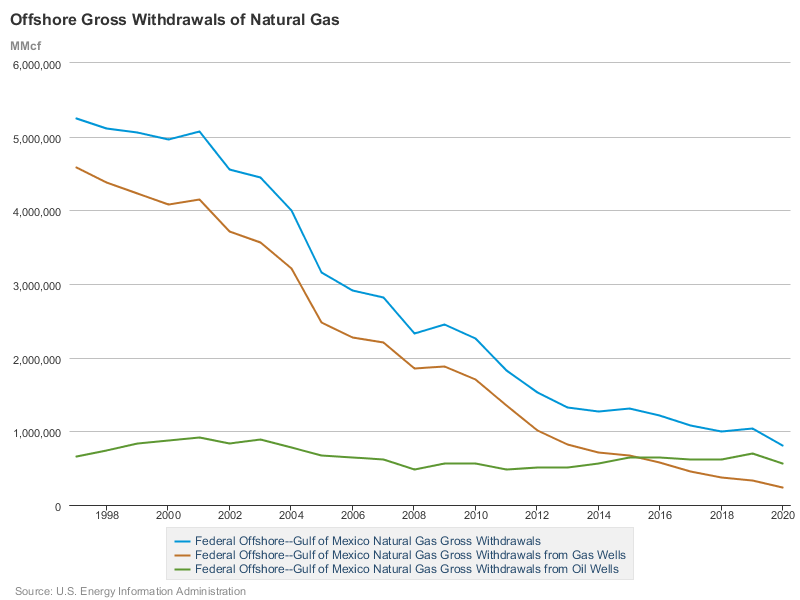
Offshore gas production (see chart below) has declined for the past 20 years and now accounts for only 4% of total US gas production, down from 20% in 2005 and 25% in the 1990s. Associated gas production (oil-well gas) has remained relatively constant owing to the strength in deepwater GoM oil production. 73% of 2020 gas production was from deepwater wells, and was mostly oil-well gas. Associated gas production surpassed nonassociated gas production (gas-well gas) in 2016 and the latter has continued to decline.

The case for natural gas has been well documented (see the EQT letter linked below). Recent natural gas advocacy has emphasized the carbon/GHG advantages given that methane (CH4) is essentially a hydrogen transporter that emits far less CO2 than other fossil fuels when burned. However, natural gas’s other important air quality advantages – low NOx. SO2, and particulate emissions – have greater local significance from a human health standpoint. Those who have ridden a bike behind a natural gas powered bus have no doubt experienced the natural gas advantage firsthand. These buses are literally a breath of fresh air!

Other environmental advantages of offshore natural gas, particularly nonassociated gas, receive less attention but are nonetheless significant. Advantages of nonassociated offshore gas include the following:

  • Fewer wells required than for shale gas
  • No risk of fresh water contamination
  • Platforms provide beneficial reef effects
  • Minimal space preemption and land disturbance relative to onshore gas production and wind/solar operations
  • Low facility density and navigation risks relative to wind operations;
  • Lower elevation and fewer view-shed, aesthetic, and aviation issues than for wind
  • Minimal avian risks relative to on- and offshore wind operations
  • Minimal spill risk relative to oil and associated gas production
  • Significantly less flaring than for oil well gas. While the overall % of US offshore gas production that is flared is low (approx. 1.0 -1.5% from 2016-2020 per EIA data), the % of gas-well gas that is flared has historically been less than 0.5%.

Low natural gas prices and competition from nimble and efficient shale operations have constrained offshore gas exploration. Ultradeep (subsurface) drilling has shown promise from a gas resource perspective but has proven to be expensive and operationally challenging. Some independent producers are still acquiring gas prone shelf tracts and that needs to be encouraged. Consideration should be given to incentives such as making nonassociated gas production royalty free. That would certainly seem preferable to subsidizing complex, expensive, and uncertain carbon disposal operations on offshore leases.
Read Full Post »

C:\Users\Owner\Pictures\Hudson Canyon Test.jpg

More than 43 years ago, natural gas was discovered in the Atlantic about 100 miles SE of Atlantic City. The prospect was unitized (Hudson Canyon Unit) and 7 additional wells were drilled over the next 3 years. 725 miles of 3-D seismic data were collected. The geology was complex and more time was needed to evaluate the data. MMS refused to extend the leases without further drilling activity. One unit partner committed to funding a confirmation well if the other companies would relinquish their interest. They would not and the leases expired in 1984. This Hudson Canyon “end game” reflected poorly on the unit partners and the regulator, and the opportunity to produce regionally significant quantities of natural gas was forever lost. Seemed petty then; seems petty now.

Read Full Post »

European power prices have spiraled to multi-year highs on a variety of factors in recent weeks, ranging from extremely strong commodity and carbon prices to low wind output.

CNBC

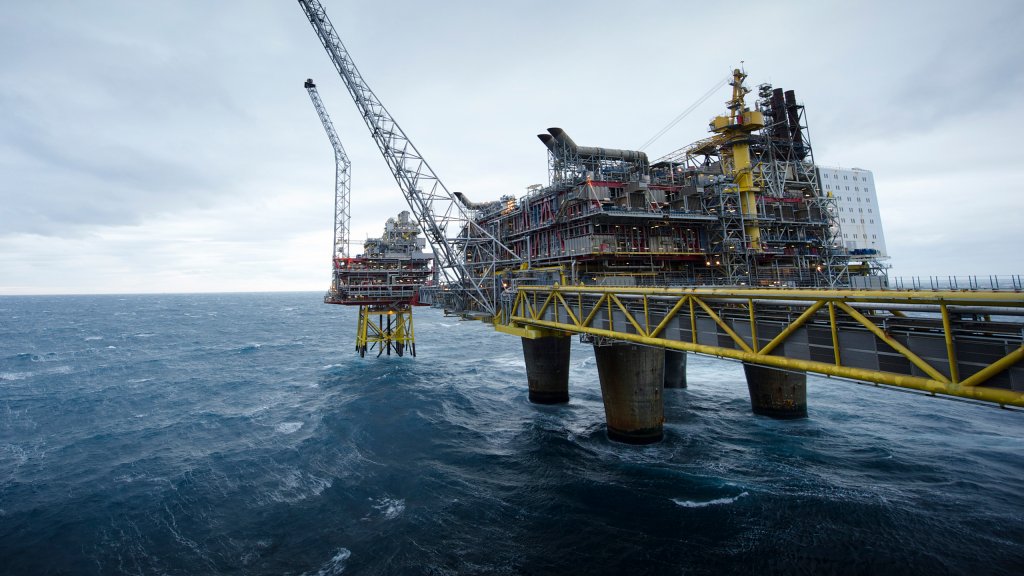
Equinor and its partners have received permission to increase gas exports from two fields on the the Norwegian continental shelf to supply the tight European market. Production permits for the Oseberg and Troll fields have each been increased by 1 billion cubic meters (bcm) for the gas year starting 1 October.

Equinor
Oseberg field centre in the North Sea
Equinor’s Oseberg field, North Sea.

I hope the folks organizing the 10/28 congressional hearing are paying attention, but somehow I doubt it.

Read Full Post »

In light of the ongoing litigation regarding the Department of the Interior’s “leasing pause,” DOI’s Record of Decision for Sale 257 is most encouraging. The viewpoints expressed in the two quotes below are fundamental to the future of the OCS Oil and Gas Program. Hopefully, all parties can put aside their differences and build upon these consensus views.

While offshore exploration and development cannot be made risk free, OCS oil- and gas-related activities can be conducted safely and responsibly with strong regulatory oversight and appropriate measures to protect human safety and the environment.

ROD, p. 5

The decision to hold Lease Sale 257 recognizes the role that GOM oil and gas resources play in addressing the Nation’s demand for domestic energy sources and fosters economic benefits, including employment, labor income, and tax revenues, which are highest in Gulf Coast States and also distributed widely across the United States. Revenues from offshore oil and gas lease sales support national conservation programs and coastal resiliency for applicable coastal states and political subdivisions under the Gulf of Mexico Energy Security Act of 2006.

ROD, p. 7

Read Full Post »

From Platts Oilgram News:

Shares of McMoRan Exploration jumped more than 12% June 29 after the company announced that additional drilling has confirmed its geological theories about the high potential of drilling ultra-deep natural gas prospects in the shallow waters of the Gulf of Mexico.

Hype, reality, or something in-between? One has to weigh the resource promise against the operational challenges, high costs, and gas market uncertainties.

Read Full Post »

John Milne Book Launch

John C Milne

“Dubs” is a term used in Aberdeen and northeast Scotland to describe all varieties of mud. That is the first thing I learned in reading John Milne’s excellent book “DUBS, How the Oil Came North.”  John’s first job in the offshore industry was with a drilling mud supplier back in 1969 when he was still a college student.  John presents a series of amusing and informative anecdotes about hie work experiences between 1969 and 1973 during the early years of North Sea offshore exploration. The book is available through the publisher, PlashMill Press. Good read!

I also recommend Bjørn Vidar Lerøen’s excellent book “Drops of Black Gold,” which

Drops of Black Gold - Statoil

chronicles the history of Statoil and Norwegian offshore oil and gas development. The book includes a now famous 1962 letter from Phillips Petroleum to the Norwegian government. In the letter, Phillips seeks exclusive rights to the entire Norwegian continental shelf in return for conducting a seismic survey program. Hey, nothing wrong with asking! 🙂

Read Full Post »

Quebec and Ottawa have struck a “historic” deal to allow the province to draw oil and natural gas royalties from the disputed Old Harry area of the Gulf of St. Lawrence, says Quebec Premier Jean Charest.

…The new deal is expected to give Quebec 100 per cent of the royalties from offshore resources. CBC News

Read Full Post »

I just sent someone an email commenting that demand for Australian LNG (and their offshore gas production) was about to soar, but it  looks like the Wall Street Journal is already on this story.

A global shift away from nuclear power in response to the atomic plant crisis unfolding in Japan will likely spur a scramble for Australian energy, catapulting the country ahead of Qatar as the world’s biggest supplier of liquefied natural gas in the near future.

[OZLNG]

More Asian gas demand: China has suspended the approval of new nuclear projects.

Read Full Post »

“The Honda Civic GX (the only NGV available to U.S. consumers and repeat winner of the ACEEE Green List) has been so successful Honda predicts it will double GX sales in the U.S. this year after doubling them in 2009. Utah, Oklahoma and California have been very successful in building out natural gas infrastructure and deploying NGVs that are refueling with natural gas.” SeekingAlpha.com

While I don’t agree with everything in this article, the numbered points are right on target. Increased use of natural gas for transportation is the best near- and intermediate-term option for reducing oil consumption and imports, air emissions, and transportation costs.

Supply does not appear to be an issue in light of the numerous domestic options including shale gas, Alaskan gas, coalbed methane, and conventional onshore and offshore gas.  Given the proximity of enormous shale gas resources to major markets, shale gas is the featured attraction. However, this is an offshore blog, and from a strictly environmental perspective, offshore gas is the preferred option.  Why?

  • No freshwater contamination issues
  • Small environmental footprint – limited facilities needs and minimal space preemption
  • No production in or near residential areas
  • Potential production near major natural gas markets. For example, there is a natural gas discovery in the Atlantic approximately 100 miles southeast of the New York City area. (Before my geologist friends get upset, I will point out that the productive reservoirs are highly complex and further exploration is necessary to determine whether this field – the former Hudson Canyon Unit – and other Atlantic prospects are commercially viable.)
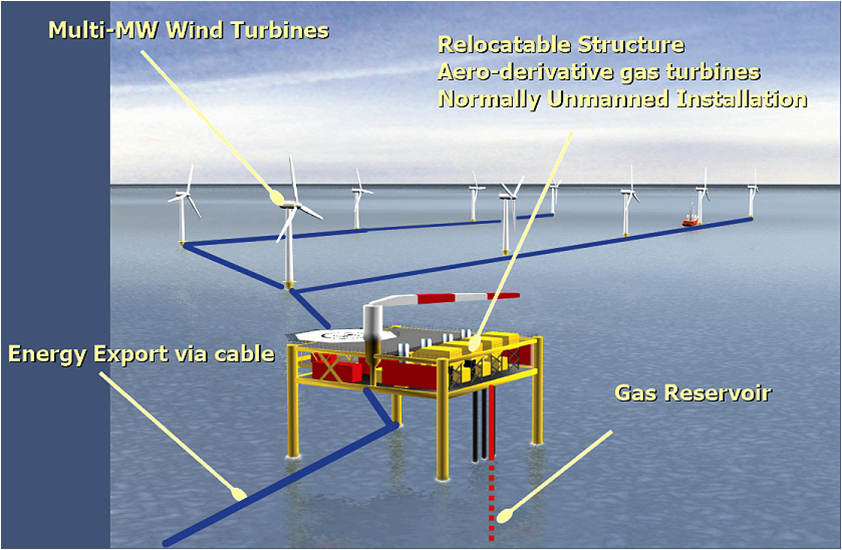
  • Potential for combining offshore gas and wind projects into offshore energy units that can ensure consistent power supply. (See slide below from a presentation by George Hagerman, Virginia Tech Advanced Research Institute)

Read Full Post »

The Economist reports on the Laggan-Tormore gas project :

The £2.5 billion project, approved earlier this year, should deliver its first gas in 2014—a full 28 years after the Laggan field was discovered, a delay that exemplifies the region’s challenges. The field was too small and remote to justify the construction of a pipeline until the nearby Tormore field was discovered in 2007.


Read Full Post »

« Newer Posts - Older Posts »