Feeds:
Posts
Comments

Archive for the ‘natural gas’ Category

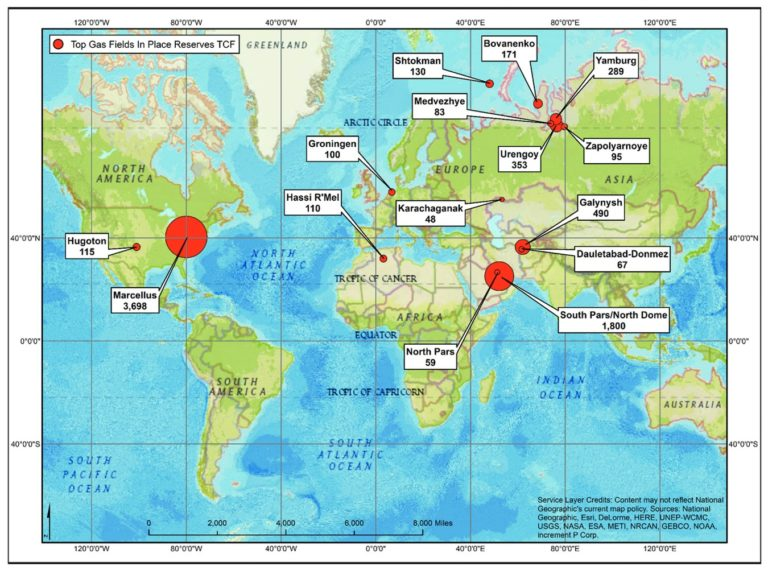
Technological advances, most notably horizontal drilling and hydraulic fracturing, and private initiative on private land changed all of that.

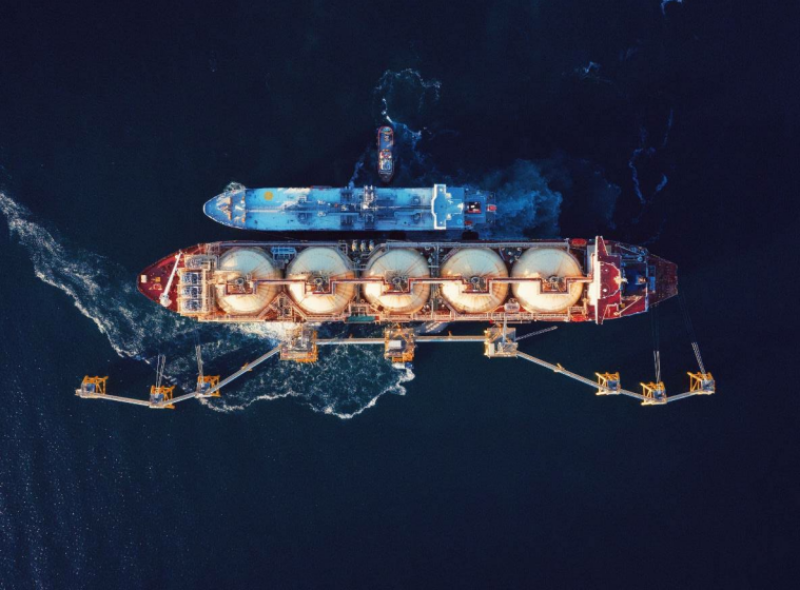
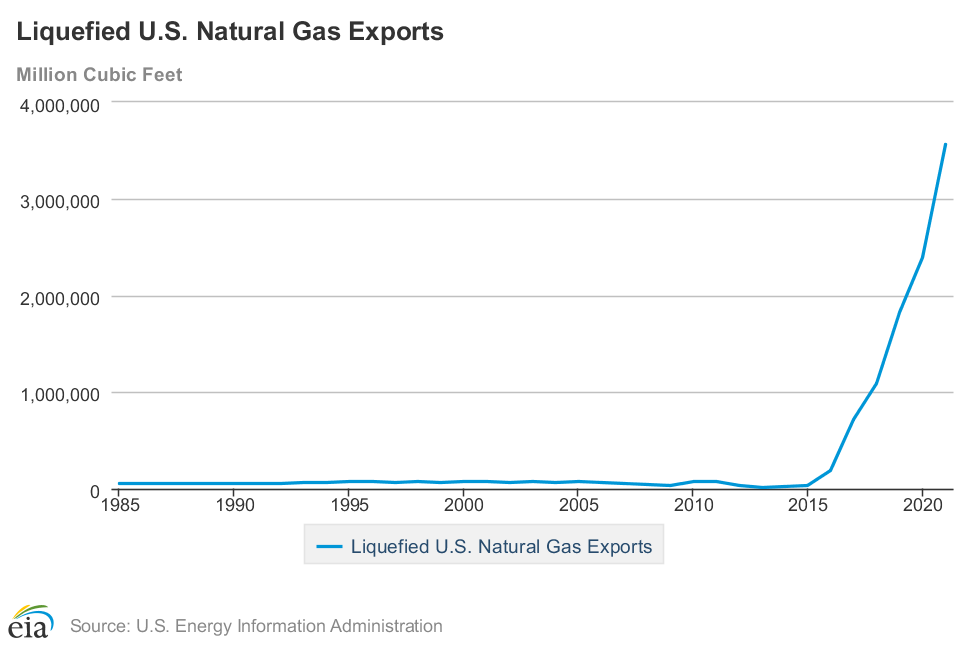
“The US is going to emerge this year as the world’s largest LNG exporter, and it is clear that US LNG is a geopolitical asset for the United States and for Europe.”

Daniel Yergin

Read Full Post »

Bad decision by Blackstone; worse timing. Putin and OPEC must be pleased.

Blackstone Inc., once a major player in shale patches, is telling clients its private equity arm will no longer invest in the exploration and production of oil and gas, according to people with knowledge of the talks. The firm’s next energy fund won’t back those upstream investments — a first for the strategy.

Bloomberg

Meanwhile:

As the United States continues to tie its hands with regard to the transportation of natural gas, a fuel that has actually led to a large decrease in CO2 emissions over coal, Russia and China reached an agreement under which Russia will supply 100 million tons of coal to China so that China can continue to open up new coal-fired power plants

Forbes

Embargo Russia, not US producers!

Read Full Post »

  • My home State (Commonwealth) of Pennsylvania is producing nearly 10 times as much natural gas as the US OCS (Federal offshore). Who would have dreamed this was possible 20 years ago? Among the states, PA is second to Texas in gas production.
  • Oil production in Texas is now nearly 3 times as high as on the OCS. In 2010, US offshore production was substantially higher (567 million barrels vs. 427 million barrels).
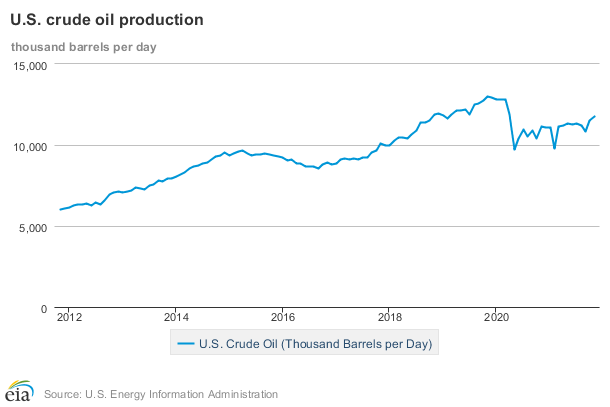
  • Thanks largely to Texas, North Dakota, and New Mexico, US oil production is rebounding.
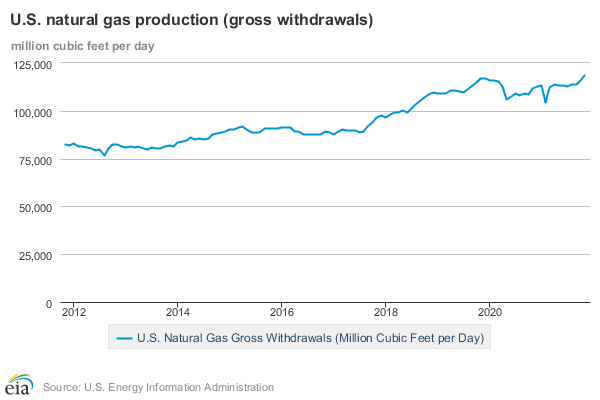
  • Thanks to TX, PA, LA, AK, WV, OK, NM, and OH, US gas production has also strengthened.

EIA production data through 11/20/2021:

Read Full Post »

By the end of 2022, Germany will have switched off its last 8.1 GW of nuclear power. Another 6.4 GW of coal capacity are scheduled for shuttering by 2023. Recent events and publications have given ammunition to those who fear a collapse of the system.

In 2018, Germany’s influential energy industry association BDEW said that Germany would run into a “shortfall in secured capacity by 2023 at the latest”, and that the country shouldn’t rely on its neighbors to make up the difference. Three years later and a lot closer to the nuclear phase-outBDEW head Kerstin Andreae says: “For a secure energy supply, we also need new gas-fired power plants, as this is the only way to obtain the required controllable power.”

Clean Energy Wire

Germany will need back-up and supplemental power from gas plants, but the EU has excluded gas-fired energy generation from the list of sustainable investments and the associated incentives. Per Kerstin Andreae of the BDEW:

“We need to build these new power plant capacities now. Although they will initially run on natural gas, they are already capable of using hydrogen as an energy source in the future and will thus ultimately become climate neutral,” she said. But without a clear decision from the Commission „ important energy transition investments are at risk”

Clean Energy Wire

Meanwhile, oilprice.com reports that “UK peak-hour power prices for Monday evening through 6 p.m. surged to the highest level in a month due to low wind power generation during the weekend.” In what is becoming a familiar story:

Coal closures and no immediate replacements for nuclear power have exposed the UK’s vulnerabilities to the whims of the weather, with cold winters stoking natural gas demand and still weather lowering wind power generation.

oilprice.com

Daniel Yergin reminded us that energy transitions take time. Countries that ignore those realities are likely to suffer the consequences, both economically and environmentally. Per Aissatou Sophie Gladima, the energy minister of Senegal:

Restricting lending for oil and gas development, she said, “is like removing the ladder and asking us to jump or fly.”

Read Full Post »

“We will need gas throughout the transitional phase,” government spokesman Steffen Hebestreit said.

oilprice.com

Germany has a very strong Green lobby that has now become part of the ruling coalition. Despite an anti-fossil fuel discourse, the Greens have now apparently accepted the necessity of at least one fossil fuel, perhaps not least because Germany has plans to shut down all of its nuclear power plants by the end of this year.

oilprice.com

Read Full Post »

It’s a great country! 😃

Read Full Post »

Offshore gas production (see chart below) has declined for the past 20 years and now accounts for only 4% of total US gas production, down from 20% in 2005 and 25% in the 1990s. Associated gas production (oil-well gas) has remained relatively constant owing to the strength in deepwater GoM oil production. 73% of 2020 gas production was from deepwater wells, and was mostly oil-well gas. Associated gas production surpassed nonassociated gas production (gas-well gas) in 2016 and the latter has continued to decline.

The case for natural gas has been well documented (see the EQT letter linked below). Recent natural gas advocacy has emphasized the carbon/GHG advantages given that methane (CH4) is essentially a hydrogen transporter that emits far less CO2 than other fossil fuels when burned. However, natural gas’s other important air quality advantages – low NOx. SO2, and particulate emissions – have greater local significance from a human health standpoint. Those who have ridden a bike behind a natural gas powered bus have no doubt experienced the natural gas advantage firsthand. These buses are literally a breath of fresh air!

Other environmental advantages of offshore natural gas, particularly nonassociated gas, receive less attention but are nonetheless significant. Advantages of nonassociated offshore gas include the following:

  • Fewer wells required than for shale gas
  • No risk of fresh water contamination
  • Platforms provide beneficial reef effects
  • Minimal space preemption and land disturbance relative to onshore gas production and wind/solar operations
  • Low facility density and navigation risks relative to wind operations;
  • Lower elevation and fewer view-shed, aesthetic, and aviation issues than for wind
  • Minimal avian risks relative to on- and offshore wind operations
  • Minimal spill risk relative to oil and associated gas production
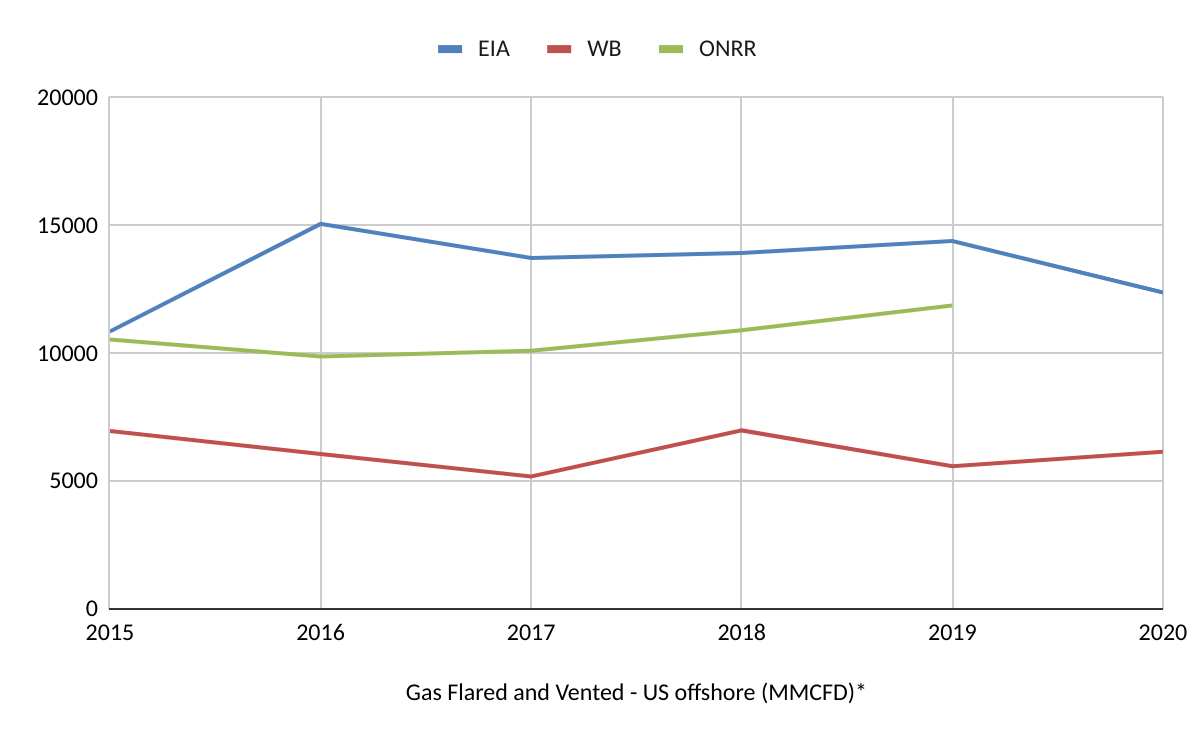
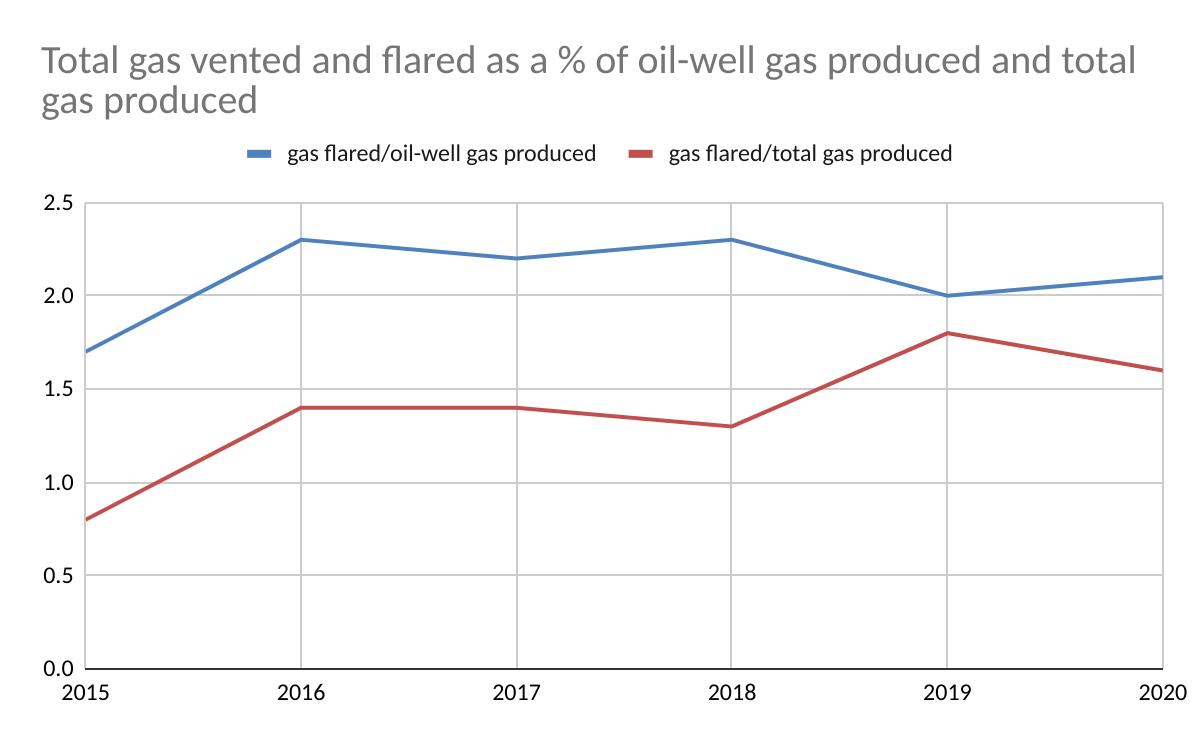
  • Significantly less flaring than for oil well gas. While the overall % of US offshore gas production that is flared is low (approx. 1.0 -1.5% from 2016-2020 per EIA data), the % of gas-well gas that is flared has historically been less than 0.5%.

Low natural gas prices and competition from nimble and efficient shale operations have constrained offshore gas exploration. Ultradeep (subsurface) drilling has shown promise from a gas resource perspective but has proven to be expensive and operationally challenging. Some independent producers are still acquiring gas prone shelf tracts and that needs to be encouraged. Consideration should be given to incentives such as making nonassociated gas production royalty free. That would certainly seem preferable to subsidizing complex, expensive, and uncertain carbon disposal operations on offshore leases.

Read Full Post »

This letter from EQT CEO Toby Rice to Senator Elizabeth Warren summarizes data demonstrating the importance of shale gas in dramatically reducing US GHG emissions. A few excerpts:

In 2019, the United States emitted 970 million metric tons less than in 2005, with 525 million metric tons of that emissions reduction resulting from replacing coal with natural gas in power generation. Said another way: since 2005, in the United States, all emissions reduction efforts combined have had less impact than coal to gas switching alone.

The emissions associated with the production of natural gas are dwarfed by the emissions reduction of switching from the consumption of coal to gas.

Meanwhile, China, which produced only 3% of the world’s natural gas but the majority of the world’s coal, saw its methane emissions increase by an amount roughly equivalent to adding a second Europe to the world.

Letter from EQT to Senator Warren

Meanwhile, natural gas prices have soared to record levels in Europe and a predicted polar vortex may spike US demand. This OilPrice.com chart illustrates the remarkable divergence between US and European gas prices.

OilPrice.com

Will natural gas demand lead to a resurgence in US offshore gas-well drilling?

Read Full Post »

C:\Users\Owner\Pictures\Hudson Canyon Test.jpg

More than 43 years ago, natural gas was discovered in the Atlantic about 100 miles SE of Atlantic City. The prospect was unitized (Hudson Canyon Unit) and 7 additional wells were drilled over the next 3 years. 725 miles of 3-D seismic data were collected. The geology was complex and more time was needed to evaluate the data. MMS refused to extend the leases without further drilling activity. One unit partner committed to funding a confirmation well if the other companies would relinquish their interest. They would not and the leases expired in 1984. This Hudson Canyon “end game” reflected poorly on the unit partners and the regulator, and the opportunity to produce regionally significant quantities of natural gas was forever lost. Seemed petty then; seems petty now.

Read Full Post »

Among other provisions, EPA’s proposed rule, issued on 11/2/2021, specifies that associated gas be handled as follows:

Route associated gas to a sales line. If access to a sales line is not available, the gas can be used as an onsite fuel source, used for another useful purpose that a purchased fuel or raw material would serve, or routed to a flare or other control device that achieves at least 95 percent reduction in methane and VOC emissions.

Because the Dept. of the Interior has jurisdiction over air emissions on most of the Gulf of Mexico OCS, I assume this proposed rule does not apply to those facilities. However, the EPA proposal is not entirely clear in that regard. If the EPA proposal does not apply, will BOEM/BSEE be proposing similar restrictions in their regulations?

MMS/DOI considered prohibiting venting, but determined that adding flaring capability was not feasible for many shelf platforms, and for some platforms there would have been a net increase in emissions. That said, venting is not insignificant. A 2017 Argonne study indicated (table 2) that, for shelf platforms from 2011 through 2015, more than 3 times as much gas was vented as was flared. More recent data should be reviewed to get a better sense of the costs, benefits, and safety considerations associated with achieving further reductions in venting.

Current flaring/venting regulations for OCS facilities are here.

Read Full Post »

« Newer Posts - Older Posts »