Feeds:
Posts
Comments

Archive for the ‘energy policy’ Category

Nothing new or surprising, but an interesting read nonetheless.

All you need to know about how the vaunted ‘energy transition’ is going as 2022 comes to its merciful close is to read the headline of a Reuters story published last week: “Global coal consumption to reach all-time high this year – IEA”.

That isn’t how the narrative surrounding the energy transition assumed this would all be going in the year 2022. Certainly, it isn’t how IEA head Fatih Birol has wanted it to go, given his insistence that “more wind and solar” is the answer to seemingly every energy-related question.

Read Full Post »

In October, the President announced a plan to replenish the SPR using updated authorities that allow for fixed-price purchases of crude oil. Relative to conventional purchase contracts that expose producers to volatile crude prices, this new approach, when used at scale, can give producers the assurance to make investments today, knowing that the price they receive when they sell to the SPR will be locked in place. Today’s notice will pilot this new approach by starting with a purchase of up to 3 million barrels of crude oil.  

DOE

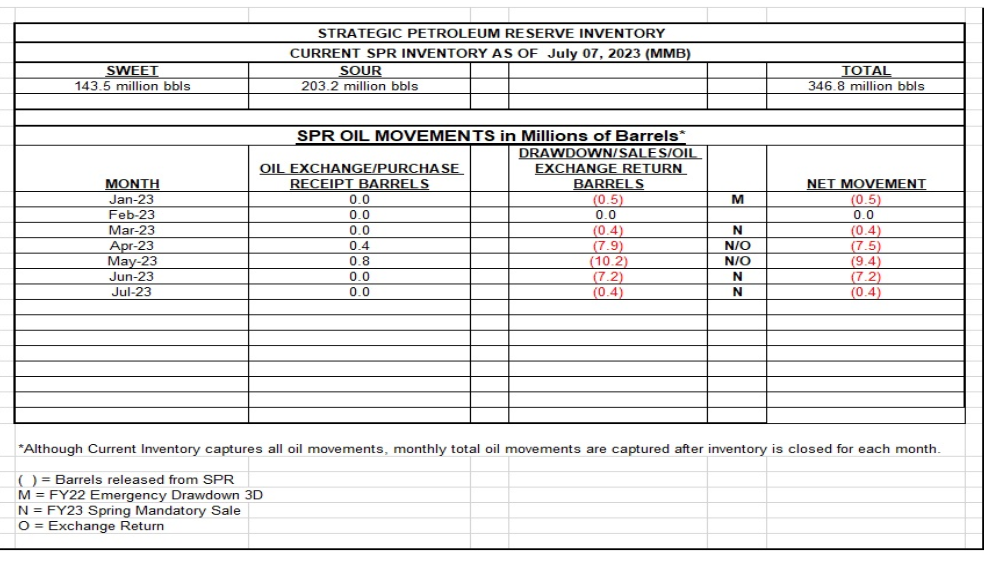
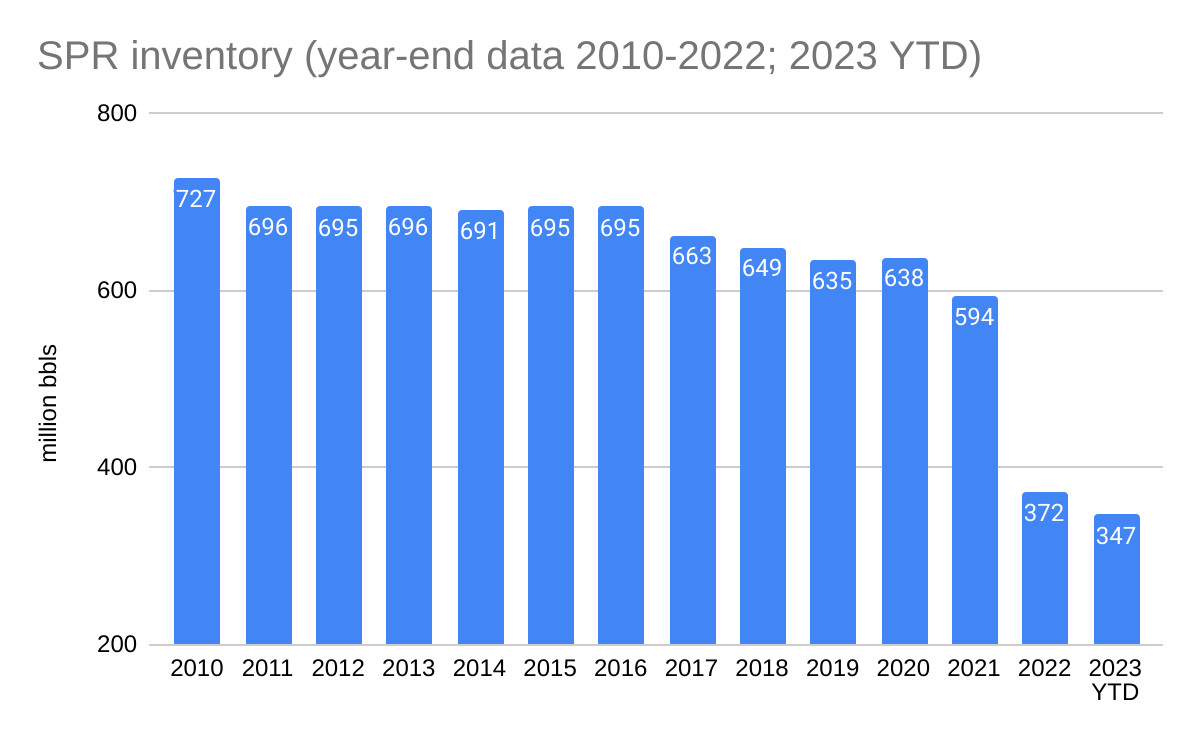
Note that these pilot deliveries will not begin until Feb. 2023 and will total < 3 million barrels. The reserve is 349 million bbls below capacity, and 216 million bbls have been withdrawn this year.

Read Full Post »

… this New York state legislation is perfect.

NY State Senate Bill S9612 (proposed)

§ 328-a provides that no fossil fuel industry member, as that term is defined in the bill, shall knowingly or recklessly create or contribute to a condition that endangers the safety or health of the public by
extracting, storing, transporting, refining, importing, reporting, producing, manufacturing, distributing. compounding, marketing, or sale of a "qualified product".

328-b declares that a violation of the new article that results in any harm shall be deemed climate negligence regardless of when the underlying conduct occurred.

328-c prohibits governmental enforcement. (i.e. prohibits govt intervention on behalf of the accused company)

328-d provides that any person, firm, corporation, or association that has been damaged as a result of a fossil fuel industry member's acts or omissions in violation of this article shall be entitled to bring an
action for recovery of damages.

This non-attorney suspects that the legislation might conflict with the Commerce Clause of the US Constitution (Article 1, Section 8, Clause 3), which gives Congress the power “to regulate commerce with foreign nations, and among the several states, and with the Indian tribes.” New York produces little oil, gas, or coal, so the legislation would largely affect operations that are conducted in other states, on Federal lands, or in foreign countries.

Read Full Post »

Read Full Post »

  • down another 4.7 million bbs from the previous week (12/2/2022)
  • lowest reserve volume since 1/6/1984
  • 212 million bbls withdrawn this year
  • EIA data

Read Full Post »

This rather arrogant and condescending policy makes neither good business sense nor good social sense (unless you support energy poverty), but I’m sure the executive team is proud. That said, they do seem to have left themselves with a fair amount of wiggle room.

In line with the policy, we will no longer provide new lending or capital markets finance for the specific purpose of projects pertaining to new oil and gas fields and related infrastructure when the primary use is in conjunction with new fields.

We will continue to provide finance or advisory services to energy sector clients at the corporate level, where clients’ transition plans are consistent with our 2030 portfolio-level targets and net zero by 2050 commitment.

HSBC

Read Full Post »

Down to 387 million bbls as of 12/2. Lowest SPR volume since 2/24/1984. 206 million bbls withdrawn in 2022. With WTI near $72/bbl, is this finally the end of the withdrawals?

Read Full Post »

Despite the spectacular 2022 lease sales, not all is rosy for US offshore wind development.

In 2011, then-Interior Secretary Ken Salazar said the Obama administration had set a goal of “10 gigawatts of offshore wind generating capacity by 2020 and 54 gigawatts by 2030.” How has that worked? Well, 11 years after Salazar’s speech, the US has seven turbines operating offshore with a total of capacity of 42 megawatts — or some 9,958 megawatts short of the goal laid out by Salazar.

Gordon Hughes, a professor of economics at the University of Edinburgh, has found that the output of Europe’s offshore wind turbines has been declining by about 4.5% per year. In a report titled “Wind Power Economics: Rhetoric and Reality,” published by the London-based Renewable Energy Foundation in 2020, Hughes concluded that declining output will result in higher operating costs that will start to exceed revenues “after 12 or 15 years.

Forbes

Opposition to NJ offshore wind projects dominate DEP hearing

addressing climate change through ocean “industrialization” using an “inefficient, expensive and largely untested strategy” was not the right path forward – Kari Martin, Clean Ocean Action

“By undertaking an industrialization project this big, it far outweighs any (climate change) benefit anybody’s ever talked about, or even tried to quantify,” he said. “The harms of this undertaking is, in my view, far worse than any benefits we could realize.” – Michael Dean, Middletown, NJ

Offshore Wind Farms Change Marine Ecosystems

In their latest publication, (scientists at the Helmholtz-Zentrum Hereon) now show that large-scale wind farms can strongly influence marine primary production as well as the oxygen levels in and beyond the wind farm areas. Their results were published in the journal Communications Earth & Environment.

… For example, Nils Christiansen’s team proved that wake turbulences—air vortices caused by wind turbines—change the flow and stratification of the water beneath them. But the climate just above the sea surface is also being permanently changed, as another team led by Dr. Naveed Akhtar was able to show.

PHYS.org

Annual mean response of net primary productions (netPP) to atmospheric changes due to offshore wind farms

More:

Commonwealth Wind project paused indefinitely

Park City Wind project delayed

RODA files a motion for a summary judgement in its lawsuit over approval of the Vineyard Wind 1 project, touted as the nation’s first commercial scale offshore project.

Discouraging Spectator article on UK onshore wind.

Read Full Post »

California offshore wind sale: 5 leases, $757.1 million in high bids

The California wind sale bidding, while lower than the record Atlantic sale in February, was extraordinary given that the 5 leases are relatively distant from shore (20+ miles) and in water depths (537 to 1284 m) that dictate the use of floating turbines. Generous subsidies, credits, and State mandates no doubt contributed to the seemingly inflated bidding, as did an auction system that is designed to maximize bonus payments.

Given the slow progress in US offshore wind development, the setbacks the industry is experiencing, the added challenges associated with commercial deepwater development, the potential cost burden on taxpayers and power customers, and the government’s financial and policy support, a more development-friendly leasing system would seem to be prudent. BOEM took a step in that direction with the with the limited training and supply chain credits provided for in the Sale Notice, but fundamental changes in the auction system may be desirable.

Read Full Post »

Like its salty neighbor to the east, the Permian Basin of west Texas and southeastern New Mexico has been proclaimed dead on many occasions. Such proclamations of their demise, however, are mere exaggerations as the Gulf of Mexico and the Permian Basin continue to thrive.

These historic oil and gas production powerhouses have delivered to global markets billions of barrels of oil and trillions of cubic feet of natural gas over the past century. Through the booms and the busts, the resiliency of each was made possible by the combination of ingenuity and perseverance and by advancements in techniques and technologies.

JPT

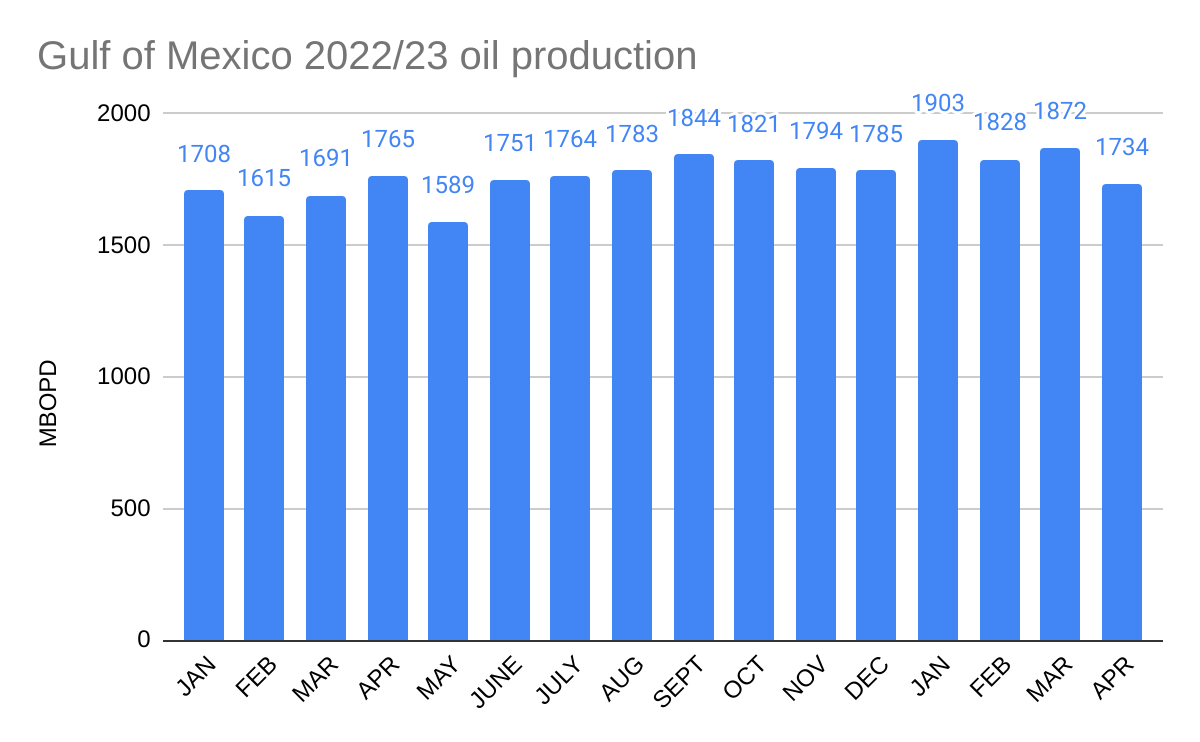
Thirty years ago the Gulf of Mexico was called “the Dead Sea” because of the decline in drilling and production activity. Deepwater technology reversed that trend and led to record Gulf of Mexico oil production averaging 1.9 million BOPD in 2019.

Similarly, horizontal drilling and hydraulic fracturing technology launched the shale revolution, and Permian oil production has risen impressively to 5.4 million BOPD.

Both the Permian and the GoM have the potential to sustain or increase production. The Permian Basin, much of which is privately owned, is more adaptable to market conditions and less exposed to political risks. The offshore program is dependent on effective long-term planning and supportive lease management policies. Unfortunately, the proposed 5 year leasing plan suggests a commitment to throttling offshore production rather than sustaining it. When will our energy policy pendulum swing back to a more balanced position?

Read Full Post »

« Newer Posts - Older Posts »