
For those interested in California offshore decommissioning, attached is an excellent update presented at a 2020 forum by my former colleague John Smith.
Posted in California, decommissioning, Offshore Energy - General, tagged California, decommissioning, John B Smith on September 24, 2021| Leave a Comment »
For those interested in California offshore decommissioning, attached is an excellent update presented at a 2020 forum by my former colleague John Smith.
Posted in California, decommissioning, offshore, Offshore Energy - General, tagged California, Hogan, Houchin, MMS, Signal Hill, State Lands Commission on September 22, 2021| Leave a Comment »
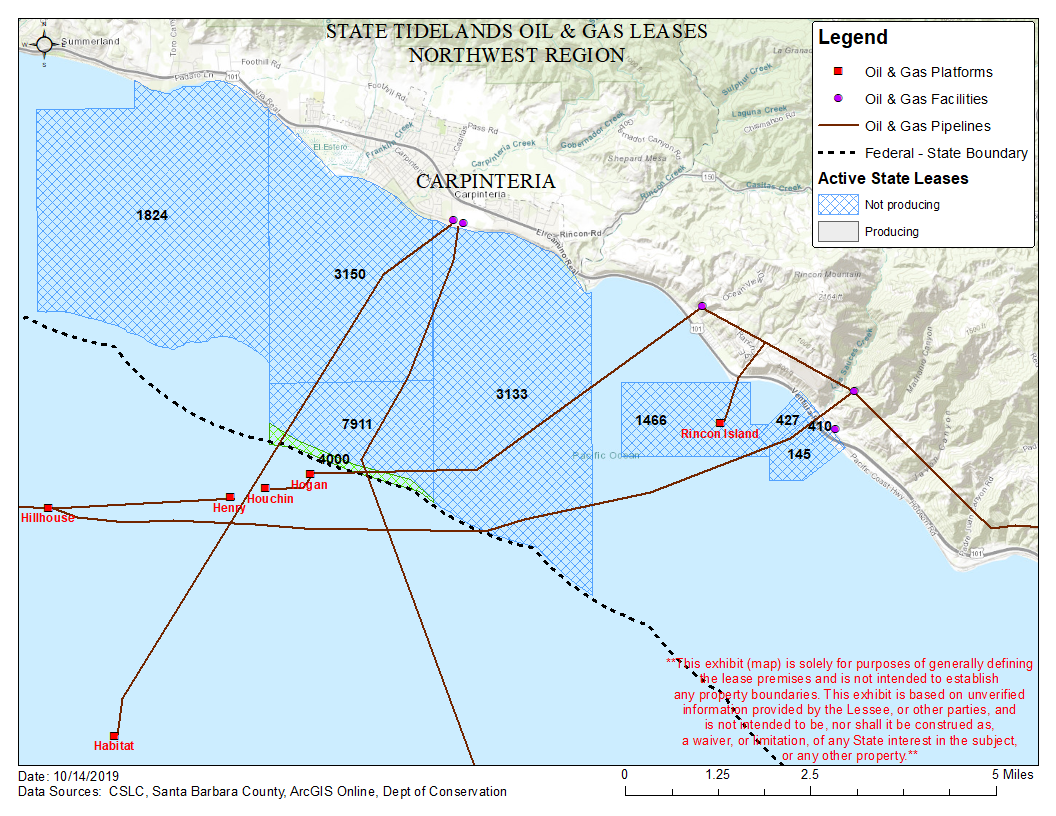
The troubled past of Platforms Hogan and Houchin extends into California State waters. In the 1990’s, Signal Hill and affiliates launched plans to drill directionally from Hogan into adjacent State leases 4000, 7911, and 3133 (see map above). These plans were dubious from the outset given MMS (Federal regulator) concerns about Hogan’s structural integrity. The planning process was never successfully concluded and the 3 State leases were terminated in 2019. For full details see this California State Lands Commission report:
In a related action, the State is suing Signal Hill for unpaid rentals on the pipeline lease that carried production from Hogan to shore. The amount due is approximately $287,000.
Posted in California, Offshore Energy - General, Regulation, tagged BOEM, BSEE, decommissioning, Hogan, Houchin, OIG, Santa Barbara Channel on September 21, 2021| Leave a Comment »
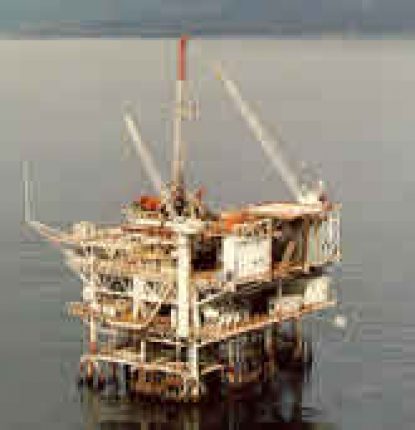
Platforms Hogan and Houchin were installed 52 and 53 years ago respectively on Lease OCS P-0166 in the Santa Barbara Channel. The lease, which had initially been issued to Phillips Petroleum, Cities Service Oil Co., and Continental Oil Co., was assigned to Signal Hill Service effective 2/19/1991. The assignment was approved despite concerns within the Minerals Management Service (MMS) about the financial strength of Signal Hill and the technical competence of Pacific Operators Offshore Inc (POOI), the affiliate that would operate the facilities.
Three decades of frustration followed for MMS, BOEM, and BSEE regulators in the Pacific Region. Per the terms of the assignment, Signal Hill was required to establish an Abandonment Escrow Account, funded from oil production revenue, with a “target balance” equal to the abandonment cost, plus 25 percent. These payments were seldom made in a timely and consistent manner.
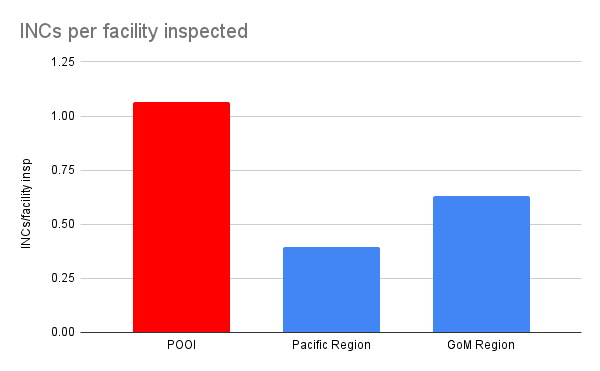
Compliance with safety regulations was also poor. In that regard, violations data are consistent with anecdotal reports from inspectors. POOI accounted for a high percentage of the regional Incidents of Noncompliance (INCs), and Platforms Hogan and Houchin had INC/inspection ratios that were far higher than Pacific or Gulf of Mexico platform averages (see inspection data below).
| INC’s | Warnings | Component Shut-ins | Facility Shut-ins |
| POOI | 485 | 562 | 46 |
| All companies (Pacific Region) | 1965 | 3103 | 281 |
| POOI % of total | 24.6 | 18.1 | 16.4 |
A 9/20/2020 Inspector General report found significant irregularities in the use of funds from an offshore production company’s escrow account. While the IG’s summary (pasted below in its entirety) doesn’t say so, the company is assumed to be Signal Hill.
The OIG investigated allegations that an offshore oil and gas production company improperly paid operational expenses with money from an escrow account dedicated to paying expenses related to decommissioning offshore platforms in Federal waters.
DOI OIG, 9/20/2020
We found that the company routinely used funds from its decommissioning account to pay what appeared to be various operating expenses. We also found instances where the company appeared to claim reimbursement for duplicate expenses.
Based on our findings, the company submitted credits and adjustments, totaling $1.9 million, to the decommissioning account to cover these expenses and other disbursements. In addition, we referred a number of unresolved expenses for non-decommissioning activities to the Bureau of Safety and Environmental Enforcement and the Bureau of Ocean Energy Management for resolution.
We referred this matter to the U.S. Department of Justice, which declined to pursue it.
Questions:
Posted in California, tagged California, exercise, Hogan, Marines, Pacific, security on July 13, 2011| Leave a Comment »
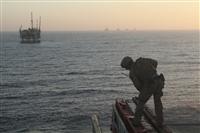
Platform Hogan, Santa Barbara Channel
A Marine with the 11th Marine Expeditionary Unit’s maritime raid force searches the oil platform Hogan for threats during an exercise July 10. The MRF, along with a section of the unit’s aviation combat element, Marine Medium Helicopter Squadron 268 (Reinforced), and command element, are taking part in a large-scale exercise with ocean and urban-based scenarios.
Posted in California, Offshore Energy - General, oil, seeps, tagged California, offshore oil, seeps on March 11, 2010| Leave a Comment »
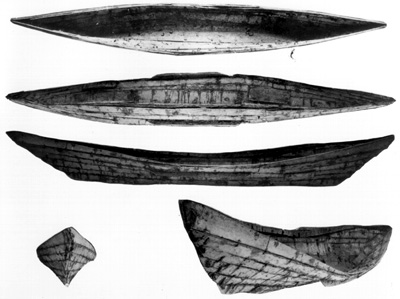
canoe caulked with asphaltum from natural seeps
The first consumers of petroleum used oil that seeped to the surface naturally. Native Americans in California used petroleum seepage to caulk their canoes. Marco Polo witnessed oil being recovered from seeps in 1264 in Baku (then part of Persia).

Drake Well, 1859, Titusville, PA
Natural seeps helped Colonel Drake target the first commercial oil well in the U.S. (Titusville, PA, 1859). The amount of oil that seeps to the earth’s surface is surprisingly high. In fact, a Norwegian Petroleum Directorate article on natural seeps estimates that “at least 1/3 of all oil formed below ground escapes to the surface as seepage.”
Natural seepage has increasingly factored into the offshore drilling debate. The MMS Oil Spill Fact Sheet notes that “natural seeps introduce 150 times more oil into U.S. marine waters than do OCS oil and gas activities.” These data are intended to provide context, not to downplay the significance of drilling and production spills. A large spill is an undesirable event at the location where it occurs, regardless of how the spill’s volume compares with regional, national, or international seepage totals.

Natural Seeps, Coal Oil Point
A California advocacy group, Stop Oil Seeps, has taken the “seep argument” a step farther by promoting offshore production as a means of reducing natural seepage and the associated air and water pollution.
While SOS’s position is interesting and perhaps justified for areas like Coal Oil Point (Santa Barbara Channel), not all production prevents or reduces seepage. Offshore oil and gas seepage results when hydrocarbon-bearing formations are exposed to the sea floor either directly or via fractured or permeable overlying sediments. Where such conditions do not exist, oil and gas production will not reduce seepage. SOS’s enthusiastic support for California offshore production is refreshing, but advocates should exercise caution in making claims regarding seepage reduction. Prospects for seepage reduction from offshore production range from highly likely (Platform Holly and Coal Oil Point) to highly unlikely (deep formations protected with impermeable cap rock).
While we applaud their enthusiastic support for offshore production, the SOS plan raises a number of questions:
While Platform Holly may be a negative spillage facility (i.e. Holly’s seep reduction may significantly exceed the platform’s production spillage), this type of seepage reduction has not been demonstrated at other platforms. Decisions on offshore exploration and development should be driven by the economic, energy security, and environmental benefits. To the extent that production reduces natural seepage, all the better. However, seepage reduction is not a primary reason for producing offshore oil and gas.
Posted in California, gas, Offshore Energy - General, oil, seeps, tagged California, offshore oil, seeps on March 7, 2010| 1 Comment »

The case for increasing production offshore California is relatively straightforward:
 Bud's Offshore Energy (BOE)