Feeds:
Posts
Comments

Archive for the ‘well control incidents’ Category

Click to read the full “Oil Budget” report (just released).

The vast majority of the oil from the BP oil spill has either evaporated or been burned, skimmed, recovered from the wellhead or dispersed – much of which is in the process of being degraded.

Read Full Post »

In the less than 3 week period since Macondo was capped, we have transitioned from “doom and gloom” to “all is well.”  What next?

Click to read an interesting USA Today article.

“Oil doesn’t really kill marsh plants,” says John Pardue, director of Louisiana State University’s Hazardous Substance Research Center, who has studied the effects of oil on marshes. “You can put several inches of oil on the vegetation surface and you won’t kill the plants.”

Read Full Post »

Those are the latest official numbers provided by the Unified Command’s Scientific Teams. Once again, no assumptions or calculations are provided. Why? What was the range of estimates for the different methods (videos analyses, reservoir modeling, acoustics, and extrapolations based on recovery volumes)? Show us the data!

Read Full Post »

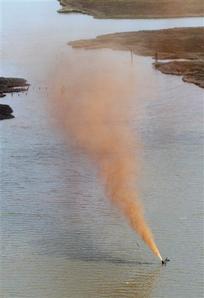
Per Nola.com, the Bayou St. Denis blowout has been capped.

“The Unified Command was able to accomplish this in less than a week due to the fantastic cooperation between the federal, state and local officials and efforts of the contractors,” Capt. John Arenstam, the Coast Guard Federal On Scene Coordinator, said in a news release.

The fact that this incident occurred at all is not so fantastic.  The Coast Guard is investigating.  We look forward to seeing the report.

Read Full Post »

End game mysteries?:  As BP prepares for the static kill operation, the well’s flow path is still not clear.   While the consensus seems to be that the flow originates in the annulus outside the production casing, irregularities during the cementing and testing of that casing suggest the possibility of flow inside the casing.  The condition of the well bore and casing strings is also uncertain. Perhaps of greatest importance will be the inspection of the BOPE after the well is plugged and the stack is pulled.  This inspection process should be closely supervised by the regulators.

Press conference etiquette?: After admitting that they joined yesterday’s Unified Command press briefing late, two reporters asked questions that had been answered earlier.  Perhaps they think their time is more important than Admiral Allen’s, or that of the other attendees, viewers, and listeners.  One of these questioners asked when the static kill operation would begin.  Admiral Allen, who answered the question politely and patiently, should have asked when it would be most convenient for the reporter. Surely, the Unified Command would want to accommodate the reporter’s busy schedule. 😉

Dispersants: As has been demonstrated at oil spill workshops and conferences for the past 30 years, you can always stir up passions by questioning the use of dispersants.  Dispersants, unlike burning and skimmers, don’t remove oil from the water (at least not directly).  The On-Scene Commander (OSC) must consider the tradeoffs and make the decisions that he or she thinks will minimize the net impact of the spill.  Given the magnitude of location of the Macondo spill, I think the OSCs made the correct calls.  Dispersants were also used (not without controversy of course) in responding to last year’s Montara blowout in the Timor Sea.

Read Full Post »

This incident isn’t receiving much attention, perhaps because the volumes being discharged are small by comparison to Macondo and there is no “supermajor” to criticize.  I expect that there would be a tad more coverage if BP was the operator. In any event, we thank the folks at NOLA.com for tracking this one.

Despite the dearth of media attention, this is a very disturbing leak/discharge/blowout (you choose) from a safety and environmental management standpoint.  The well was apparently no longer producing and was left without any downhole barriers that would prevent flow in the event of hurricane damage, a fire, or a vessel collision (what happened).  While pollution spectaculars like Macondo deserve the notoriety, industry should be just as determined to address more systemic problems like this one.

Read Full Post »

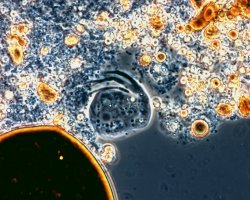
oil-eating bacteria

ABC News reports: Undersea Plumes Nowhere to Be Found as Tests Show Seafood to Be Safe

“When a large amount of oil comes into the environment, then they quickly muster, if you will, and they can sometimes grow to 1,000-fold,” said Jay Grimes, a professor of microbiology at the University of Southern Mississippi.

Read Full Post »

“For southern Florida, the Florida Keys, and the Eastern Seaboard, the coast remains clear,” said Jane Lubchenco, Ph.D., under secretary of commerce for oceans and atmosphere and NOAA administrator. “With the flow stopped and the loop current a considerable distance away, the light sheen remaining on the Gulf’s surface will continue to biodegrade and disperse, but will not travel far.”

The scare is over, return to your stations and enjoy the sunsets.

Dr. Lubachenco’s announcement is no surprise to the savvy readers of this obscure blog, but it’s nonetheless good to hear the official word.  Don’t expect any apologies from the fear mongers who predicted that the loop current superhighway would carry oil to east coast beaches as early as the first week of May or from the media folks who were eager to report the pending doom.

Read Full Post »

A. The environmental effects will be modest  (initial Hayward assessment made shortly after oil started gushing into the Gulf)

or

B. Environmental catastrophe (revised Hayward assessment while on the political hot-seat)

It’s much too soon to make a call, but the early data seem to favor A.  The Telegraph and Time have posted interesting articles on this topic.

Read Full Post »

AP Photo/Patrick Semansky

From NOLA.com:

CEDYCO Inc. of Houston owns the wellhead, but the company declared it “orphaned” under the Louisiana Department of Natural Resources “orphaned well” program in 2008.
That program allows companies to abdicate some responsibility for the well and gives the state permission to plug it and prepare the site for redevelopment.

Comments:

  1. Lots of explaining to do on this one.  What barriers were in place in the well bore?
  2. How can you “orphan” a well that hasn’t been temporarily abandoned or equipped with downhole plugs, especially in an area with vessel traffic?
  3. No “deep pockets” responsible party on this one.  Cleanup costs will be paid from the Oil Spill Liability Trust Fund.  Good luck collecting damage costs.
  4. Bad practices yield bad results, regardless of location or water depth.

Read Full Post »

« Newer Posts - Older Posts »