Feeds:
Posts
Comments

Archive for the ‘well control incidents’ Category

A colleague sent a link to a Marathon Oil Company Macondo presentation that was posted by the Houston Chronicle. The presentation was intended for internal training and discussion purposes.

Firstly, I applaud Marathon for ensuring that the blowout is studied and debated within the company. Hopefully, they did the same thing for Montara, have a good internal system for studying accidents throughout the industry, and thoroughly investigate all of Marathon’s incidents and near misses.

I thought Marathon’s comments about safety culture were particularly interesting, including these on slide 58:

Although harder to define and measure, and even more difficult to regulate, we pointed to our culture as the single most important differentiating attribute when comparing us to BP.

In a recent meeting with an individual who has numerous dealings with BP, he observed that regardless of the purpose of the gathering (planning session to morning rig call), it is almost impossible to determine who is ultimately responsible and accountable for the operation being discussed. Evidence of this exists in the very report this presentation was derived from.
I wonder what convinces Marathon that their safety culture is superior. The above anecdote, while interesting, doesn’t tell us much. Prior to Macondo (and perhaps even after the blowout), I’ll bet most BP employees thought that they had a strong safety culture. Ditto for Transocean. Does Marathon have any better evidence demonstrating the strength of their safety culture? If not, what makes them so confident? Does Marathon have a process for assessing and monitoring the attitude and commitment of their employees? Have they conducted regular internal surveys to gauge safety culture? My sense is that they have not. If they had, they could make their case without the very subjective comparison with BP.

Read Full Post »

BOE applauds retired offshore regulators Ian Whewell (UK HSE) and John Clegg (NOPSA Australia) for their excellent participation in yesterday’s hearings. No one is wiser than a retired regulator. 😉

Also, Magne Ognedal overcame technical glitches to make an important long-distance contribution from Norway.  Those who have not yet read our interview with Magne should take the time to do so.  In this interview, which was conducted before Macondo, Magne concisely answers most of the questions about the Norwegian regime and regulatory philosophy that have arisen since the blowout.

Read Full Post »

In addition to suing for damages, the Justice Department is seeking civil penalties.  The amount has not been specified.

In the complaint, the United States alleges violations of federal safety and operational regulations, including:

  • Failure to take necessary precautions to secure the Macondo Well prior to the April 20th explosion;
  • Failure to utilize the safest drilling technology to monitor the well’s condition;
  • Failure to maintain continuous surveillance of the well; and
  • Failure to utilize and maintain equipment and materials that were available and necessary to ensure the safety and protection of personnel, property, natural resources, and the environment.

Read Full Post »

Agenda

Live Webcast

Read Full Post »

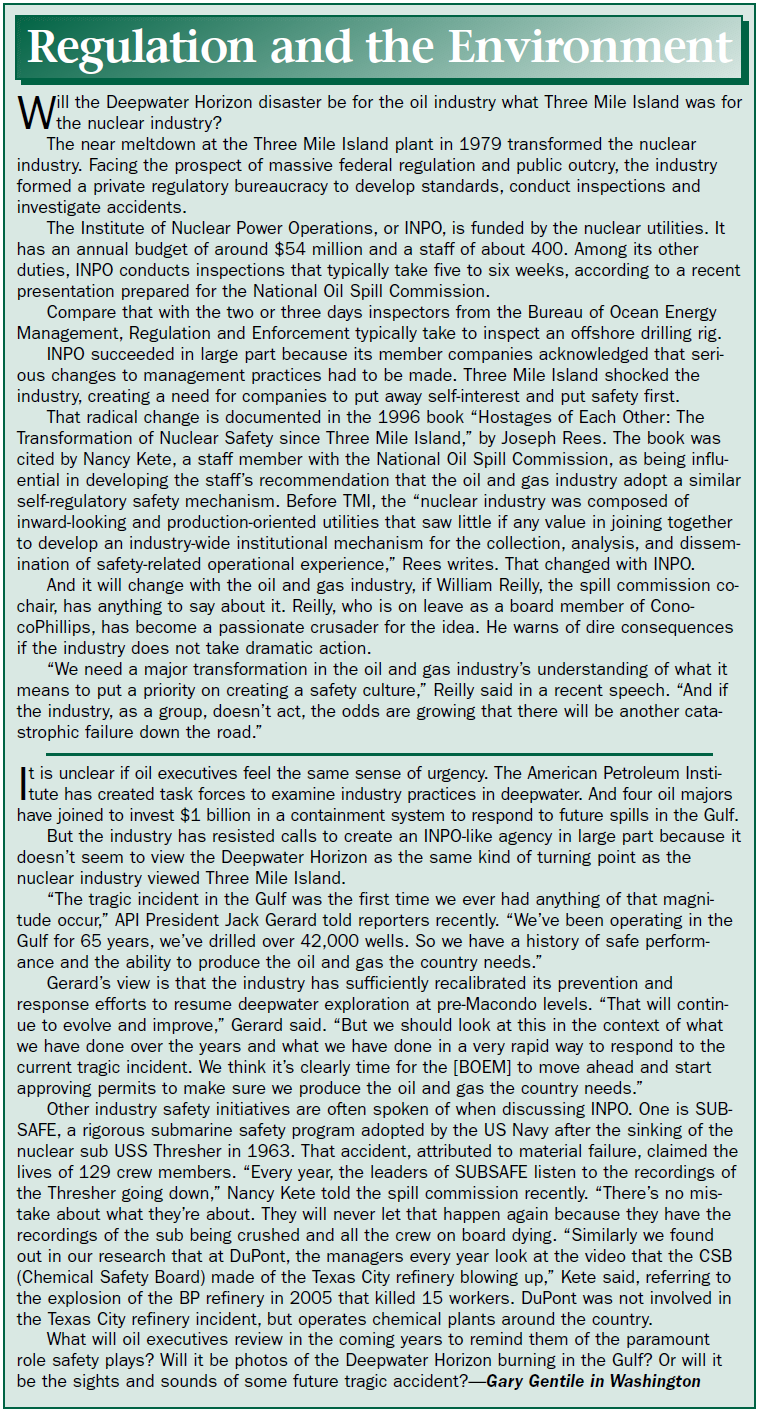
This is a very good column that we are posting with the permission of Gary Gentile, Platts Oilgram.

Read Full Post »

Top 10 Twitter trends for 2010:

1. Gulf Oil Spill
2. FIFA World Cup
3. Inception
4. Haiti Earthquake
5. Vuvuzela
6. Apple iPad
7. Google Android
8. Justin Bieber
9. Harry Potter & the Deathly Hallows
10. Pulpo Paul

Pre-Macondo poll numbers I would like to have seen:

  • Percentage of adult Americans (outside of the Gulf Region) who knew there was offshore oil and gas production in the Gulf of Mexico.  Based on conversations I’ve had with people in the DC area, I’m guessing less than 50%. I know that sounds astounding, but that’s my guess.
  • Percentage of adult Americans who had heard of the Minerals Management Service (probably less than 2%) and knew that the MMS had regulatory responsibilities for offshore oil and gas operations (had to be less than 1%).

Read Full Post »

Transocean Ltd. (RIG, RIGN.VX) said Thursday that a Swiss administrative court ruled that the company cannot pay out about $1 billion to shareholders because of the numerous Deepwater Horizon-related lawsuits pending against the rig owner in the U.S. Wall Street Journal

The $40 billion question: How much will Macondo ultimately cost Transocean? Halliburton? Anadarko? Mitusi? Cameron?

Read Full Post »

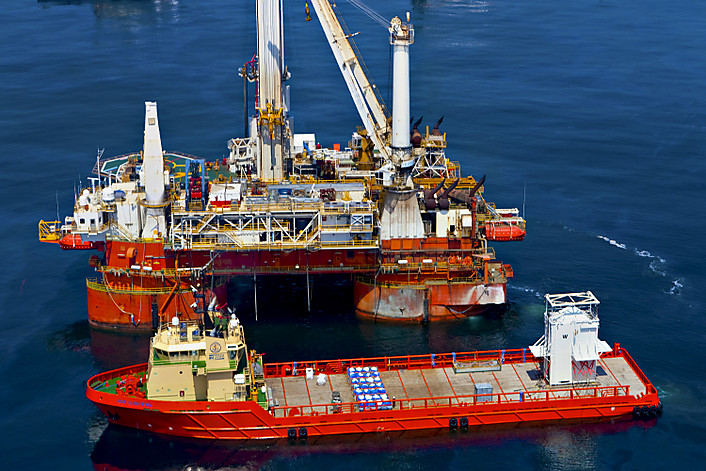
Helix Q4000

Helix’s system, a competitor to a project led by Exxon Mobil Corp that is still in the planning stages, is built from equipment that was used to siphon oil from the sea floor after BP Plc’s Macondo well ruptured on April 20. Reuters article

Interesting. We don’t know the details, but this would seem to be a cost-effective approach that could be quickly implemented.

Read Full Post »

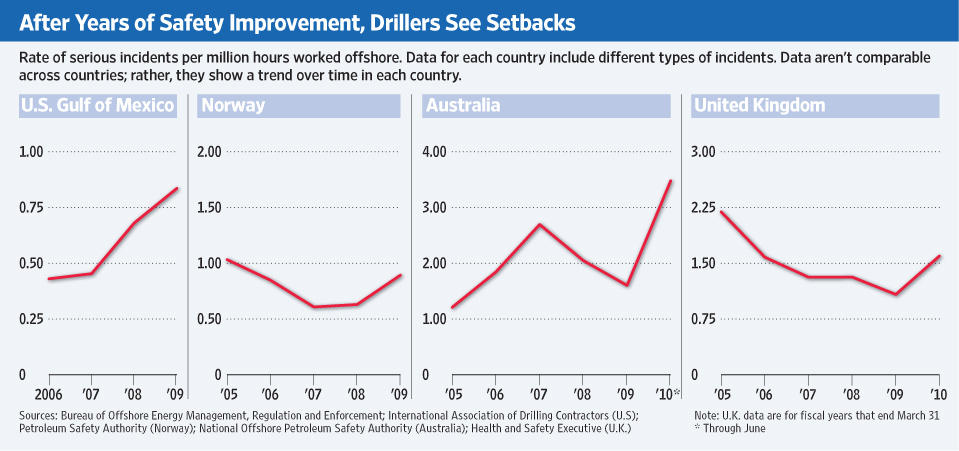
While the significance of these charts is debatable, the occurrence of two historic blowouts – Montara and Macondo – within an eight month period is a clear signal that we have problems. The disturbing similarities in these two blowouts tell us that well construction, monitoring, barrier verification, and personnel training practices are not where they should be.

Link to article

Read Full Post »

Washington Post report:

Workers on the doomed Gulf of Mexico oil rig were distracted by multiple activities going on simultaneously and didn’t try to shut the well until 49 minutes after potentially explosive gas particles began flowing in, a BP vice president told a federal investigative panel Wednesday.

Read Full Post »

« Newer Posts - Older Posts »