The main effect of the EPA ruling (attached) appears to be that permit appeals will be submitted to EPA rather than the State of Maryland.
Archive for July, 2025
EPA rules that Maryland improperly issued US Wind permit
Posted in Offshore Wind, tagged EPA, Maryland, PSD permit, US Wind on July 12, 2025| Leave a Comment »
Sunday (7/13) marks the one year anniversary of the Vineyard Wind turbine blade failure
Posted in accidents, Offshore Wind, tagged anniversary, blade failure, BSEE, debris, departures, environmental assessment, investigation report, quality control, Vineyard Wind on July 11, 2025| Leave a Comment »
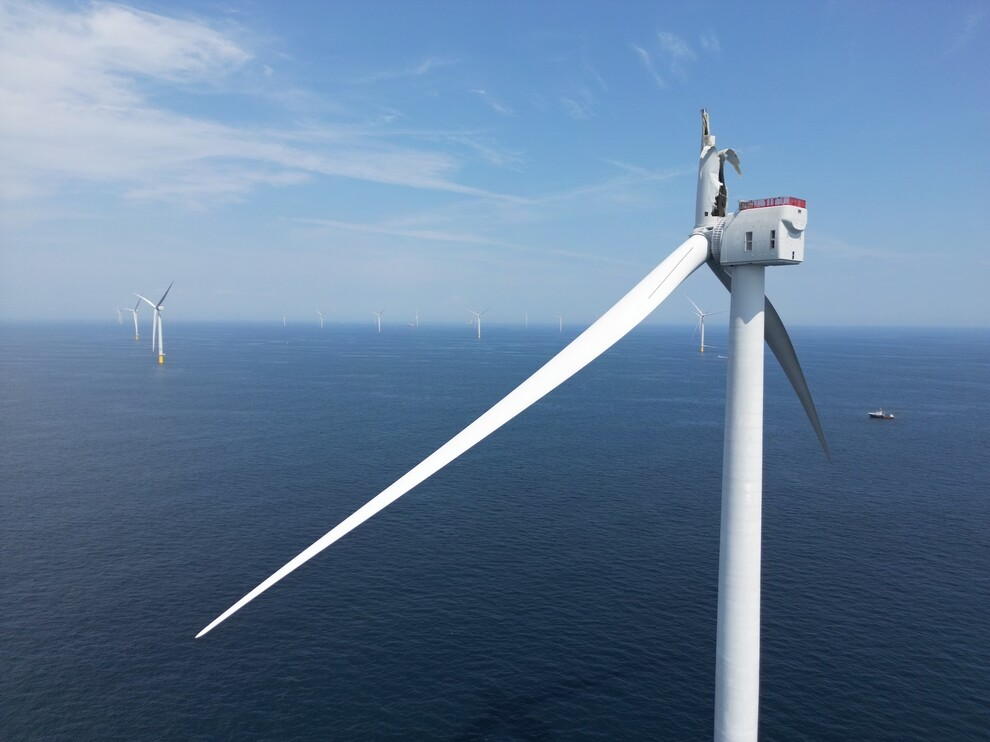
Why has the BSEE investigation report still not been issued?
Construction on the Vineyard Wind project continues yet important questions about quality control, regulatory departures, debris recovery, and environmental impacts remain.
Given the investigation’s significance, not only for Vineyard Wind, but for other offshore wind projects planned or under construction, how is the delay in issuing the report acceptable?
Keep in mind that the lengthy and complex National Commission, BOEMRE, Chief Counsel, and NAE reports on the Macondo blowout were published 6 to to 17 months after the well was shut-in.
WSJ/Rystad on tariffs
Posted in drilling, energy policy, Offshore Energy - General, tagged drill baby drill, oil and gas drilling, Rystad, tariffs on July 10, 2025| Leave a Comment »
Tariffs and their uncertainty “will certainly decrease expected investment activity in the energy sector,” says the new report. More than $50 billion of offshore investment this year has been deferred “with operators looking to wait out current market uncertainty before making significant final investment decisions,” Rystad notes.
Rystad estimates that tariffs will increase costs for offshore oil and gas projects by 8% year-over-year and 12% for onshore. “Most steel and raw material exposed cost categories are feeling the majority of the impact from tariffs and thus will take the biggest hit.”
The Tax Foundation and Wood Mackenzie have offered similar opinions.
Comment: At a glance, the number of 2025 well starts in the GOA appears to be down (more on this at a later date). While there are many factors affecting drilling decisions, lower oil prices and higher costs associated with tariffs are not compatible with a “drill baby drill” philosophy.
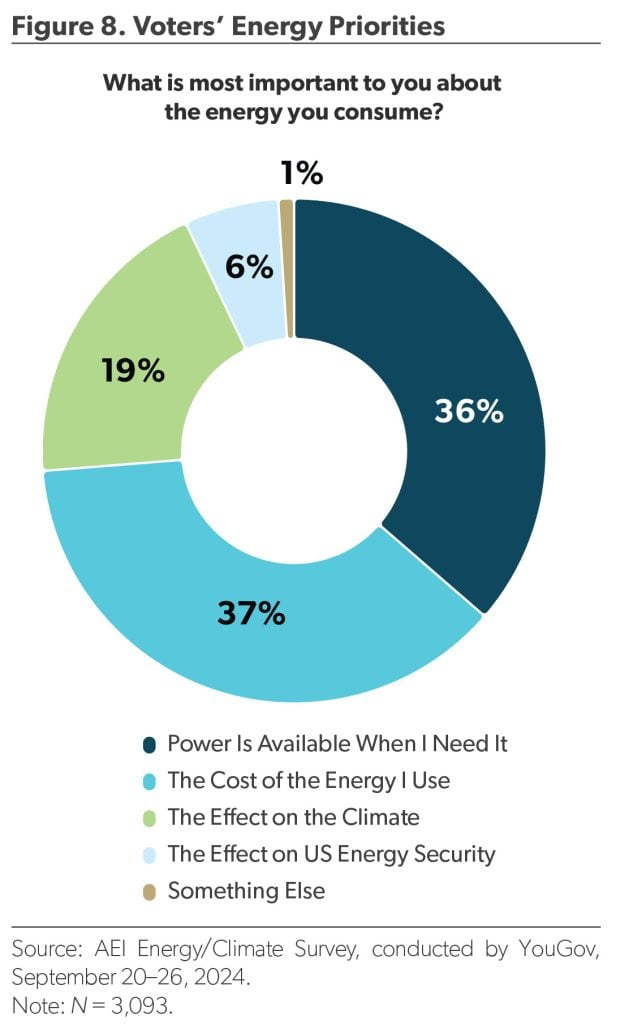
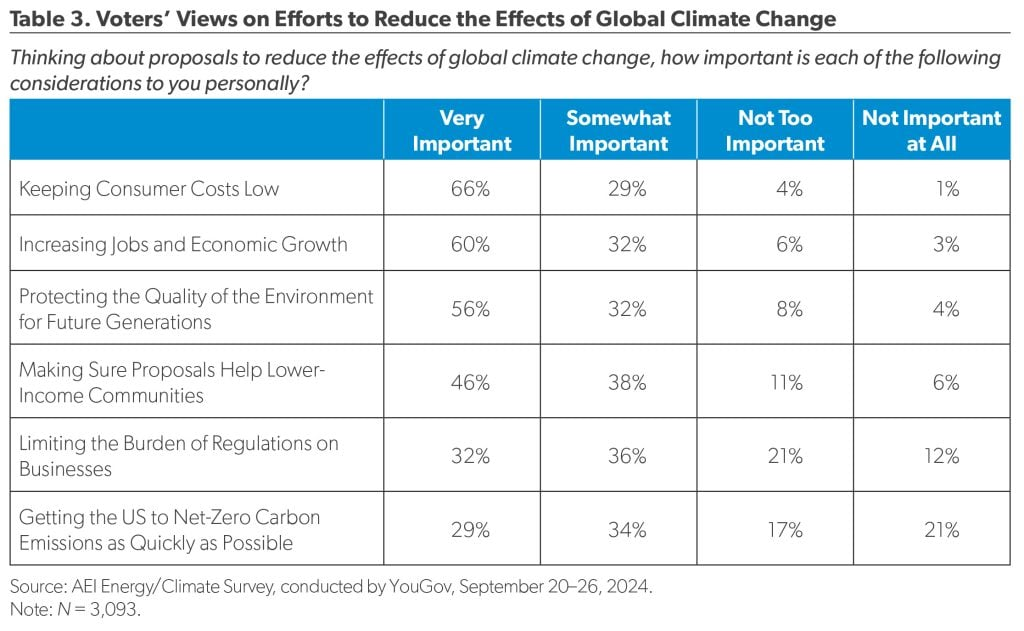
Interesting AEI survey of US voters views on energy
Posted in climate, energy policy, tagged AEi, climate, energy cost, energy reliability, voters energy priorities on July 9, 2025| Leave a Comment »
The full report is attached.
Not at all shocking:
The public is most interested in the cost and reliability of the energy they use and the convenience and comfort of their energy-using products. They are unwilling to sacrifice much at all financially to address climate change or significantly change their consumer behavior.
NOAA proposes revisions to deepsea mining regulations
Posted in deep sea mining, energy policy, tagged consolidated licensing, deepsea mining, DSHMRA, NOAA, UNCLOS on July 8, 2025| Leave a Comment »
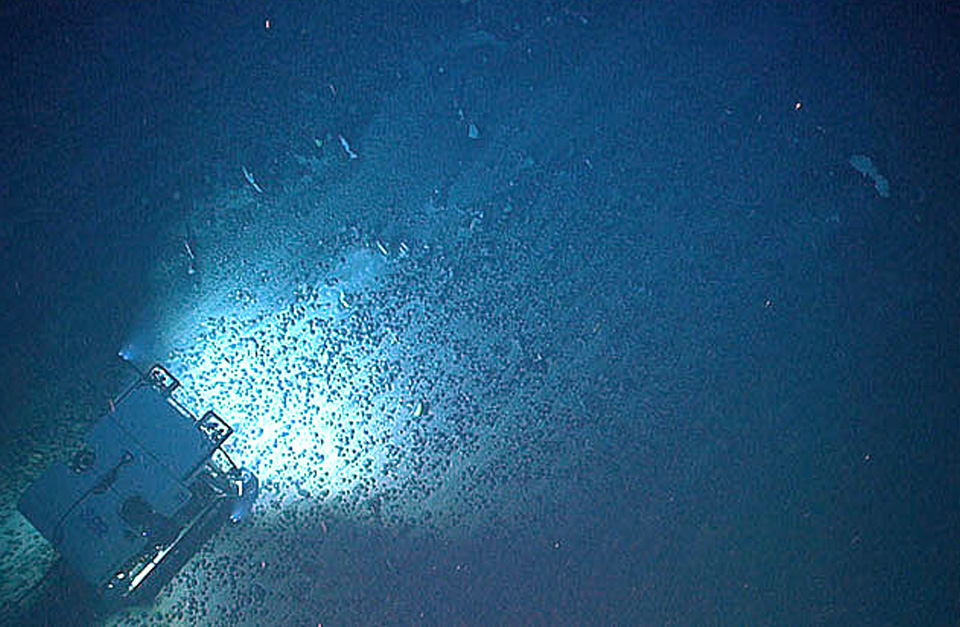
The proposed rule is attached. Important points:
How can the US issue mining licenses in international waters (controversial)?
“The International Seabed Authority (ISA) regulates deep seabed mining in areas beyond national jurisdiction for countries that are parties to the United Nations Convention on the Law of the Sea (UNCLOS). The United States is a non-party to UNCLOS. Under U.S. law, NOAA may issue licenses and permits to U.S. citizens in areas beyond national jurisdiction under the Deep Seabed Hard Mineral Resources Act (DSHMRA).“
Main objective of the proposed rule (paraphrased):
The deepsea mining industry has gained experience from site specific exploration activities. As a result, later entrants may be able to capitalize on the information gained by previous explorers and lessen the need for further exploration of previously explored areas. In such cases there may be a need for a consolidated licensing process in which permit applicants could meet exploration license requirements to establish priority of right, and permit requirements, simultaneously.
Comment: The proposed rule seems reasonable in that qualified companies that gather the necessary site information would have the right (after NOAA review and approval) to collect the minerals. This would align deepsea mining more closely with offshore oil and gas in that companies acquiring licenses would be able to proceed to production after regulatory approvals.
Senate version of the Big Beautiful Bill was enacted
Posted in energy policy, Offshore Energy - General, Regulation, tagged Big Beautiful Bill, energy policy, Gulf of America, lease sale 262 on July 7, 2025| Leave a Comment »
See the differences in the OCS oil and gas provisions in the House and Senate versions.
We preferred the House version, but the Senate Parliamentarian killed the provisions that reduced the risk of litigation and processing delays.
Whether justified or not, the royalty rate is now capped at 1/6 and a 10-year deepwater lease term is locked in.
The favorable terms and assurance of regular GOA lease sales put the ball squarely in industry’s court. We are looking for a good showing at Sale 262, including some new bidders and the return of some prominent companies.
Interesting bits in the Proposed Notice for OCS Oil and Gas Lease Sale 262
Posted in energy policy, Gulf of Mexico, Offshore Energy - General, tagged Big Beautiful Bill, carbon disposal, drilling requirements, joint bidding restrictions, lease stipulations, OCS Sale 262, oil and gas only, Sale Notice, UNCLOS on July 1, 2025| Leave a Comment »
Eye catching sentences in the news release and Proposed Notice of Sale:
“Leases awarded through Lease Sale 262 will be for oil and gas exploration and development only.” (News Release)
“Leases issued as a result of GOA Lease Sale 262 are expressly limited to oil and gas exploration and development.” (p. 16 of the Sale Notice)
Comment: Why would BOEM stipulate, for the first time ever, that an Oil and Gas Lease Sale is only for oil and gas exploration and development? Perhaps because, at the last 3 sales, 2 companies wrongfully acquired oil and leases for carbon disposal purposes. Those leases will likely expire at the end of their primary term, and the lessees will have nothing to show for their investment.
Other items of interest:
“Congress may enact legislation through reconciliation efforts sometime after publication of this Proposed NOS“
Comment: The Offshore Oil and Gas Leasing provisions in the “Big Beautiful Bill” make OCS leases more attractive in that they minimize sale uncertainty and return royalty rates to pre-IRA levels.
Proposed Primary Terms
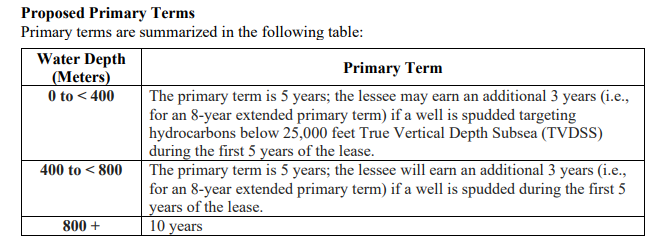
Comment: Time for an update. The drilling requirements for a primary term extension should be the same for leases in 0-400 m as for those in 400-800 m. The requirement for an ultra-deep subsurface well is selectively punitive to shelf operations. These operations, although typically less lucrative, are important to the Gulf’s infrastructure.
Restricted Joint Bidders
On April 29, 2025, BOEM published the most recent List of Restricted Joint Bidders in the Federal Register (90 FR 17832). Potential bidders are advised to refer to the Federal Register prior to bidding for the most current list at the time of the lease sale. Please refer to the joint bidding provisions at 30 CFR 556.511-556.515
Comment: It’s past time for Congress to do away with the joint bidding restriction.
Comment: No surprises in the Lease Stipulations. Can BOEM finally drop the Law of the Seas stipulation (No. 6)?
Conclusion: There are no excuses for not participating in this sale!
 Bud's Offshore Energy (BOE)