Feeds:
Posts
Comments

Archive for May, 2024

It’s OTC week and optimism abounds. We are so back!”

Preachin’ to the choir:

  • Deepwater is back in vogue.” (Pablo Medina, Welligence)
  • “Newer deepwater projects have the attributes oil and gas companies are looking for: longer-term production, lower breakeven costs, big resource potentials and lower carbon emissions.” (Medina)
  • Capital spending on all-new deepwater drilling is poised to hit a 12-year high next year (Rystad)
  • Investment in all-new and existing deepwater fields could hit $130.7 billion in 2027, a 30% jump over 2023 (Rystad)
  • Deepwater resources offer lower carbon emissions intensity than shale and other tight oils, averaging 2kg of carbon dioxide per barrel less than shale. (Rystad)
  • “The return of offshore and deepwater operations is going to be a big topic at OTC, and Namibia is going to be talk of the show.” (James West, Evercore)
  • Enthusiasm for offshore has climbed with discoveries and technology breakthroughs. Namibia’s Mopane is forecast to hold as much as 10 billion barrels of oil. (Portuguese oil company Galp Energia)
  • Rates for some rigs have surpassed $500,000 a day and contract durations are lengthening as supply dwindles.
  • Deepwater development: simpler, safer, greener!
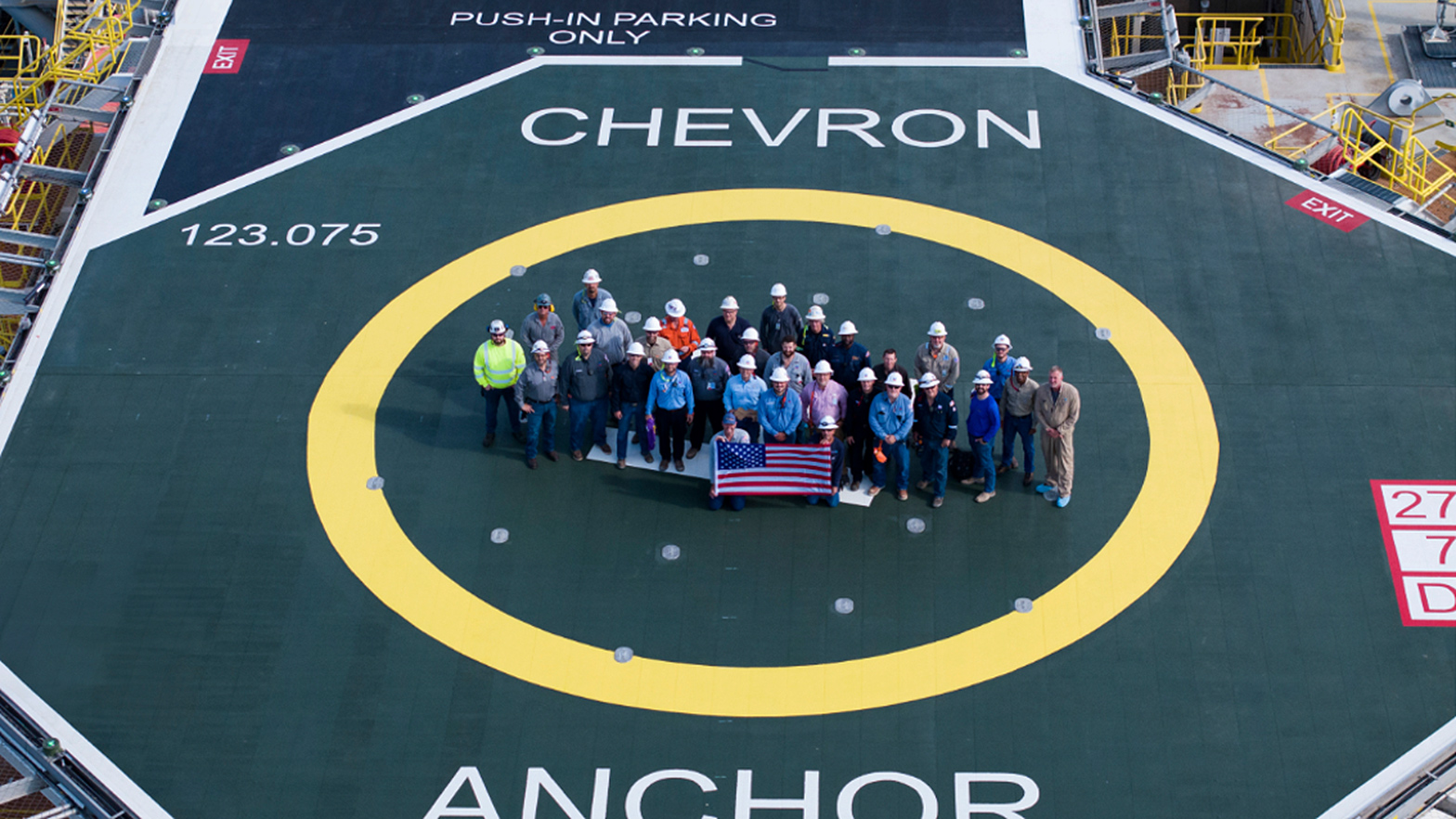
  • Chevron is preparing to start ultra-high pressure production at their Anchor platform.
So as not to kill the buzz, I won’t mention the 5 Year (no)Leasing Plan and other troubling US matters, at least for one day.

Read Full Post »

The government’s decision to require that a capping stack be located in Guyana is prudent. Although the need for a capping stack is dependent on multiple barrier failures and is thus extremely low, the environmental and economic consequences of a prolonged well blowout warrant timely access to this tertiary well control option.

A capping stack must be properly maintained and deployable without delay. In that regard, BSEE has a good program for testing Gulf of Mexico capping stack readiness. Capping stack drills are an important post-Macondo addition to the unannounced oil spill response program that dates back to 1981.

The capping stack designed during the Macondo blowout shut-in the well on 15 July 2010. The decision process that allowed the well to remain shut-in was a bit perplexing, and we had a bizarre situation where the Federal Incident Commander threatened to require the resumption of the blowout. The same well integrity concerns had prematurely ended the “top kill” operation on 28 May, allowing the well to flow unnecessarily into the Gulf for an additional 48 days (5/28-7/15). (See this important paper by LSU Petroleum Engineering professor Dr. Mayank Tyagi et al: Analysis of Well Containment and Control Attempts in the Aftermath of the Deepwater Blowout in MC252)

“Troy Naquin, BSEE New Orleans District, observes as a capping stack is carefully lowered onto the deck of ship to be transported more than 100 miles offshore for a drill designed to test industry’s ability to successfully deploy it in case of an emergency, May 8, 2023.” BSEE photo/Bobby Nash

Read Full Post »

Chevron wants in, Exxon and China want bigger pieces, and Venezuela claims it all.

Exxon CEO Darren Woods sums it up:β€œI believe Guyana will go down as one of the most successful deepwater developments in the history of the industry.”

Nice production growth and this is just the beginning:

OilNow Guyana

Read Full Post »

As promised, the Norwegian petroleum safety regulator (Havtil) has posted their risk trend report (RNNP) for 2023 in English.

Havtil prioritizes risk assessment and publishes their comprehensive annual analysis of safety trends in a timely manner. The 2023 RNNP was posted in Norwegian earlier this year and the summary report is already available in English. RNNP reports are an important safety resource that should be reviewed and discussed wherever oil and gas operations are conducted.

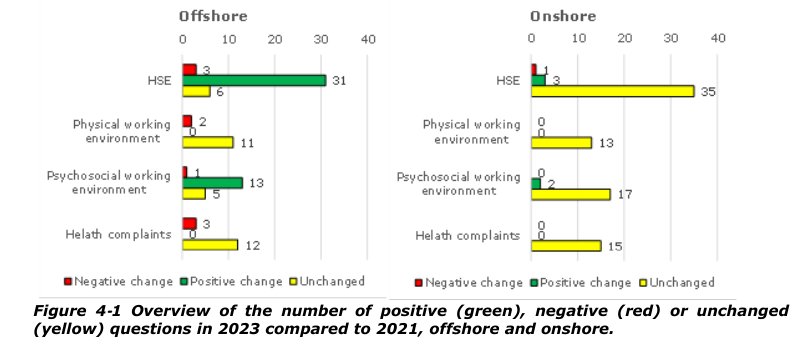
As an example of the breadth of these reviews, the two sets of charts below convey data that are not typically documented by offshore safety regulators. The first set documents near-misses that did not result in injuries, but did expose workers to that risk.

The second set of charts is a summary of worker responses to a survey, a means of assessing the safety culture. The big jump in favorable responses to the HSE questions is encouraging. In particular, the report notes (p. 14) that responses to a question about being pressured not to report incidents has moved in a positive direction in the last two surveys. Hopefully, this is an industry-wide trend.

Read Full Post »

To what extent was the Main Pass Oil Gathering (MPOG) system shut-in responsible for the Nov. to Feb. production decline (chart below)? The MPOG wasn’t cleared for production until earlier this month, so we may not know until the investigation report is published and the EIA posts April 2024 production data (2 month lag).

The NTSB is leading the investigation on the MPOG spill. This short summary is all they have posted so far, but we should see a preliminary report soon. The NTSB’s final reports are frequently delayed. They still haven’t finalized their report on the Dec. 2022 Gulf of Mexico helicopter crash.

Read Full Post »

« Newer Posts