Feeds:
Posts
Comments

Archive for January, 2022

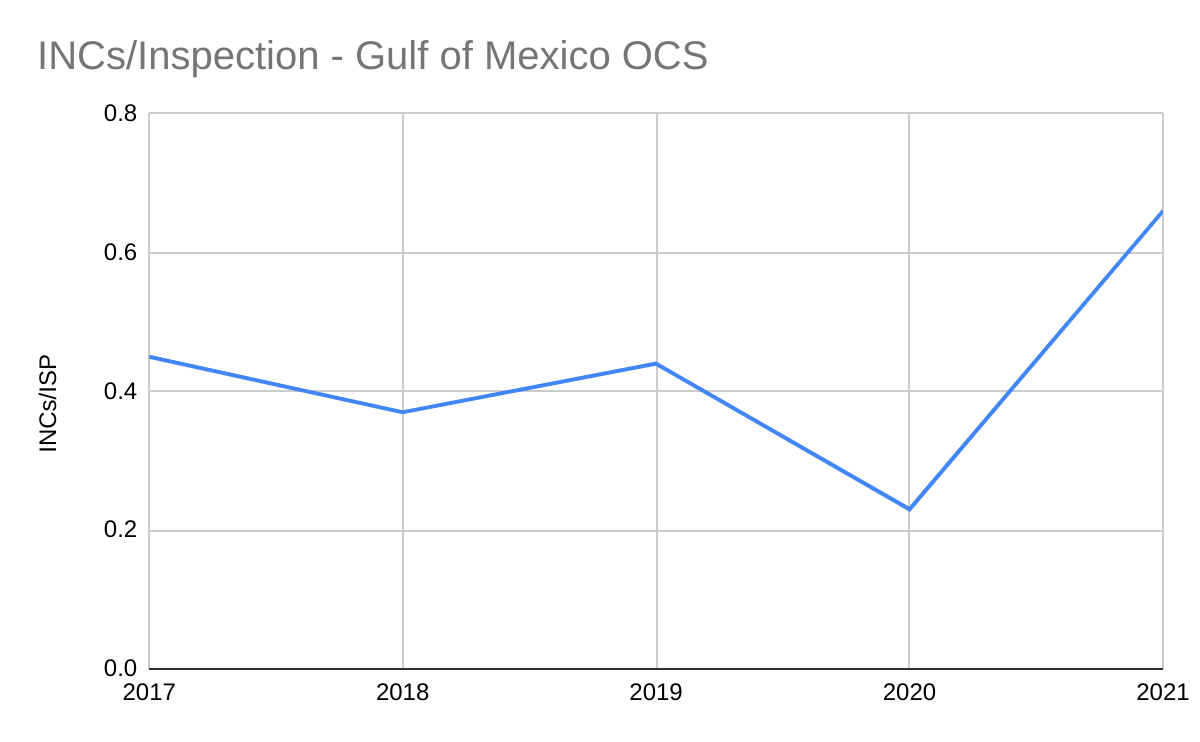
Per BSEE’s Incidents of Non-Compliance (INC) data base, the number of violations surged in 2021, both in terms of the total number of INCs and the INCs/inspection ratio (see chart below). Remarkably, a single company – Fieldwood Energy – was responsible for 845 INCs or 44% of the total number issued. Normalizing for the number of inspections, Fieldwood facilities were cited for 1.46 INCs/inspection versus 0.46 INCs/inspection for all other companies. An unprecedented 61 of Fieldwood’s 2021 INCs called for facility shut-ins, many times more than any other operator. Through the first 17 days of 2022, Fieldwood has already been cited for 21 INCs, 5 of which required facilities to be shut-in.
Fieldwood and its affiliates have experienced multiple bankruptcies and the company has once again been reorganized with the blessing of the courts. Chevron’s comprehensive objection to the reorganization plan asserted that Fieldwood has $9 billion in current and anticipated decommissioning obligations. These enormous decommissioning liabilities and their implications for predecessor lessees (former facility owners) and the Federal government were the main issue in these proceedings, and the bankruptcy plan includes settlements with predecessor companies and the government.

Even more significant than the financial matters and INCs are the following:

While BSEE regulations provide for the removal of operating rights for poor safety performance, companies can reorganize and problem managers can reappear elsewhere. As a result, marginally financed and ineffective operating companies are a major challenge for BSEE as evidenced by the INCs, civil penalties, and investigations. (See the related saga of Platforms Hogan and Houchin in the Pacific Region.)

Poor safety performers drag down the entire industry. The costs of mega-disasters like the Santa Barbara and Macondo blowouts have been widely discussed. However, chronic poor performance and the associated incidents also weaken the industry and damage the integrity of the offshore oil and gas program. These performance issues can’t be left entirely to BSEE and the Coast Guard to resolve. The industry needs to do a better job of self-evaluation, calling out poor performers, and exercising judgement in the assignment of offshore properties.

Read Full Post »

BP and Equinor have quit Nova Scotia’s upstream sector in Canada, leaving the once-alluring region without an active exploration licence, potentially putting a final nail in the coffin of the province’s E&P scene which is already been on its death bed.

Upstream
Discoverer Seven Seas

Some of us remember the record water depth well (4876′) drilled by the Discoverer Seven Seas offshore Nova Scotia in 1979. (Correction: The record water depth well was actually offshore Newfoundland. Many thanks to Howard Pike for the reminder.)

Some notable achievements offshore Nova Scotia:

  • Cohasset Panuke provided Canada’s first offshore oil production (1992), and the first for the Atlantic waters of North America.
  • The Sable Offshore Energy Project was responsible for Canada’s first offshore gas production (1999)
  • A novel jackup platform produced gas from the Deep Panuke field from 2013 to 2018.

The only remaining exploration and production operations in the Atlantic offshore North America are in Newfoundland waters (link to map).

Read Full Post »

Oil and gas workers’ union, Unite Scotland, has demanded intervention by the Scottish government in response to Canadian Natural Resources (CNR) International introducing mandatory vaccinations, calling these measures “draconian.”

offshore-energy.biz

As previously reported, a Norwegian union criticized the absence of consultation before Aker BP imposed vaccine requirements at their facilities.

Read Full Post »

By the end of 2022, Germany will have switched off its last 8.1 GW of nuclear power. Another 6.4 GW of coal capacity are scheduled for shuttering by 2023. Recent events and publications have given ammunition to those who fear a collapse of the system.

In 2018, Germany’s influential energy industry association BDEW said that Germany would run into a “shortfall in secured capacity by 2023 at the latest”, and that the country shouldn’t rely on its neighbors to make up the difference. Three years later and a lot closer to the nuclear phase-outBDEW head Kerstin Andreae says: “For a secure energy supply, we also need new gas-fired power plants, as this is the only way to obtain the required controllable power.”

Clean Energy Wire

Germany will need back-up and supplemental power from gas plants, but the EU has excluded gas-fired energy generation from the list of sustainable investments and the associated incentives. Per Kerstin Andreae of the BDEW:

“We need to build these new power plant capacities now. Although they will initially run on natural gas, they are already capable of using hydrogen as an energy source in the future and will thus ultimately become climate neutral,” she said. But without a clear decision from the Commission „ important energy transition investments are at risk”

Clean Energy Wire

Meanwhile, oilprice.com reports that “UK peak-hour power prices for Monday evening through 6 p.m. surged to the highest level in a month due to low wind power generation during the weekend.” In what is becoming a familiar story:

Coal closures and no immediate replacements for nuclear power have exposed the UK’s vulnerabilities to the whims of the weather, with cold winters stoking natural gas demand and still weather lowering wind power generation.

oilprice.com

Daniel Yergin reminded us that energy transitions take time. Countries that ignore those realities are likely to suffer the consequences, both economically and environmentally. Per Aissatou Sophie Gladima, the energy minister of Senegal:

Restricting lending for oil and gas development, she said, “is like removing the ladder and asking us to jump or fly.”

Read Full Post »

Deb Haaland, U.S. Secretary of the Interior
Deb Haaland, US Secretary of the Interior
Haaland Leeds
Erling Braut Haaland

As a result of her mother’s heritage, Deb Haaland is the first Native American to serve as a US cabinet secretary. However, her father, a decorated Marine Corps officer was a Norwegian American. She thus has the same surname as Erling Braut Haaland, the star striker for Norway and BVB Dortmund in the German Bundesliga.

Although most Americans cannot name the Secretary of the Interior (James Watt was an exception thanks to his attempt to ban the Beach Boys from the 4th of July concert in Washington😃), Deb Haaland is probably slightly better known in the US than Erling Haaland. However, thanks to the popularity of football/fussball/futbol/soccer, Erling is much better known internationally.

What does this have to do with offshore energy? Well Norway, which just announced record oil and gas revenues, has managed to sustain leasing, exploration, and production throughout the pandemic without compromising safety and environmental objectives. They also wisely eased the petroleum tax burden during the pandemic with favorable results.

The temporary change in the petroleum tax has most likely led to an increase in project activity. The projects would most likely have been carried out even without the tax package, but some of them would have been postponed.

NPD

Regardless of her heritage and any connections she might have with Norway, this would be a good time for Secretary Haaland to put the MOU between the Dept. of the Interior and the Ministry of Petroleum and Energy (Norway) to good use by learning more about resource management on the Norwegian continental shelf and discussing how to best sustain US offshore production.

Read Full Post »

Good News Friday 😃

 - Dilbert by Scott Adams

Gratitude and positive messaging should be incorporated into safety management plans.😃

Read Full Post »

This should not surprise experienced OSHA regulators given the absence of clear legislative authority.

Offshore regulators in the US have used “work-arounds” in the form of Notices to Lessees, Conditions of Approval, and other types of guidance documents. However, there was a general understanding that requirements imposed by these methods would not survive legal challenges unless they were clearly authorized by legislation or regulations. Most work-arounds aren’t challenged because the regulatory authority is reasonably clear, their issuance is at least minimally acceptable to the regulated industry, or the perceived cost of challenges exceeds the cost of compliance.

Read Full Post »

A Norwegian union representing offshore oil and gas workers has criticized Aker BP’s process to introduce a Covid-19 vaccine mandate for its offshore employees.

offshore-energy.biz

“We agree that we must protect our employees and our suppliers in the best possible way, but it also requires that we are involved in how it should happen and how our employees and suppliers are taken care of in this process.”

Ingard Haugeberg, Industri Energi

Seems like a reasonable position on the part of the workers. As previously reported, many US oilfield workers are skeptical of the vaccine mandate and have warned that they will quit.

Read Full Post »

See the video below. The size and durability of the bladders could be issues at locations where there are other seafloor activities (e.g. trawling), but this and other pumped hydro-storage concepts are promising. Onshore testing of this concept is scheduled for 2023 in the Netherlands. Energy storage and stable, reliable power supply will be critical to the long-term success of offshore wind projects.

Read Full Post »

Vineyard Wind false start?

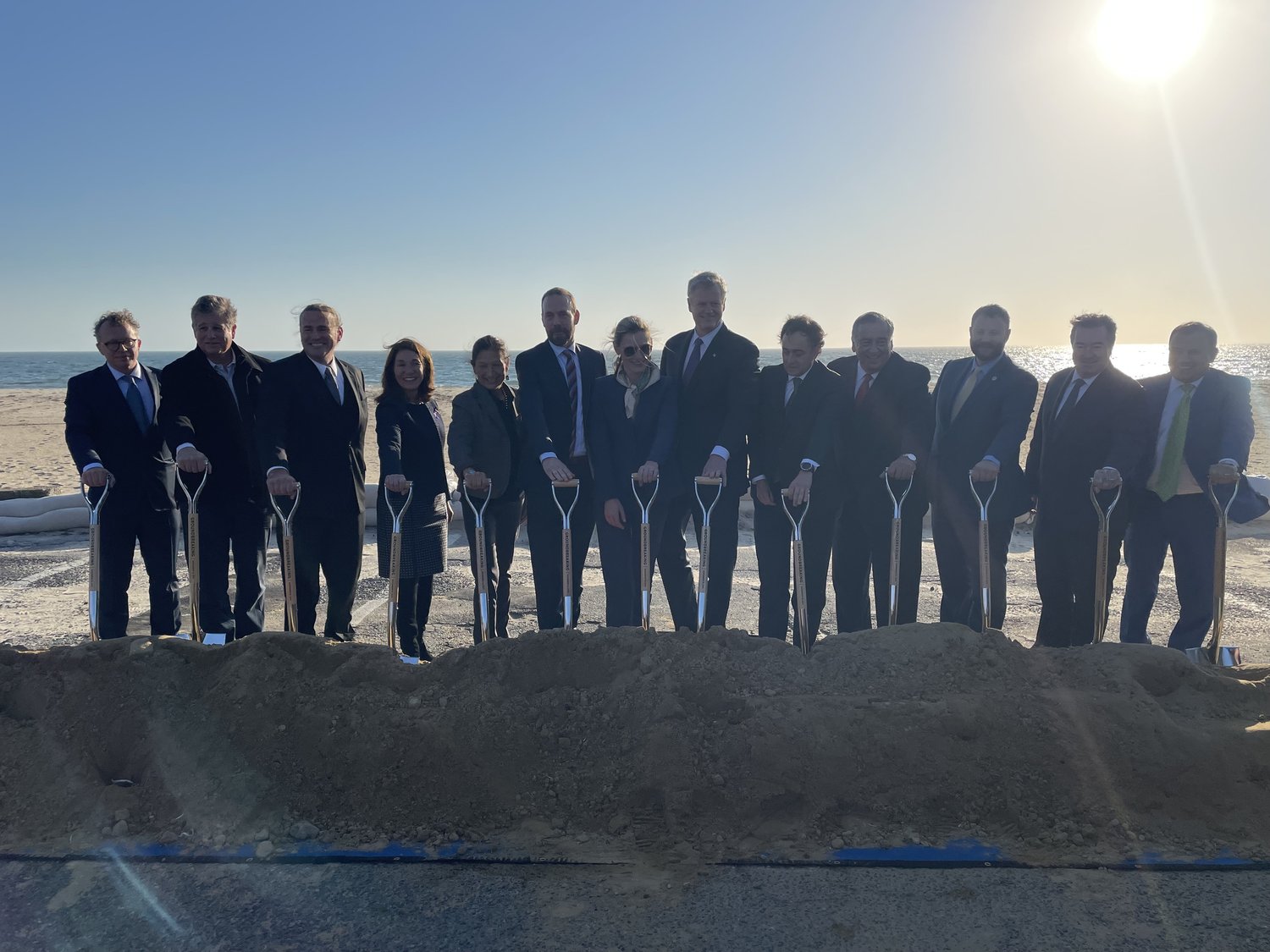
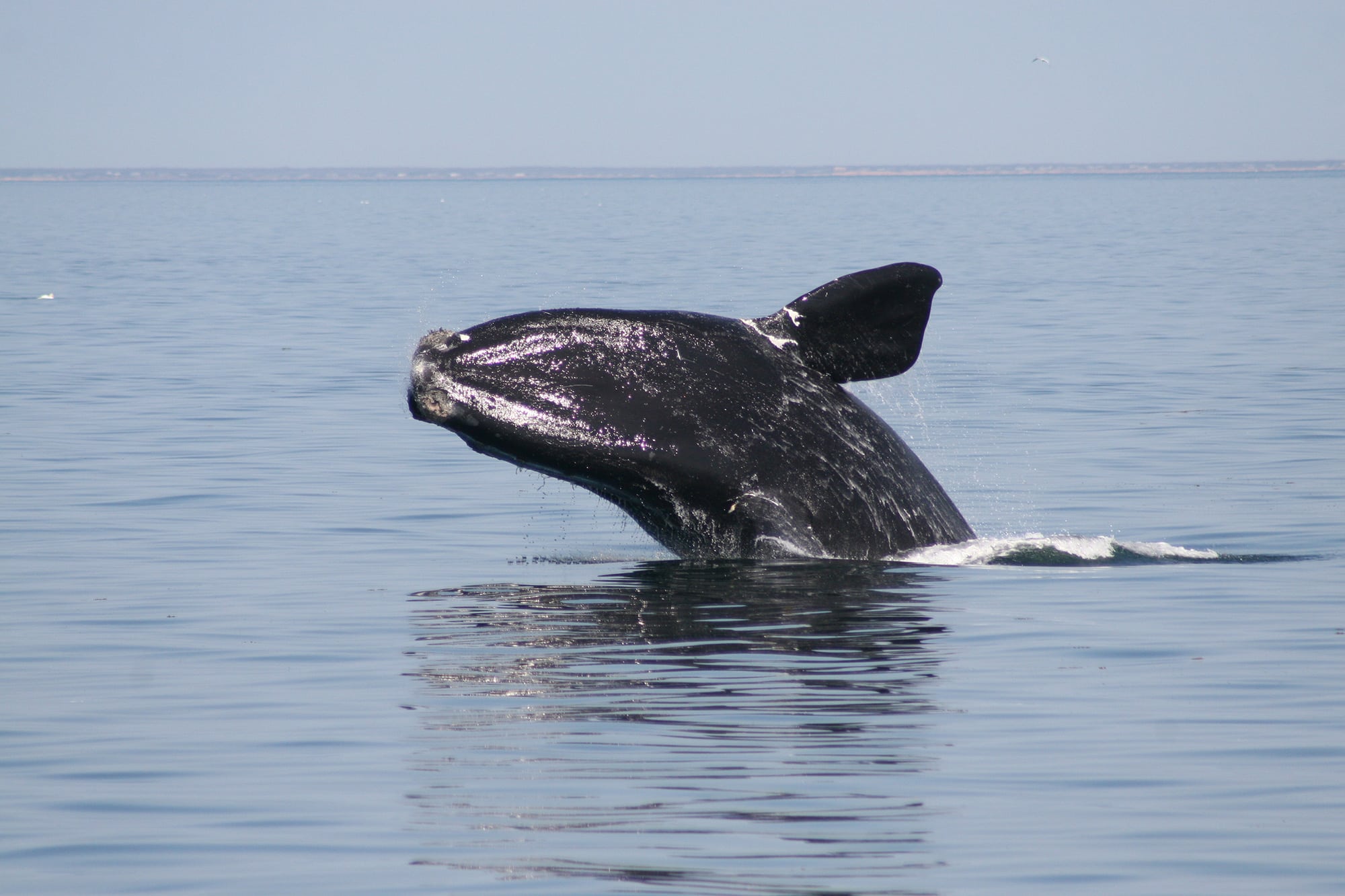
Nearly 17 years after the Energy Policy Act of 2005 (incorporating language drafted by Minerals Management Service staff) authorized wind energy projects in Federal offshore waters, commercial offshore wind power is not imminent. Despite enthusiastic political support and promised State and Federal subsidies, no commercial scale offshore wind development has commenced. The groundbreaking ceremony for Vineyard Wind I (pictured above), the first project approved by BOEM, may prove to have been premature. The project faces multiple lawsuits from commercial fishing organizations and an organization concerned about possible impacts to the endangered right whale.

North Atlantic right whale - Whale & Dolphin Conservation USA
North Atlantic Right Whale

Read Full Post »

« Newer Posts - Older Posts »