Feeds:
Posts
Comments

Archive for June, 2011

A month ago, BOE posted a list of major accidents for which no official company or government reports had been released.  Below is the latest update on these accidents. If you have updated information, or if there are other events that should be added to the list, please let us know.

The following recent accidents are on our “watch list.”  Accidents are added to the “missing report list” when six months have elapsed since the accident.

Read Full Post »

From the standpoint of post-Macondo safety and regulatory issues, this concise summary is the most comprehensive and useful report that I have read since the blowout.

I have pasted (below) comments about information management – one of the many important topics considered in the report – and hope you take time to read the entire summary. It is only 12 pages.

Conducting a critical review of the information used to manage major accident risk is one of the measures relevant for the companies. This work could include an assessment of
 the relevance, reliability and modernity of the indicators used to follow up risk trends
 inappropriate use of indicators, incentives and reward systems
 the need for better indicators and other information about the business which can be used to secure an early warning about a weakening in safety-critical barrier elements.
The PSA is of the opinion that the quality of information applied in managing major accident risk is also a question of what overview the players have of their own business, and thereby a question of the players’ own control. The PSA assumes that managing major accident risk cannot be outsourced. In light of the DwH accident, it could be relevant for the companies to review the processes intended to provide the necessary information about the business, assess in part how these processes support a culture of accountability and how various management and audit functions, third-party verifications and so forth contribute in this connection.


Read Full Post »

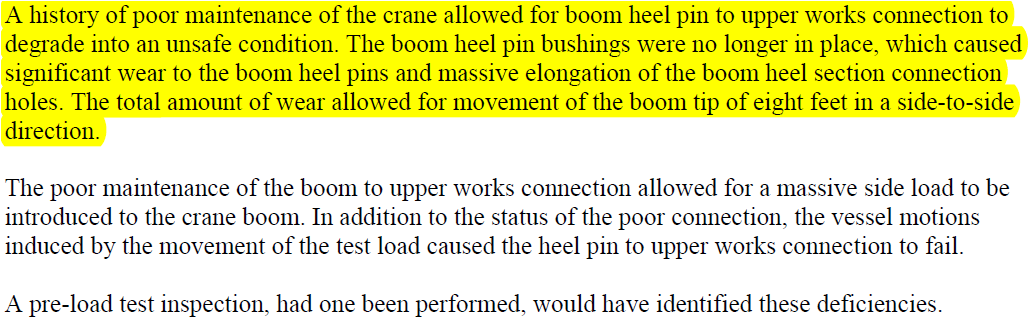
Thanks to a reader, we have obtained a copy of a report on the Jack Ryan crane failure (August 2010) that killed one worker and injured three offshore Nigeria. As BOE readers know, we have been pursuing information on this accident for months.

At BOE our highest priority is drawing attention to and disseminating information on offshore accidents.  In that regard, we greatly appreciate the support we have received from readers.

Excerpt:

Link to Jack Ryan report.

We understand that Total is conducting an inquiry, and assume that Transocean has also investigated this accident. We hope those reports are made publicly available.

Read Full Post »

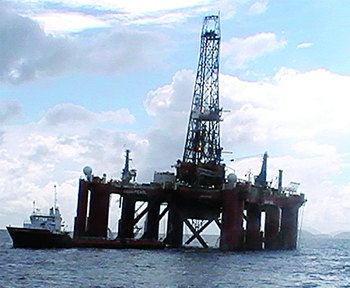
Aban Pearl listing off Trinidad in August 2009

While our interest in the sinking of the Aban Pearl pertains to what went wrong and why, former PDVSA board member Gustavo Colonel continues to question Aban Pearl contracting irregularities. Is PDVSA refusing to release the report on the Aban Pearl sinking so as not to draw further attention to these contracting issues?

The whole Board is responsible for the loss of about 800,000 barrels per day of oil production; for the fraudulent certification of “proven oil reserves” in the Orinoco heavy oil region; for the irregular contracting, with a ghost company, of the offshore drilling barge Aban Pearl for twice the amount really paid to the owners of the barge; for the importing of 180,000 tons of food that later went to rot in Venezuelan ports but provided some of the members of the board with millions of dollars in criminal profits; and in numerous other corrupt practices that are well documented.

Read Full Post »

Like the National Commission on the BP Deepwater Horizon Oil Spill and Offshore Drilling, the Montara Commission of Inquiry, the Norwegian government, and leading safety and regulatory authorities around the world, the IADC recognizes the risks associated with complex, multi-agency regulatory regimes. A single authority should be responsible and accountable for safety and pollution prevention at offshore facilities, and should draw on the expertise of other agencies and organizations as necessary to achieve performance objectives. 

The safety and environmental  risks associated with fragmented or compartmentalized regulation include gaps, overlap, confusion, inconsistencies, and conflicting standards. Industry and governmental personnel spend too much time coordinating with multiple parties and not enough time managing safety and environmental risks.

Link to IADC comments.  Key quotes:

IADC continues to be concerned by seemingly duplicative regulatory requirements imposed by the Coast Guard and BOEMRE, particularly where the agencies appear to have divergent views regarding the placement of regulatory responsibility.

One cannot holistically address safety when faced with the unyielding and overlapping demands of multiple narrowly-focused regulatory agencies.

Read Full Post »

Daily Mail

The people of Blackpool may have barely felt a shudder, but the repercussions could be wide-reaching.

Measuring just 1.5 on the Richter scale, the seaside town escaped a recent earthquake totally unscathed.

But it was the latest in a series of ‘natural’ disasters, that are not considered natural at all – they are man-made.

Now the UK’s only ‘shale’ gas drilling project has been suspended after it emerged that the controversial technique may have caused the tremors.

Read Full Post »

“It would seem to me, reading between the lines, that the cockpit crew weren’t confident of the information that was being presented to them on the data displays. Maybe — and it’s only a maybe — they took some action that led to the stall warning, and the plane stalling and then being unable to correct it.”

The above quote from a new article on the Air France crash should sound familiar to BOE readers. At both Montara and Macondo, the evidence of hydrocarbon influxes was clear, but personnel misinterpreted or ignored that information. Was this wishful thinking on their part? Was their training flawed? Lack of sleep? Overstressed? Distracted? These issues need to be carefully studied.

Improving well control preparedness is not simply a matter of modifying stack design.  The thought processes and human response tendencies that contribute to well control incidents and other accidents must be fully considered. Monitoring systems must provide timely, accurate, and understandable information, and training programs must teach workers not to rationalize negative signals, but to respond with caution pending further assessment. Trainers must remind students about past disasters and how they could have been prevented.

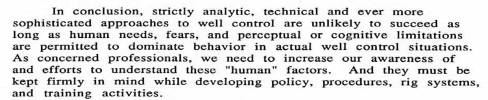
Nearly 20 years after it was written, Paul Sonnemann’s excellent paper on the Psychology of Well Control (excerpt below) is even more relevant today. We need to build upon and apply the lessons.

Read Full Post »

Ohmsett

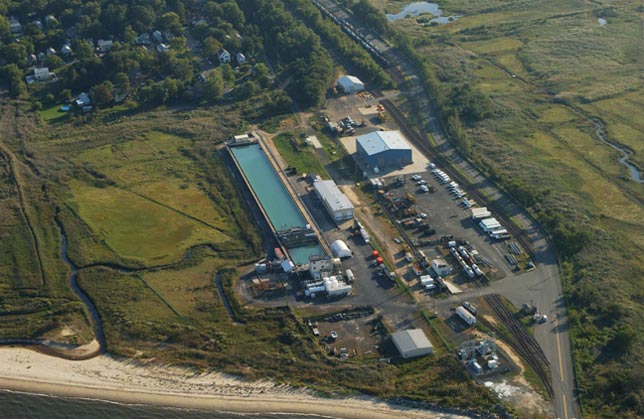
Yesterday’s Platt’s Oilgram News included an excellent Gary Gentile piece about Ohmsett and the recent visit by BOEMRE Director Bromwich and Admiral Zukunft of the Coast Guard. Both had high praise for this outstanding oil spill response test facility which has contributed greatly to improved understanding of boom and skimmer performance, in situ burning, and chemical treating agents. This quote from the Platt’s article gives you a sense of the facility’s importance:

AbTech Industries spent two days at OHMSETT testing a new polymer it hopes will be able to sop up hydrocarbons from produced water or water used in hydraulic fracturing. The company pumped saltwater contaminated with Louisiana crude at rates of up to 250 gallons per minute through its filtering system. “The facility is tremendously unique,” AbTech Chief Operating Officer Jonathan Thatcher said in an interview. “I don’t know where else we would go where we could pump up to 250 gallons per minute for days on end and contaminate it. It allows you to go and make any mistakes you need to make.”

As we have said before, those who claim that there has been no progress in spill preparedness either have no real interest in spill response or have not been paying attention. Much has been accomplished.

Kudos to spill response visionaries like Ed Tennyson and John Gregory, MMS employees who had been pushing for the re-opening of Ohmsett since EPA closed the facility in the mid-1980’s.  After the Valdez spill in 1989 they received the necessary support, and the facility has been going strong since its re-opening in 1992.

Read Full Post »

« Newer Posts