Feeds:
Posts
Comments

Archive for January, 2011

Good news first:

Scientists at the Woods Hole Oceanographic Institution in Massachusetts found circumstantial evidence that the chemicals guided some oil into underwater currents, stopping it from bubbling up to the surface, where it would do more damage, said marine chemist Elizabeth Kujawinski.

Now the bad:

But she added, “the dispersant is sticking around,” which is worrisome. The chemicals didn’t seem to biodegrade the oil and gas as fast as basic chemistry would predict.

See the AP article recommended by BOE oil spill guru Cheryl Anderson.

Read Full Post »

From the State of the Union address:

The Interior Department is in charge of salmon while they’re in fresh water, but the Commerce Department handles them when they’re in saltwater. I hear it gets even more complicated once they’re smoked. President Obama

While this comment drew laughs from the audience, the regulation of salmon is rather straightforward compared to the extraordinarily complex regulatory regime for offshore facilities and pipelines. The first and most important recommendation in my testimony before the Senate Energy and Natural Resources Committee last May was as follows:

Streamline the OCS regulatory regime to minimize the potential for gaps, overlap, and confusion.  Because of the complexity of the OCS regime, regulatory and industry personnel spend too much time resolving and coordinating administrative and procedural matters.  This time would be better spent focusing on mission critical safety issues.   A single agency should be responsible and accountable for safety and pollution prevention at offshore facilities, and should draw on the expertise of other agencies and organizations as necessary to achieve performance objectives.

If we are to achieve our safety, pollution prevention, efficiency, and energy production objectives, the OCS regulatory regime must be consolidated and simplified.

Read Full Post »

Bob Graham and William Reilly will testify.

Schedule (Eastern Time):

0930 – Senate Energy and Natural Resources Committee – live streaming

1400 – House Natural Resources Committee – broadcast live on C-SPAN3

The questioning should be pretty lively, especially at the House hearing.

Read Full Post »

1. Helix has inked 19 Gulf of Mexico customers for its Deepwater Containment System. What will happen to the Marine Well Containment Company which was announced with much fanfare in July? Does it make sense to have two such consortiums operating in the Gulf?

2. No new reports on the Apache gas leak in the press or on the company’s website.  More transparency is needed in the post-Macondo era.

3. The Deepwater Horizon BOP testing remains a mystery. If you disregard the erroneous January 5th and 6th updates (which pertain to hearings held last summer), the official investigation website has not been updated since before Christmas. Given the importance of this work, the absence of status updates is disappointing.

4. Useful listing of deepwater Gulf projects in Offshore magazine.

5. The National Commission Chairs will appear before the Senate Energy and Natural Resources Committee tomorrow.  The hearing will be webcast live beginning at 0930. Here is some pre-hearing chatter.

6. The Aban Pearl semisubmersible drilling rig sunk offshore Venezuela last May.  Will the world ever find out what happened? In fairness to Venezuela, they aren’t the only ones sitting on reports.

7. “The oil spill [has] definitely [been] blown out of proportion.” Judith McDowell is a highly respected scientist. If this is an accurate quote, it is quite significant.

8. Transocean wants to pay dividend.

9. Interested in serving on DOI’s Safety Committee?

10. A great painting completes the list!

Read Full Post »

Montara Blowout - Timor Sea

SapuraAcergy’s scope under the contract involves the engineering, procurement, load out, transportation and construction activities for the removal and disposal of the existing topside and the transportation and installation of new pipelines, risers, umbilicals, spools, manifolds, FPSO mooring systems and a new replacement topside, all of which to be undertaken at PTTEPAA’s Montara Development Project in water depths of approximately 80 metres. Dow Jones

The work will be performed in 2011.

Comment: What about the Australian government’s commitment to review PTTEP’s license?

Read Full Post »

The Buchanan measure would permit the U.S. secretary of the interior to deny drilling leases to companies involved with countries facing trade sanctions. Buchanan specifically noted that Repsol, a Spanish corporation, has an agreement in place with Cuba to drill off the Florida coast. Sunshine News

Comment: In addition to the economic and foreign policy flaws, this legislation could increase risks to Florida by further limiting the pool of technically advanced and responsible companies that could participate in Cuban offshore drilling.

We would lose regardless of what these companies decided. If a company opted not to purchase US leases (so they could drill offshore Cuba), we would lose economically (i.e. jobs, revenue, and energy).  If the company chose to exit Cuba, less capable companies would fill the void.

While it seems unlikely that this bill will pass, even its threat could influence the decisions of leading international companies. If Congress is interested in protecting US interests, how about a bill that would facilitate dialogue with Cuba on safety and pollution prevention issues? How about a bill that would allow leading American companies to work offshore Cuba?

Read Full Post »
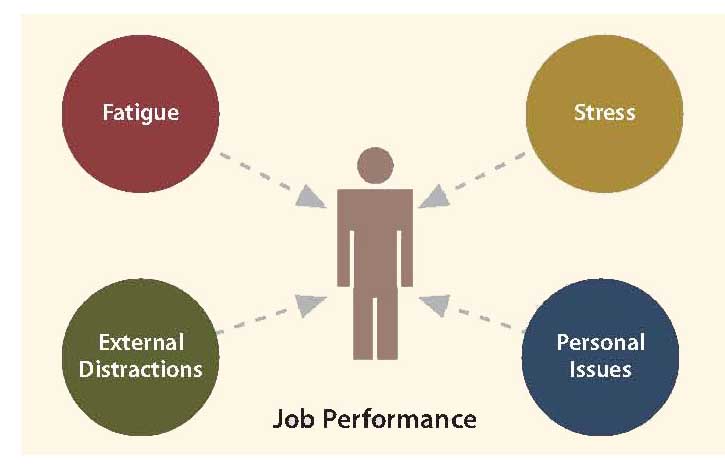
Step Change in Safety, a UK partnership committed to offshore safety achievement, has published an interesting human factors report.  The report, which was brought to my attention by Melinda Mayes, includes 12 one-page case studies of offshore incidents with commentary on how human factors played a role.

I suspect that many of you can relate to “Case Study 3,” which begins as follow:

After going through a difficult downsizing a company decided to restrict recruitment and personnel moves, in an attempt to avoid painful redundancies in the future.

At the time there was great demand for personnel in the oil and gas market. One installation lost a number of its operational leadership to another company. For a while the installation managed. It was able to maintain its minimum manning levels, and less experienced personnel were asked to step-up into leadership positions. The Offshore Installation Manager (OIM) and offshore engineer began micro-managing work on the installation.

After reading the report, you may want to take a look at the comments posted at the Step Change site. These comments illustrate another human factor – differences in opinion!

Read Full Post »

The Transportation Safety Board of Canada (TSB) will hold a news conference on Wednesday, February 9, 2011 to make public the final TSB investigation report (A09A0016) into the crash of a Cougar Helicopters Sikorsky S-92A off the coast of Newfoundland on March 12, 2009.

This investigation addressed the helicopter and pilot performance that contributed to the crash that killed 17 workers.

A separate commission, directed by Judge Wells, reported on broader issues associated with the offshore safety and regulatory regime.

Read Full Post »

TwinCities.Com

A Detroit Lakes, Minn., man who fabricated a story last summer that he had invented the cap that fixed the Deepwater Horizon oil spill is facing three unrelated felony theft charges.

You may recall the parade of snake oil salesmen and other hucksters who appeared on TV during the blowout. Apparently, this guy was one of them.

In July, several local news outlets, including KARE-TV and KSTP-TV, reported that Mastin had invented the cap that eventually plugged the oil spill in the Gulf of Mexico. But the Pioneer Press found that BP had not bought the device from Mastin.

Read Full Post »

Bloomberg report on East Cameron 278 “B”gas leak (90 miles offshore, 170′ water depth):

Apache workers have boarded the platform to seek to contain the source of the gas leak, the U.S. bureau said in an e-mailed statement today. The government said a remotely operated vehicle will monitor conditions to make sure work can occur safely.

The bureau said today that, in accordance with its direction, Apache is continuing preparations for drilling a relief well to stop the leak in the event the platform procedures don’t succeed.

Read Full Post »

« Newer Posts - Older Posts »