Feeds:
Posts
Comments

Archive for August, 2010

My former colleague Clarence Kershaw, a retired USGS/MMS inspector and a very knowledgeable offshore oil and gas guy, has run into some Tiger Mikes in his career. Clarence has shared some thoughts on the subject:

I liked your comments on “More Mike Talk”.  I personally think organizations (Military, Government and civilian) are too obsessed with superior/ underling relationships.  It is acceptable for “Mike” types in a superior/owner position to issue instructions-orders-regulations to lower echelon personnel, but is is not always accepted (or sometimes allowed) for lower echelon personnel to “correct” or point out even possible errors made by superiors.

There are a lot of lower echelon personnel who have made an attempt to correct a mistake by a superior and then been rebuffed.  After that they tend to accept errors and say “It’s not my job, man.”  I’ve seen engineers get indignant when something they approved in error was pointed out by an inspector or secretary.  I knew one District Supervisor who did not like to have his writing corrected by an excellent secretary.  She would end up bringing it to me to point out to him, because he would not accept it from her.  He didn’t always accept it from me either.

My point is if you had a “Tiger Mike”  type running the rig just prior to the blowout, it wouldn’t make any difference to him how unstable the well was if he had already made up his mind to continue operations.

No, I don’t know the answer.  One person has to be in charge, but each individual must have over-riding “stop work” authority to assure safety!!!  The problem is magnified if a disagreement occurs and management consistently backs up the one in charge.
Read Full Post »

A newspaper says it has obtained an internal audit conducted by BP PLC on the Deepwater Horizon oil rig that details severe safety flaws months before the Gulf of Mexico spill.

link

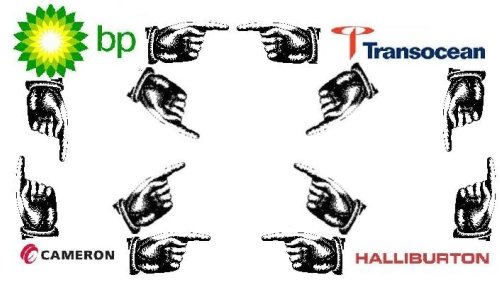
Comment: Was this a planned leak?  If so, how does this strengthen BP’s legal position?  The DWH had deficiencies (bad for Transoocean), but BP knew about the deficiencies and didn’t ensure that they were corrected (worse for BP?).  As indicated by the poster below (More “Mike Talk”), the poor working relationship between the operator and contractor may have been the real core problem.

Read Full Post »

From a poster who has requested anonymity (for background about this topic, see the 2 preceding posts):

There has been a lot of hard work done to update Mike and bring him into the modern world.  I too have had experiences with “Mike” and at a minimum they are distracting and most cases unsafe.  Mike and those like him are bullies, plain and simple.  They may have technical skills, however their people skills are lacking.  Mike doesn’t only work for Operators.  I don’t think there is an appreciation of the complex people relationships that are laid over the technical issues and inevitably there are culture clashes.  It appears that regardless of Transocean and the Deepwater Horizon having worked for BP, the relationships between senior BP and TO personnel was extremely disfunctional.  As someone with multiple decades of experience, I was amazed that what I believed were top flight organizations appear to have not progressed out of the stone age.  I’m not sure what the solution is here.  The competance of all individuals expecially those in senior positions is very important, however the skill set must include more than technical competance alone.  Significant time and money are spent in well control schools, but when the people involved can’t communicate, all such training doesn’t realize much benefit.  It may be trite, but there needs to be a TEAM.  I thought the major players had that concept in their management schemes but the recent history, at least for this incident, does not appear to indicate this.  It appears there is another big task to add to the long list of items needing attention to prevent another such occurance like Macando … and Montara.

Read Full Post »

Hart E&P shares reader feedback about the infamous Tiger Mike. (also, see our precious post)

Meanwhile BOE Senior VP Odd Finnestad recalls experiences with Mike-like characters offshore Norway:

For some reason I think there were many – and still are some – Tiger Mikes around in the business. I know they were here in Norway when our first field, the Ekofisk, was discovered by the “Ocean Viking” and later developed the field way back in the sixties. And when you would be sacked simply for having been clumsy enough to have had your fingers crushed by the makeup or breakout tongs. The comment of the ODECO supervisor would then probably be: “Five minutes for a smoke. Then you come back or you f…. jump on the first f…. helicopter!” He might even have added: “And, if you do, I don’t want to see your f…. face again!” well knowing that it was not really necessary for him to elaborate on the fate of the poor Norwegian roustabout that had just signed on for the good money!

You do not find so many of these supervisors in the offshore NCS today. But I think I can still see some – busily harassing employees in other types of oil and gas related organisations.

The Tiger Mikes of today are much more subtle.  While they may say the right things (at least officially), their actions and offhand comments send other signals.  They insist on making every decision, create an atmosphere where employees are afraid to raise safety concerns, and ignore warning signs that might delay operations and increase costs.

When things go wrong, the temptation for both operators and regulators is to be more like Tiger Mike – more memos, more prescription, and more approvals. While this approach may address certain technical or operational details that contributed to a specific accident, it does not address the fundamental leadership, organizational, and cultural shortcomings that must be corrected to improve operational performance and reduce safety and environmental risks.

Great organizations stimulate and harness employee energy and ingenuity such that the whole is greater than the sum of the parts. Similarly, great regulations foster organizational excellence on the part of both the regulated community and the regulator.

Don’t be like Mike!

Read Full Post »

Tiger's visionary health and safety policy.

Throw away your text books and ignore everything you learned in supervisory training classes.  Instead, study the wisdom of Tiger Mike, an oil baron and a visionary management guru.  In addition to his leadership genius, Tiger Mike (LSU grad?) was a brilliant wildcatter who drilled 49 consecutive dry holes (industry record?) and a snappy dresser (“Tiger Mike’s wardrobe consisted of only one-piece khaki polyester leisure suits with white shoes and white belt.”)  Truly inspiring!

I saw paper copies of these memos in the pre-internet days, and am pleased to see that they are now posted on the web, so that everyone can benefit from Mike’s wisdom 🙂

Read Full Post »

G’Day Australia.  There are now only 2 weeks until the Federal election. Ironically, the election, which may have delayed the release of the Montara Inquiry report, will be held on the first anniversary of that blowout.

This report will play an important role in keeping our workers safe, protecting our environment and safeguarding our energy security. Minister Martin Ferguson

BOE fully agrees with Minister Ferguson’s statement about the importance of the Montara Inquiry report and hopes that he or his successor promptly releases the report after the election.  The lessons learned at Montara will not only prevent accidents in Australia, but elsewhere in the world. In light of the disturbing similarities between the two blowouts, it is possible that closer international attention to Montara might even have prevented the Macondo blowout.

Read Full Post »

  1. Now that the Unified Command has had a couple of days to review the static kill data (which were certainly considered in planning the cementing operation that was concluded yesterday), please provide an update on the latest thinking with regard to the well’s flow path.
  2. Please post a cross section schematic (best estimate) of the well after the completion of yesterday’s cementing operation.

Read Full Post »

I have stated over and over again, let me be perfectly clear. I am the National Incident Commander. I issue the orders. This will not be done until we complete the bottom kill. Admiral Allen, 5 August 2010

Al "I'm in charge here" Haig

Just kidding Admiral Allen 🙂

Read Full Post »

Upstream has confirmed the crane incident on the Jack Ryan during operations offshore Nigeria.

According to a summary incident report into the accident, seen by Upstream, the port aft crane boom and cab, together with the three men, went overboard during load testing.

Upstream understands that the crane boom snapped during the tests.

The Upstream report is consistent with information provided separately by Malcolm Sharples.  One worker is still missing.

Read Full Post »

Kent Well’s response to a reporter’s question and Colin Leach’s comment on BOE seem to give credence to our suspicion that the flow path for the Macondo well was inside the production casing!  If true, this is enormously significant for the following reasons:

  1. The root cause of Macondo is eerily similar to that at Montara in that oil and gas entered the well via compromised cement in the casing shoe and a failed float.  Did the BP engineers and TO crew even know about Montara?  This shows why accident information must be promptly circulated and brought to the attention of key personnel everywhere in the world. It also demonstrates why the Montara report needs to be released without further delay.
  2. Presumed contributing factors that would be irrelevant or less significant: the long string vs. liner/tieback decision, and the failure to run a Cement Bond Log, additional centralizers, or a lockdown sleeve on the casing seal.
  3. Contributing factors that would have even greater importance: selection of the casing point (integrity at the base of the well), waiting on cement time, timing of the positive and negative pressure tests (this is a topic that warrants much more scrutiny and discussion), and failure to set a cement plug before displacing the mud with sea water.

Read Full Post »

« Newer Posts - Older Posts »