
Energy Training and Resources Macondo Well Diagram
Posted in accidents, well control incidents, tagged accidents, blowouts, Deepwater Horizon, drilling, ETR, Gulf of Mexico, macondo, safety, well control, well diagram on July 24, 2010| Leave a Comment »
Energy Training and Resources Macondo Well Diagram
Posted in accidents, well control incidents, tagged accidents, blowouts, Deepwater Horizon, Gulf of Mexico, macondo, Marine Well Containment Company, offshore oil, safety, well control on July 24, 2010| 2 Comments »
Posted in accidents, well control incidents, tagged blowouts, Deepwater Horizon, drilling, Gulf of Mexico, macondo, Marine Well Containment Company, offshore oil, oil spill, safety, well control on July 23, 2010| Leave a Comment »
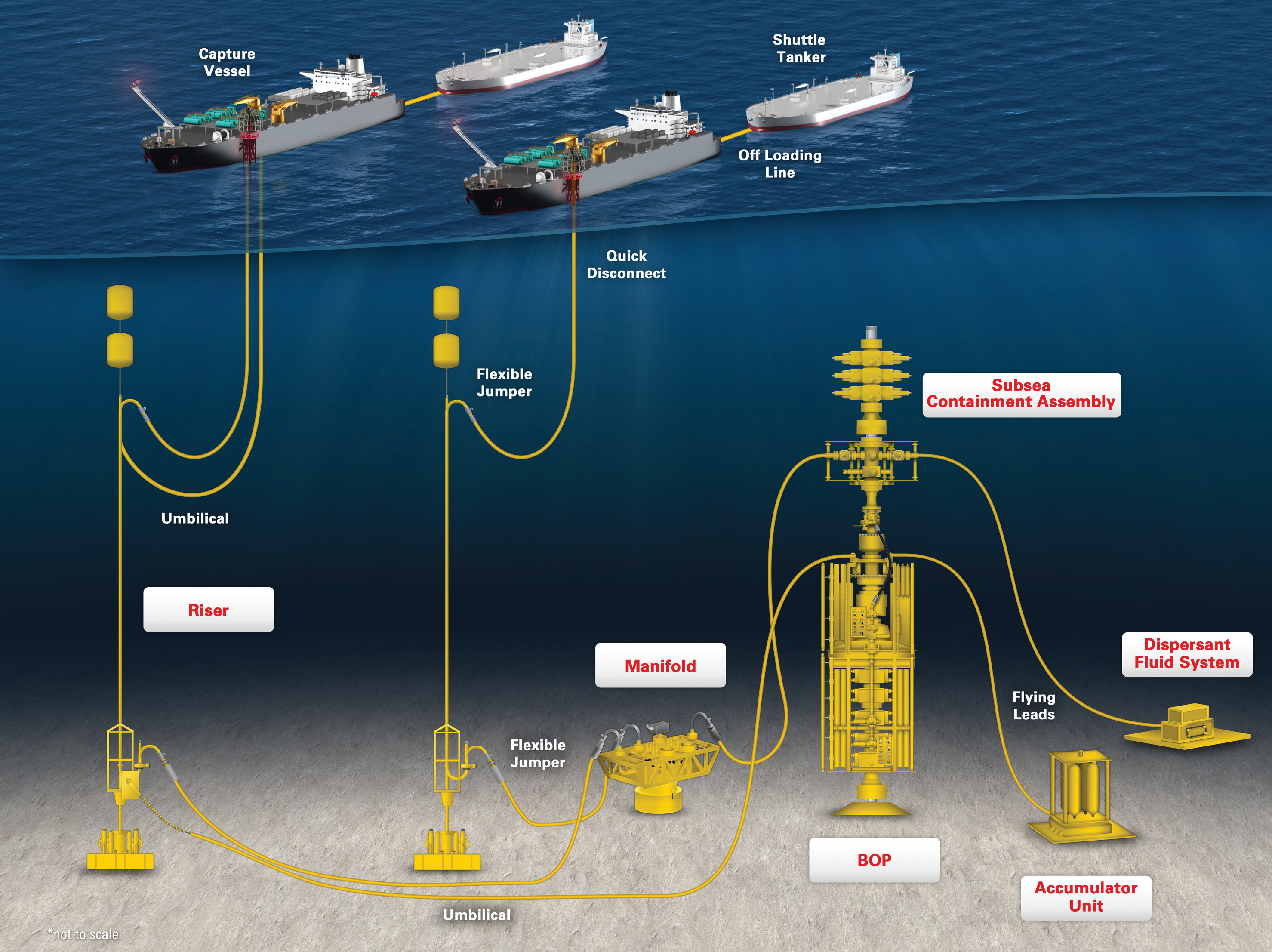
Exxon, Shell, Chevron Corp. and ConocoPhilips will each give $250 million to establish a non-profit organization, the Marine Well Containment Co., to produce and manage the equipment. The system will be designed and built over the next 12 to 18 months to handle spills of 100,000 barrels a day in waters as deep as 10,000 feet (3,048 meters), the companies said in a statement yesterday.
Comments:
Posted in accidents, well control incidents, tagged accidents, blowouts, Deepwater Horizon, drilling, Gulf of Mexico, Jason Mathews, macondo, offshore oil, safety, well control on July 23, 2010| Leave a Comment »
Platts has an interesting report on yesterday’s hearing:
Guide said the decision to use a long string of casing instead of a liner
was made because it provided better long-term well bore integrity, not because a liner would have cost an additional $7 million to $10 million. He said the liner would have added only one additional barrier in the well. John Guide, BP’s Well Team Leader
Comment: One additional barrier is very significant when you only have 2 others and there are issues with the primary barrier (production casing cement).
Jason Mathews, a BOEM panel member, asked Guide if he knew that in the past year, Schlumberger had been brought to rigs 74 times for cement bond logs, and only three times they had been sent away without doing the logs; in two instances BP, sent the crews away.
Comment: Interesting statistic; good research by Jason and the BOEMRE team.
Posted in accidents, well control incidents, tagged accidents, Australia, blowouts, Coast Guard, Deepwater Horizon, drilling, Gulf of Mexico, macondo, Montara, offshore oil, safety, safety leadership training, well control on July 22, 2010| Leave a Comment »
We believe that we should not start the static kill operation until we have installed the last liner run in the bottom of the relief well. Admiral Allen
Comment: This is understandable given the potential for communication between the 2 wells at or near the reservoir level.
– There has been some media talk about allowing the well to flow during a possible hurricane evacuation. I don’t see any direct quotes from Admiral Allen that specifically say that, so I hope these media reports are inaccurate. As indicated in previous posts, this is an unnecessary measure that could be viewed as irresponsible.
-Safety Leadership has been a major emphasis of drilling contractor training programs in recent years. Transocean’s program is summarized here. Safety leaders create an environment in which each employee is comfortable raising any and all concerns without fear of repercussions. Safety leaders are also encouraged to raise safety issues with the companies that contract their rigs. Judging by comments at the BOEMRE-CG Macondo hearings, some DWH employees were not comfortable raising safety concerns to their supervisors or the operator. During the Montara blowout hearings, there was evidence of similar reluctance on the part of contract employees. Drilling and other contractors need to take a close look at their Safety Leadership programs and find out why these entrenched attitudes persist.
Posted in accidents, well control incidents, tagged accidents, blowouts, Deepwater Horizon, drilling, Gulf of Mexico, macondo, offshore oil, oil spill, relief well, safety, well control on July 21, 2010| Leave a Comment »
Most recently, tensions flared as BP made plans to lower its newly designed cap onto the gushing well. Last Thursday, when the cap appeared to stop the oil, all weren’t happy at the Houston crisis center. Instead, a squabble broke out between government scientists and BP engineers.
Which of the official investigations will look at the important interactions among Unified Command participants and the effectiveness of the decisionmaking procedures?
Posted in accidents, well control incidents, tagged Australia, blowouts, Montara, safety, well control on July 20, 2010| Leave a Comment »
“I will act promptly and appropriately on the report once I have had an opportunity to review its contents,” Minister Ferguson said. 18 June news release
Posted in accidents, well control incidents, tagged accidents, blowouts, Deepwater Horizon, Gulf of Mexico, macondo, Macondodrama, oil spill, relief well, safety, seeps, well control, well integrity test on July 19, 2010| Leave a Comment »
Statement by Admiral Allen this morning (19 July):
I authorized BP to continue the integrity test for another 24 hours and I restated our firm position that this test will only continue if they continue to meet their obligations to rigorously monitor for any signs that this test could worsen the overall situation.
Comments:
Posted in accidents, well control incidents, tagged accidents, blowouts, Deepwater Horizon, drilling, Gulf of Mexico, macondo, offshore oil, oil spill, safety, well control on July 18, 2010| 2 Comments »
Doug Suttles tweets at 0830 on 18 July:
Data continues to show encouraging signs and we’re reviewing w/ gov’t team. We will continue to leave the well shut in.
Pressure is currently 6778 PSI, what we would have forecast in a scenario where the resevoir would have been depleted.
We are continuing to run extensive tests and monitor. We’re going to take this day by day.
There doesn’t seem to be any information that would justify a resumption of flow via the collection and production systems. Yesterday’s official statement from Admiral Allen (below) is therefore a bit puzzling.
When this test is eventually stopped, we will immediately return to containment, using the new, tighter sealing cap with both the Helix Producer and the Q4000. Additional collection capacity of up to 80,000 barrels per day is also being added in the coming days.
Why resume flow?
Posted in accidents, well control incidents, tagged accidents, Gulf of Mexico, macondo, offshore oil, oil spill, relief well, safety, well control on July 17, 2010| Leave a Comment »
At this point, there is no evidence that we don’t have well integrity. -Kent Wells tweet; 17 July; 0900 ET
 Bud's Offshore Energy (BOE)