Feeds:
Posts
Comments

Posts Tagged ‘US offshore oil and gas leasing’

2024 will be the first year since 1958 without a single OCS oil and gas lease sale. There would not have been a sale in 2023 either were it not for a legislative mandate. The only 2022 lease sale was a micro-sale in the Cook Inlet that resulted in only a single bid. So, at the end of 2024 three years will have elapsed with only one meaningful sale, and that sale was mandated by Congress.

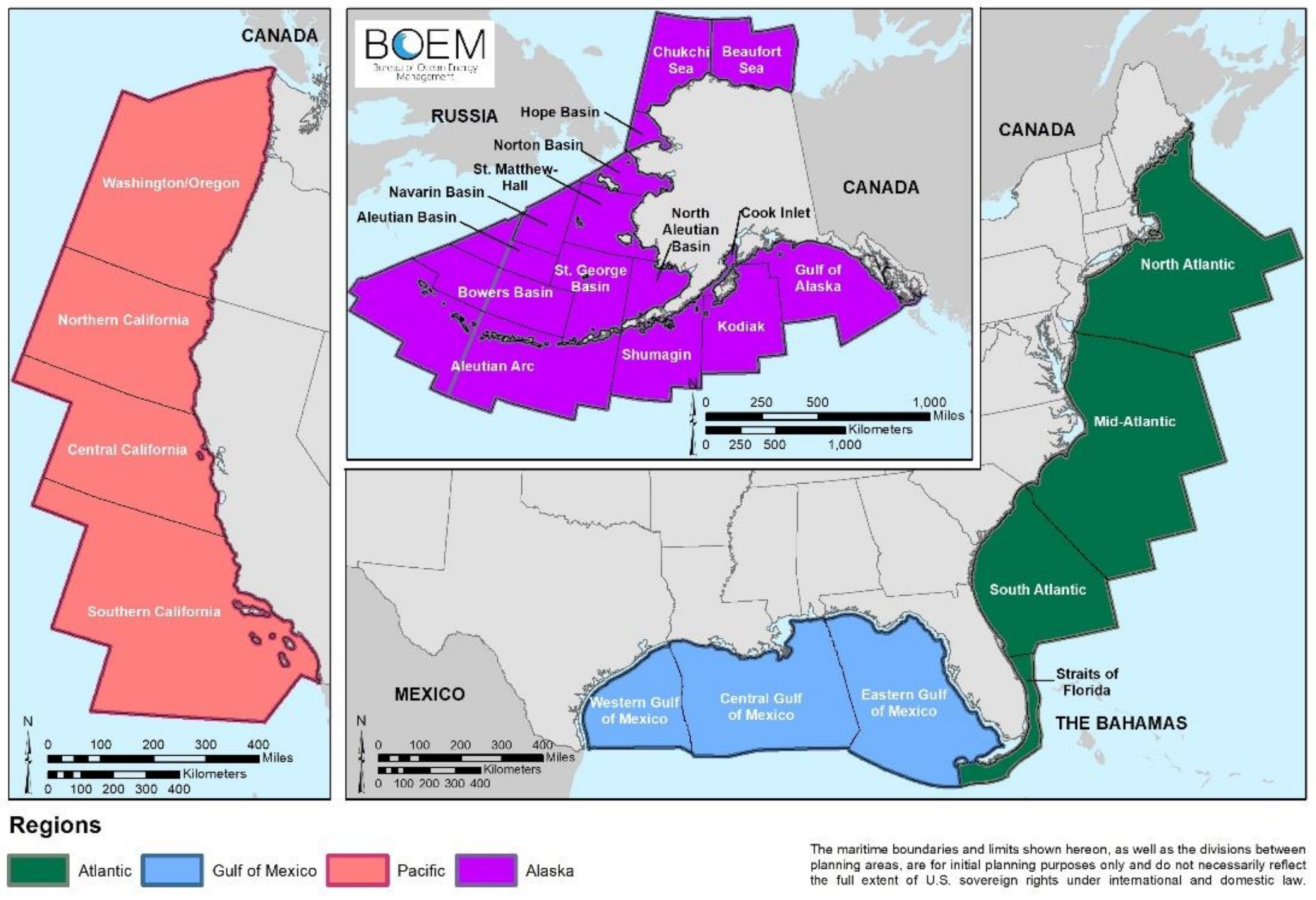
The current plan is for these de facto sanctions on US offshore production to continue. The Dept. of the Interior’s 5 year leasing plan includes a maximum of 3 sales, by far the fewest sales in any 5 year plan in OCS program history.

Meanwhile, the sanctions on Venezuelan production were further eased with the understanding that the Maduro regime would hold fair elections. To the surprise of no one, the evidence strongly suggests that those elections were not fair. Nonetheless, the sanctions on production have not been reimposed.

Apparently, the climate activists who have imposed their will on the OCS oil and gas program have less influence over our policy toward Venezuela. Or perhaps the production (and consumption) of Venezuelan oil is cleaner and greener (🙃 sarcasm intended!)
Read Full Post »

WASHINGTON — During testimony before the U.S Senate Committee on Energy and Natural Resources today, Secretary of the Interior Deb Haaland confirmed that, despite delays in implementation from the previous Administration, the Interior Department will release the Proposed Program – the next step in the five-year offshore energy planning process – by June 30, 2022, which is the expiration of the current program. A Proposed Program is not a decision to issue specific leases or to authorize any drilling or development.

DOI

Here is the timeline for the 5 Year Leasing Program (light blue).

A sale this year under the new program is thus highly unlikely. The process will no doubt be delayed even further by litigation. As we have said previously, the only hopes for a sale this year are a successful appeal of Judge Contreras’s Sale 257 ruling or successful congressional action (unlikely but possible under the circumstances).

Read Full Post »

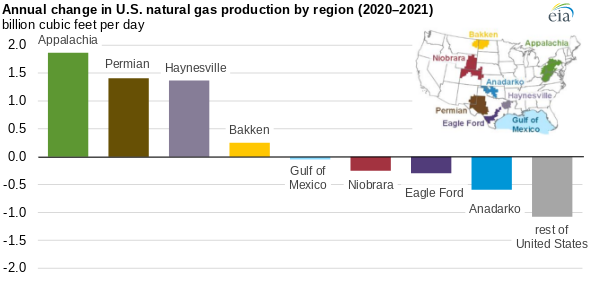
The administration has taken steps toward a resumption of leasing on Federal onshore lands, which account for only 7% of domestically produced oil and 8% of our natural gas. While this is a positive step, our economy is largely being driven by production on private lands, absent which we would have a serious supply crunch. This new EIA graphic illustrates where the growth in natural gas production has been, and most of that growth has been on private land.

The growth in US oil production has been largely dependent on the Permian Basin:

Industry leaders have raised concerns about the extent to which Permian production can continue to grow and the country’s over-reliance on shale production.

There are no private offshore lands, and the future of US offshore production is almost entirely in the hands of the Federal government. It has now been 525 days since the last offshore lease sale. The Administration chose not to appeal the DC Federal Court decision vacating Sale 257, leaving that to the State of Louisiana and API (parties that actually support offshore oil and gas leasing).

It’s disappointing that the reasoning behind the judge’s Sale 257 decision has received so little attention, especially given that it hinged on BOEM not analyzing the benefit of high oil prices. (i.e. <leasing = <production = >prices = <intl consumption = < CO2) The decision was issued as Russian troops were amassing on the Ukraine border only 28 days before the invasion. Oil prices (WTI) had already reached $87/bbl and would soon spike to $120/bbl, so the decision embracing higher oil prices was (at best) bad timing. Keep in mind that this was not a matter of BOEM failing to consider GHG issues; BOEM had conducted those assessments. The judge’s decision was specific to BOEM not analyzing the GHG benefits of reduced foreign consumption as a result of the higher prices associated with reduced leasing.

Meanwhile, The 5 year program, without which offshore leasing cannot proceed, expires in June. Fellow Democrats Manchin and Kelly sent a letter to the President on 31 March urging the Administration to develop and implement a new 5 year program without delay. There is no online evidence of a response. Presumably, the 5 year program issue will be addressed in the bipartisan energy legislation that Senator Manchin is drafting.

Read Full Post »

Yesterday, EIAP issued a report for API and NOIA that estimates economic impacts from leasing program delays. The fundamental reason for regular sales has not received much public attention, but is summarized succinctly in the report:

In most cases, additional leases are required to produce an existing field fully or to underpin the economics of processing and transportation infrastructure. It is thus important for the industry to have continued opportunities to secure leases through a predictable leasing program.

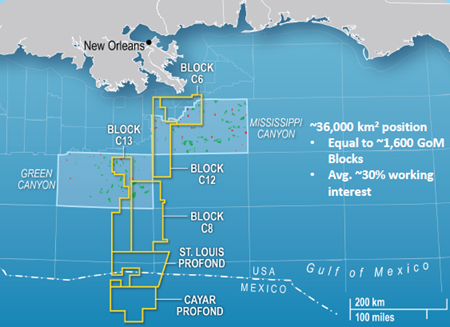
Keep in mind that US lease blocks are the smallest in the offshore world, too small for optimal development in deepwater and frontier areas. The smaller the blocks, the greater the importance of regular lease sales. Pictured below is a 2017 graphic graphic which superimposes Kosmos Energy’s blocks off Senegal and Mauritania on the Central Gulf of Mexico.  Note that the six West African blocks encompass 36,000 sq km and are the equivalent of 1600 GoM lease blocks.  

Read Full Post »

lease sale statistics

Read Full Post »