Each annual licensing round will only take place if key tests are met that support the transition to net zero. The first test is that the UK must be projected to import more oil and gas from other countries than it produces at home.
The second is that the carbon emissions associated with the production of UK gas are lower than the equivalent emissions from imported liquefied natural gas.
If both these tests are met, the NSTA will be required to invite applications for new licences annually.
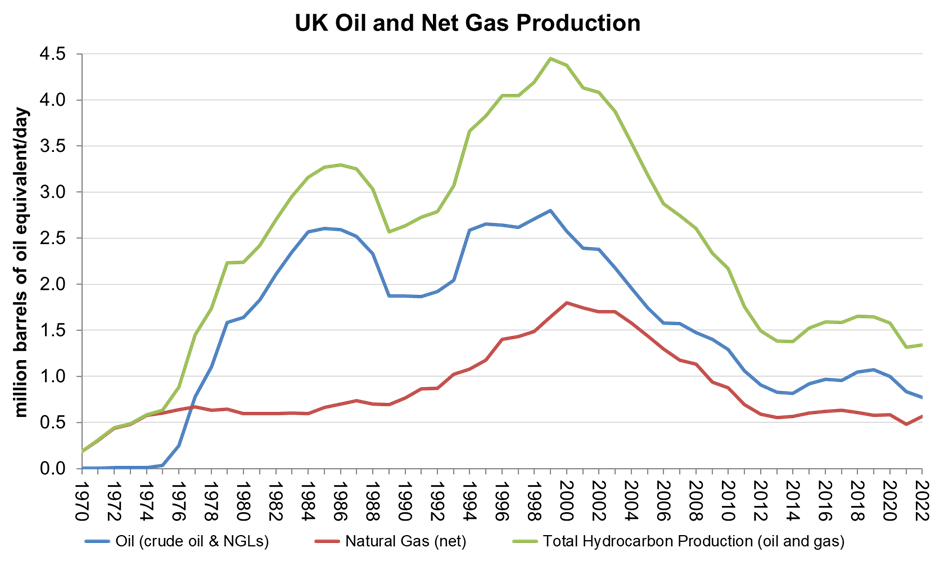
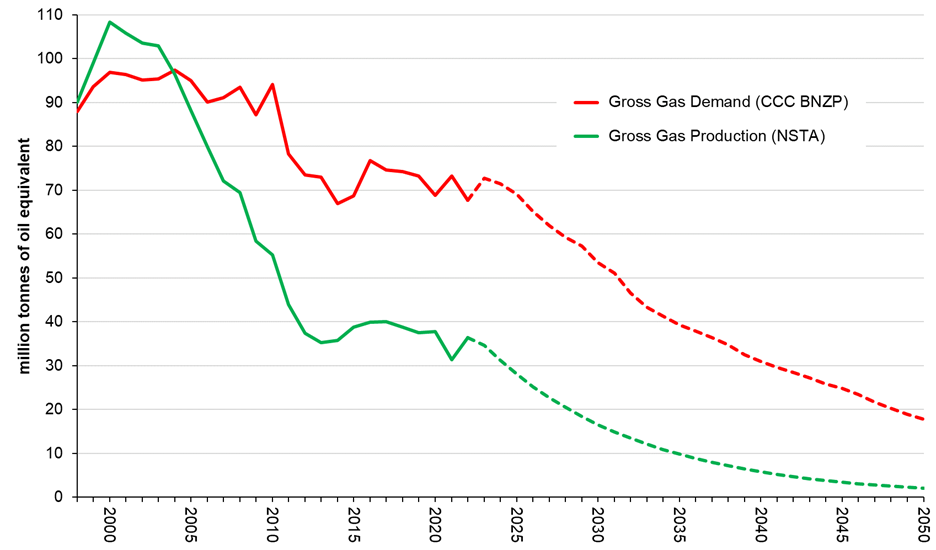
The “key tests” would seem to ensure annual licensing rounds for the foreseeable future. The charts below are from UK EiTi. The first chart illustrates the sharp decline in UK production over the past 20 years. The second and third charts illustrate the large projected gaps between supply and demand, particularly for natural gas.
In 2050, total production of oil and gas is estimated at ~10 million tonnes of oil equivalent. The projected 2050 demand is estimated at ~35 tonnes. For domestic production to exceed imports over the next 20-30 years, resource licensing and field development would have to be very successful and efficient.

With regard to the second test, carbon emissions from the production of UK gas should maintain their advantage over imported LNG given the energy required to liquefy and transport that gas.
It would have perhaps been more transparent to simply stipulate annual licensing rounds, but that would probably not have been politically acceptable.

 Bud's Offshore Energy (BOE)