Kathryn Porter is a well informed and articulate energy consultant. This video linked below is highly recommended.
Posts Tagged ‘UK’
We Spent £220 Billion on Decarbonisation and Saw Zero Financial Benefits: Kathryn Porter
Posted in climate, energy policy, UK, tagged decarbonization, expensive renewables, financial costs, Kathryn Porter, UK on May 16, 2025| Leave a Comment »
UK report: “Fishermen v Big Wind: A David and Goliath story”
Posted in energy policy, Offshore Energy - General, Offshore Wind, UK, tagged commercial fishing, conflicts, David v Goliath, Offshore Wind, UK on May 7, 2025| Leave a Comment »
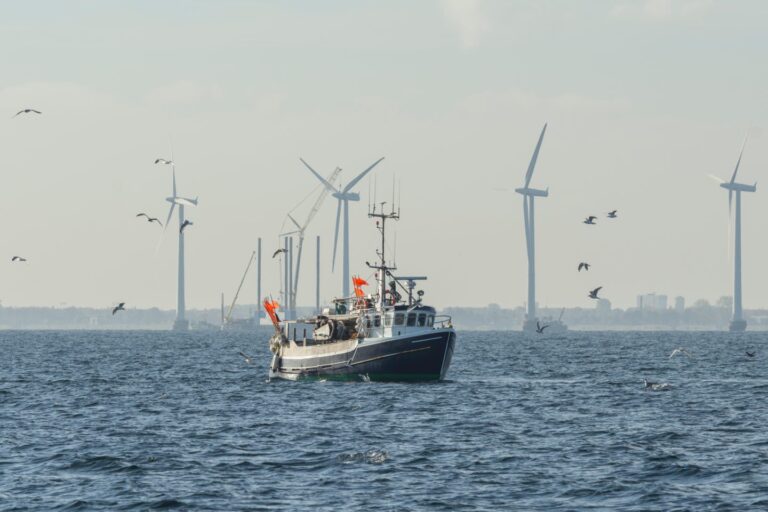
“David is small, semi-nomadic and works across a vast sea area; Goliath is massive and growing rapidly.”
Energy Voice describes the challenges offshore wind poses for the small but culturally important UK commercial fishing industry, highlighting the findings of a fisheries research lab report.
Per Elspeth Macdonal of the Scottish Fishermen’s Federation:
“How it often feels to us is that government says all the right things, has this blue economy vision and all of those great things but, at the end of the day, it actually feels like government is picking winners and losers and, at the moment they seem unable to see past the wind industry as the only game in town.“
This comment on the evolution of the relationship between the fishing and oil industries in the North Sea also aptly describes the US offshore experience:
“The fishing industry eventually learned to live with Big Oil, which is now on the wane, but living with territory-guzzling offshore wind farms – fixed and floating – may prove a lot more challenging.”
Bits of Scottish common sense
Posted in energy policy, Offshore Energy - General, UK, tagged energy policy, North Sea, offshore oil and gas, Scotland, UK on March 27, 2025| Leave a Comment »
Scotsman letter
Industry sources tell us, authoritatively, that the North Sea could produce around half of all the oil and gas the UK will need up until at least 2050 – if new projects are developed. Meanwhile, as instead we shut down our existing wealth, China continues burning dirty coal and making us more dependent on their products.
As it stands, Offshore Energies UK (OEUK) says the UK is on track to produce just four billion of the 13-15bn barrels of oil and gas the country will need over the next 25 years.
It is time for those making decisions in London and Edinburgh to put away all the green zealotry nonsense and get the UK powerhouse moving again. Given 25 years they could make a good start on installing small, clean, nuclear plants dotted across the UK to help in great part to pick up the load.
We need planning, not zealotry. It is now even more clear the green emperor is not wearing clothes. When will Energy Secretary David Miliband be convinced?
Alexander Mckay
Edinburgh
And from an offshore worker @Deano9981:
As someone who actually works in the North Sea on oil rigs I have heard almost all my life how the oil and gas will be gone in 10 years. 35 years in this industry and the first time I am likely to be unemployed is because of the government. Not the end of oil fields.
UK House of Commons Report on carbon capture: “High degree of uncertainty whether risky investment by Govt will pay off”
Posted in CCS, energy policy, UK, tagged CCUS, energy costs, House of Commons Report, risky investment, UK on February 10, 2025| Leave a Comment »

Key points (the full report is attached):
- Government’s backing of unproven, first-of-a-kind technology to reach net zero is high-risk.
- Government should assess whether its full carbon capture, usage and storage (CCUS) program will be affordable for taxpayers and consumers, given wider pressures on energy bills and the cost of living.
- There are no examples of CCUS technology operating at scale in the UK.
- CCUS may not capture as much carbon as expected.
- International examples show that CCUS performanc expectations are far from guaranteed.
- 3/4 of the almost £22bn envisaged to support the projects will come from levies on consumers who are already facing some of the highest energy bills in the world.
- The Government’s downgraded target of storing 20 to 30 million tonnes per year of CO2 by 2030 is now seen as no longer achievable
How will the Trump administration view offshore carbon disposal? Some elements of the oil industry see CCUS as a lucrative business opportunity. Budget and inflation hawks, along with most environmental organizations, are strongly (and rightfully in my opinion) opposed.
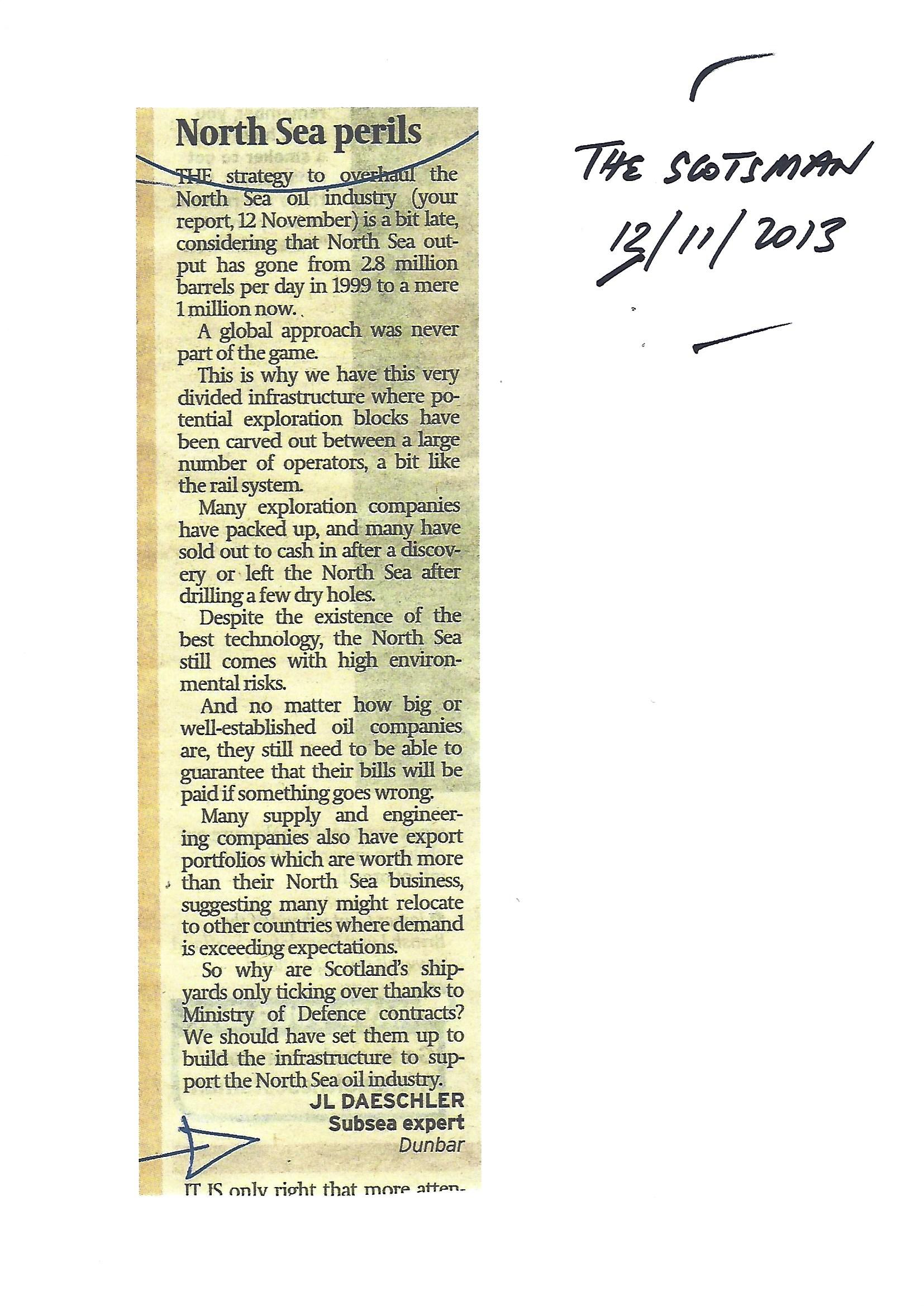
Donald Trump echoes comments made by JL Daeschler 11 years ago!
Posted in energy policy, UK, tagged Apache, Donald Trump, JL Daeschler, North Sea oil and gas, oil and gas infrastructure, UK on January 3, 2025| Leave a Comment »
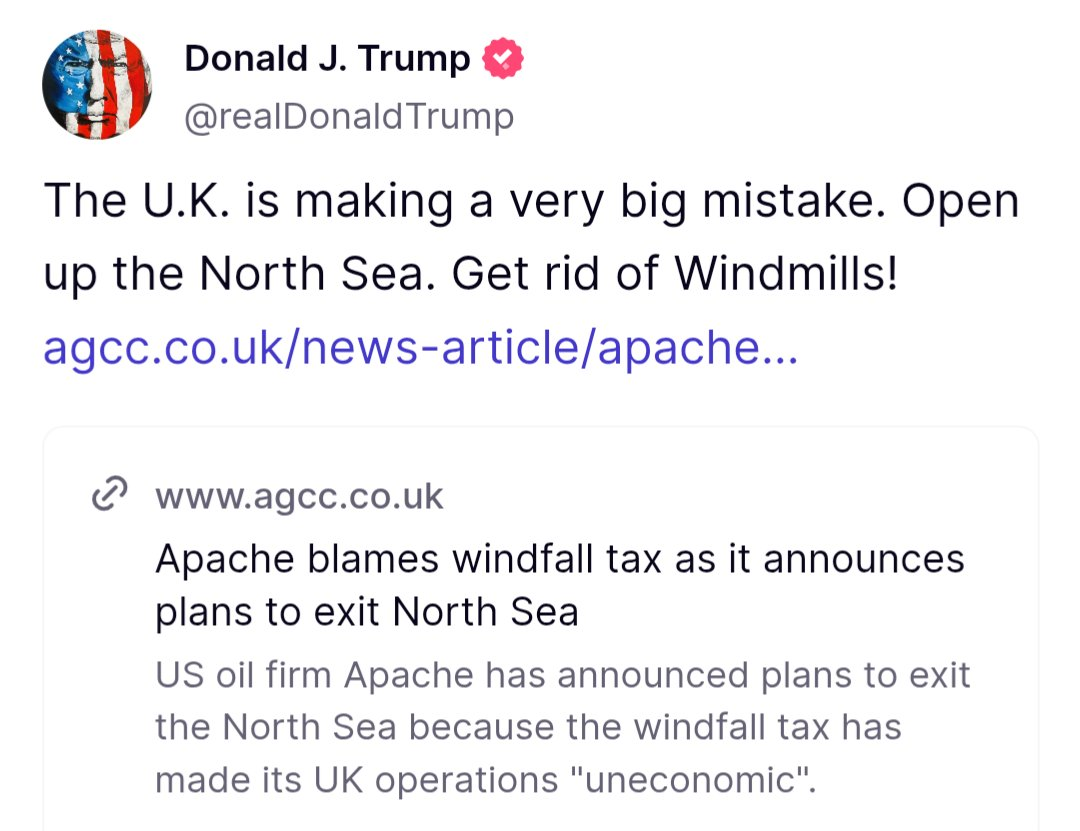
JL Daeschler, a BOE contributor, subsea engineer, and resident of Scotland, warned 11 years ago (see clip below) about the demise of North Sea infrastructure and the exit of important companies. JL now comments as follows:
“We have unfortunately taken down all the support facilities needed to conduct a complete offshore sequence – finding, engineering, and producing – even under a more favorable tax climate. We will have to call on Norway to do anything!”
Carbon disposal moving forward in the North Sea, stalled (hopefully forever) in the GoM
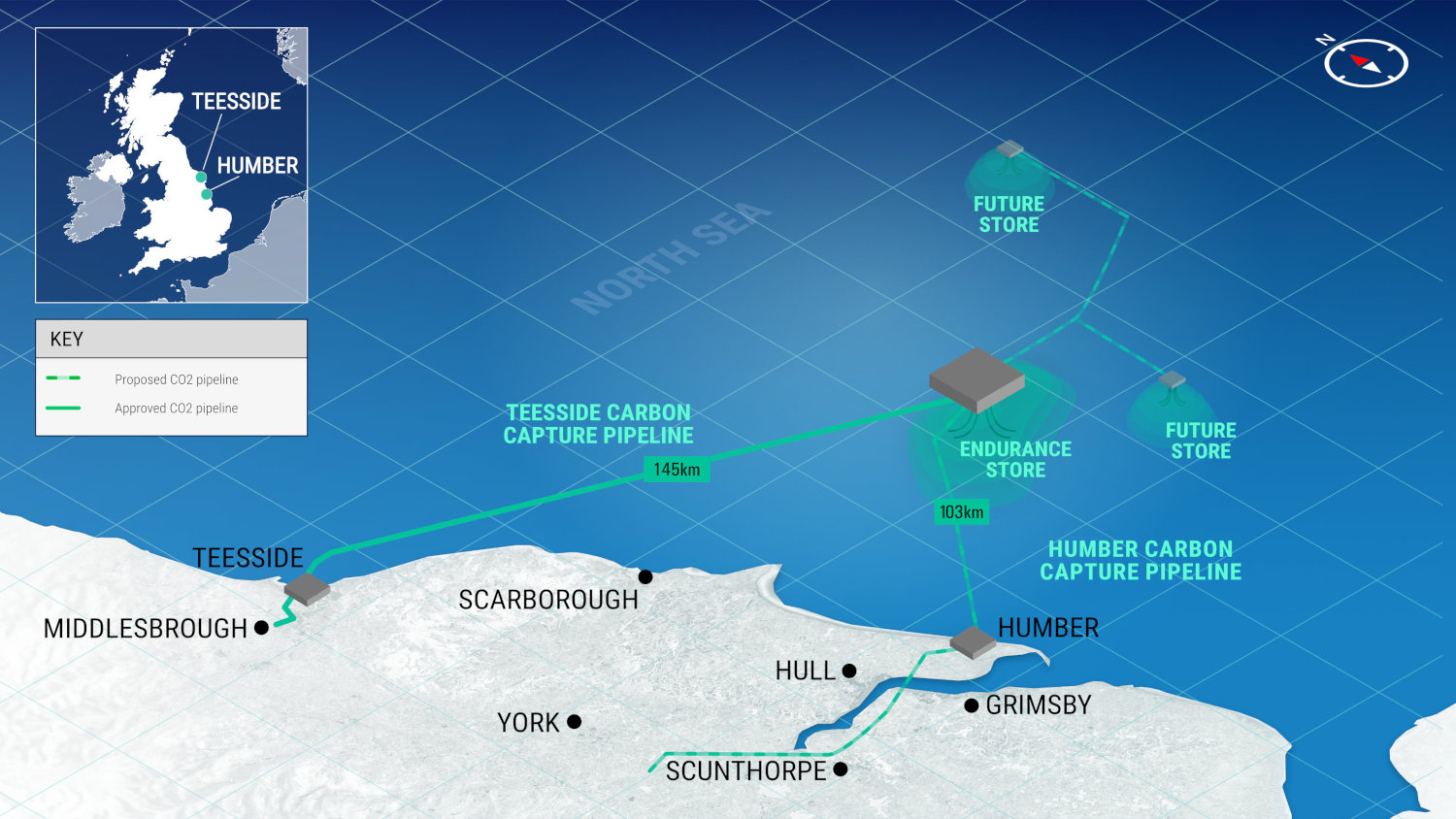
Posted in CCS, climate, Gulf of Mexico, UK, tagged carbon disposal, costs vs. benefits, Gulf of Mexico, North Sea, Northern Endurance Partnership, UK on December 16, 2024| Leave a Comment »
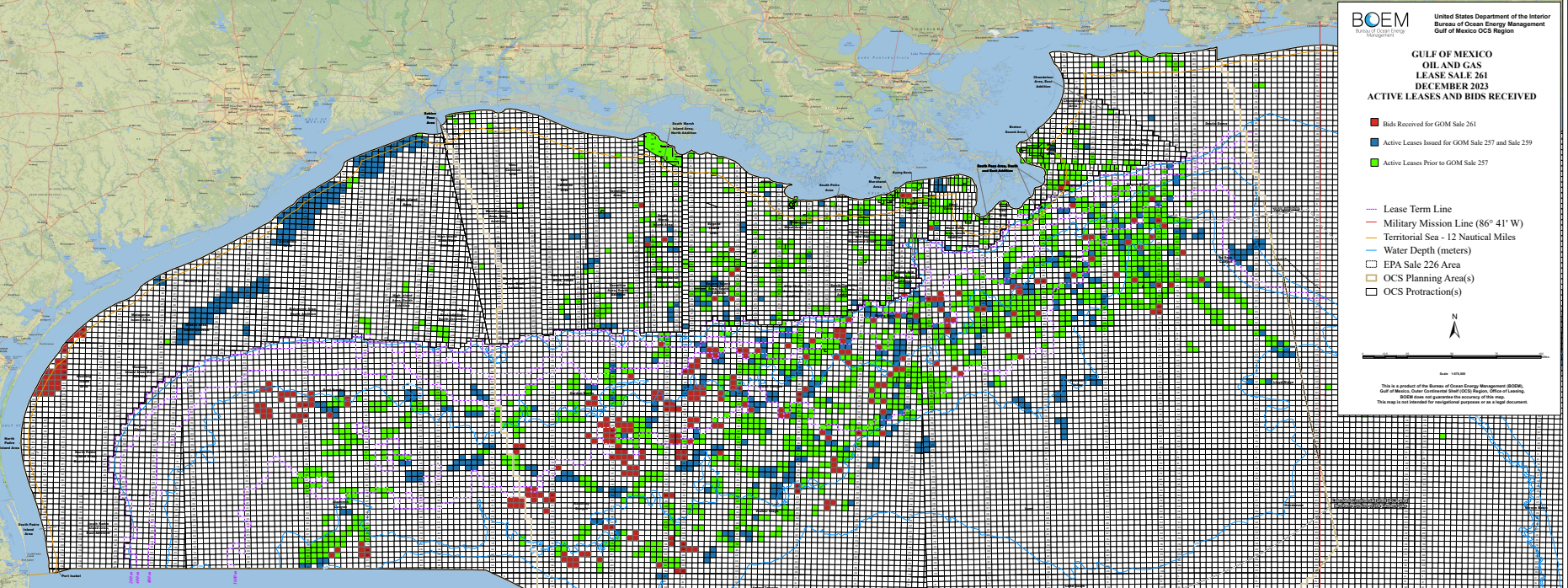
Fortunately, from the standpoint of US consumers and taxpayers, the push for carbon disposal in the Federal waters of the Gulf of Mexico has stalled, perhaps permanently. Oct.1 marked the 2 year anniversary of the 94 leases improperly acquired by Exxon at Sale 257 for carbon disposal purposes. Those leases will expire in 33 months (with the remaining 105 rogue leases expiring 1-2 years later) barring another legislative maneuver by industry advocates.
All of the previously posted questions about carbon disposal in the Gulf of Mexico remain, and most apply elsewhere. In particular, detailed cost-benefit analyses and risk assessments for these projects have not been provided. The intended permanency of offshore, subsurface carbon disposal raises complex monitoring, maintenance, liability, and decommissioning issues.
What are the carbon disposal proponents selling and why should governments be buying? If CO2 emissions are a significant threat to society (and informed opinions differ), is carbon disposal a cost effective solution? Policy decisions on subsidies for carbon disposal will be a good indication of how serious the new administration is about cutting Federal spending.
Die Dunkelflaute and the emperor’s new clothes
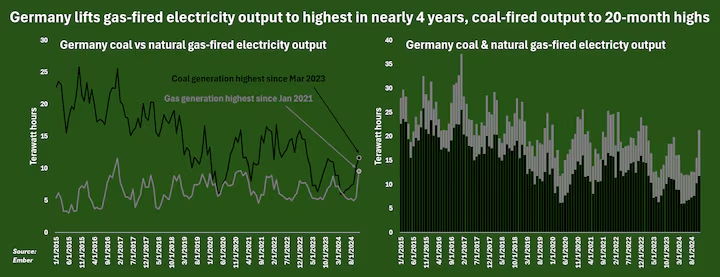
Posted in climate, energy policy, natural gas, Wind Energy, tagged coal, Die Dunkelflaute, emperor's clothes, energy policy, germany, natural gas, UK on December 5, 2024| Leave a Comment »
Germany: Coal and gas vs. Die Dunkelflaute
Spot-on from Bernie, a UK poster on X:
“NET ZERO – I want to be clear: I am not against advancement in energy technologies. Humanity should always develop and progress.
What I oppose is bankrupting the country by gambling taxpayers’ money on the emperor’s new clothes. Because that’s what these experimental technologies are currently. The misinformation being fed to the public is a disgrace.
Technologies like carbon capture, flywheels, and large-scale battery storage are being sold to us as the future and that we can lead the world! I don’t want to gamble with my tax thanks. The only thing we will lead the world in, is being the first country to bankrupt itself on the alter of Net zero and they haven’t even given us a choice!
These experimental technologies will cost not £ billions but £ TRILLIONS and provide little benefit to the average citizen, they simply benefit global corporations and those with vested interests.
The government should have focused on upgrading the national grid as a first step. At the very least it would enable us to use the renewable energy we are creating currently, rather than paying £ billions in subsidies for providers not to supply.
Instead, we’re rushing headlong into experimental technologies that are still in test phase. We are investing in these theoretical technologies before we can even observe their real world performance, evaluate value for money, or knowing if practically they will even work! And let’s face it, installations of both fly wheels and carbon capture machines have both failed financially or practically worldwide.
The hypocrisy around emissions and claims that these new technologies are “cleaner and greener” is an outrageous lie. Whether deliberate or misguided, this misinformation is unacceptable. The British public deserves open-book transparency on costs, timelines, and actual impacts. If the government cannot provide this, they must step aside and bring in independent teams—free from vested interests—to evaluate and advise. And then the British public should be offered a vote.
The ideological, socialist pipe dream of hitting a fictitious 2030 target will bankrupt the country. Worse, it will make us entirely dependent on banks and foreign entities that will dictate our policies for decades.
And we are doing all of this whilst we have at least 200 years of domestic energy resources in the ground, the ‘emergency’ propaganda is simply untrue. But instead of bringing energy prices down in order to enable growth, which in turn would generate GDP, which in turn frees up domestic funds to invest in research, we’re sacrificing our economic stability and sovereignty for technology that will be outdated before we’ve even finished building it!.. because technology works like that!
Some people are getting very rich, some people are gaining global attention and others are simply fools. It is unacceptable to me.“
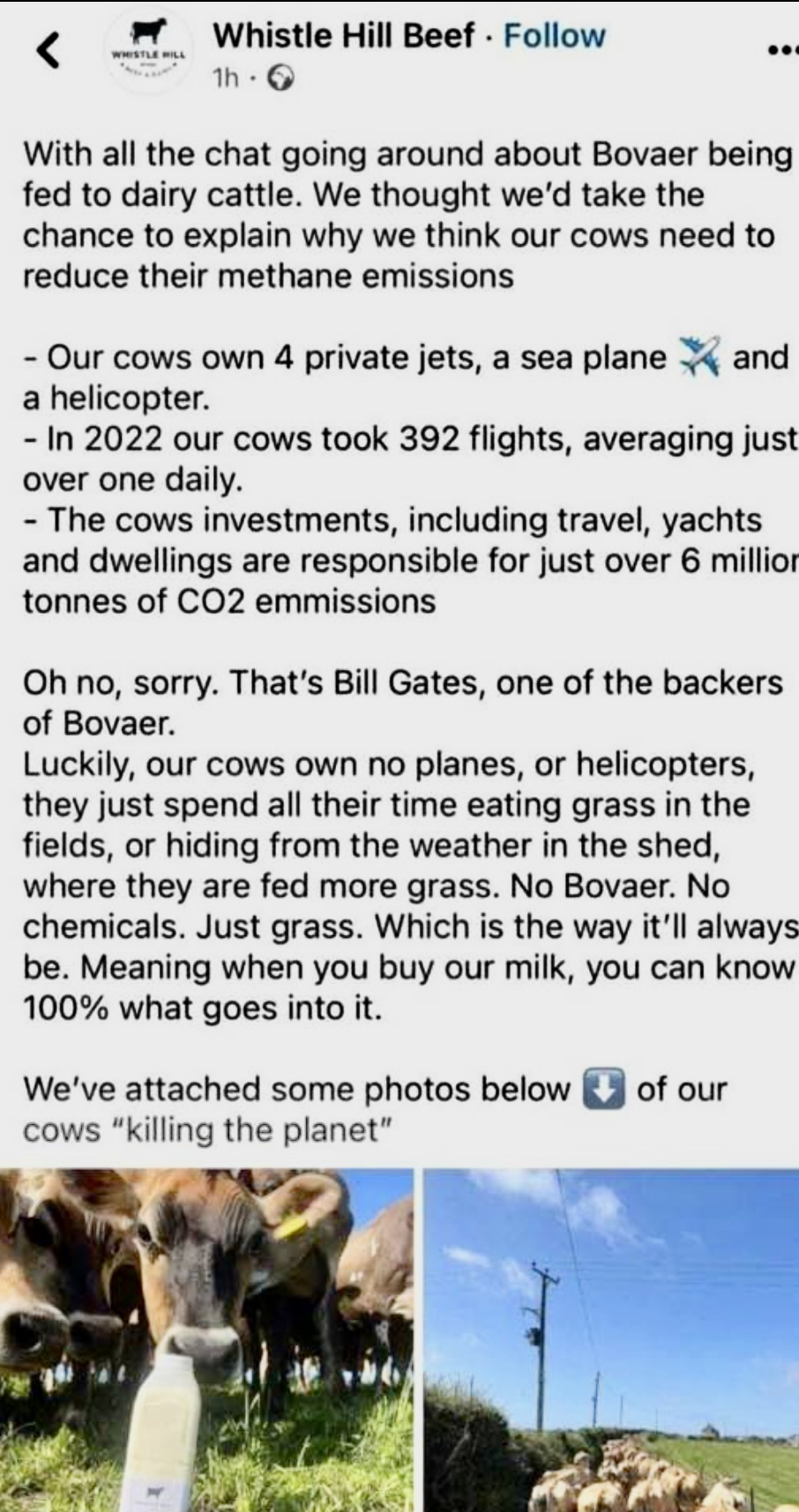
From a UK cattle owner 😉
Posted in climate, flaring and venting, natural gas, tagged Bovaer, Dairy cattle emissions, UK, Whistle Hill Beef on December 2, 2024| Leave a Comment »
JL Daeschler – Renaissance Man
Posted in Uncategorized, Offshore Energy - General, UK, tagged art, France, JL Daeschler, National Assembly, subsea engineer, Total, UK, Zapata on July 12, 2024| Leave a Comment »
Jean-Louis Daeschler, is an artist and pioneering subsea engineer. A native of France (Brittany), he has worked in the offshore industry worldwide and lives in Scotland. His wife is from Singapore and his children and grandchildren live in England and Canada.
Before beginning his engineering career, JL had the distinct honor of exhibiting his artwork at the French National Assembly (Parliament) in Paris (article below). How many offshore engineers can say that? None would be a good guess.
JL also exhibited in le Havre, Singapore, Houston, Edinburgh, Calgary, and elsewhere. He works mainly with acrylics, and his preferred subjects are boats, maritime scenes, harbors and the working environment associated with the sea. Of course!
JL worked on an early semi-submersible rig offshore Malaysia in 1969 (see his account of a serious near-miss), met with George HW Bush when he was building a new rig for Zapata Offshore, was instrumental in the first production in the UK sector of the North Sea (1975) from a converted semi-submersible drilling rig in the Argyll Field, designed a new BOP concept, and holds patents for seabed drilling templates and subsea control systems.
When he was called upon to work in Total’s onshore office, his boss told him “the best offshore job is in the office!” The photo below suggests that JL made the most of those onshore assignments! 😀

Congratulations to JL on his many contributions to the offshore industry, art, and society!
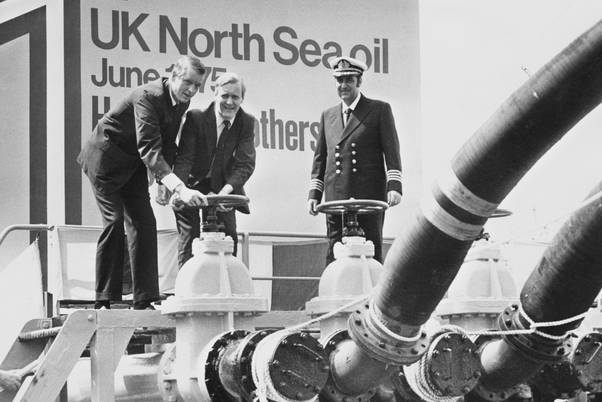
The Hamilton brothers, JL Daeschler, and the first production in the UK North Sea
Posted in Offshore Energy - General, UK, tagged Argyll field, first production, Hamilton Brothers, JL Daeschler, North Sea, UK on November 10, 2023| Leave a Comment »

JL Daeschler, a pioneering subsea engineer who lives in Scotland, has fond memories of his interactions with Fred and Ferris Hamilton, the brothers whose company was the first to produce oil in the UK sector of the North Sea (1975). Their small company aced the super-majors by initiating production at the Argyll Field with subsea wells and the Transworld 58, a converted semi-submersible drilling rig. Their rig conversion was an early predecessor to the modern floating production units that have become the surface facilities of choice for deepwater development.
JL recalls that Ferris and Fred took time to discuss any problem with any employee. Should there be arguments, they were often followed by more relaxed discussions about sailing, cars, cooking, and other topics of mutual interest. The brothers would travel from Denver for the annual Christmas dinner in Aberdeen, and invited everyone from the warehouse crew to the production manager. There was a great sense of community among the employees and contractors.
As JL notes, there were no satellite positioning systems, and real time communications with the rig were short and limited to the normal marine radio channels. This was a remarkable era of achievement for the North Sea and the offshore industry, as operations expanded and technology advanced to support them. I have much respect for these offshore pioneers and their contributions to societies around the world.
Related articles:
 Bud's Offshore Energy (BOE)