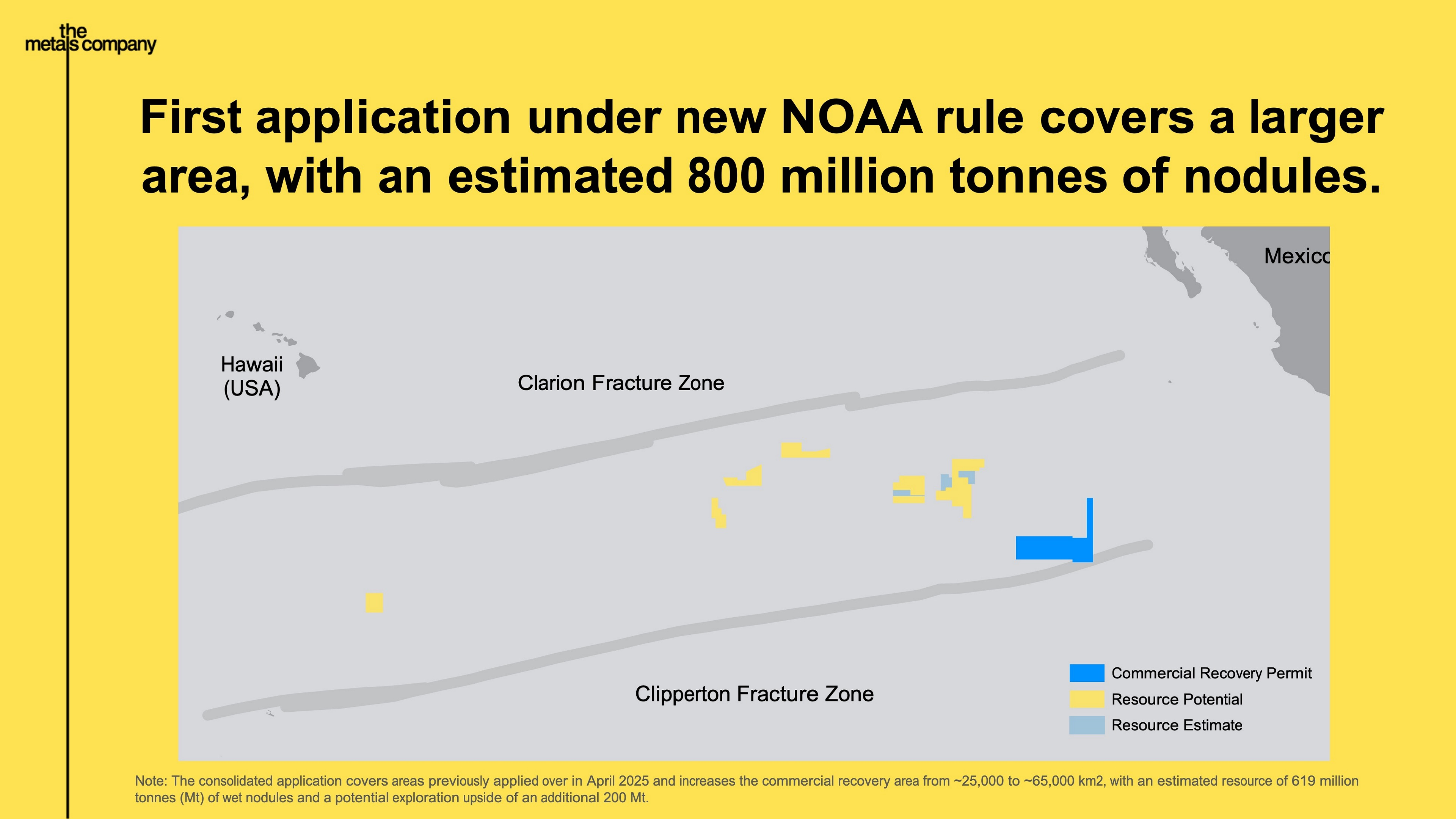
The Metals Company has filed the first consolidated application for an exploration license and commercial recovery permit under NOAA’s new regulations.
Posted in deep sea mining, energy policy, Regulation, tagged deepsea minerals, DSHMRA, first application, NOAA, The Metals Company, TMC on January 23, 2026| Leave a Comment »
The Metals Company has filed the first consolidated application for an exploration license and commercial recovery permit under NOAA’s new regulations.
Posted in deep sea mining, energy policy, tagged deep sea mining, environmental impacts, Impossible Metals, land vs. deep sea, The Metals Company on October 7, 2025| Leave a Comment »
BOE contributor John Smith, who worked in the US marine minerals program, shared the pictures pasted below.



An Impossible Metals table (below) understandably favors their methods vs. those employed by deep-sea mining rival The Metals Company. However, both approaches are far preferable, environmentally and socially, to onshore metal mining.
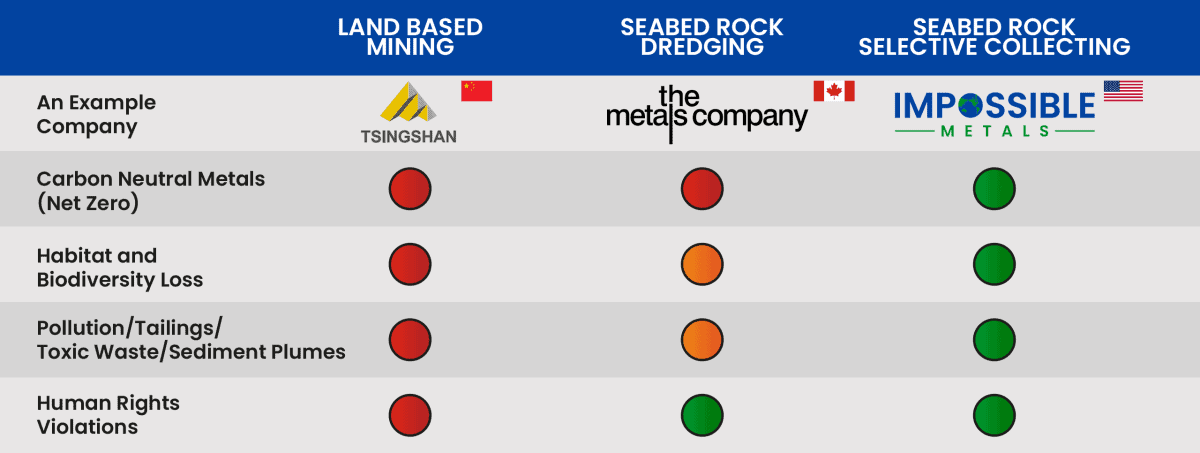
Impossible Metals graphic:
Posted in deep sea mining, energy policy, Offshore Energy - General, tagged BOEM, deepsea minerals, Impossible Metals, International Seabed Authority, NOAA, rare earths, The Metals Company, underwater sculpture on April 29, 2025| Leave a Comment »
… and shared a mineral water toast! 😉 (Weak joke, but at least it’s original and topical!)


NOAA and TMC, a Canadian company, are working together to bypass the stifling UN deep sea minerals bureaucracy.
NOAA raises a glass: Yesterday, President Trump signed an Executive Order establishing a framework for American companies to identify and retrieve offshore critical minerals and resources. The Executive Order prioritizes U.S. leadership in seabed mapping and mineral exploration, ensuring reliable access to critical minerals like manganese, nickel, cobalt and rare earth elements.
In support of the Executive Order, NOAA is committed to an expeditious review of applications for exploration licenses and commercial recovery permits. The agency will provide the necessary resources for license and permit reviews to ensure that those reviews go forward without undue delays.
China boos: “The US authorization… violates international law and harms the overall interests of the international community,” Chinese foreign ministry spokesman Guo Jiakun said on Friday.
TMC and other companies like Impossible Metals (see below) have had enough of the endless delays at the United Nations’ International Seabed Authority, which is still developing regulations. Mining companies and others have spent years gathering data and providing input.
Meanwhile in US waters:
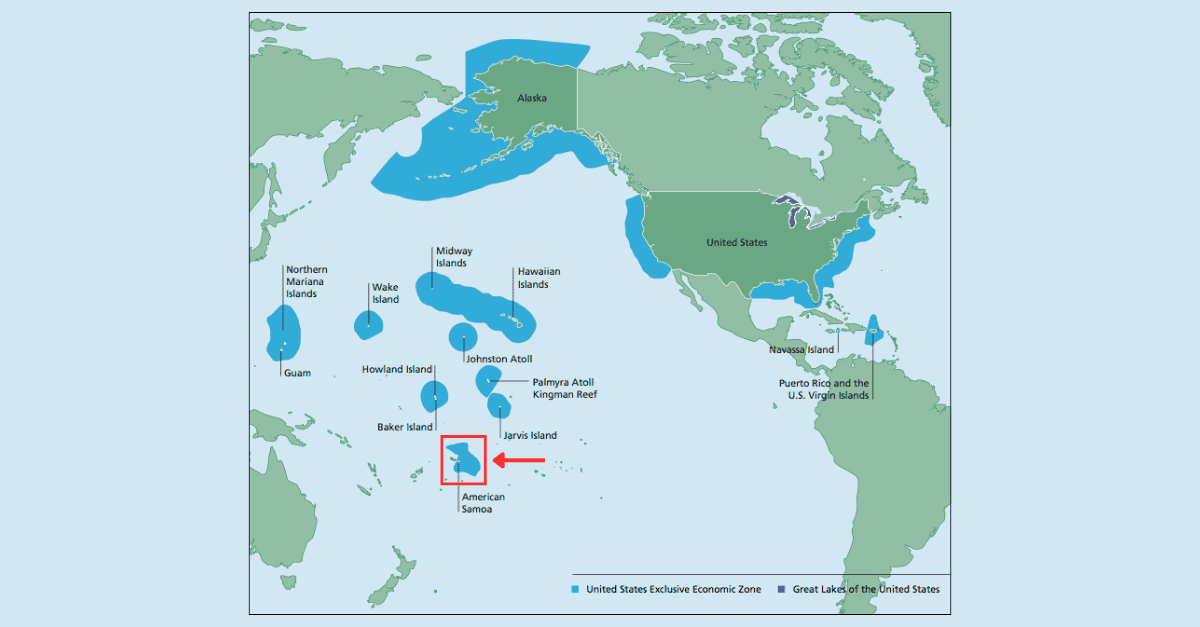
San Jose, CA – Impossible Metals, a pioneering US-based deep-sea mining company, has submitted a request to commence a leasing process for exploration and potential mining of critical minerals in the deep sea off the coast of American Samoa. Impossible Metals is the first company to request a lease of critical minerals under the Outer Continental Shelf Lands Act of 1953, which is regulated by the U.S. Bureau of Ocean Energy Management (BOEM), part of the U.S. Department of the Interior.
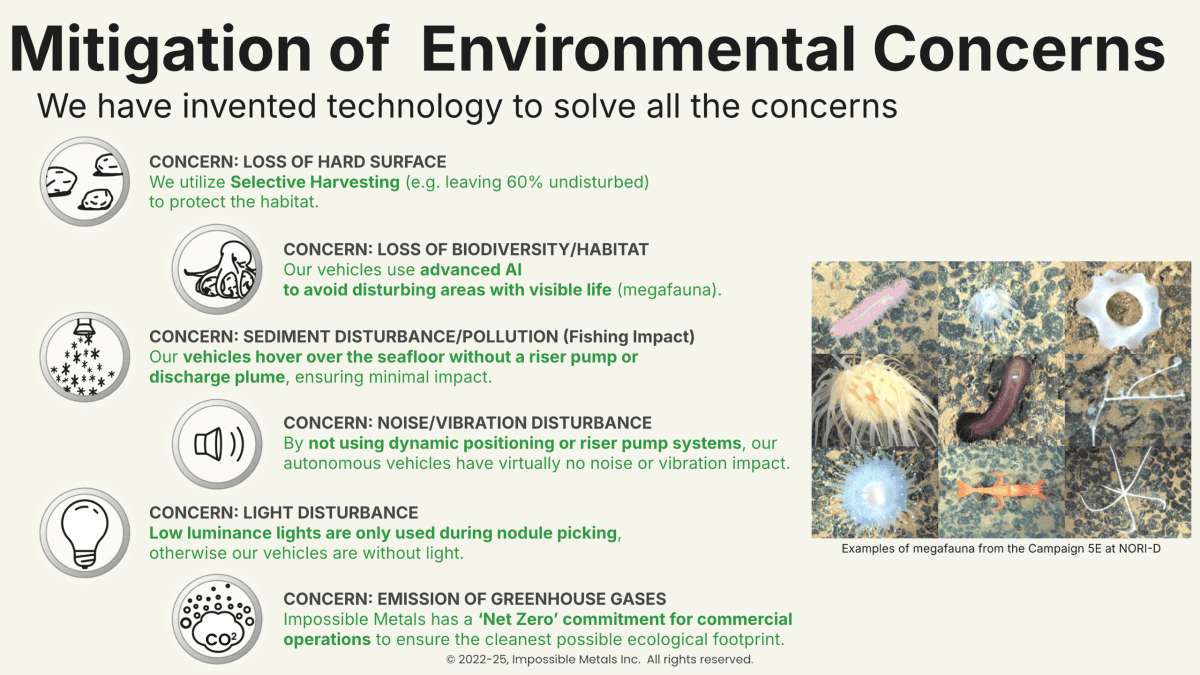
Impossible Metals has developed the only autonomous underwater robot (AUV) for selective harvesting. The novel underwater robot uses advanced robotics, AI, and a buoyancy engine to hover above the seabed, accurately identifying and avoiding nodules with visible life while minimizing disruption to the habitat and native biodiversity. This method will have the lowest environmental impact and cost among land and deep-sea mining approaches, setting a new standard for responsible resource collection.
Posted in deep sea mining, energy policy, Offshore Energy - General, tagged deepsea mining, ISA, NOAA, The Metals Company, TMC, UNCLOS, US permitting on March 31, 2025| Leave a Comment »
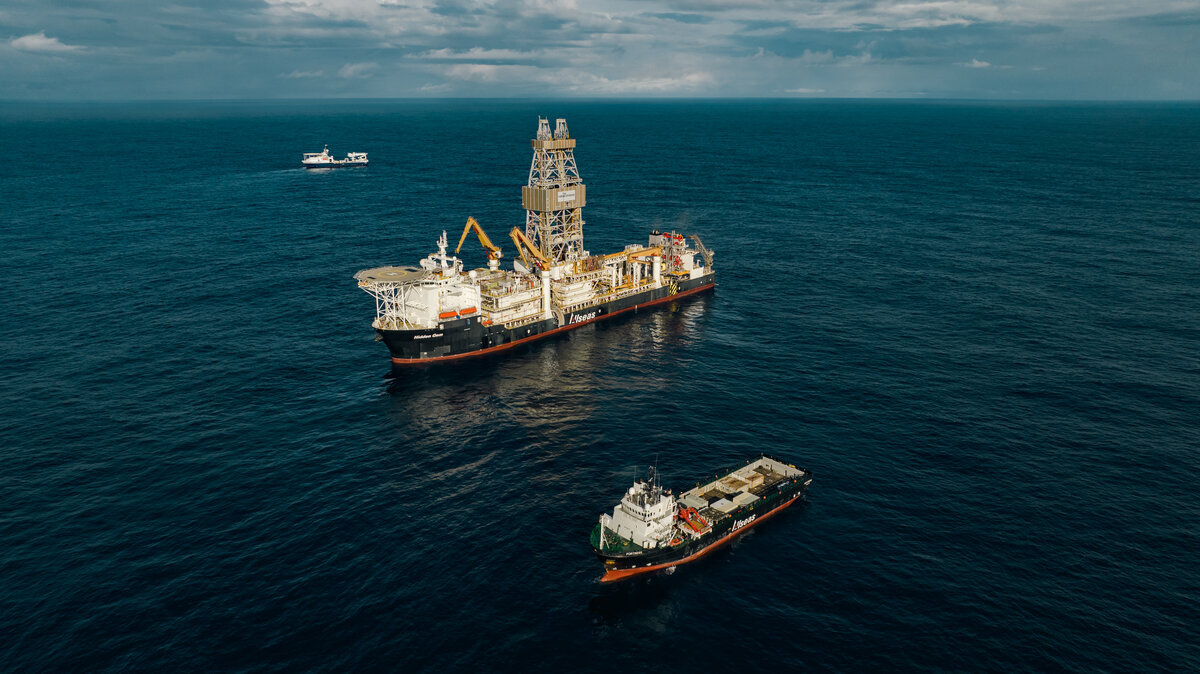
Lars Herbst brought this bold and rather surprising deepsea mining development to my attention. Let the screaming begin!
NEW YORK, March 27, 2025 (GLOBE NEWSWIRE) (emphasis added) — TMC the metals company Inc. (Nasdaq: TMC) (“TMC” or the “Company”), an explorer of the world’s largest undeveloped resource of critical metals for building infrastructure, power generation, transmission, and batteries, today announced that its subsidiary The Metals Company USA LLC (“TMC USA”) has formally initiated a process with NOAA under the U.S. Department of Commerce to apply for exploration licenses and commercial recovery permits under existing U.S. legislation, the Deep Seabed Hard Mineral Resources Act of 1980 (DSHMRA).
Following extensive legal diligence on DSHMRA, NOAA’s implementing regulations and other applicable environmental protection legislation, the Company strongly believes that the U.S. seabed mining code offers the greatest probability of securing a permit for commercial recovery of deep-sea mineral resources in a timely manner.
Gerard Barron, Chairman & CEO of The Metals Company, commented: “Over the last decade, we’ve invested over half a billion dollars to understand and responsibly develop the nodule resource in our contract areas. We built the world’s largest environmental dataset on the CCZ, carefully designed and tested an offshore collection system that minimizes the environmental impacts and followed every step required by the International Seabed Authority. But, despite collaborating in good faith with the ISA for over a decade, it has not yet adopted the Regulations on the Exploitation of Mineral Resources in the Area in breach of its express treaty obligations under UNCLOS and the 1994 Agreement.”
“We believe we have sufficient knowledge to get started and prove we can manage environmental risks. What we need is a regulator with a robust regulatory regime, and who is willing to give our application a fair hearing. That’s why we’ve formally initiated the process of applying for licenses and permits under the existing U.S. seabed mining code. After extensive legal review and constructive engagement with NOAA and other officials across the U.S. government, we believe the United States offers a stable, transparent, and enforceable regulatory path. TMC USA expects to submit applications to NOAA in the second quarter of 2025. We’re encouraged by the growing recognition in Washington that nodules represent a strategic opportunity for America—and we’re moving forward with urgency.”
Posted in Mexico, Offshore Energy - General, tagged deep sea mining, Hidden Gem, Long Beach, Manzanillo, MV Coco, The Metals Company on November 28, 2023| Leave a Comment »
Our Mexican correspondent Andrew Konczvald reports that the Hidden Gem deep sea mining vessel is no longer in Manzanillo. Vessel tracking data indicate that the ship has relocated to the Port of Long Beach.
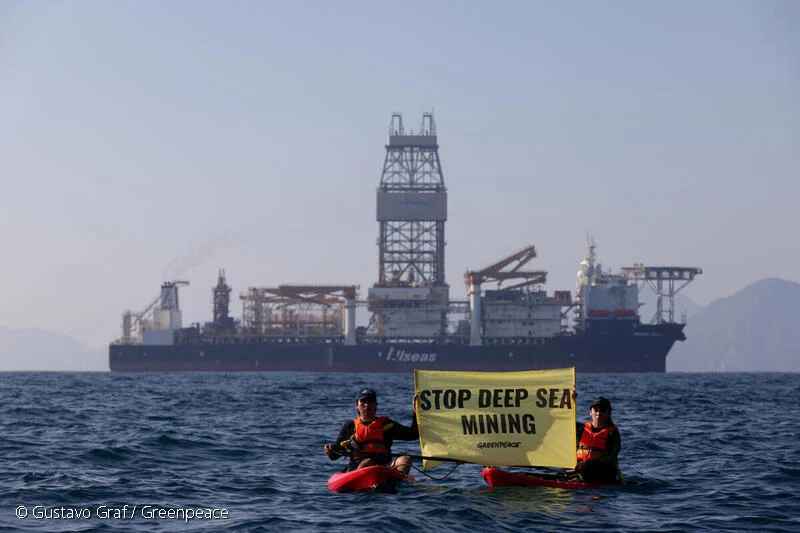
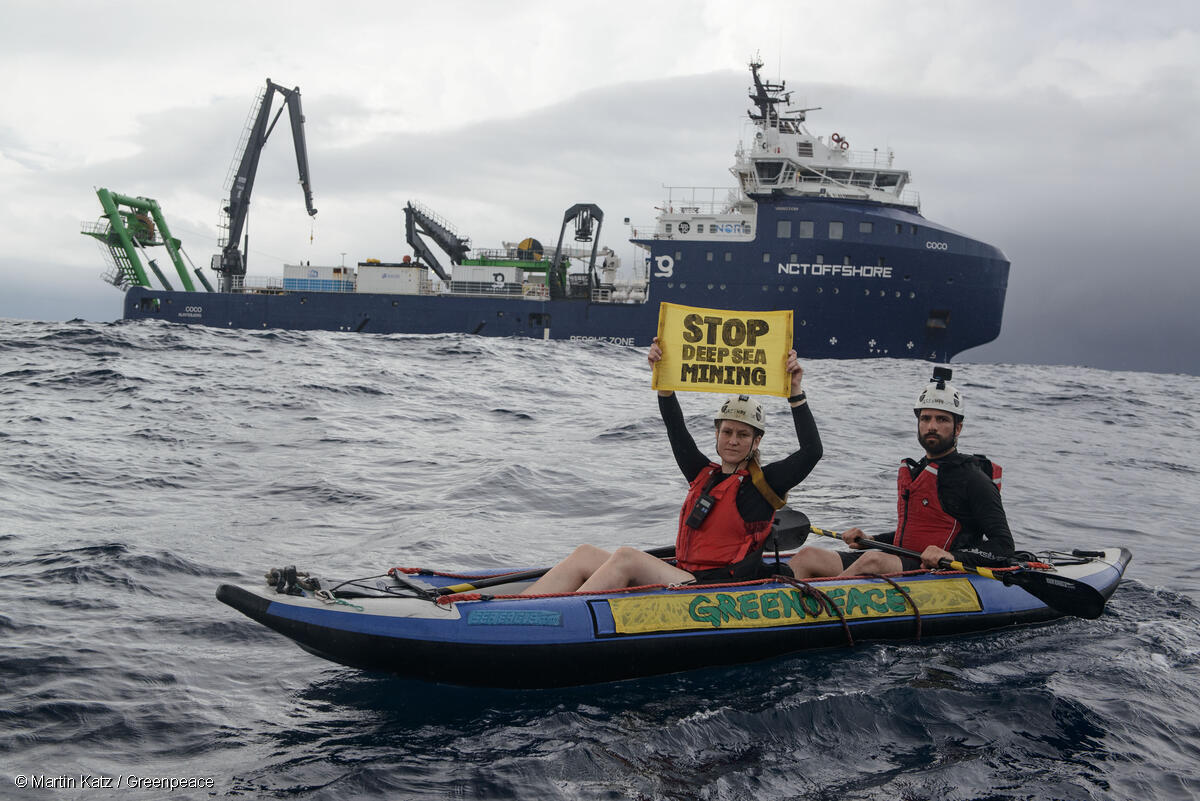
News articles are reporting that The Metals Company is conducting studies in the Pacific. These articles erroneously include a file photo of the Hidden Gem, which is not involved with this research. The MV Coco, an impressive research vessel that is pictured below with the obligatory Greenpeace protesters, is conducting the studies.
On a related note, below is an interesting video about last year’s nodule recovery trials using the Hidden Gem’s integrated collection system.
Posted in energy policy, Jamaica, Offshore Energy - General, Regulation, Uncategorized, tagged CIA, Clarion-Clipperton Zone, deep sea mining, Glomar Explorer, Hidden Gem, ISA, Manzanillo, Naura, The Metals Company, UNCLOS on October 26, 2023| Leave a Comment »
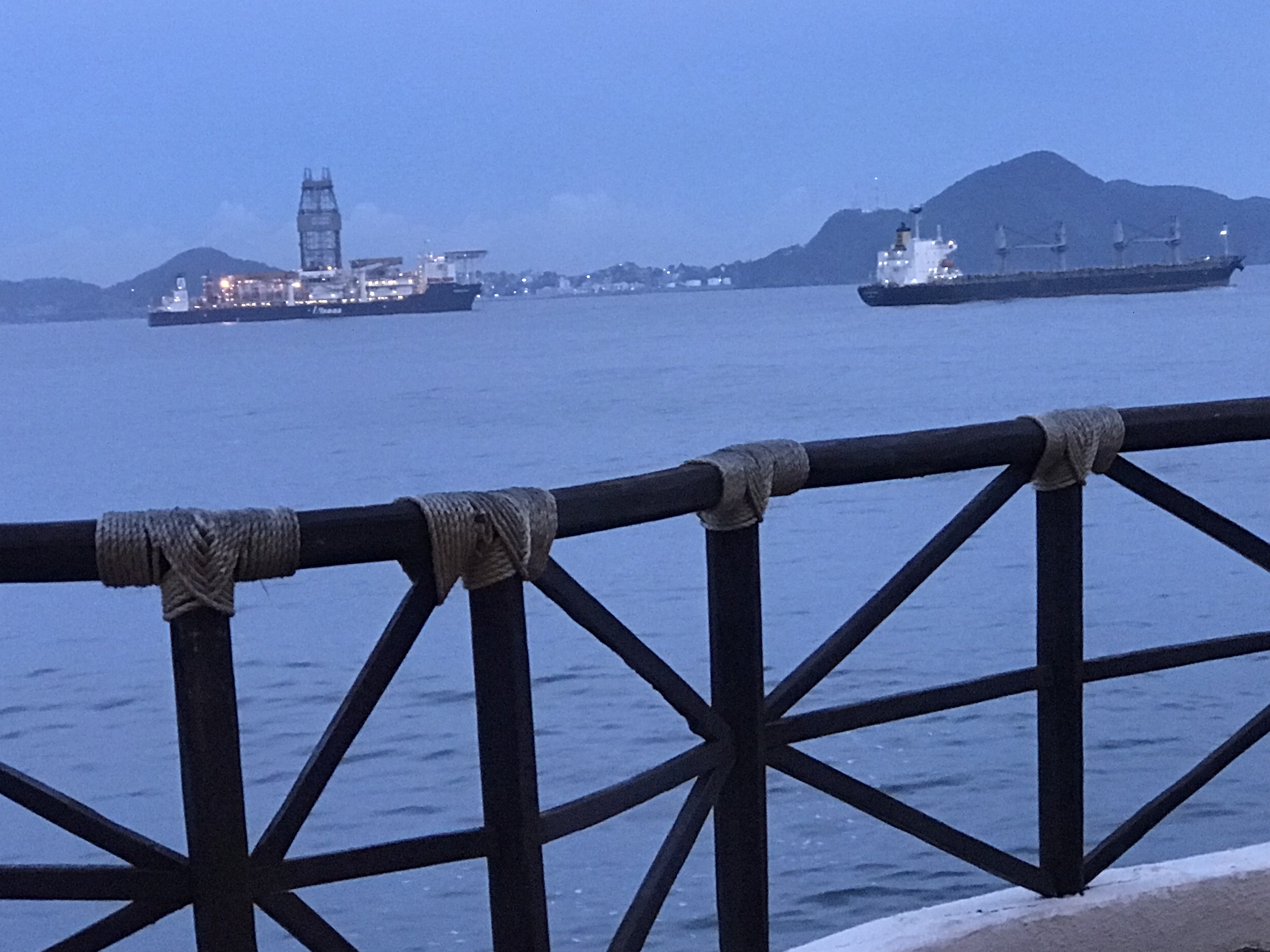
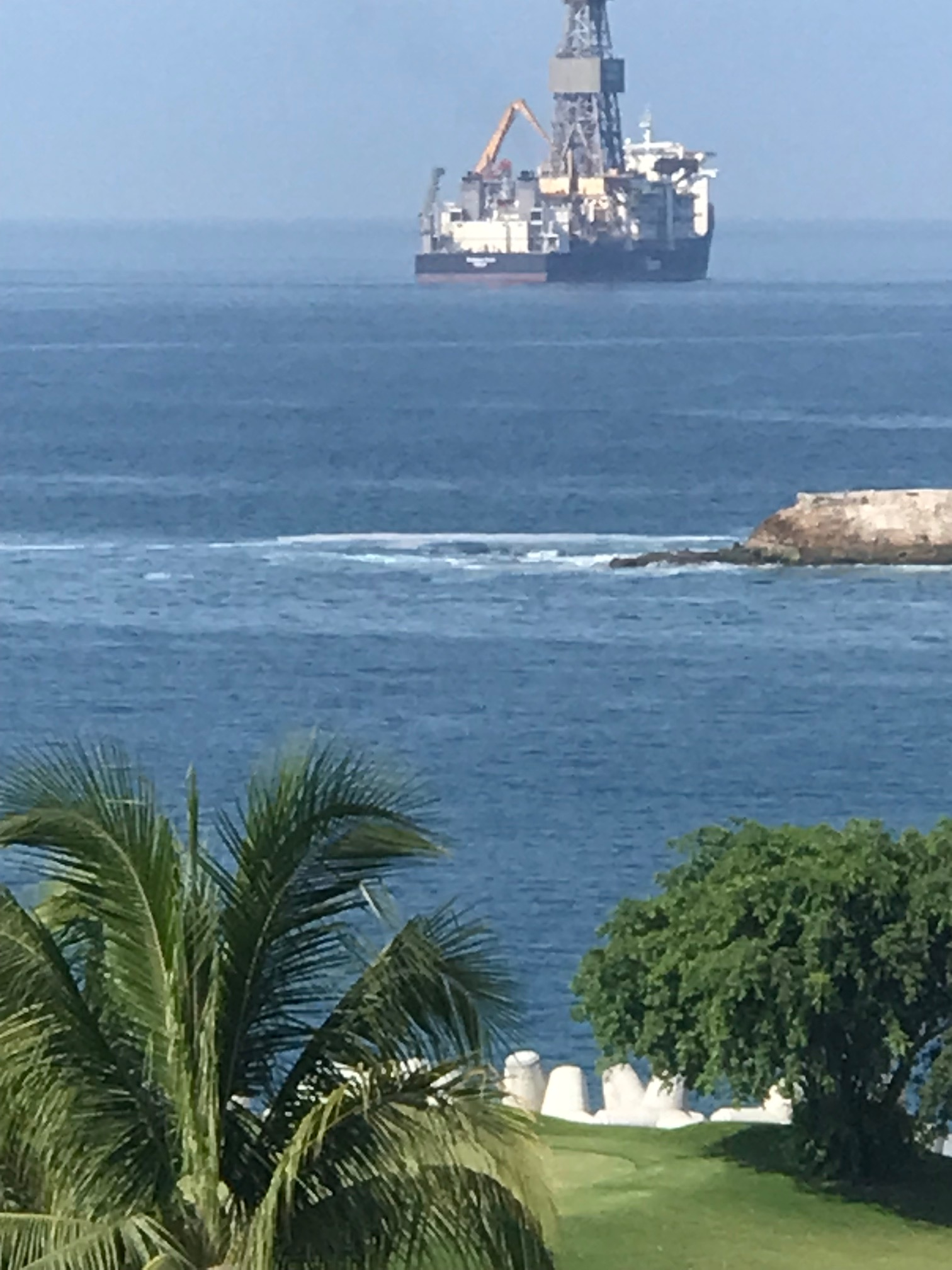
Andrew Konczvald’s reports from Manzanillo, Mexico about the presence of the Hidden Gem (pictured above), a converted deepwater drillship, have renewed BOE interest in deep sea mining, a topic that is full of political, environmental, legal, and operational intrigue:


Posted in Mexico, offshore, Regulation, tagged deepsea mining, Hidden Gem, Manzanillo, Mexico, The Metals Company on May 29, 2023| Leave a Comment »
Andrew Konczvald reports that the Hidden Gem, a deepsea mining vessel owned by The Metals Company (TMC) is still parked offshore Manzanillo. Andrew’s latest picture of the Hidden Gem is pasted below.
TMC is awaiting international deepsea mining regulations, hence the extended and costly downtime for this massive rig. Per TMC, the regulations seem to be progressing.
 Bud's Offshore Energy (BOE)