Feeds:
Posts
Comments

Posts Tagged ‘shale gas’

Santa Ynez Unit items (thanks to John Smith for the links):

Cuts in carbon capture spending coming? These are cuts that both climate activists and skeptics can support.

In a peer reviewed paper, AI (Grok-3) debunks the man-made climate crisis narrative.

Doug Burgum: Hydraulic fracturing technology is “one of the reasons why the U.S. shale revolution is a miracle. But that miracle keeps on getting better and better. It’s the thing that has literally turned around the economy.” Posted here 15 years ago: Natural Gas Bonanza – Why Aren’t We Celebrating?
Read Full Post »

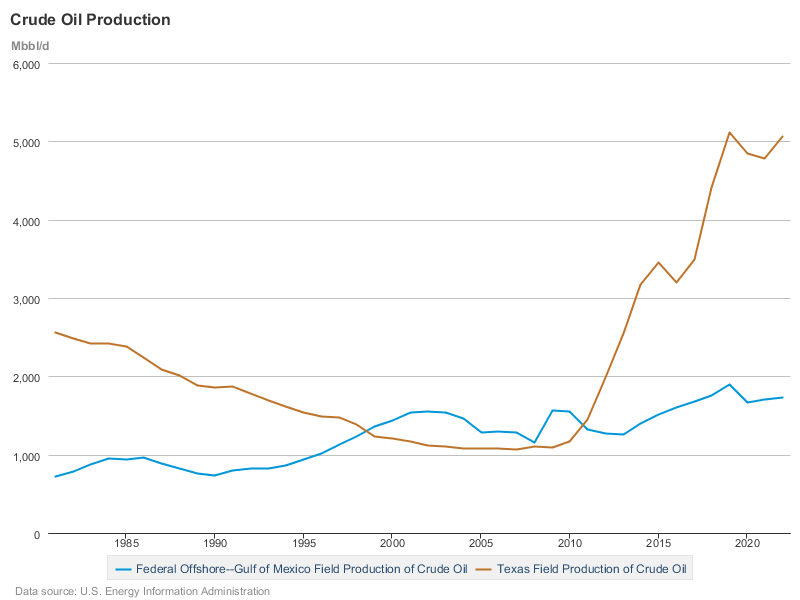
A friend owns land in the Texas Permian. His family gets a nice royalty check every month that has helped them get through some difficult times. Texas Permian production is almost entirely from private land, which is a big part of the success story. Payments to private land owners by responsible producers engender public support, access to resources, and growth in production. Add to that the continuous improvements in horizontal drilling, well stimulation and completion practices, and you have the success story that is the Texas Permian.

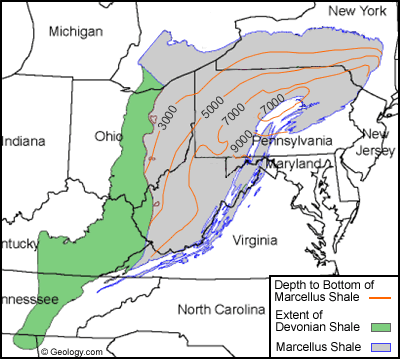
Similarly, private and state land plus technology launched the natural gas boom in my native state of Pennsylvania. When I was a student, we looked back at the Titusville/Colonel Drake glory days, and no one dreamed that the state would become a major natural gas exporter. Today, pipeline constraints, particularly in NJ and NY (which has managed to prevent access to the state’s substantial Marcellus and Utica shale resources) are preventing PA from further increasing gas sales.

The offshore lands on the US Outer Continental Shelf are a different story. Unfriendly, bordering on hostile, leasing policy (and not just during the current administration) has been partially overcome by advances in deepwater well and facility design that have lowered costs and increased productivity. However, OCS oil production is a fraction of what it could be.

OCS gas production has fallen dramatically since the turn of the century. Ultradeep (subsurface) gas production was not economically viable and production was fading even before onshore shale gas began to dominate US gas markets. Most of the current OCS gas production is associated with deepwater oil production.

The charts below tell the story.

Read Full Post »

Very interesting Wall Street Journal article.

First, thanks to the unexpected shale gas boom in the U.S., liquefied natural gas cargoes once planned for the U.S. have gone looking for new buyers. Result: European customers have been able to shake off Russian long-term contracts linked to the price of oil.

Russia insists the gas glut is temporary. It has tried to fight back by pushing gas sales to China. But now those talks are stalled over price thanks to Beijing’s discovery that—guess what?—China back home may have the biggest shale potential of all.

And the hits will keep on coming, upending a high-price dynamic and European dependency that have suited Russia very well (and, admittedly, also suited some of its customers, especially German utilities).

Will the great potential of shale gas be fulfilled? In the US? In Europe? Elsewhere?

But what the Lord giveth, European politics may fritter away. French campaigner Jose Bove, having failed to kick McDonald’s out of Paris, is now jawboning Poland against developing its reserves, handing a Polish-subtitled copy of “Gasland,” the U.S.-made antifracking documentary, recently to Poland’s president.

France in May passed a ban on fracking. Poland is the anti-France, set to take the European Union’s rotating presidency next month and determined to move ahead on fracking. A mystery wrapped in an enigma is Germany, with its precipitous decision to retire its nuclear plants, and its big, Russia-friendly investment in Nord Stream, a gas pipeline whose board is headed by former German Chancellor Gerhard Schroeder.

Read Full Post »

Daily Mail

The people of Blackpool may have barely felt a shudder, but the repercussions could be wide-reaching.

Measuring just 1.5 on the Richter scale, the seaside town escaped a recent earthquake totally unscathed.

But it was the latest in a series of ‘natural’ disasters, that are not considered natural at all – they are man-made.

Now the UK’s only ‘shale’ gas drilling project has been suspended after it emerged that the controversial technique may have caused the tremors.

Read Full Post »

Per the Citizens Voice, no injuries were reported

The Atgas 2H well operated by Chesapeake Energy in Leroy Township blew out at around 2 a.m., according to Bradford County Emergency Management Agency Deputy Director Skip Roupp.

The well was in the process of being hydraulically fractured and Roupp characterized the spilled fluid as “mostly water … with some contaminants” but he did not know the exact composition of the fluid.

Evidently the crack is in the top part of the well below the blowout preventer,” he said, referring to a device used in emergency situations to choke off flow from a well. “They don’t really know what happened yet because they don’t have it controlled yet.”

Read Full Post »

“The Honda Civic GX (the only NGV available to U.S. consumers and repeat winner of the ACEEE Green List) has been so successful Honda predicts it will double GX sales in the U.S. this year after doubling them in 2009. Utah, Oklahoma and California have been very successful in building out natural gas infrastructure and deploying NGVs that are refueling with natural gas.” SeekingAlpha.com

While I don’t agree with everything in this article, the numbered points are right on target. Increased use of natural gas for transportation is the best near- and intermediate-term option for reducing oil consumption and imports, air emissions, and transportation costs.

Supply does not appear to be an issue in light of the numerous domestic options including shale gas, Alaskan gas, coalbed methane, and conventional onshore and offshore gas.  Given the proximity of enormous shale gas resources to major markets, shale gas is the featured attraction. However, this is an offshore blog, and from a strictly environmental perspective, offshore gas is the preferred option.  Why?

  • No freshwater contamination issues
  • Small environmental footprint – limited facilities needs and minimal space preemption
  • No production in or near residential areas
  • Potential production near major natural gas markets. For example, there is a natural gas discovery in the Atlantic approximately 100 miles southeast of the New York City area. (Before my geologist friends get upset, I will point out that the productive reservoirs are highly complex and further exploration is necessary to determine whether this field – the former Hudson Canyon Unit – and other Atlantic prospects are commercially viable.)
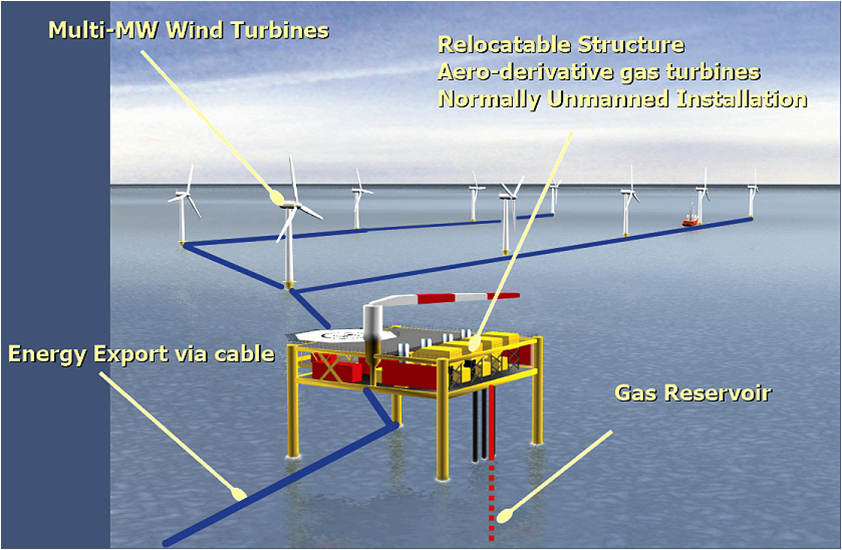
  • Potential for combining offshore gas and wind projects into offshore energy units that can ensure consistent power supply. (See slide below from a presentation by George Hagerman, Virginia Tech Advanced Research Institute)

Read Full Post »

Associated Press story forwarded by Cheryl Anderson:

In the two years since the frenzy of activity began in the vast underground rock formation known as the Marcellus Shale, Pennsylvania has been the only state allowing waterways to serve as the primary disposal place for the huge amounts of wastewater produced by a drilling technique called hydraulic fracturing, or fracking.

State regulators, initially caught flat-footed, tightened the rules this year for any new water treatment plants but allowed any existing operations to continue discharging water into rivers.

Pennsylvania shale gas producers seem to be getting the message, but the industry is once again in a reactive mode. Where was the leadership during the critical first two years?  Why were new regulations needed to address the obvious?

Records verifying industry claims of a major dropoff in wastewater discharges to rivers will not be available until midwinter, but John Hanger, secretary of Pennsylvania’s Department of Environmental Protection, said he believed that the amount of drilling wastewater being recycled is now about 70 percent — an achievement he credits to tighter state regulation pushing the industry to change its ways.

“The new rules, so far, appear to be working,” he said. “If our rules were not changed … we would have all of it being dumped in the environment, because it is the lowest cost option,” Hanger said.

That last sentence must be painful reading for industry’s true safety and environmental leaders. The Marcellus Coalition, and the rest of us, need to remember this message:

We’re all in this together. We’re all only as good as whoever had a mistake this morning.

Read Full Post »

In 1973, while a graduate student at Penn State, I wrote a paper entitled “The Use of Natural Gas in Improving Air Quality.”  My professor, Richard Gordon, a terrific economist who greatly influenced my thinking about energy, liked the paper but thought I was too optimistic about the availability of natural gas.  The sense at the time was that natural gas was a premium energy source in short supply.

Fast forward to 2010.  Another Penn State professor, Terry Englander, estimates recoverable natural gas resources of 500 tcf for the Marcellus shale alone.  Annual gas consumption for the entire US is only about 23 tcf.  The whole world consumed about 113 tcf in 2008.

Dan Yergin is calling it the natural gas revolution.   Boone Pickens has called the US the “Saudi Arabia of natural gas.”  In addition to the shale gas, we have huge Alaskan gas reserves awaiting a pipeline (the economic viability of which may be threatened by the major discoveries in the lower 48). Prospects for ultra-deep gas in the Gulf of Mexico are also looking brighter in the wake of McMoRans major deep gas discovery.  There is excellent natural gas potential in the eastern Gulf near major gas markets, and at least one Atlantic state (Virginia) has expressed interest in renewed exploration in the Atlantic.

Given the dearth of good economic news, why isn’t more attention being given to this natural gas bonanza?  Boone Pickens and others are doing their part, but there should be a national dialogue on how we can use these resources to improve our economy, energy security, and the environment.

How about a parade down Constitution Avenue to celebrate our good fortune?

Celebrating the Natural Gas Revolution?

Read Full Post »