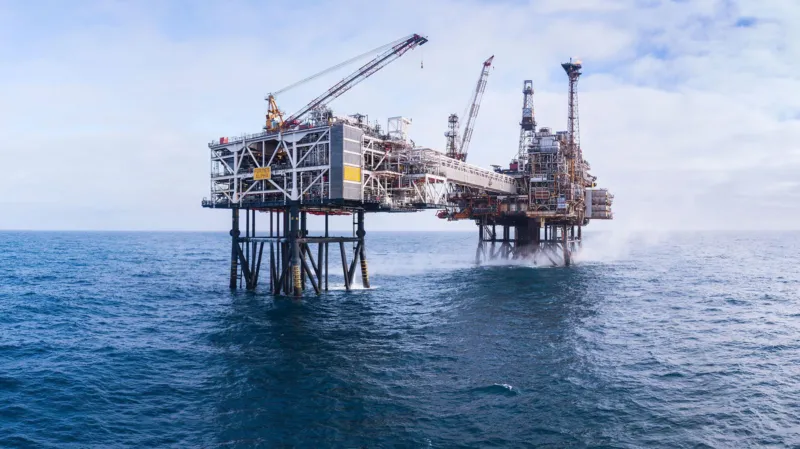
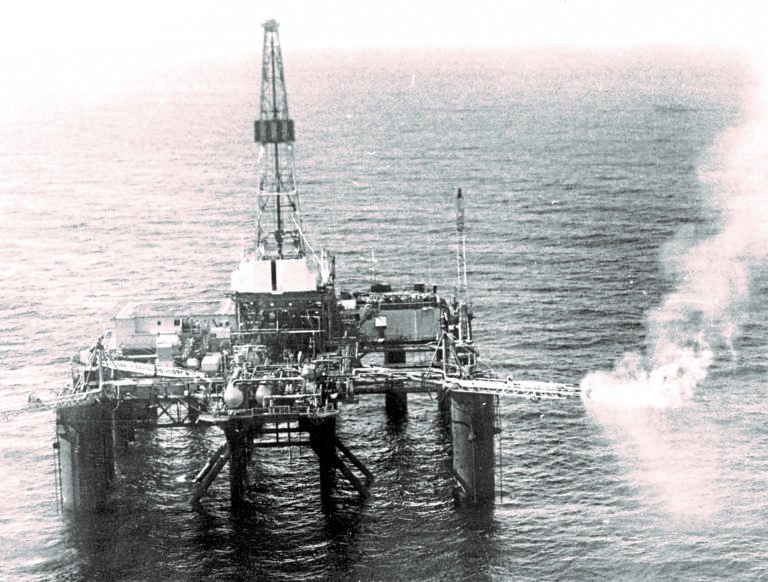
Queen Elizabeth inaugurated Forties field production.
Marking the Forties field’s half-century, the current operator Apache said it stood as a testament to Scottish grit, industrial excellence, and enduring human spirit.
In November 2024 Apache said it had suspended new drilling and would end all its operations in the North Sea by 2029. ☹
Bucks Fizz performed on a Forties field platform in the 1980s
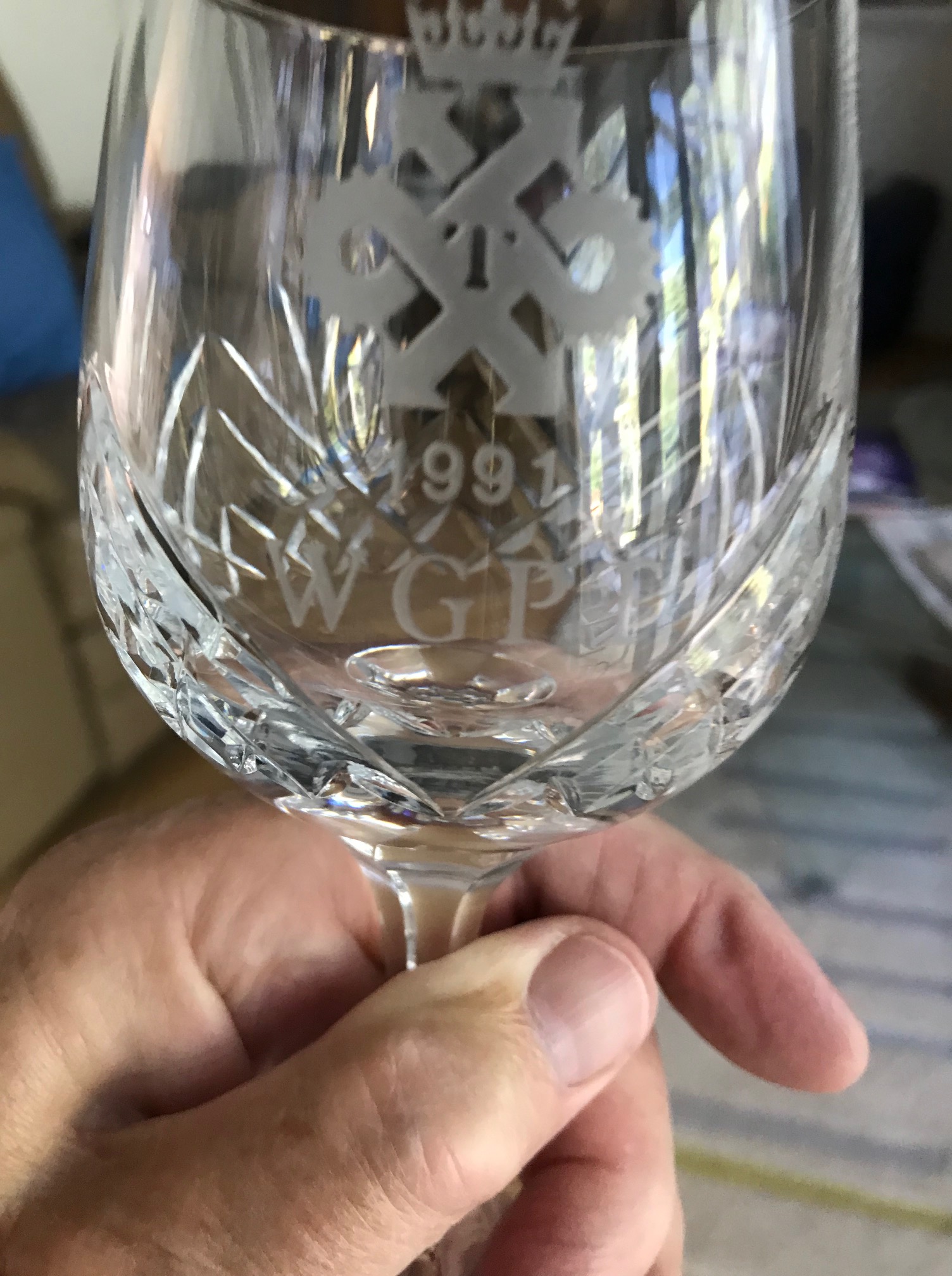
In 1991 Wood Group Production Technology (WGPT) received the Queen’s award for engineering innovation.
JL Daeschler, a pioneering subsea engineer who lives in Scotland, is saddened by the sale of the famous Wood Group engineering firm. After difficult financial losses, the Wood Group, headquartered in Aberdeen, has been sold at a cut-price to a Dubai based group.
Per JL: I knew Ian in the early North Sea development stage. He became Sir Ian Wood. We used to chat at various conferences in Houston, Stavanger, and Aberdeen. Ian was an energetic man, who had a friendly approach to our North Sea challenges. He was a true Aberdonian entrepreneur who employed 1000’s in offshore related disciplines worldwide. The crystal glass above was a gift by a University student I sponsored who later worked for the Wood group. In 1991 Wood Group Production Technology (WGPT) received the Queen’s award for engineering innovation. We worked closely on the development of down hole pressure censors and temperature gauges in the 1980’s.
JL reports that oil & gas is a hot subject in Scotland, but political commentary dwarfs technical discussion. To fix the economy, the govt should look at where people are struggling, and energy costs are their no. 1 concern.
While some politicians are belatedly vowing to maximize North Sea production, that will be difficult given the loss of operators, rigs, ships, installation and pipeline vessels, shipyards, and experienced workers. The infrastructure in Aberdeen is back to 1970 levels, and it’s difficult to build back what has been destroyed.
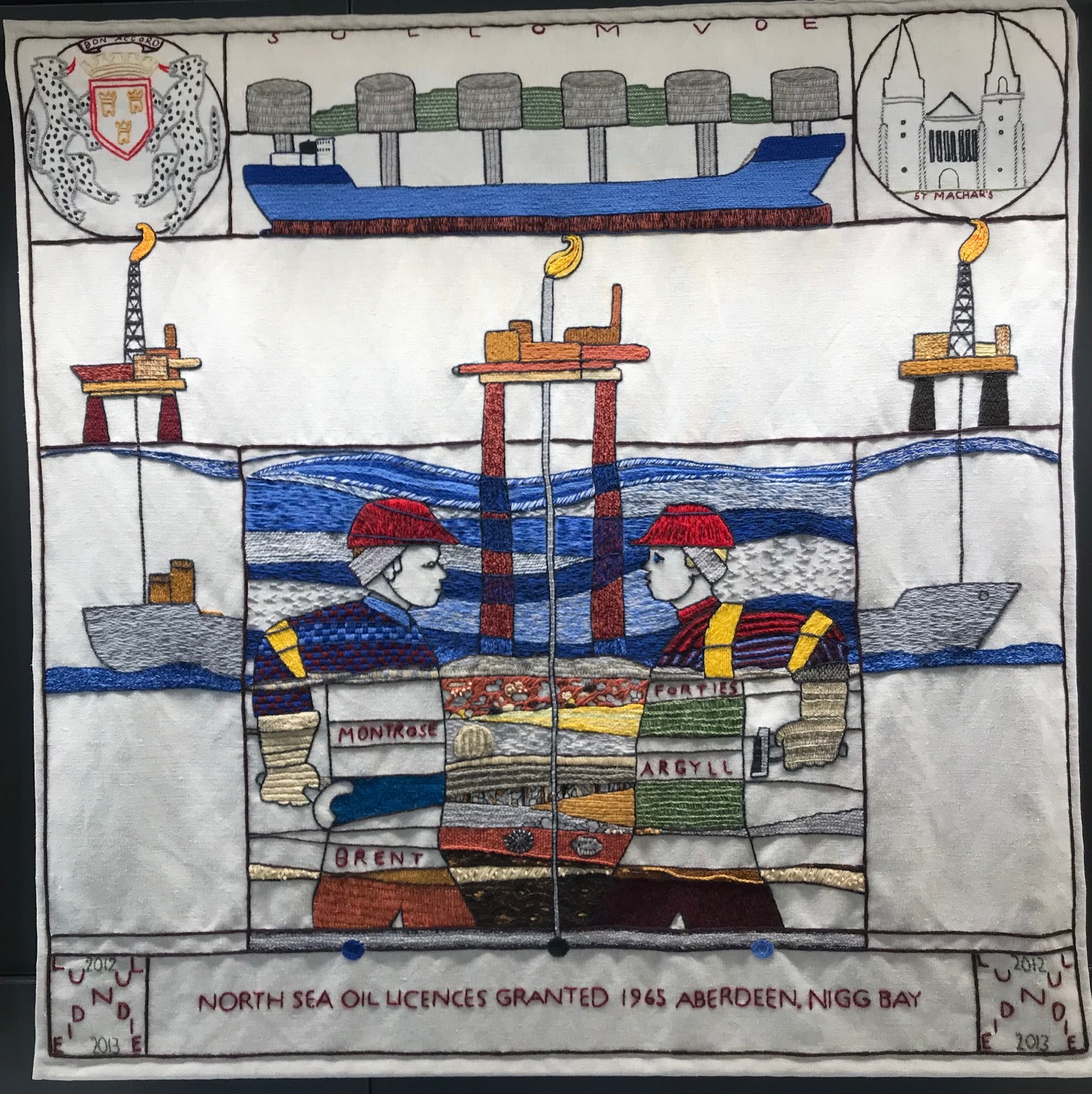
JL Daeschler, pioneering subsea engineer, artist, resident of Scotland, and BOE contributor, visited The Great Tapestry of Scotland exhibition in Galashiels. He shared this image of a tapestry tribute to North Sea workers.
JL reports that the Great Tapestry is 143 m long, and that more than 1000 people worked 50,000+ hours on the various historical panels!
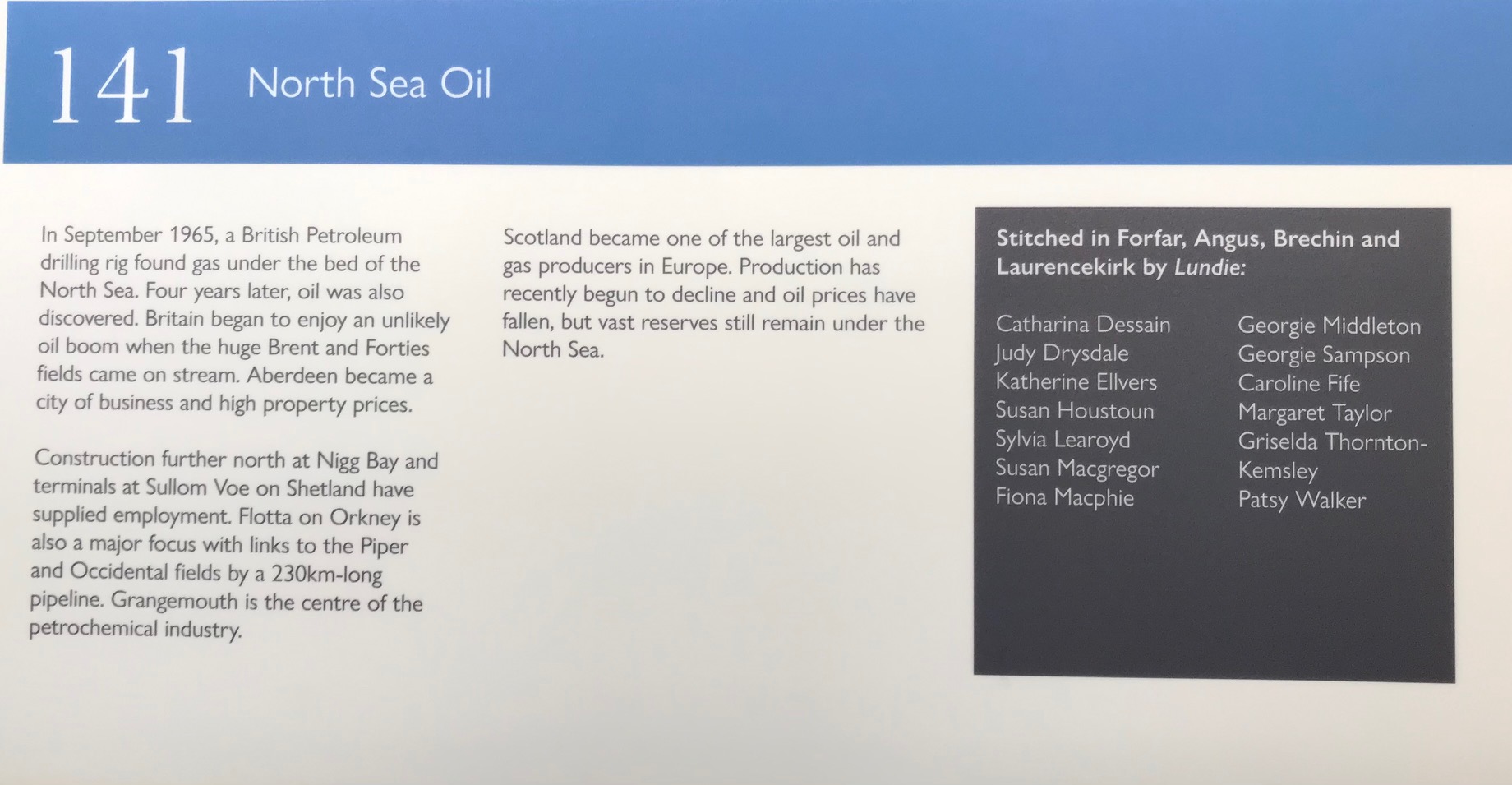
Beneath the North Sea oil panel is some historical information and the names of those who did the stitching:
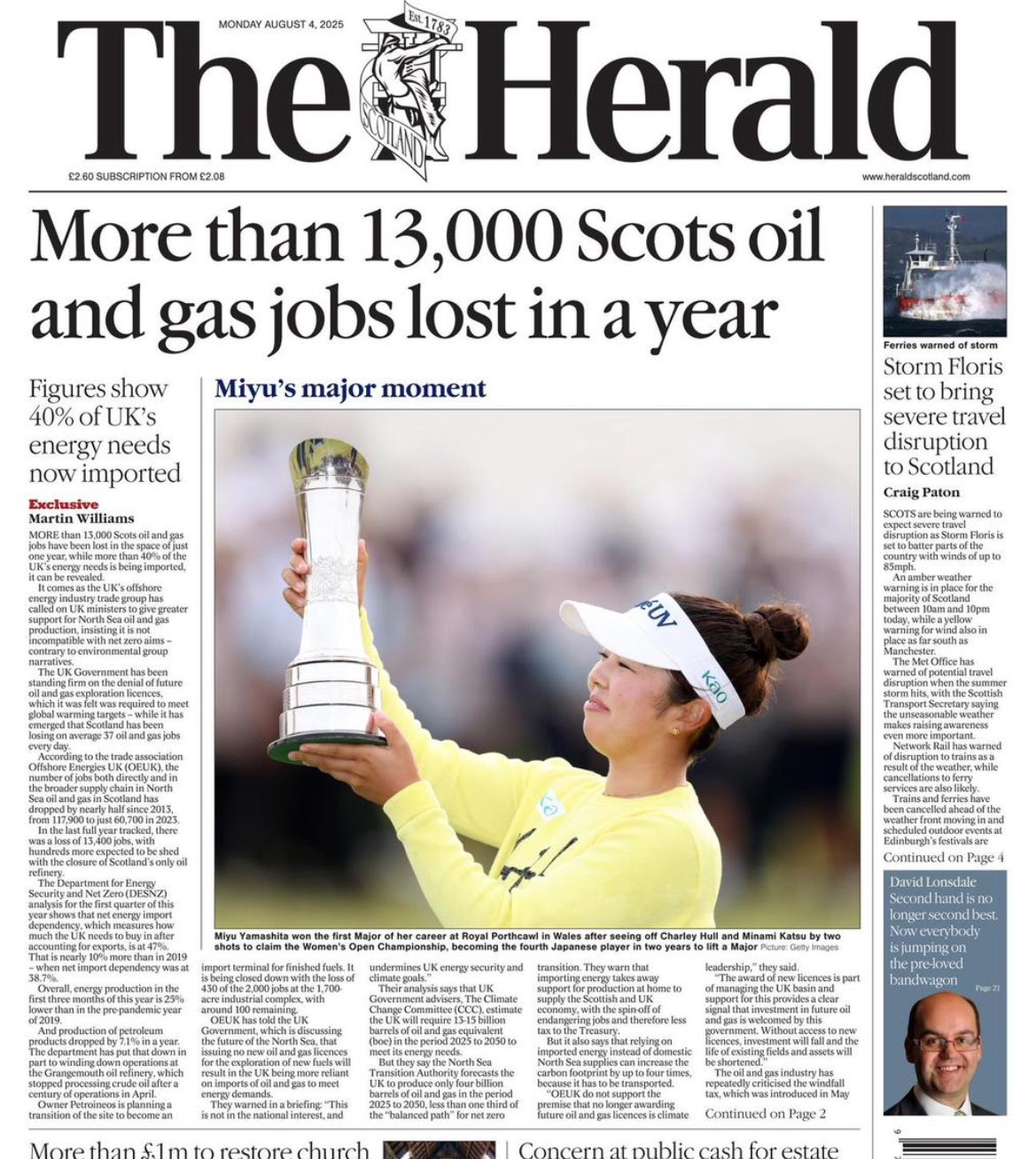
North Sea pioneer, JL Daeschler, reports from Scotland that “more than 13,000 Scots oil and gas jobs have been lost in the space of just one year while over 40% of the UK’s energy needs is being imported ….”
The UK’s self destructive energy policy, while sadly not unique, is particularly troubling because of the North Sea’s enormous contribution to the domestic economy over the past 50 years. As Gillian Bowditch aptly commented:
“We all want to protect our environment and Scotland, with its vast natural resources and expertise in energy, should be leading the way. Instead, we have squandered an opportunity in favour of a facile show of moral posturing.”
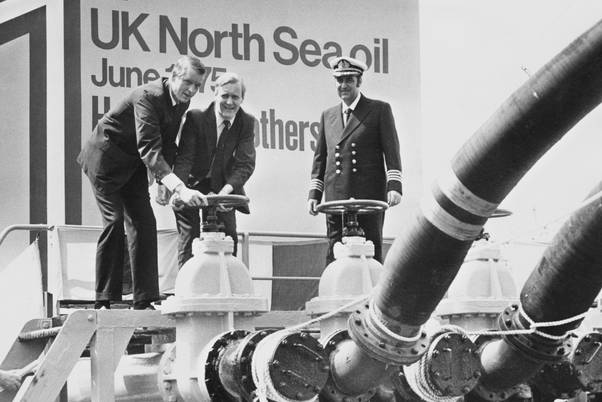
Converted semi-submersible initiates production at the Argyll fieldin the UK sector of the North SeaBritish Secretary of State for Energy Tony Benn, center, with Frederic Hamilton and Captain Harry Koutsoukos opening a valve to release the first oil from the North Sea into the BP refinery on the Isle of Grain in 1975.
Congratulations to JL Daeschler and other North Sea pioneers!Your important contributions to the UK and the world have not been forgotten.
Our Scottish contributor, JL Daeschler, brought this brilliant Sunday Times piece by Gillian Blowditch (pictured) to my attention. A few excerpts follow, but I recommend that you read the entire column.
“I’m writing this column from Applecross in the Scottish Highlands, where the view from the window is of the Cuillins. These immutable behemoths squat beneath an expanse of sky in which the light is invariably diffuse. It never gets old.” (I second that emotion!)
“Renewables are a vital part of our energy mix, but they require gas-fired back-ups. Yet, instead of tapping into our North Sea reserves, we’re committed to importing foreign gas. It’s not just an issue around energy security and cost, it affects our trade deficit and competitiveness against countries using cheaper, home-grown supplies. It increases our dependence on foreign supply chains.”
“Meanwhile, we risk losing the valuable skills and expertise we have built up over 50 years of North Sea exploration. We are all paying the price for this obsession through higher energy bills and job losses.”
“It is difficult to imagine a world in which it makes sense to import oil and gas but not produce it, while forcing our skilled workforce to work offshore in far flung corners of the globe, especially when we are importing from Norway, which is extracting oil and gas from the same seabed for which we are refusing to grant licences.”
“According to a Survation poll commissioned by the Aberdeen & Grampian Chamber of Commerce and published last week, 68 per cent of voters want the country’s demand for oil and gas to be produced domestically, rather than imported.”
“We all want to protect our environment and Scotland, with its vast natural resources and expertise in energy, should be leading the way. Instead, we have squandered an opportunity in favour of a facile show of moral posturing.”
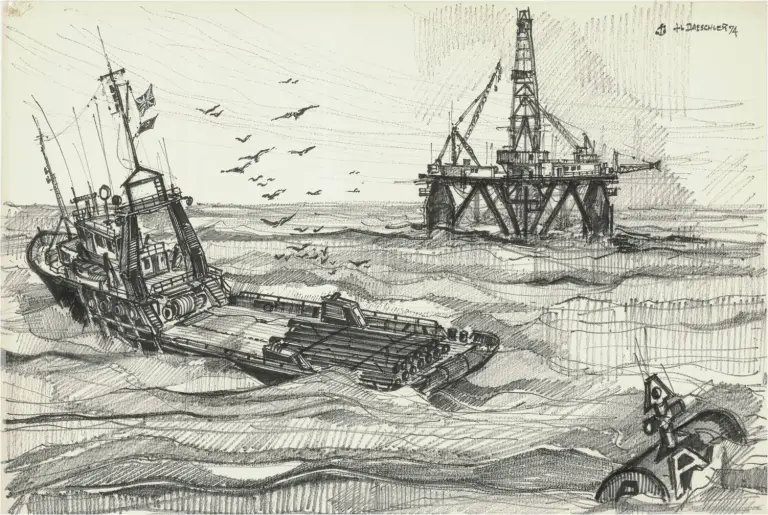
JL Daeschler, pioneering subsea engineer, outstanding artist, and BOE contributor, lives in Scotland. He shared these concerns about the state of the UK offshore industry:
Since projects have been shelved, contractors have left the country – so no drill rigs, no exploration, no pipelines, and no crane barges. The list of disciplines put out of work is far longer. The big international operators have left looking for better opportunities overseas with milder environments and cheaper manpower support. Air travel, modern communication systems, and immediate electronic access to information and support facilitate operations anywhere in the world. So what is left in the UK sector of the North Sea are the few installations running towards the end of production. Their years are numbered. The North Sea could have had a sustainable greener and safer project profile if the momentum had been kept. It’s like an oil & gas pandemic, except you do not work from home if you operate rigs and vessels. No research, no strategy, and no money !!!
Industry sources tell us, authoritatively, that the North Sea could produce around half of all the oil and gas the UK will need up until at least 2050 – if new projects are developed. Meanwhile, as instead we shut down our existing wealth, China continues burning dirty coal and making us more dependent on their products.
As it stands, Offshore Energies UK (OEUK) says the UK is on track to produce just four billion of the 13-15bn barrels of oil and gas the country will need over the next 25 years.
It is time for those making decisions in London and Edinburgh to put away all the green zealotry nonsense and get the UK powerhouse moving again. Given 25 years they could make a good start on installing small, clean, nuclear plants dotted across the UK to help in great part to pick up the load.
We need planning, not zealotry. It is now even more clear the green emperor is not wearing clothes. When will Energy Secretary David Miliband be convinced?
As someone who actually works in the North Sea on oil rigs I have heard almost all my life how the oil and gas will be gone in 10 years. 35 years in this industry and the first time I am likely to be unemployed is because of the government. Not the end of oil fields.
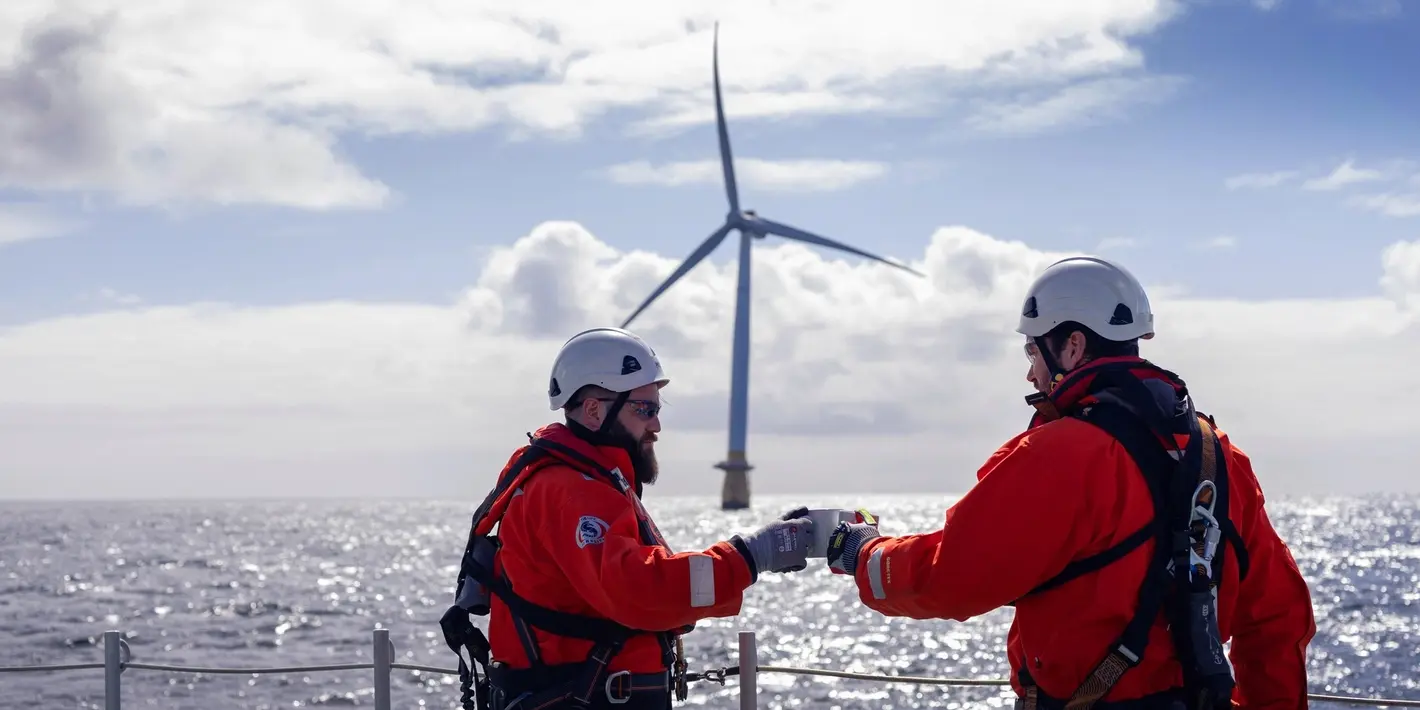
Equinor reports that all 5 Hywind turbines have been returned to service after being towed to Norway as part of a 4-month maintenance campaign.
Even though the turbines had only been in operation since 2017, Equinor puts a positive spin on the 4-month maintenance outage, declaring total victory:
“The successful completion of the maintenance campaign on Hywind Scotland is a testament to the collaborative efforts of our teams and partners. As the world’s first floating offshore wind farm, Hywind Scotland has demonstrated the immense potential of floating wind. Through this maintenance campaign, we’ve gained valuable insights that will help us refine maintenance practices and optimise this technology for the future. By sharing our learnings, we aim to contribute to the growth and development of the floating wind industry.”
Some of the folks in Scotland have a different take as evidenced in this video:
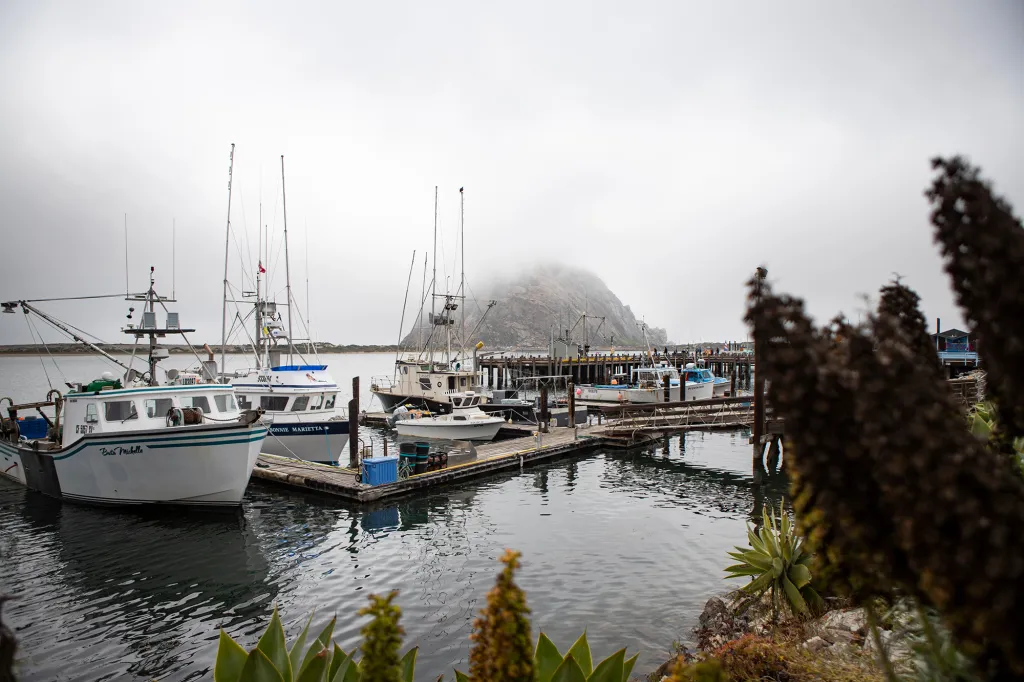
Meanwhile, the turbines planned for offshore Central California will also have to be towed to shore for major maintenance. Nearby harbor areas like Morro Bay (pictured below) would be overwhelmed by the large structures and the maintenance and repair operations. Central Coast residents are not enamored with “another attempt to industrialize the coast.” Towing the towers to LA/Long Beach, albeit rather distant from the leases, would seem to be the preferred option for such work.
Looking forward, the first power generation from floating wind turbines on the Central Coast is forecast for 2034. Betters may want to take the over!
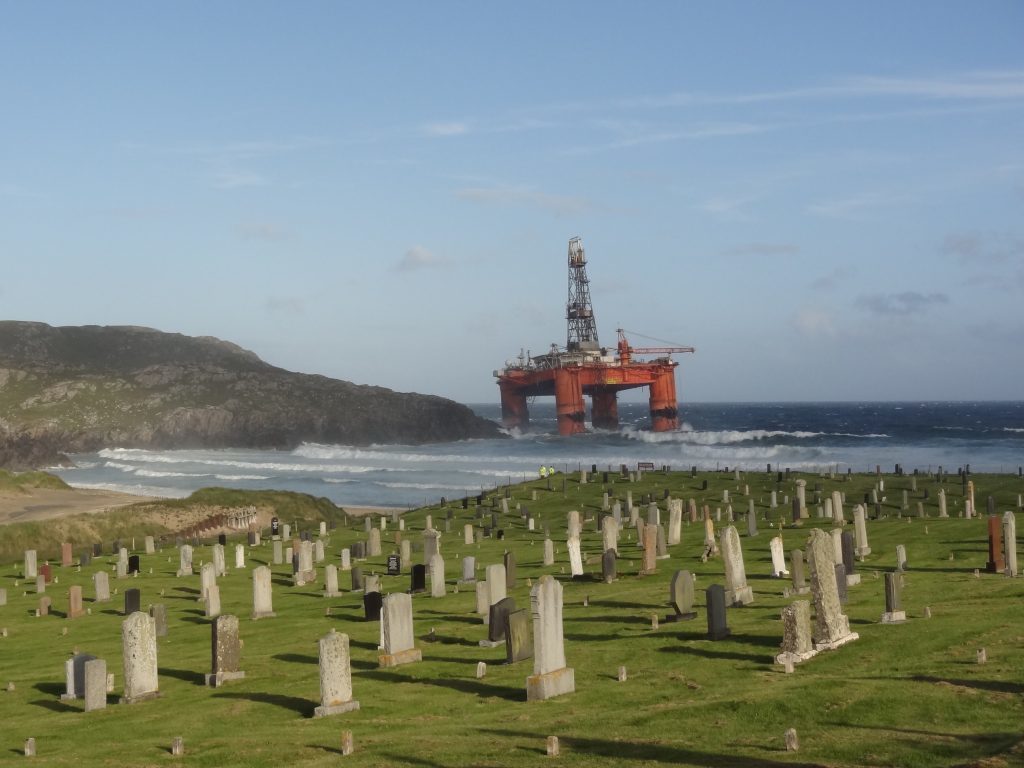
In 2016, this old Transocean semisubmersible was being towed from Norway to Malta prior to being scrapped in Turkey. The rig broke free and grounded at Dalmore, Scotland. This picture, with a Scottish cemetery in the foreground, is a fitting tribute to old rigs, the wells they drilled, the storms they endured, and the people they served.
The picture and title will be added to our world-famous Rigs-to-Reefs+++ page. Many thanks to those who have contributed to this important resource over the years.




 Bud's Offshore Energy (BOE)