Feeds:
Posts
Comments

Posts Tagged ‘oil spill’

Selected cementing recommendations from the Montara report:

Recommendation 30: Tracking and analysis of cementing problems/failures should occur to assess industry trends, principal causes, remedial techniques and so on.

Comment: This is an excellent recommendation that needs to be expanded to include other failures (e.g. BOPE) and incident data.

Recommendation 31: It is recommended that industry, regulators, and training/research institutions liaise with one another with a view to developing better techniques for testing and verifying the integrity of cemented casing shoes as barriers (particularly in atypical situations such as where the casing shoe is located within a reservoir in a horizontal or high angle position at great depth).

Recommendation 33: It should be standard industry practice to re‐test a cemented casing shoe (that is, after WOC) whenever the plugs do not bump or the float valves apparently fail. Standard industry practice should require consideration of other tests in addition to a repeat pressure test.

Comment: Negative pressure test guidance should be the highest priority.

Recommendation 37: Consideration should be given to ways to ensure that contractors who are involved in barrier installation (such as cementing companies) have a direct interest in the performance of works to a proper standard. In particular, consideration should be given to (i) preventing contractors from avoiding the economic consequences of negligent installation of barriers; and/or (ii) imposing specific legislative standards of workmanship on contractors with respect to well control (similar to those which presently apply to licensees).

Comment: I’m not sure I agree with this one.  It seems to me that one party should be responsible and accountable for the well construction, and that should be the operator. Operators should choose contractors who have outstanding performance records, apply the highest standards, and work effectively with the operator’s team to ensure that barriers are properly installed and tested.

 

Read Full Post »

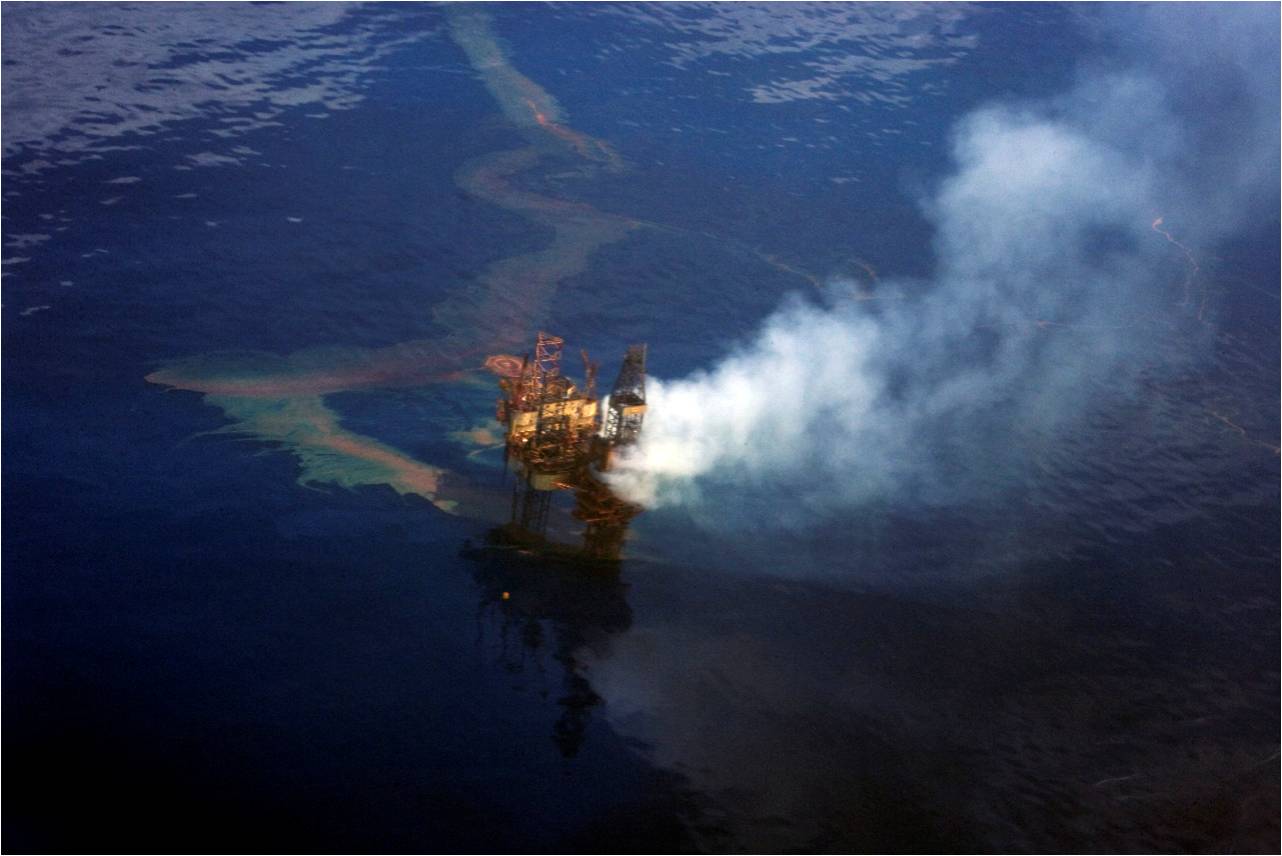
Montara Blowout - Timor Sea

Our virtual vigil is over.  I awoke to messages from Odd, Anthea, and Kevin that the day had finally arrived – the Montara Report has been released. Not only do we have the Inquiry report, but also the government’s response and PTTEP’s action plan.  We’ll be digesting this over the next few days (along with a turkey dinner), but below are a few key items (direct quotes from the government’s response) that are likely to be of interest to BOE readers:

  • To create a single national regulator the Government will expand the functions of the existing National Offshore Petroleum Safety Authority (NOPSA) to include regulation of structural integrity, environment plans and day-to-day operations associated with petroleum activities in Commonwealth waters. There is a fundamental connection between the integrity of structures, the safety of people, and protection of the environment. The expanded authority – to be named the National Offshore Petroleum Safety and Environmental Management Authority (NOPSEMA) – will also regulate safety, integrity and environment plans for minerals extraction and greenhouse gas storage activities in Commonwealth waters.
  • In recognition of the global nature of the offshore petroleum industry, and Australia’s increasingly important role, the Government intends to host an international conference for governments, regulators and the offshore petroleum industry to share the lessons from Montara and to learn from the experience of other nations. The conference will beheld in Australia during 2011.
  • An important feature of objective-based regulation is that it encourages continuous improvement rather than acompliance mentality. It is essential that a regulatory system encourage the creator of the risk to move beyond minimum standards in a continuous effort for improvement, and not just accept the minimum standard. The risk of specific standards is that they can shift the burden of responsibility from the operator to the government and stifleinnovation. The Australian objective-based regime retains the focus clearly on the operator to evaluate risk andachieve fit for purpose design in order to reduce risk to ‘as low as reasonably practicable’.

Read Full Post »

Cheryl Anderson

Cheryl Anderson, the world’s leading authority on offshore oil spill occurrence rates and causes, has retired from the US Department of the Interior after an exceptional career. Cheryl developed and maintained comprehensive oil spill data bases, and authored numerous reports on spill risks and occurrence rates.

Because of her meticulous attention to detail and unbiased analyses, both supporters and opponents of offshore oil and gas operations trusted Cheryl’s data.  Her reports have been widely referenced in energy policy documents, environmental reviews, and professional papers published in the US and around the world.  Lease sale areas were revised and operating regulations were updated as a result of Cheryl’s statistics and analyses.

In recent years, Cheryl’s leadership in improving the accuracy and credibility of hurricane spill statistics was particularly noteworthy. She developed a process for gathering information on the amount of stored oil that could have been lost when platforms were toppled and pipeline segments were damaged. Previously, only spills that appeared on the water surface were included, which meant that total hurricane spillage volumes were significantly understated.

Cheryl worked for the Minerals Management Service since its inception in 1982. Given the sensitivity of oil spill statistics, there was a tendency on the part of some officials to want to “spin” Cheryl’s statistics. Cheryl had the highest professional standards, and firmly resisted such attempts. Her only concern was the accuracy of the data and the credibility of the reports. For this she was greatly respected by all of her MMS colleagues. She received numerous honors, most notably the Distinguished Service Award, the Department of the Interior’s highest honor award.

Cheryl was universally admired by her MMS colleagues and was a great friend to all. She warmed hearts with the charming trinkets that she would distribute on holidays and helped everyone stay healthy with the wonderful apples that she would bring to the office (in great quantities) from the orchards west of the metropolitan Washington DC area.  BOE wishes Cheryl great success in her future endeavors. No matter what she chooses to do, we know she will do it with great integrity, commitment, and enthusiasm.

All the best to Cheryl!

Read Full Post »

Based on lower than expected pressure readings during the cementing operation, Halliburton (Richard Vargo) contends that hydrocarbons entered the annulus (outside production casing) during cementing, rose to the wellhead before the seal assembly was set, and raised the seal assembly after it was set.  They believe that subsequent flow was inside production casing, but that the initial burst was up the annulus. This position is inconsistent with current view of the Commission and all of the other parties.

Read Full Post »

The hearing will focus on the causes of the Deepwater Horizon explosion and will be broadcast live on C-SPAN2.  The panelists and speakers are listed here.

Read Full Post »

BP is now estimating total Macondo response and damage costs at $39.9 billion. I would guess that only 4 or 5 other operating companies could have survived this type of hit.

Hopefully, every offshore operator is keeping this in mind when formulating safety management programs and training, research, and standards budgets.  Companies claiming that such disasters couldn’t happen to them are simply demonstrating that they could, because no company with a proper safety culture would make such a statement.

Read Full Post »

  • C-SPAN has opted not to cover this weeks BOEMRE – Coast Guard Macondo hearings.  Instead, they are presenting recordings of political rallies, assorted senatorial and gubernatorial candidate debates, and similar fare.  In other words, all three channels will be dedicated to the usual political posturing that already receives non-stop national coverage, and the investigation into one of the more significant accidents in US history will be ignored.
  • Why does it take 3 weeks to post the transcripts of these hearings? The Australians posted each Montara transcript within hours after the day’s session ended.

Read Full Post »

In our last Cuba update, we noted that their next deepwater well always seems to be a year away. So it came as no surprise when we saw this in a New York Times article:

Yet next year, a Spanish company will begin drilling new wells 50 miles from the Florida Keys — in Cuba’s sovereign waters.

Comment: We have been hearing this for five years.  Will the well really be spudded next year?

The nascent oil industry in Cuba is far less prepared to handle a major spill than even the American industry was at the time of the BP spill. Cuba has neither the submarine robots needed to fix deepwater rig equipment nor the platforms available to begin drilling relief wells on short notice.

Comments: (1) Not a good time for the US to be lecturing Cuba about oil spills.  (2)In the event of a spill, all well intervention, relief well, and spill response equipment would no doubt be made available to Cuba without hesitation and with the full support of the US government. (3)A Cuban blowout is unlikely because every operator and contractor in the world will be focusing on well integrity and BOP performance issues that were factors in the Macondo blowout. (4)Informed international contacts have advised us that Cuban offshore officials are knowledgeable and committed to internationally accepted safety and pollution prevention standards.

My biggest concern with regard to Cuban offshore operations, assuming a moored rig is used, is that the rig would be set adrift during a hurricane and that anchors, mooring lines, or hulls could damage coral reefs and other sensitive seafloor features.  In the US, the MMS and industry did a lot of good work on mooring risk assessments and improved anchoring systems and mooring lines.   Given the significant probability that Cuban rigs will be exposed to hurricane conditions, it is imperative that US and Cuban specialists meet to discuss these issues.  Once a rig is adrift, there is not much that can be done to stop it.

Also, in an award winning project, a multi-agency US government team demonstrated enhanced satellite monitoring capabilities that provide timely information on the location of evacuated rigs.   These capabilities can be combined with gps systems to ensure continuous rig-tracking.

US-Cuban cooperation on offshore safety and pollution prevention issues is in the best interest of both countries, and should be encouraged without hesitation.

Read Full Post »

Secretary Salazar, Deputy Secretary Hayes, and BOEMRE Director Bromwich testified at today’s National Commission hearings. Director Bromwich made several important announcements and comments of interest to BOE readers:

  1. He has completed his public meetings and will submit his report to the Secretary by the end of the week, approximately two months ahead of schedule.  Does this point to an early end to the drilling moratorium?
  2. Two significant interim final rules will also be issued by the end of the week.  These rules will address well integrity,  BOP performance, and other issues raised in the 30-day report submitted to the President at the end of May.
  3. New drilling will not be authorized until operators and contractors can demonstrate compliance with the new rules.
  4. BOEMRE resources will be reallocated to assist with the workload associated with the resumption of drilling.

Chairman Reilly expressed concerns about the leasing and regulatory functions reporting to the same Assistant Secretary under the new organizational structure.  He also drew attention to the regulatory regimes in Norway, the UK, and elsewhere, and the importance of studying those programs.

Secretary Salazar’s goal is for the US offshore oil and gas program to serve as the “gold standard” for safe and clean operations around the world.

Read Full Post »

Monday’s hearings will be broadcast on CSpan 2 beginning at 0900 ET. Admiral Allen will be the first witness and will address decision-making within the Unified Command.  Given the number of high profile witnesses and the limited time allotted to each witness,  in-depth questioning would seem to be unlikely.  Will this be a day of short speeches?

Read Full Post »

« Newer Posts - Older Posts »
