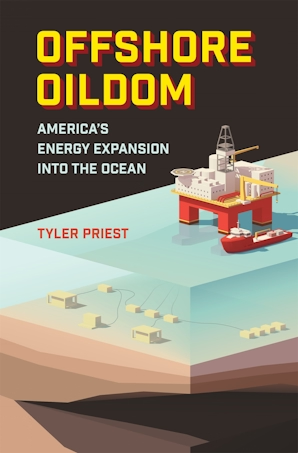
Tyler Priest, the leading historian on US offshore oil and gas operations, has published another gem. His book, Offshore Oildom, is a fascinating account of the history of the technologically innovative and economically important, yet highly controversial, OCS Oil and Gas program. His bookis highly recommended.
Consider this recommendation by Daniel Yergin:
“Tyler Priest, a preeminent historian of energy and the environment, explores how a single well drilled off a pier near Santa Barbara in 1898 gave rise to a major American industry—offshore oil and gas. In spirited prose, Priest demonstrates how this U.S. industry was created not only by innovation, creative engineering, and complex execution; it was also the result of fierce political battles.” ~Daniel Yergin, Pulitzer Prize–winning author of The Prize: The Epic Quest for Oil, Money, and Power and The New Map: Energy, Climate, and the Clash of Nations
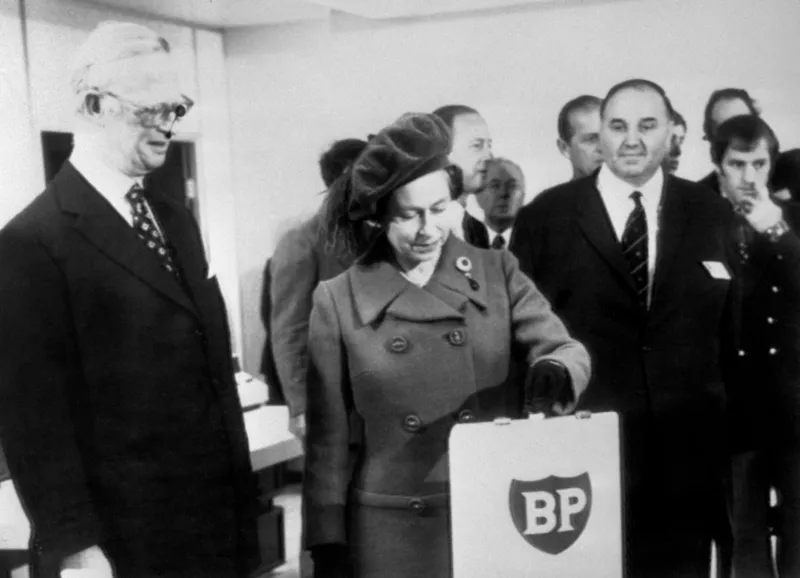
Queen Elizabeth inaugurated Forties field production.
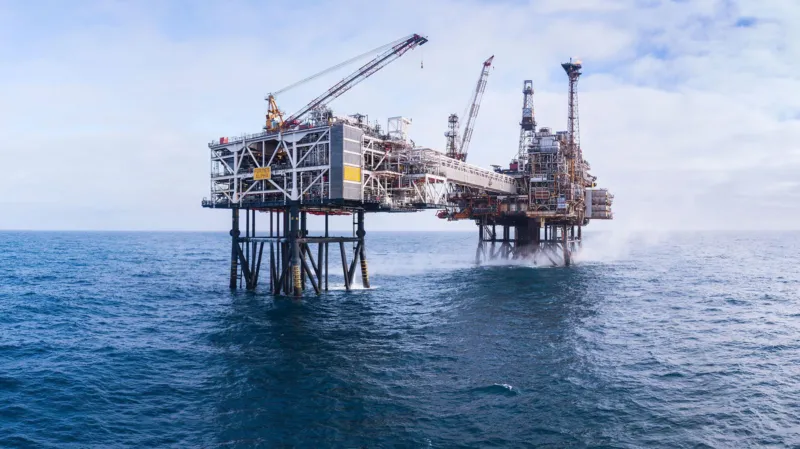
Marking the Forties field’s half-century, the current operator Apache said it stood as a testament to Scottish grit, industrial excellence, and enduring human spirit.
In November 2024 Apache said it had suspended new drilling and would end all its operations in the North Sea by 2029. ☹
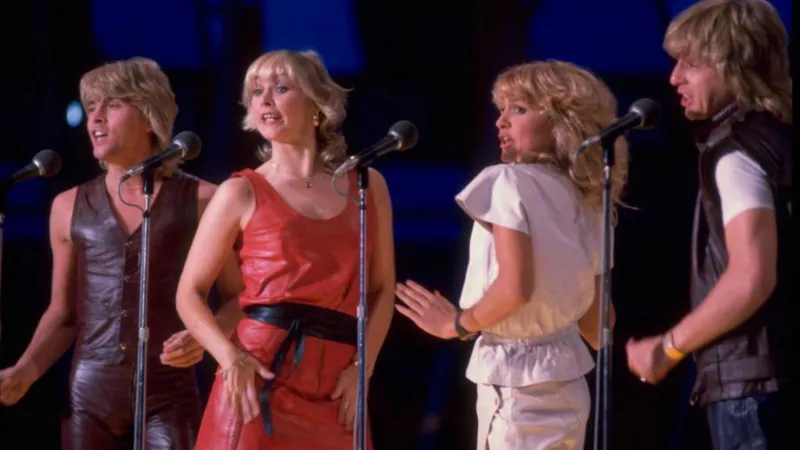
Bucks Fizz performed on a Forties field platform in the 1980s
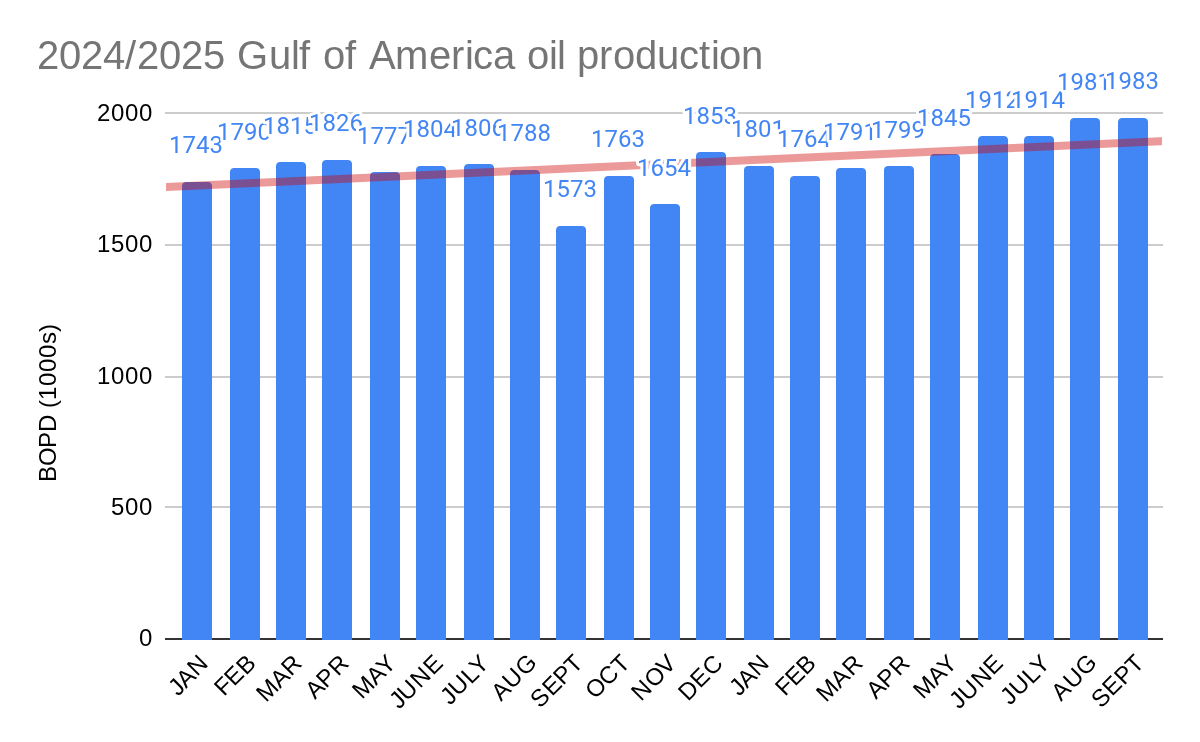
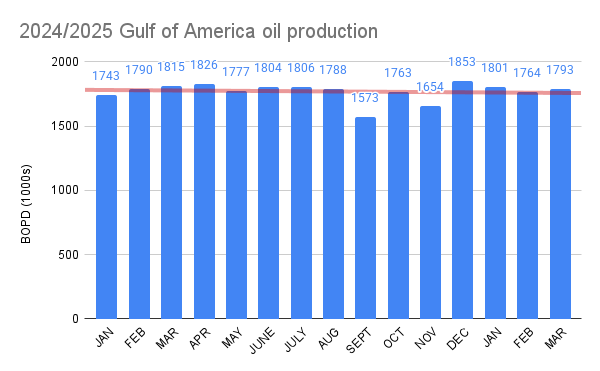
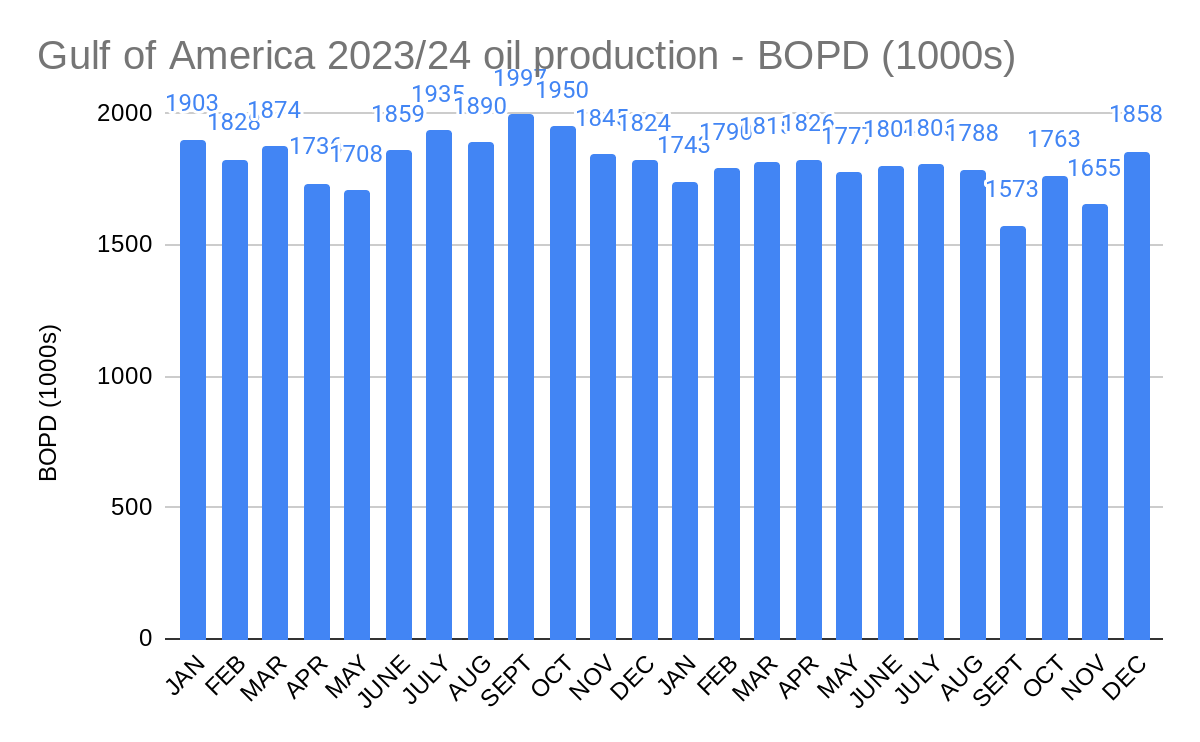
March Gulf of America oil production was nearly identical to the 2024/2025 average, and the trend line (red) is remarkably flat. However, production remains below the volumes forecasted by EIA and well below those forecasted by BOEM.
It appears that new deepwater production is replacing Gulf-wide production declines, but is not yet sufficient to increase total production. We will see if that changes as the year progresses.
March 2025 Gulf of America production: 1.793 million bopd
2024/2025 average production: 1.77 million bopd
2024/2025 average omitting Sept. 2024 (tropical storms): 1.784 million bopd
EIA forecast for 2025 (published 9/16/2024): 1.9 million bopd
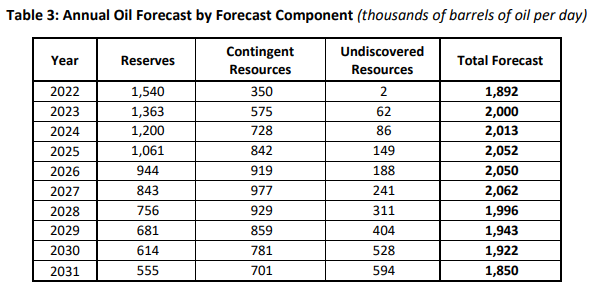
BOEM forecast for 2025 (published in 2022, table below): 2.052 million bopd
Sustaining or preferably increasing production rates will be dependent on a reliable schedule of lease offerings and a consistent regulatory regime based on best safety management principles and continuous improvement in technology, practices, and culture. Poorly considered operating restrictions imposed by activist judges are a major risk to both safety and production.
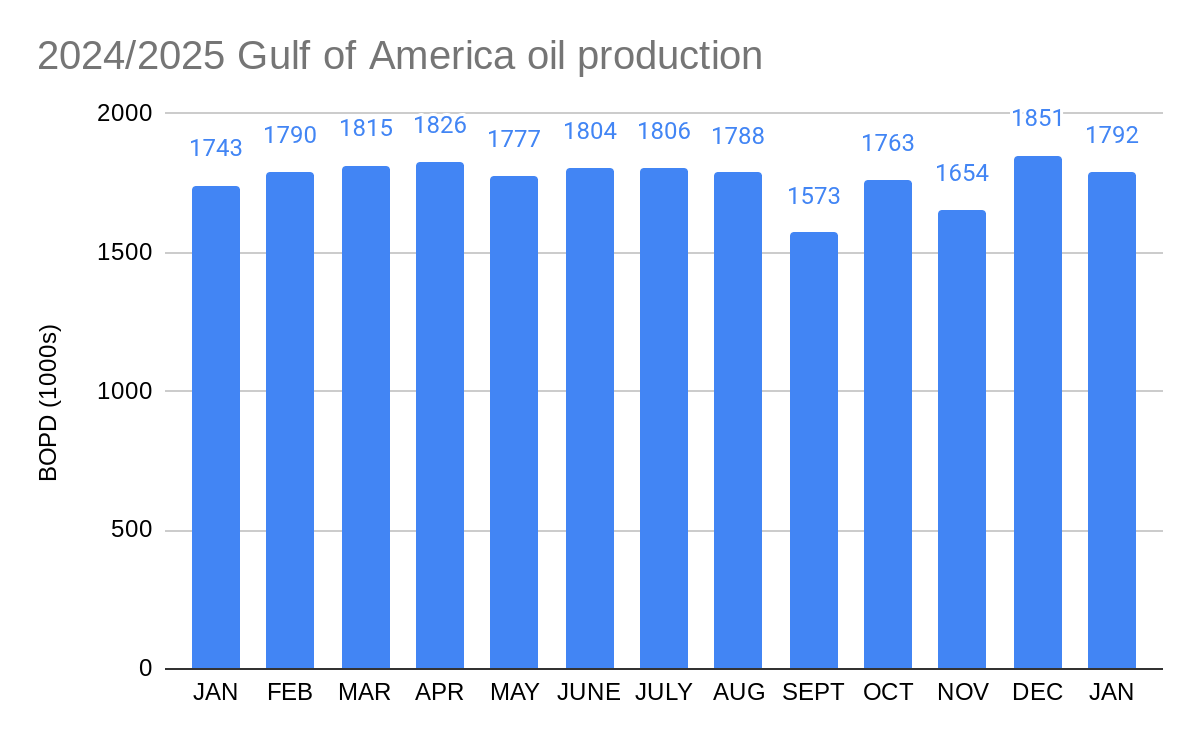
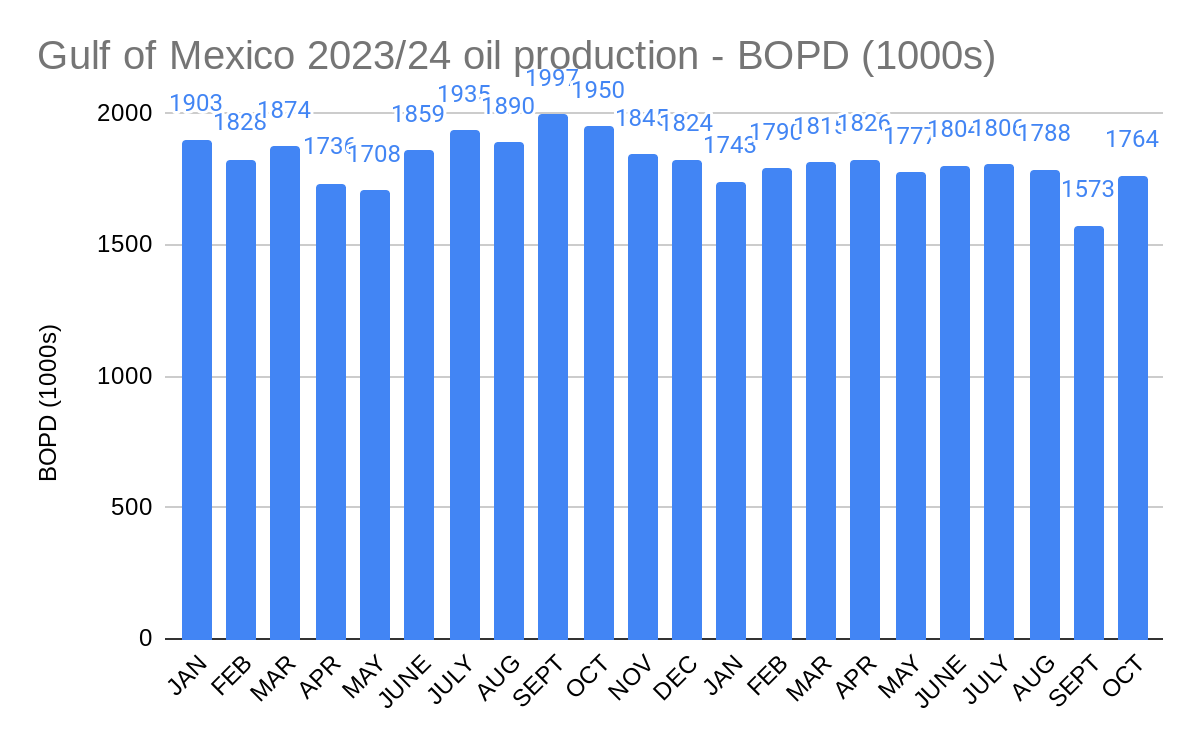
Following the 200,000 bopd decline in Sept. because of Tropical Storms Francine and Helene, Oct. GoM oil production was once again in the normal range for 2024. With the exception of Sept., average 2024 production has been remarkably consistent from month to month.
As expected, the Gulf of Mexico’s remarkable 7 month production consistency streak ended in September as a result of shut-ins associated with Tropical Storms Francine and Helene. Nonetheless, average daily production still amounted to 88% of the ~1.8 million bopd average that had been achieved for the previous 7 months. Rather impressive resiliency!
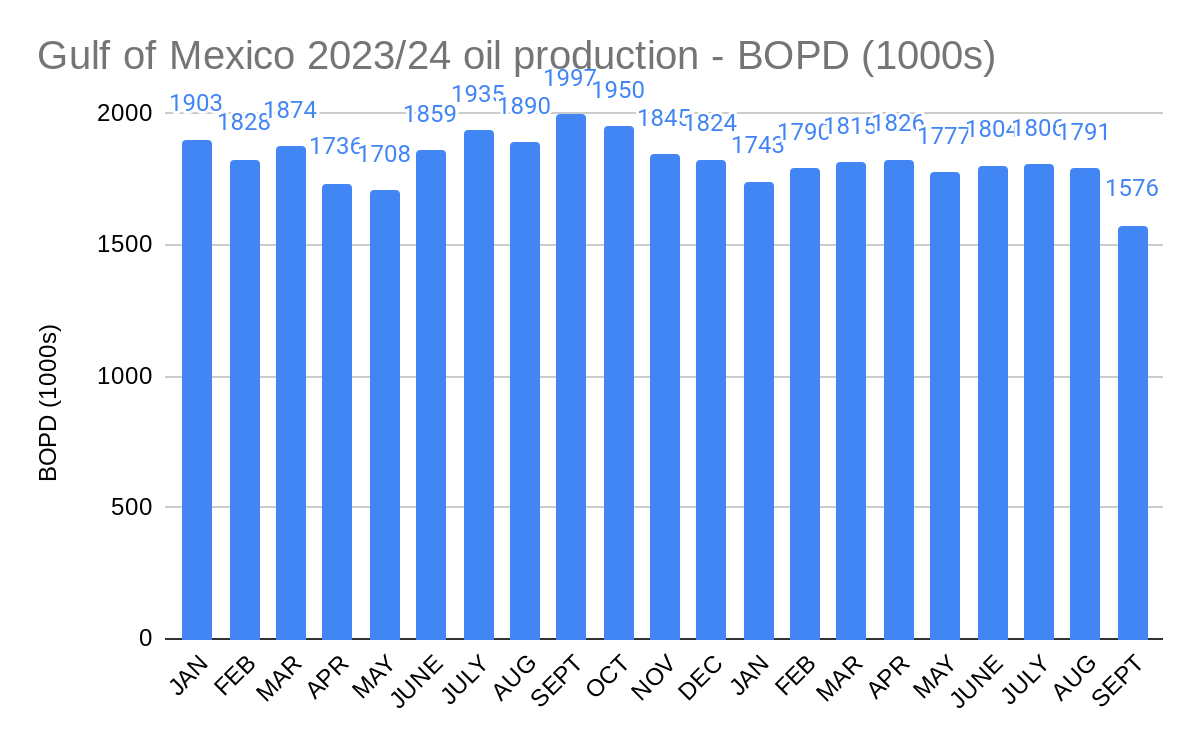
The stability in Gulf of Mexico oil production rates, as noted when the data for June were released, continued into July. Oil production once again remained remarkably consistent at 1.8 million bopd.
Average daily production was within 1.4% of 1.8 million bopd for each month from February to July. As previously observed, this is as stable as production has been for any 6 month period in the past 10 years.I’m not sure this observation is terribly significant, but it’s interesting nonetheless. 😀
If the streak didn’t end in August, it most certainly did in September given the shut-ins for Hurricanes Francine and Helene.