Feeds:
Posts
Comments

Posts Tagged ‘offshore oil’

I have received the letter from Chairmen Waxman and Stupak of the of the House Committee on Energy and Commerce, requesting that the CSB investigate the BP Deepwater Horizon blowout.  It is my desire that the CSB do everything it can to facilitate the request and to undertake the investigation and determine what factors led to the explosion and failure of the blowout prevention system. ~John Bresland, CSB Chairman

In addition to the House and Senate Hearings, this would bring the number of official investigations to four:

  1. MMS-Coast Guard investigation required by the OCS Lands Act
  2. National Academy review requested by the Department of the Interior
  3. National Commission established by the President
  4. Chemical Safety Board review requested by the House Committee on Energy and Commerce

I have long advocated an independent investigation capability for major OCS incidents and recommended a special commission in my testimony before the Senate Committee on Energy and Natural Resources Committee on May 11.  However, is four official reviews too many?  The MMS-CG investigation is well underway and is required by statute, but the 3 independent reviews have yet to begin.  Perhaps these efforts can be consolidated.  If not, their respective missions must be very clearly defined.  Otherwise, there is a significant risk of gaps, confusion, and unnecessary overlap.  We need to make sure that each group knows their role and is staffed to obtain the information needed to prevent the recurrence of other offshore tragedies, in the US and elsewhere.
Read Full Post »

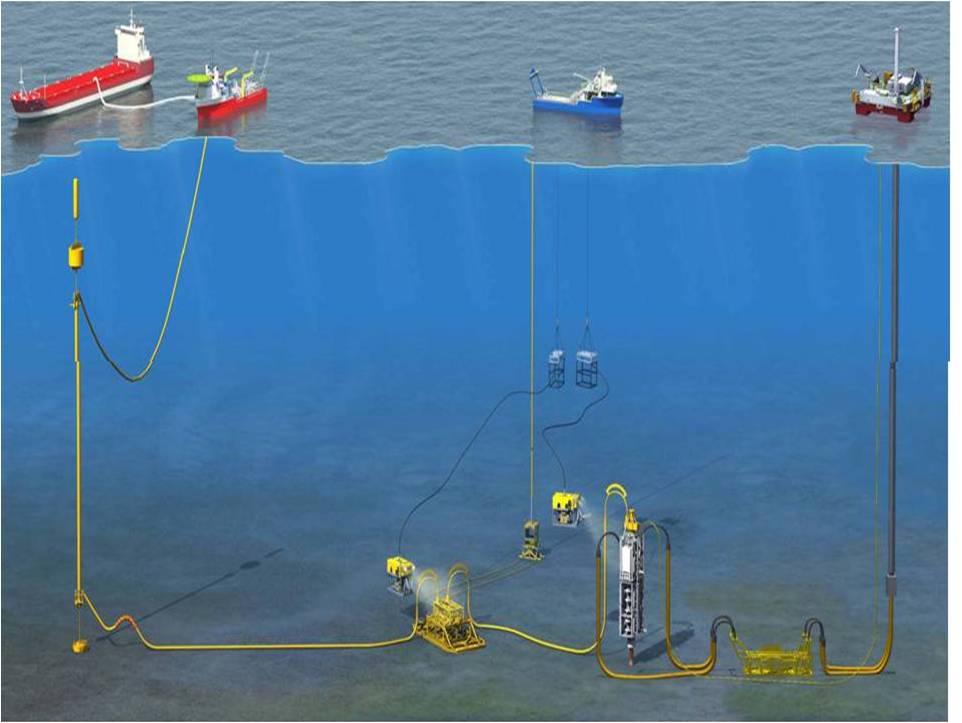
By the end of June, BP hopes to have the following arrangements in place:

  1. New well cap with improved sealing mechanism
  2. New seafloor manifold feeding production to a floating production storage and offloading (FPSO) vessel
  3. Shuttle tankers supporting FPSO
  4. Alternative flow path via choke and kill lines back to the Q4000 support vessel

The challenge will be minimizing production system downtime and the associated spikes in spillage, particularly during hurricane evacuations.

Read Full Post »

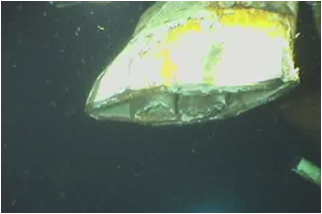
When they sheared the riser prior to installing the LMRP cap, the video clearly shows two segments of sheared drill pipe inside the riser.  How that happened is a mystery.  Did the explosion break the work string into multiple segments which fell back toward the BOP?

Read Full Post »

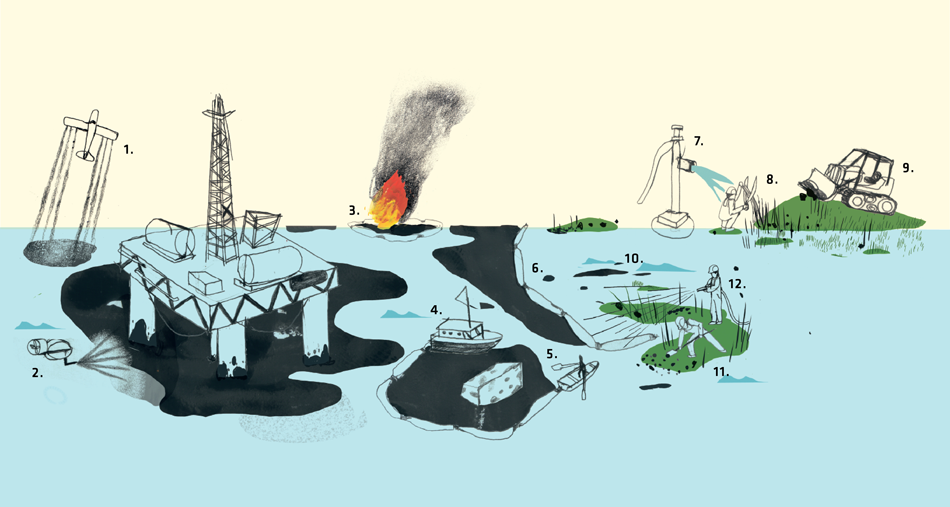
spill response methods

But I can tell you, based on 21 years’ experience analyzing and observing oil spills, that the best minds in the business are already doing all they can. No special techniques that would work well to clean up the oil in this situation aren’t being tried or planned. There simply are no foolproof solutions. ~ Dagmar Schmidt Etkin

link

Read Full Post »

Jason Mathews

Kudos to Jason Mathews, David Dykes, John McCarroll, and their Coast Guard colleagues for their excellent work on the MMS-USCG investigation of the Macondo blowout.  Catch some of the testimony on C-Span.

Read Full Post »

We won’t get a good read on the cap’s effectiveness until its placement is adjusted and oil production is stabilized.  Flow to the surface may also be initiated through the choke and kill lines, which could supplement and improve the effectiveness of the cap system.

Update from Deepwater Horizon Response Facebook page:

The LMRP Cap is in place and nitrogen pressure head is slowly being reduced in the riser. Throughout the day, the vents in the cap will be closed as production begins on the surface. The goal is to ensure methane hydrates do not form in the cap.

Read Full Post »

  • “Worst environmental disaster in US history” –  Reporters may want to wait until all of the data are in before making those kind of statements.  Largest oil spill doesn’t necessarily equate to the worst environmental disaster.  Some very large spills have had minimal long-term environmental damage, while the effects of some smaller spills have been quite serious.  The extensive long-term monitoring program will give us the answers.
  • Loss of wetlands – Louisiana has experienced serious wetland losses for years with little attention from the national media.  The barrier islands, which were approved by Admiral Allen, have been on the drawing board for some time and are primarily for wetlands restoration purposes.  Ironically, these islands may not have been approved and funded were it not for the oil spill.
  • BP employees – I’d like to see some reporting from the standpoint of typical BP employees.  Their lives have also been shattered.  The very existence of their company, which has lost 1/4 of its market value, is threatened.  While few BP employees had anything to do with the Macondo disaster, they are all working hard to set things right and continue their domestic and international operations.  It must be frustrating to realize that no matter how hard they work, it won’t be good enough to satisfy the critics.
  • Will the national reaction do more damage than the spill?  US production is threatened in the Gulf and elsewhere, and jobs are already being lost.  Preventing offshore drilling and production doesn’t prevent oil consumption.  As long as we consume oil, there will be a risk of spilling it during the production and transportation process.  We need to better manage those risks.  We didn’t eliminate tanker transport after Valdez, and we shouldn’t eliminate offshore exploration and production in the wake of Macondo.  Let’s not boycott ourselves and make OPEC the primary beneficiary of this disaster.
  • “Nationalize BP”- Just when you thought the commentary couldn’t get any sillier, you hear this kind of nonsense.  Hugo Chavez must be smiling.

Read Full Post »

  1. Kudos: To Admiral Landry for a job well done.  Since April 20, she has had the most challenging and thankless job in America, and performed it very well.  I’m sure she is happy to return to her “day job.”
  2. Remarkable: The work done by the ROVs and the people who deploy and control them.  If you haven’t watched the feed, check it out.
  3. Impressive: Admiral Allen’s briefings.  His summaries are concise and informative.  His responses to questions are direct.  Not much repetitive boilerplate.
  4. Improved: More complete and detailed information is being provided on the the well intervention work.
  5. Prediction: The LMRP cap will be successfully installed and will soon be recovering most of the oil.  We should be able to observe the key operations on the ROV cameras.  This will be very interesting, particularly when the final cut is made and the cap is installed.

Read Full Post »

The Washington Salute - "You Did It!"

Not surprisingly, the finger pointing in Washington is as out-of-control as the well that precipitated it.  This public spectacle is now more closely followed than the actual spill response.  As a result, perceptions become reality and reality is altered to support perceptions.

If you want to participate in the bash-fest and dare to compete with Washington’s best, here are some tips:

  1. Shoot high; go after the top dogs.  Blast President Obama, President Bush, and every other President going back to James Buchanan.  Why did Buchanan allow Colonel Drake to drill the first oil-well in Buchanan’s home state of Pennsylvania in 1859.  Why wasn’t he more visible when the well started to flow?  Where was his leadership?  Did you see the mess? No wonder they call it Oil Creek.
  2. Criticize every Secretary of the Interior starting with Albert Fall who in 1922 leased, without competitive bidding, the Teapot Dome fields to Harry Sinclair of Sinclair Oil. Talk about the culture of corruption which Fall fostered and the Department’s inability to clean house.
  3. Humiliate every employee of the MMS.  When you are pointing the finger, don’t worry about getting the bureau’s name right (90% of the critics don’t).  Feel free to call it the Minerals and Mining Service, Marine Minerals Survey, Mineral Management Service (which mineral?), Minerals Management Services (which services?) or any other name you can say with a snarl.  Be sure to make some juvenile comment about how the MMS is literally in bed with industry.  Don’t bother to read the investigation reports which show how few people were actually involved and are much less sensational than the media accounts.
  4. Take a cheap shot at the Coast Guard by shouting that the military needs to take over the spill response.  Sadly, even some retired military officers have made such comments.  They should know better.
  5. Take shots at whale lovers.  If it weren’t for them we could go back to burning whale oil.
  6. Criticize alternative energy proponents for the slow pace of renewable energy development.  Point out how Cape Wind has been dragging their feet on the Nantucket Sound project.  (BTW, it was the maligned employees of MMS who took the initiative, on their own, to draft the legislation that provided a framework for offshore renewable energy development.  Were it not for their leadership, renewable energy development would have been even further delayed.)
  7. Take a few swipes at BP, Transocean, Halliburton, and Cameron, but save your best shots for other oil industry targets.  BP et al are too easy for the real pros.  Talk about your vast experience in working with this industry.  If that’s too big of a stretch, even by Washington standards, talk about your friend or relative who worked in the industry.
  8. Point to past incidents regardless of their relevance.  Disregard historical data that contradict your position.
  9. Don’t criticize US energy consumption, at least not if you have any political ambitions.  Consumption is fine; production is the problem.
  10. Lastly, take your shots with great confidence.  Style is more important than substance.  Be loud and certain.

Remember Harry Truman’s sage advice:

“If you want a friend in Washington,” he once said, “get a dog.”

Read Full Post »

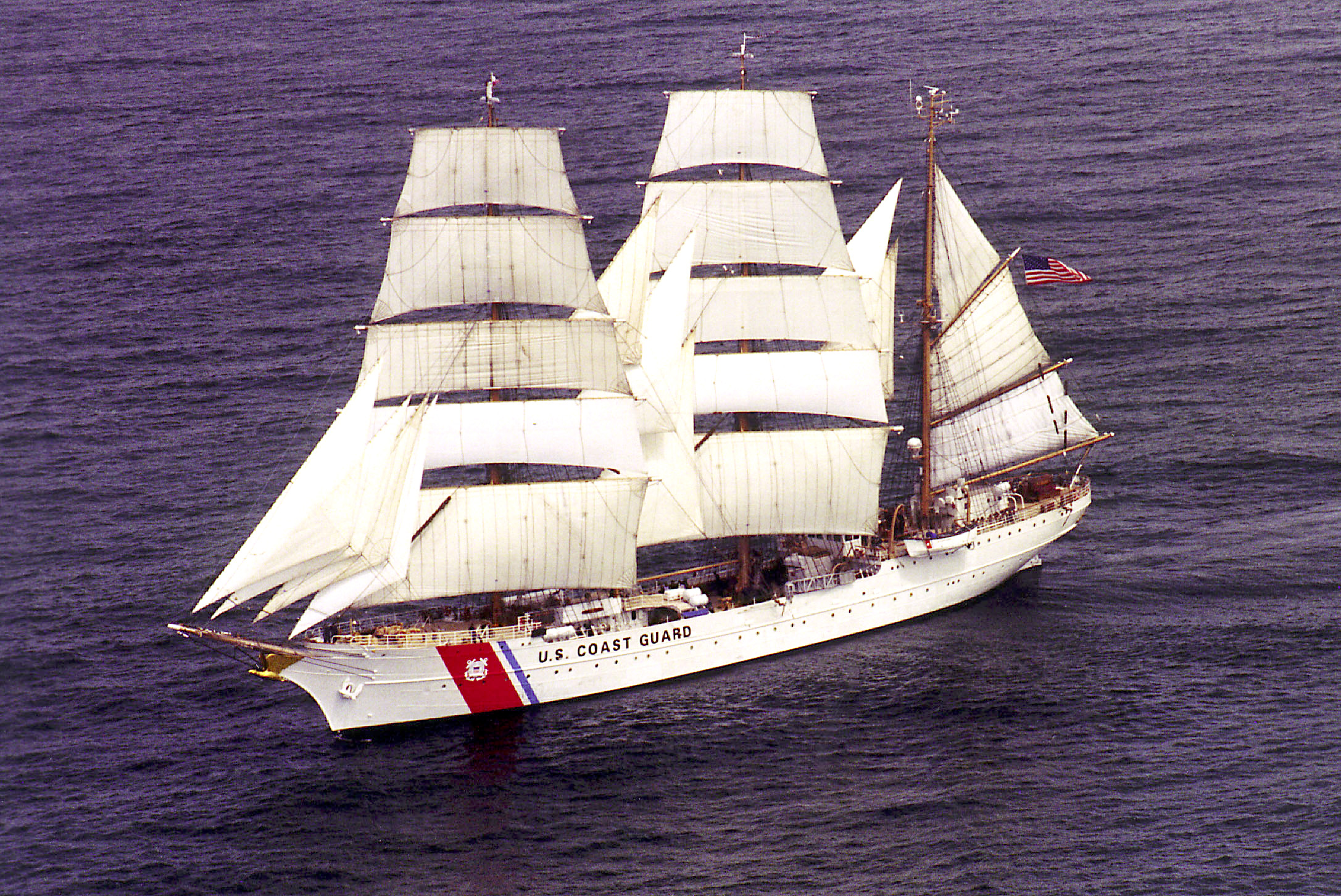
For almost 220 years the Coast Guard has been rescuing distressed mariners, defending our borders, protecting our maritime interests, and responding to environmental threats.  With regard to the latter, the Coast Guard is once again demonstrating outstanding leadership in directing the unprecedented national response to the Macondo spill.

I worked closely with Coast Guard personnel throughout my career, both in the field and at the headquarters level, and was extremely impressed with their dedication and professionalism.  This military service sometimes goes unnoticed and performs many thankless tasks, like the major spill response it is engaged in today.  On Memorial Day, we salute the Coast Guard for its sacrifice and public service.  Well done!

Coast Guard Eagle - tall ship and training vessel

Read Full Post »

« Newer Posts - Older Posts »