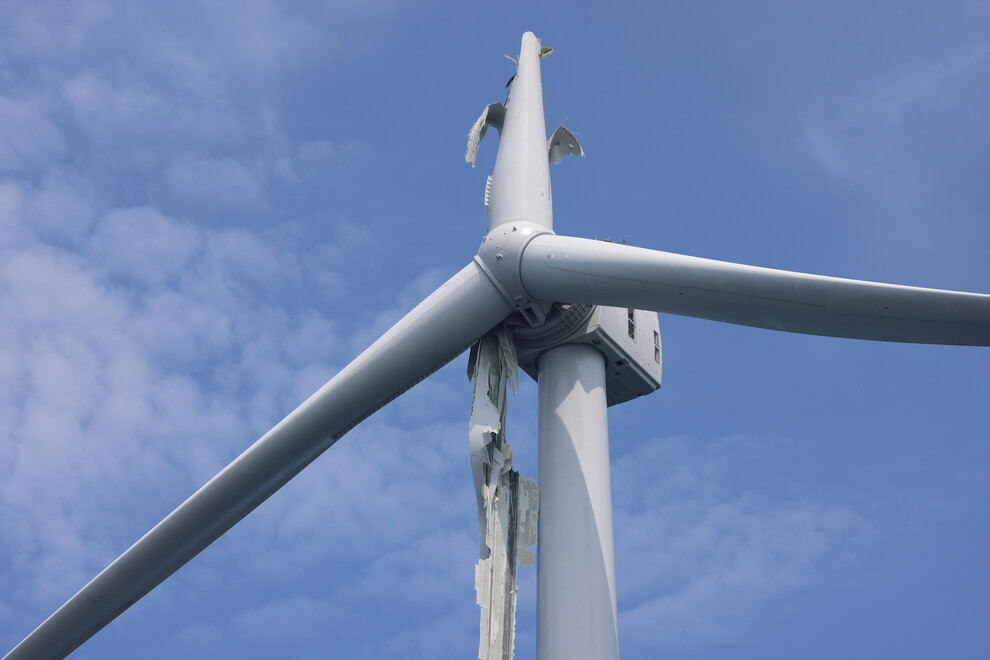
The suspension order for the Vineyard Wind project was lifted on the last business day before the change in Administration and before the completion of the Federal investigation into the blade failure.
Posted in accidents, Offshore Wind, Regulation, tagged blade failure, BSEE, Nantucket, suspension order lifted, Vineyard Wind on January 18, 2025| Leave a Comment »
The suspension order for the Vineyard Wind project was lifted on the last business day before the change in Administration and before the completion of the Federal investigation into the blade failure.
Posted in energy policy, Offshore Wind, tagged Ack for Whales, Hail Mary, Jayden Daniels, Nantucket, SCOTUS, Vineyard Wind on January 14, 2025| Leave a Comment »
The U.S. Supreme Court has declined to hear the challenge of the Vineyard Wind project brought by the Nantucket-based nonprofit ACK For Whales. This is not surprising given that the odds of the SCOTUS hearing the case were extremely low, tantamount to the completion of a “Hail Mary” pass.
Perhaps Nantucket should have added Jayden Daniels to their team! 😉
Although the SCOTUS declined to hear their challenge, the Nantucket group may still achieve their objective, at least in part, given the looming changes in Federal policy and the financial and operational challenges facing the offshore wind industry.
Posted in energy policy, Offshore Wind, tagged Ack for Whales, endangered species, Nantucket, Supreme Court on December 30, 2024| Leave a Comment »
The response by the Nantucket group’s attorneys is attached. Key excerpt:
“NMFS absurdly argues that agency officials, in preparing a biological opinion for a project, must ignore information about impacts on endangered species from other offshore wind turbine projects that are planned and in various stages of development and governmental review. Perhaps even more bizarrely, NMFS contends that, in preparing a biological opinion for a project, it must consider the cumulative impacts of planned state and local projects but ignore the impacts of planned federal projects.“
Background:
Posted in Offshore Wind, tagged call for action, historic preservation, Nantucket, SouthCoast Wind on December 14, 2024| Leave a Comment »
The Town of Nantucket calls on you to help safeguard one of the nation’s most treasured National Historic Landmarks. We ask that you contact the Advisory Council on Historic Preservation (ACHP) and the Massachusetts State Historic Preservation Officer (SHPO) to urge them to decline signing the Section 106 Memorandum of Agreement (MOA) for SouthCoast Wind. Section 106 requires federal agencies to consider the effects on historic properties of projects they carry out, assist, fund, permit, license, or approve throughout the country, and to find ways to avoid, minimize, or mitigate adverse effects on those properties.
Meanwhile, Vineyard Wind turbine blade installation has resumed.
Posted in energy policy, Offshore Energy - General, Offshore Wind, tagged Good Neighbor Agreement, Nantucket, Nexit, petition, SouthCoast Wind, Vineyard Wind on November 27, 2024| Leave a Comment »
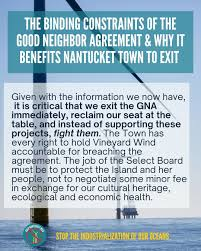
A recent Nantucket Current piece criticizes the Nantucket Select Board for failing to address community concerns about the attached Good Neighbor Agreement (GNA) with Vineyard Wind. In particular, any discussion about the GNA was throttled at a recent public forum on the SouthCoast Wind project.
Some key points from the article and related thoughts:
The Nantucket GNA controversy should be carefully considered by other communities that are tempted by developer incentives to enter into agreements that may not be in their best long-term interest.
Will Nantucket exit (Nexit) the GNA? The pressure is building.
Posted in energy policy, Offshore Wind, tagged Ack for Whales, Nantucket, Offshore Wind, Supreme Court on October 1, 2024| Leave a Comment »

The Nantucket non-profit ACK for Whales (ACK is the FAA abbreviation for Nantucket Airport) has petitioned the Supreme Court to review the 1st Circuit’s ruling on the Vineyard Wind project. Per the Supreme Court filing (full document attached):
Despite the agencies’ explicit statutory duty to consider all “best information available,” regarding the impacts its actions might have on an endangered or threatened species and those habitats, the National Marine Fisheries Service (NMFS) and the Bureau of Ocean Energy Management (BOEM), did not consider the cumulative impacts of other planned projects when they authorized and issued permits to construct the Vineyard Wind 1 Project.
Will the Supreme Court accept the case?
Regardless of the outcome of this case, there is a profound inconsistency in the administration of the Endangered Species Act as evidenced by our comparison of the operating restrictions for the Right whale (Atlantic wind) and Rice’s whale (Gulf of Mexico oil and gas). Note that the more onerous Rice’s whale restrictions were removed by court order.
Posted in accidents, Offshore Energy - General, Offshore Wind, tagged debris, Nantucket, turbine blade failure, update, Vineyard Wind on August 11, 2024| Leave a Comment »
The Town of Nantucket would like to provide you with an important update regarding the controlled detachment of the Vineyard Wind turbine blade and the ongoing efforts to manage any resulting debris.
August 11, 8:00 PM – Early this morning, portions of the remaining hanging sections of the Vineyard Wind turbine blade detached from the hub. The controlled detachment follows a series of exercises conducted late last week to pitch the blade, which, in combination with storm winds, led to the safe separation of the sections below the root of the blade.
Vineyard Wind and GE Vernova are currently assessing the situation to determine if any remaining sections pose a risk of detachment. The root of the blade, still attached to the turbine, is being monitored, and we are informed that plans are in place for its removal. Vineyard Wind has maritime crews on site to secure and contain any debris immediately.
The U.S. Coast Guard continues to enforce a 500-meter safety exclusion zone around the turbine. Vineyard Wind is utilizing ocean current and wind pattern models to predict potential debris movement. Depending on wind direction, more debris could potentially arrive on Nantucket beaches over the next hours or days. The Town of Nantucket will provide updates when necessary.
Under a federal preservation order, Vineyard Wind is responsible for retaining all debris, and only their employees, contractors, or those appointed by town officials are authorized to handle and recover debris materials. We urge the public to avoid handling any debris.
REMINDER TO THE PUBLIC
Only trained employees or contractors are responsible for collecting and removing the debris. To report any remaining debris, please contact:
Posted in accidents, Canada, energy policy, Offshore Wind, tagged Canada, CVA, GE Vernova, Good Neighbor Agreement, Nantucket, Vineyard Wind on July 25, 2024| 1 Comment »
Quotes from Nantucket Current article (emphasis added):
“While we continue to work to finalize our root cause analysis, our investigation to date indicates that the affected blade experienced a manufacturing deviation,” said GE Vernova CEO Scott Strazik. “We have not identified information indicating an engineering design flaw in the blade or information of a connection with the blade event we experienced at an offshore wind project in the UK, which was caused by an installation error out at sea. We are working with urgency to scrutinize our operations across offshore wind. Pace matters here. But we are going to be thorough, instead of rushed.”
“It’s been 11 days since the event, and just to reinforce from the start, we have no indications of an engineering design flaw,” Strazik said. “We have identified a material deviation or a manufacturing deviation in one of our factories that, through the inspection or quality assurance process, we should have identified. Because of that, we’re going to use our existing data and reinspect all of the blades we’ve made for offshore wind. For context, this factory in Gaspé, Canada where the material deviation existed we’ve made about 150 blades.
Any comments from the CVA, assuming there was one?
Meanwhile, Nantucket will renegotiate their “Good Neighbor Agreement” with Vineyard Wind. Is this a lesson for other municipalities?
Posted in energy policy, Gulf of Mexico, Offshore Energy - General, Offshore Wind, Regulation, tagged BOEM, BSEE, Nantucket, turbine blade failure, Vineyard Wind, wind leasing on July 23, 2024| 1 Comment »
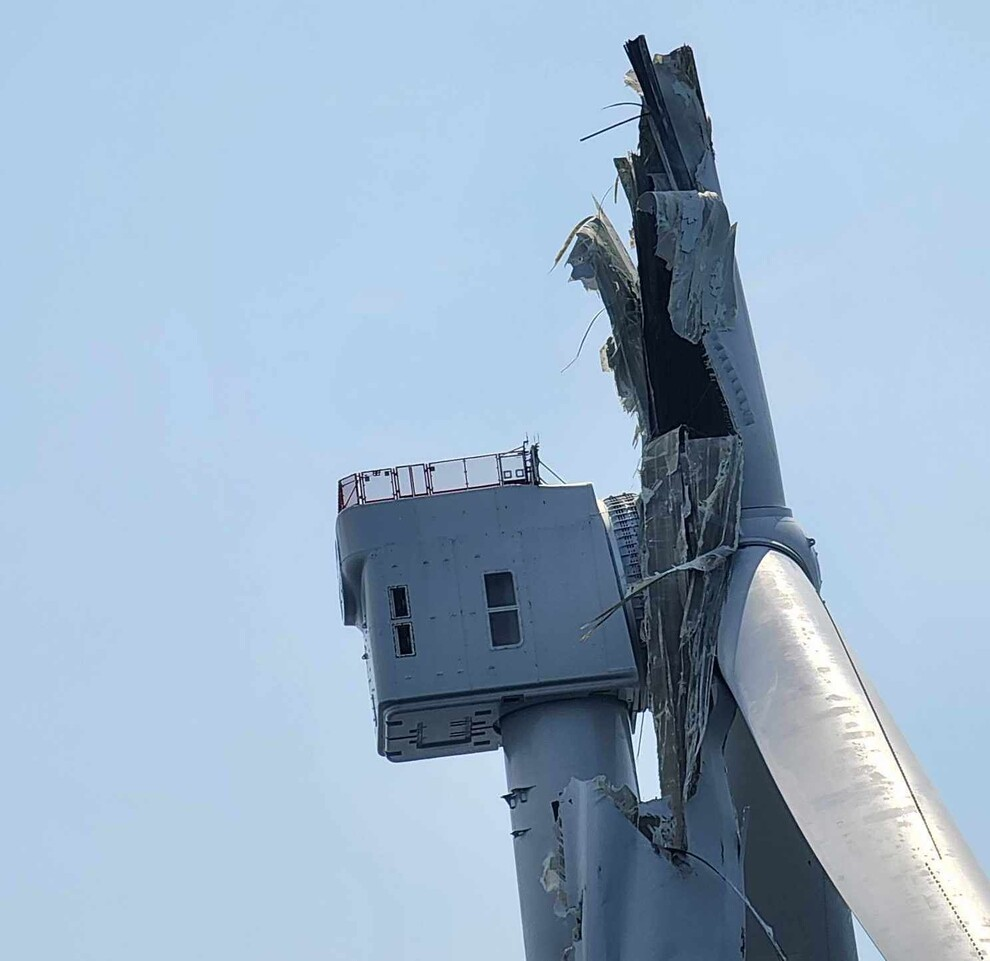
The Vineyard Wind turbine incident, which littered Nantucket beaches, has also tarnished the US offshore wind program. BSEE has prudently halted Vineyard Wind operations and construction pending an investigation into the blade failure.
Offshore wind development is structure rich, so public confidence in the design of turbines and support platforms is critical. BOEM lists 37 active wind leases on the US OCS. Most of these leases have not yet reached the construction phase. A hold on the approval of any Construction and Operations Plans would seem to be appropriate pending completion of the Vineyard Wind investigations.
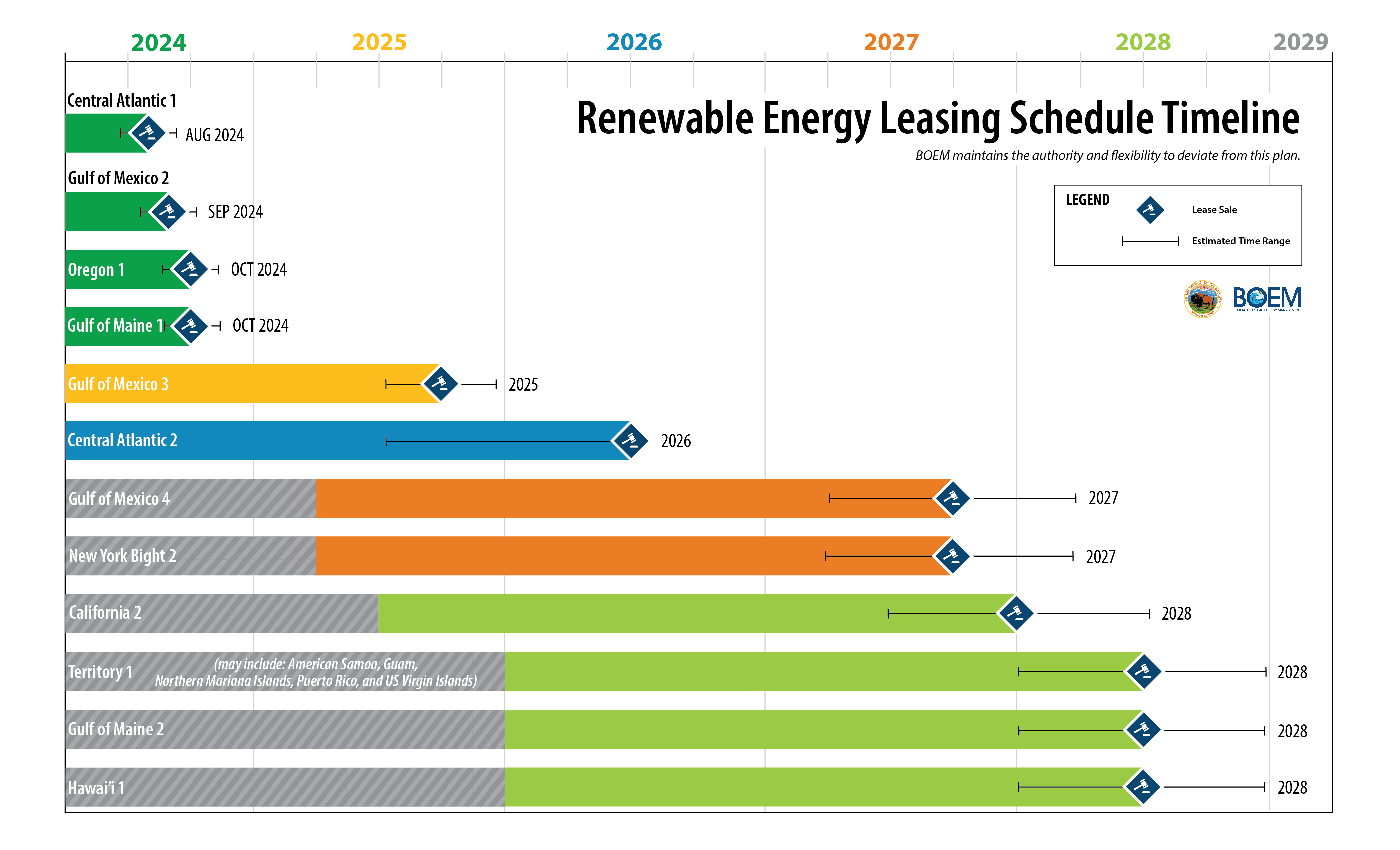
Per the leasing schedule below, BOEM intends to hold 4 wind sales during the remainder of 2024, all within a 3 month period. Only 1 sale is scheduled for each of the following 2 years. Deferring the 2024 sales until the investigations are complete would assist potential lessees by ensuring that the issues of concern were fully understood.
Unfortunately, BOEM’s failure to conduct a 2024 oil and gas lease sale has boxed in the wind program. The Inflation Reduction Act prohibits BOEM from issuing wind leases unless an oil and gas sale has been held within the previous year. Lease Sale 261 was held on 12/20/23 meaning that no wind leases may be issued after 12/20/24. BOEM has compressed the wind leasing schedule, presumably to beat the legislative deadline. It would have been better for both the oil and gas and the wind programs if at least one oil and gas sale had been held in 2024 as has been customary since the 1950s.
Posted in accidents, decommissioning, Offshore Wind, tagged BOEM, decommissioning, financial assurance, Good Neighbor Agreement, Nantucket, Vineyard Wind on July 22, 2024| 2 Comments »
Pasted below is an excerpt from the BOEM letter waiving the“pay as you build” financial assurance requirement for the Vineyard Wind project.
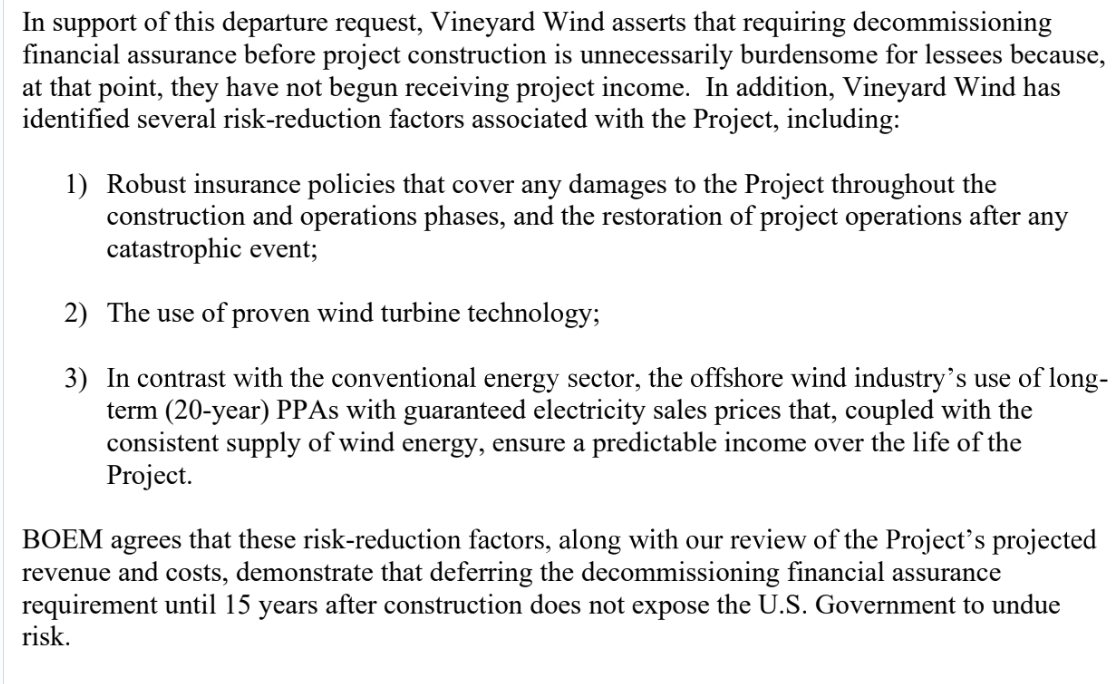
Comments on the 3 risk reduction factors cited in the letter:
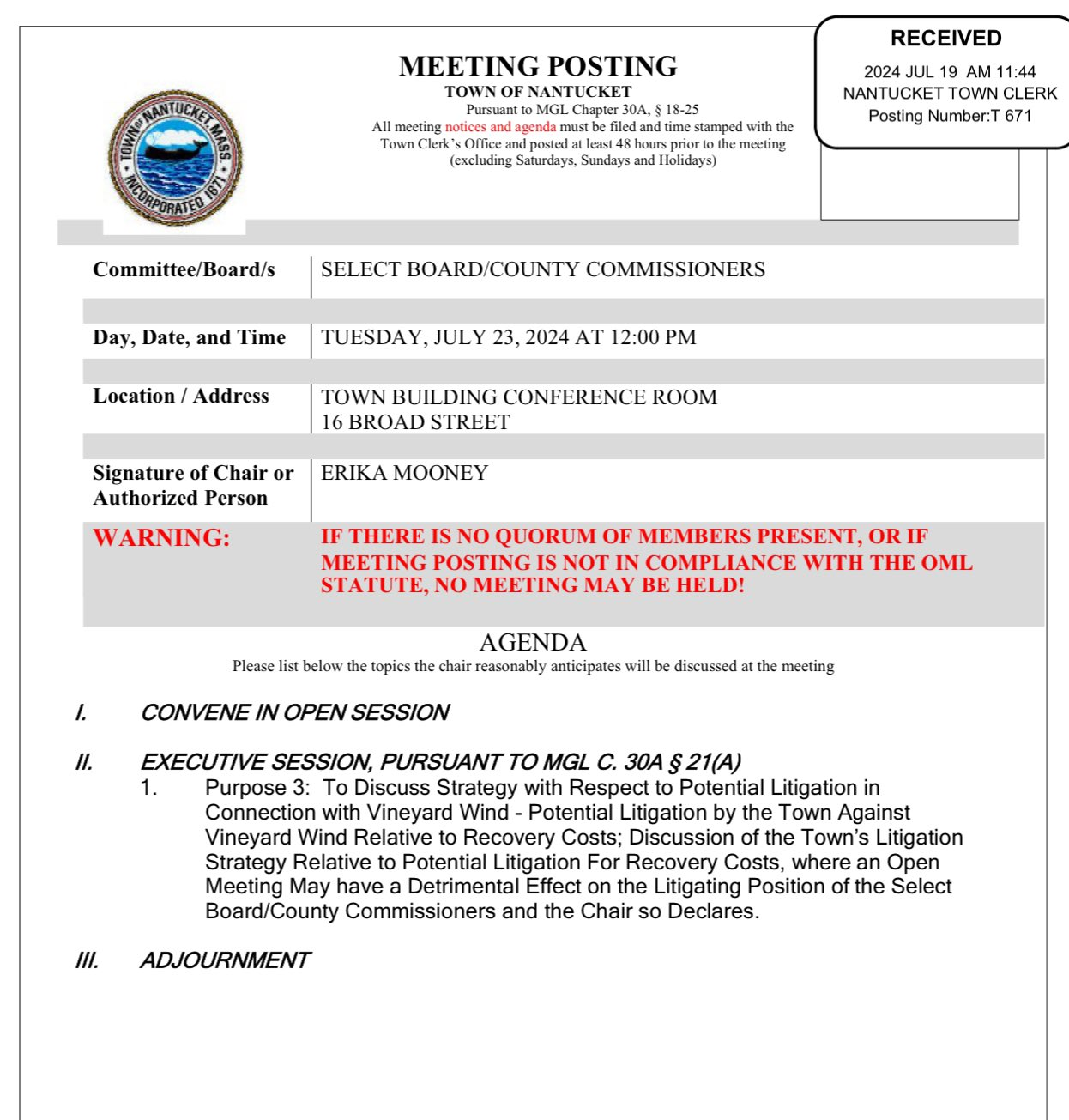
Factor 1: Those “robust insurance policies” may soon be tested given the costs associated with the turbine blade incident and potential law suits. (The notice pasted below informs that Nantucket officials will meet on Tuesday to consider litigation. A question for attorneys is the extent to which Nantucket is compromised by their good “Good Neighbor Agreement” with Vineyard Wind. That agreement essentially calls on Nantucket to promote the Vineyard Wind projects in return for payments that seem modest relative to the economic benefits from tourism and fishing.)
Factor 2: To the extent that GE Vernova Haliade-X 13 megawatt turbines are proven technology (and that is very much in doubt), the use of proven technology doesn’t prevent premature abandonment associated with unexpected incidents.
Factor 3: Reliable power generation and predictable long-term income remain to be demonstrated.
 Bud's Offshore Energy (BOE)