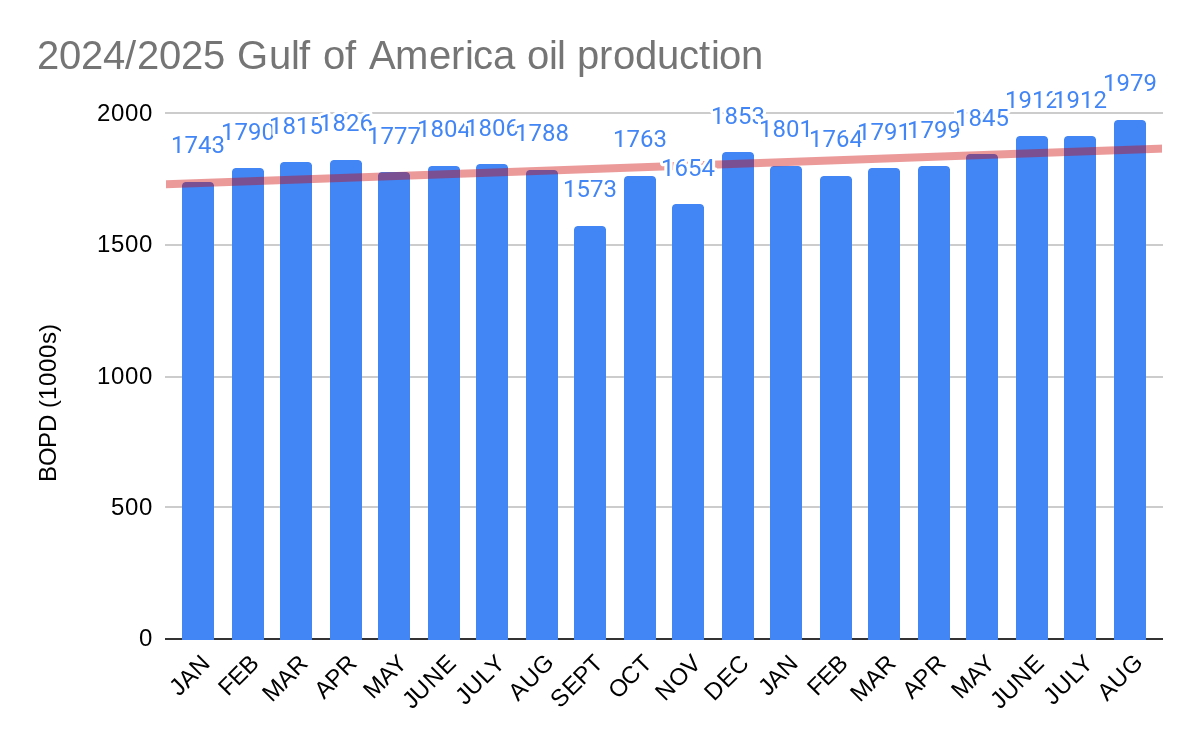
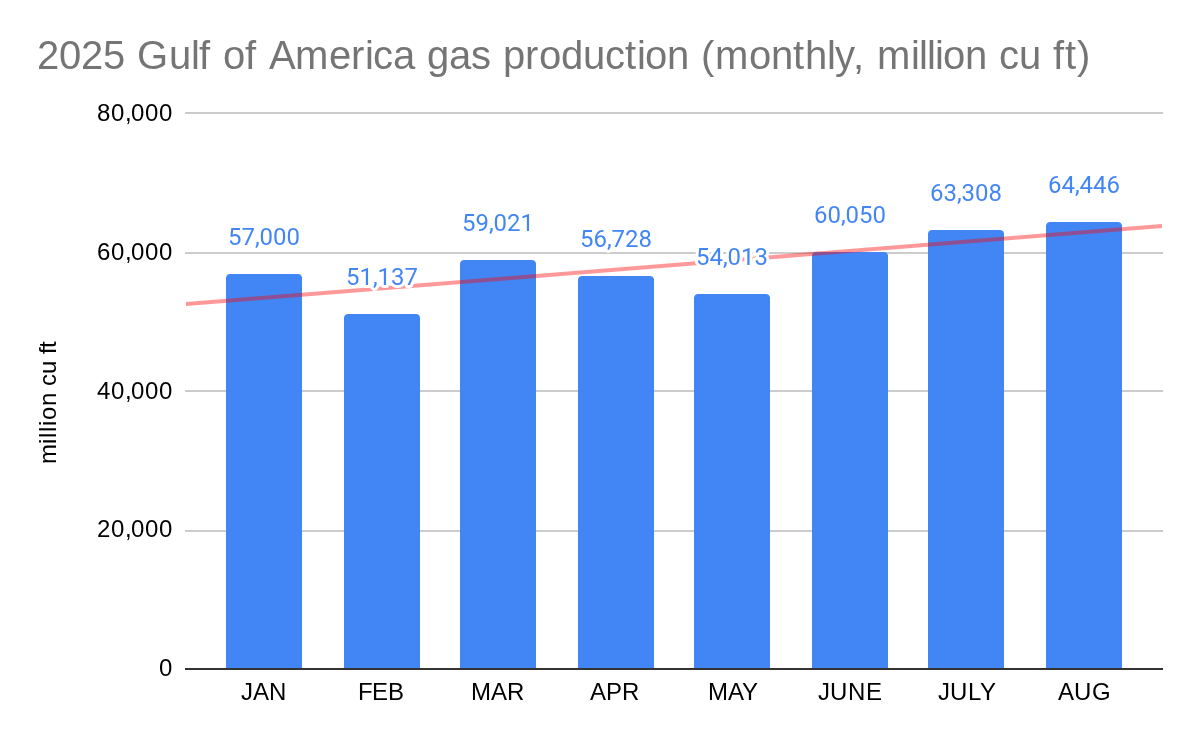
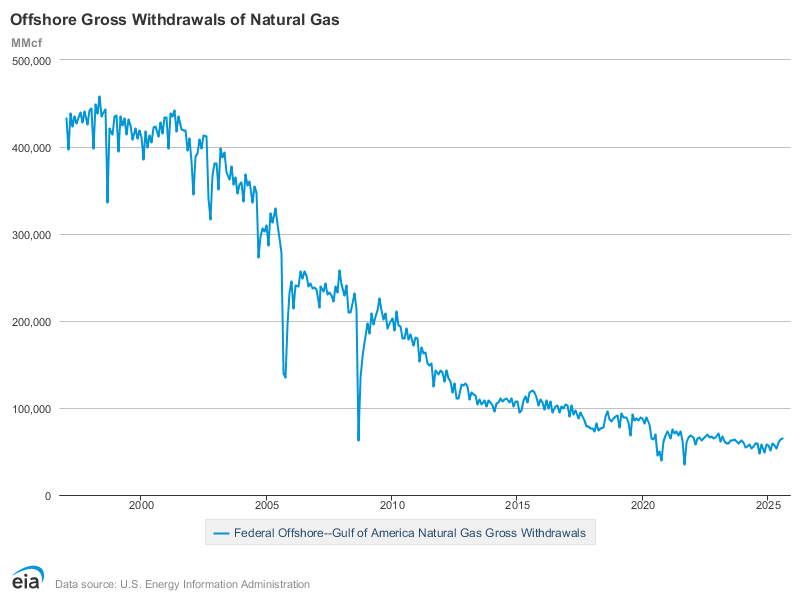
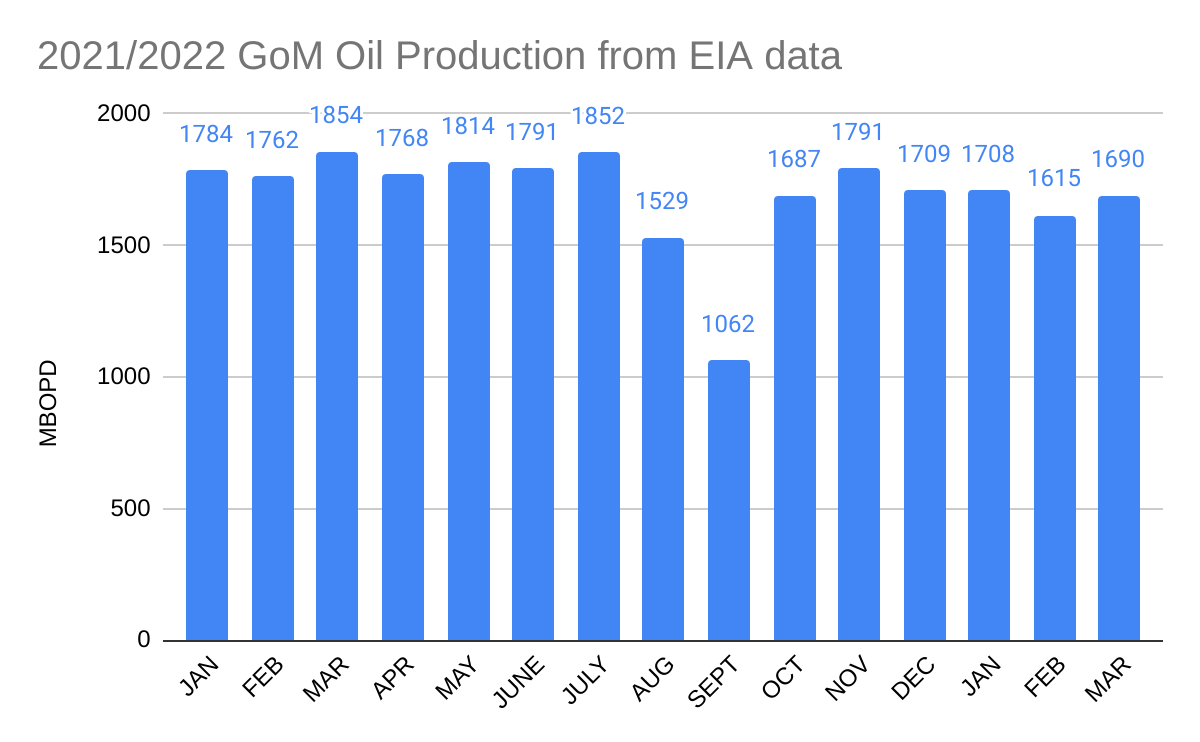
Gas production, which is now overwhelmingly from oil wells, also ticked up. However, gas production remains at historically low levels. (See charts below.)
Time to take another look at ultradeep shelf gas? More on this in a later post.
Every deepwater platform installed since Feb. 2018, when Chevron installed its Big Foot tension leg platform (TLP), has been a Floating Production Unit (aka FPU or production semisubmersible). During that period, no new SPARs, FPSOs, or TLPs were installed.
The list (below) of these simpler, safer, greener FPUs has grown by two with the initiation of production at Shenandoah and Salamanca. Note the water depth range from 3725 to 8600 ft.
platform
operator
water depth (ft)
first production
Appomattox
Shell
7400
May 2019
King’s Quay
Murphy
3725
April 2022
Vito
Shell
4050
Feb 2023
Argos
bp
4440
April 2023
Anchor
Chevron
4600
Aug 2024
Whale
Shell
8600
Jan 2025
Shenandoah
Beacon
5840
July 2025
Salamanca
LLOG
6405
Sept 2025
The efficiencies achieved with the simpler platform designs combined with the high pressure (>15,000 psi) technology developed over the past 2 decades is facilitatihg production from the highly prospective Paleogene (Wilcox) deepwater fans. (For those interested in learning more about the geology, see the excellent presentation by Dr. Mike Sweet, Univ. of Texas, that is embedded in this post.)
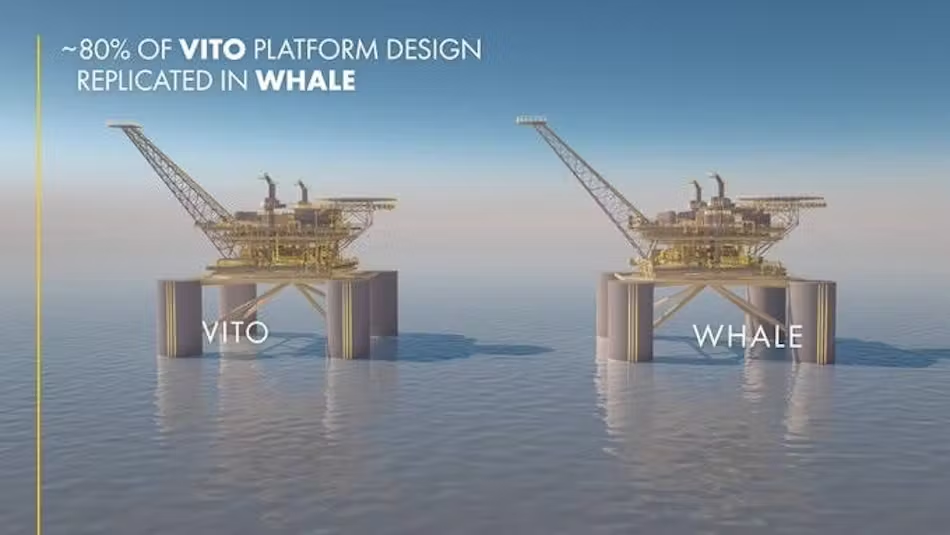
All of the operators note the cost-saving similarities in their FPU designs. For example, Vito and Whale are very much the same despite the 4550′ difference in water depth.
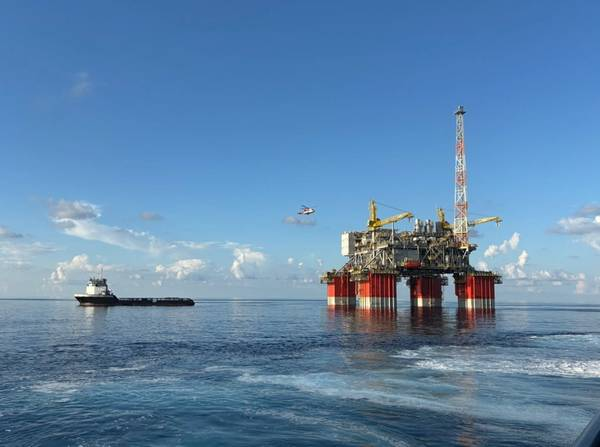
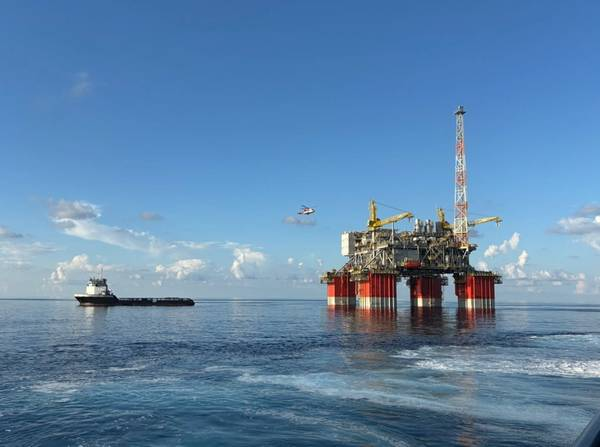
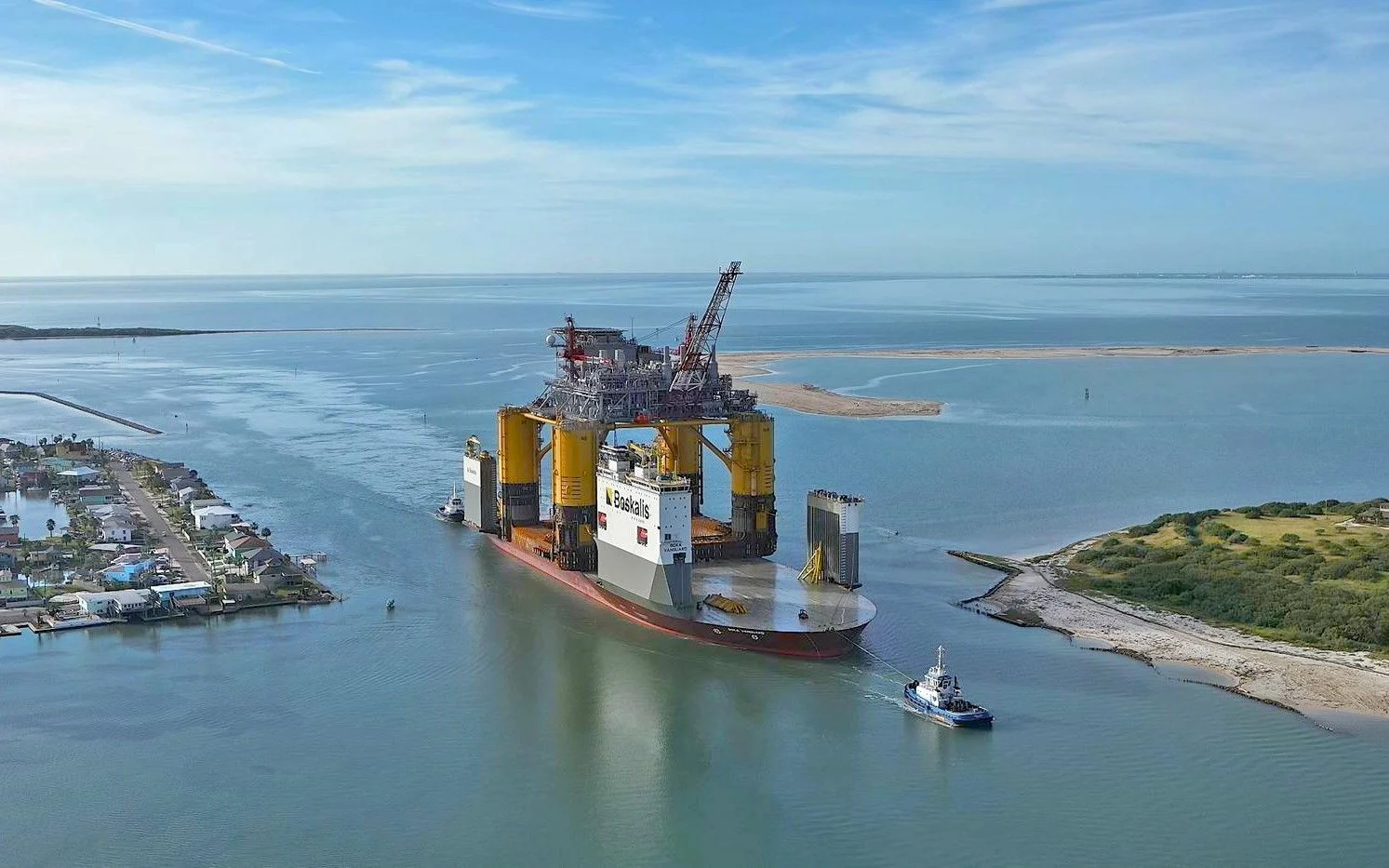
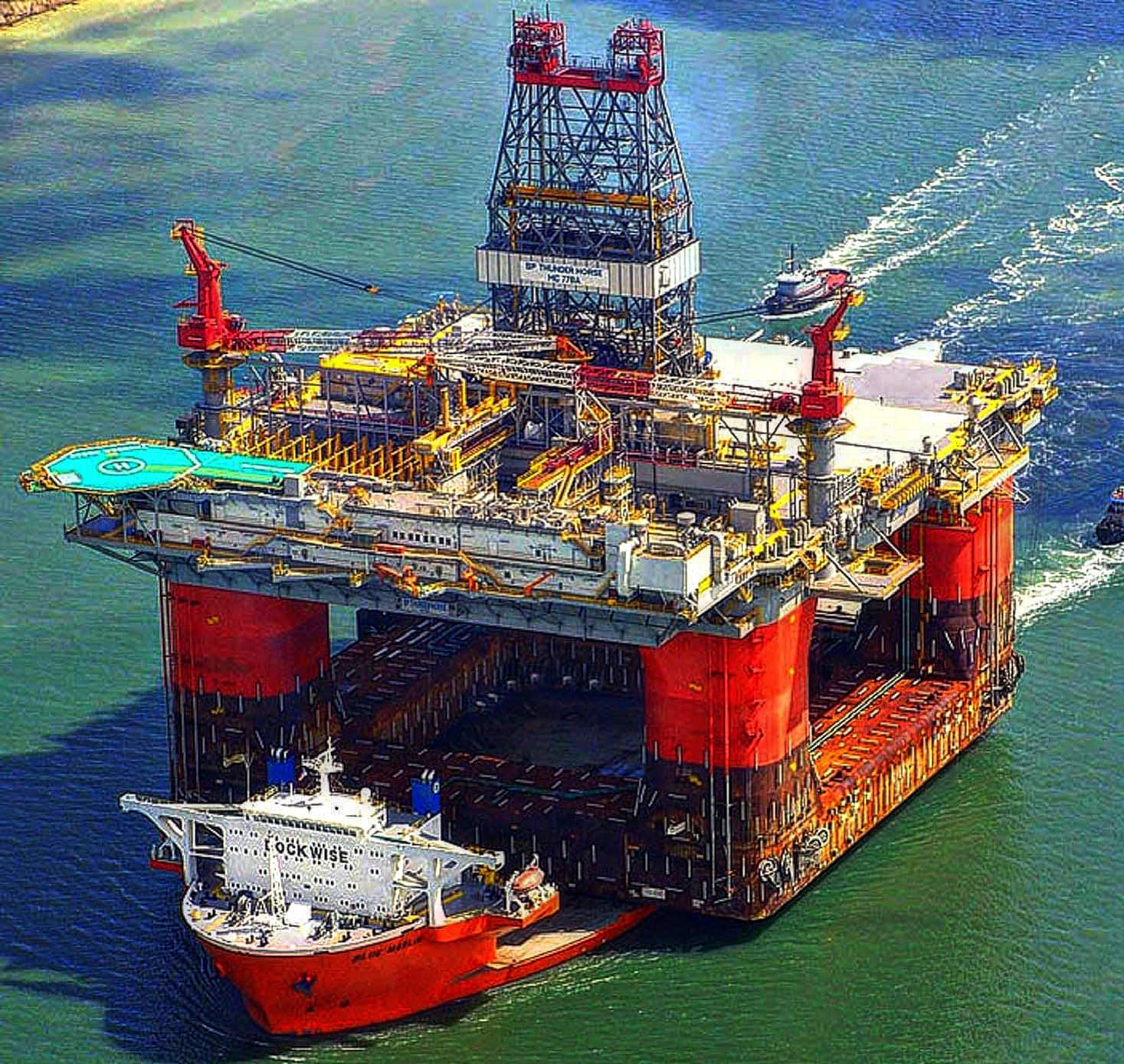
Lars Herbst noted another endangered whale sighting by the US Coast Guard. Unlike their erroneous Rice’s whale report in September (still waiting for their mea culpa), the Coast Guard has gotten this one right. The 25,000 ton Whale is pictured above.
Whale’s species is indeed endangered with the most serious threats coming from a faraway place on the Potomac River. The “newborn” Whale is one of only 15 of its species in the Gulf of Mexico. The entire platformus deepis genus numbers only 59, but their importance to society is enormous (read more).
Perhaps the wise people who control our offshore lands will do more to encourage and support these floating behemoths. Unfortunately, their 5 year management plan is not encouraging in that regard.
Dr. Malcolm Sharples, a leading marine engineer and offshore safety advocate, brought this Supreme Court’s decision and the resulting regulatory confusion to my attention.
has created regulatory uncertainty for floating production facilities like this:
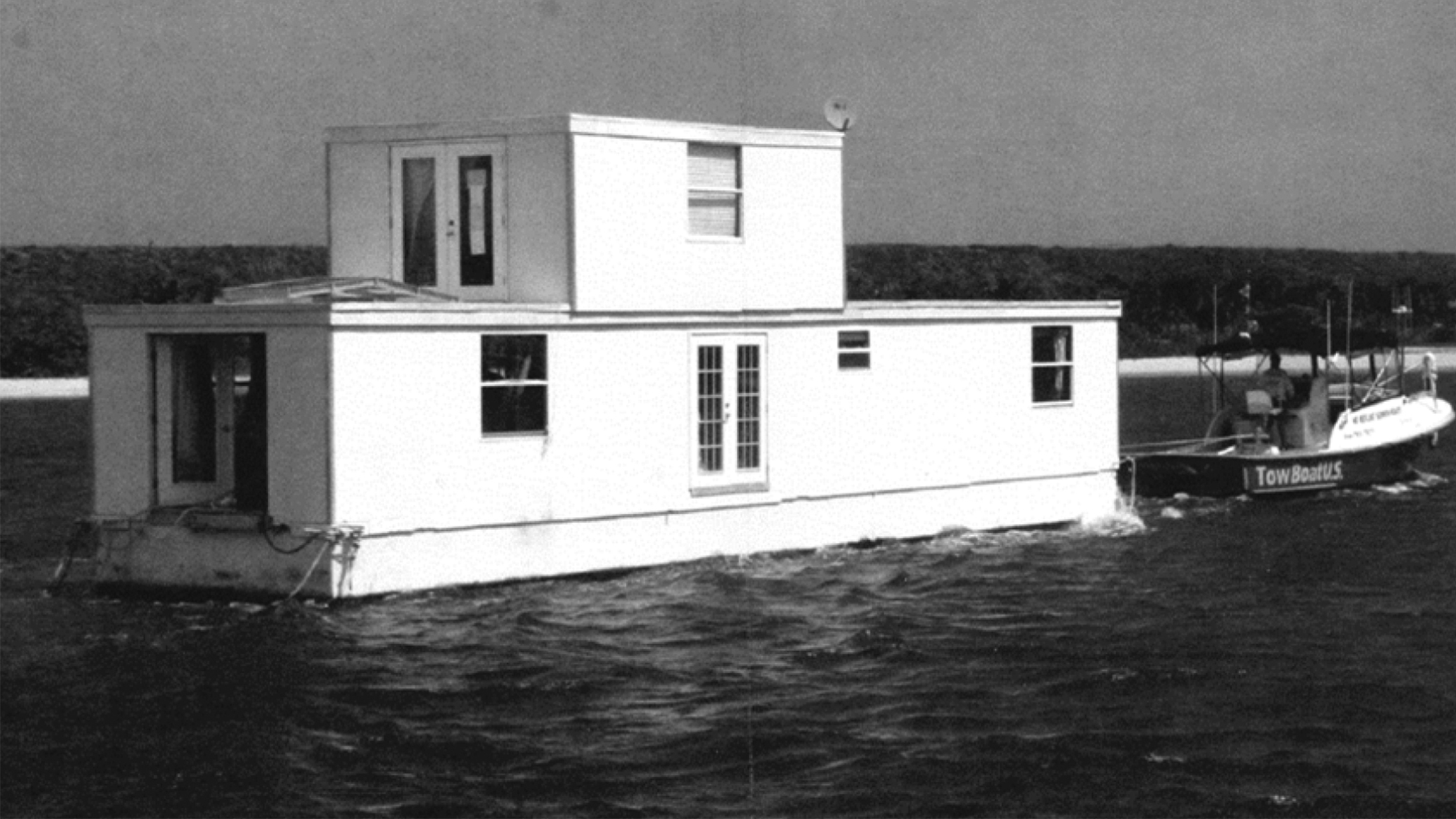
In a 7-2 decision, the court ruled that a gray, two-story home that its owner said was permanently moored to a Riviera Beach, Florida, marina was not a vessel, depriving the city of power under U.S. maritime law to seize and destroy it.
The floating production facilities are still subject to Coast Guard regulation and inspection pursuant to separate authority under the OCS Lands Act. The extent to which Coast Guard approval and inspection practices will change is not entirely clear. The Coast Guard will issue new certificates of inspection for these floating facilities, and new policy guidance is being developed.
Attached are answers that the Coast Guard provided to questions from the Offshore Operators Committee.
 Bud's Offshore Energy (BOE)