Feeds:
Posts
Comments

Posts Tagged ‘Dan Yergin’

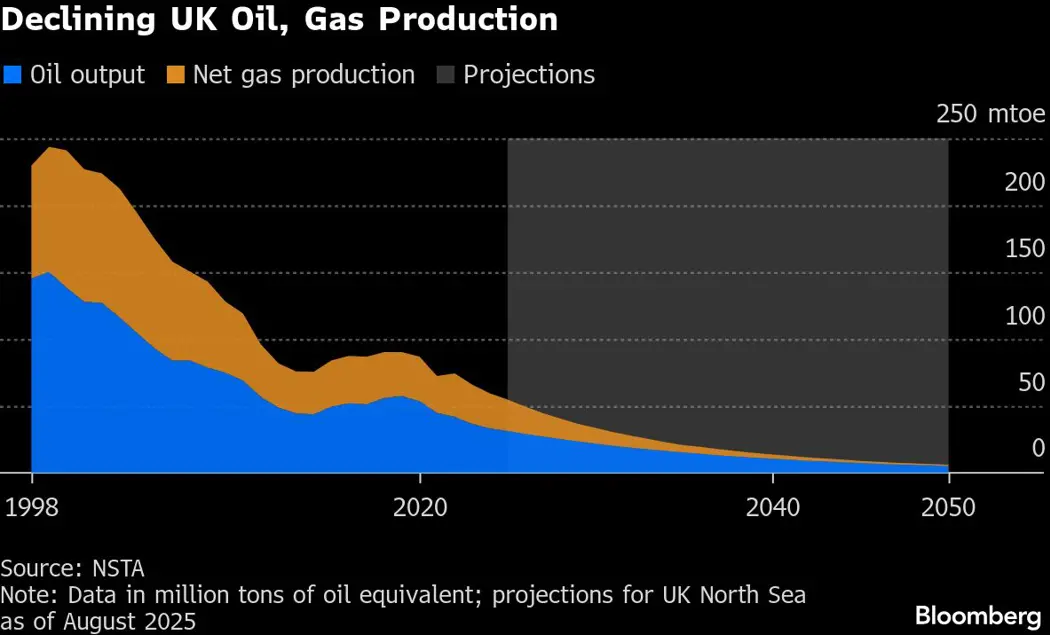
The sad state of UK North Sea production

JL Daeschler, other North Sea veterans, and those of us who once admired the UK offshore program, lament the sad plight of their oil and gas industry and the destruction of the economy in northeast Scotland.

Incomprehensibly, the UK has retained the Energy Profits Levy, which requires North Sea operators to hand over 78% of their diminished profits to the Treasury. Most have regrettably chosen to do business elsewhere. Investment in the UK North Sea is at a record low and a study from Robert Gordon University says jobs are being “quietly” lost at a rate of 1,000 a month.

The UK government is grudgingly allowing some tieback production to existing facilities, but this will do little to stem the industry’s decline. JL notes that this limited infield development is not the type of new field investment needed to grow production and sustain the service industry (rigs, boats, helicopters, equipment, etc.).

The UK Oil and Gas Authority rather smugly changed its name to the North Sea Transition Authority in 2022. Besides lower production and higher energy prices, what has the Transition Authority accomplished? As Dan Yergin correctly informs us:

“The term energy transition somehow sounds like it is a well-lubricated slide from one reality to another. In fact, it will be far more complex: Throughout history, energy transitions have been difficult, and this one is even more challenging than any previous shift.”

Related article in the WSJ: “Europe’s Green Energy Rush Slashed Emissions—and Crippled the Economy”

European politicians pitched the continent’s green transition to voters as a win-win: Citizens would benefit from green jobs and cheap, abundant solar and wind energy alongside a sharp reduction in carbon emissions. Nearly two decades on, the promise has largely proved costly for consumers and damaging for the economy.

Europe largely took an “or” strategy: It raced to replace fossil fuels with solar, wind and biomass by taxing carbon heavily, subsidizing renewables and closing scores of fossil-fuel power plants. Britain, which pioneered the use of coal for energy, last year became the first large industrialized country to shut all of its coal-fired power plants. It has also banned new offshore oil-and-gas drilling. Denmark plans to eliminate gas for home heating by 2035. Around one-fifth of Germany’s municipal utilities plan to shut down their gas networks in coming years, according to an October survey by the utilities’ trade association.”

Read Full Post »

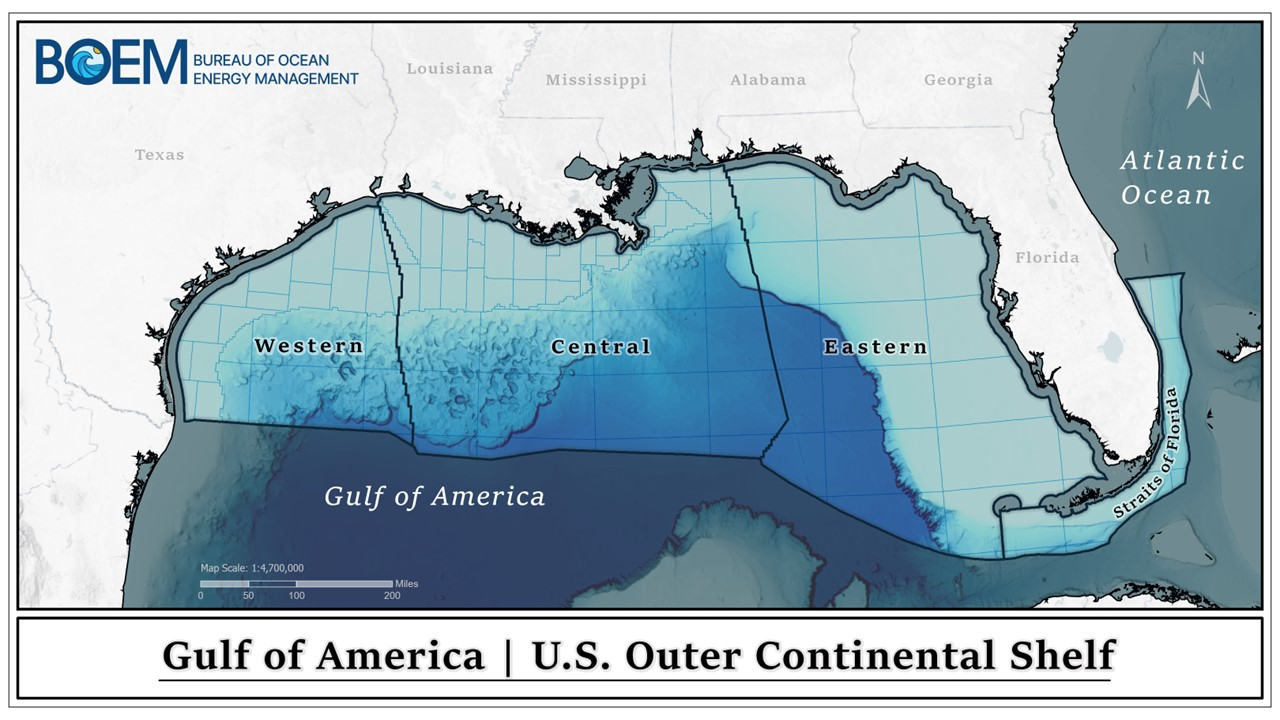
“The Bureau of Ocean Energy Management’s analysis reveals an additional 1.30 billion barrels of oil equivalent since 2021, bringing the total reserve estimate to 7.04 billion barrels of oil equivalent. This includes 5.77 billion barrels of oil and 7.15 trillion cubic feet of natural gas—a 22.6% increase in remaining recoverable reserves.” 

YearNumber of fieldsOriginal ReservesHistorical Cumulative ProductionReserves
Oil BbblGas TcfBOE BbblOil BbblGas TcfBOE BbblOil BbblGas TcfBOE Bbbl
19752556.6159.917.33.8227.28.662.7932.78.61
19804358.0488.923.94.9948.713.663.0540.210.20
198557510.63116.731.46.5871.119.234.0545.612.16
199078210.64129.933.88.1193.824.802.5336.18.95
199589912.01144.937.89.68117.430.572.3327.57.22
20001,05014.93167.344.711.93142.737.323.0024.67.38
20051,19619.80181.852.214.61163.943.775.1917.98.38
20101,28221.50191.155.517.11179.349.014.3911.86.49
20151,31223.06193.857.619.58186.552.783.487.34.78
20161,31523.73194.658.420.16187.553.583.576.84.79
20171,31924.65195.259.720.78188.954.213.876.35.00
20181,31924.86195.559.721.42189.855.213.445.74.45
20191,32526.77197.061.822.12190.956.094.656.15.74
20231,33630.43201.266.224.66194.059.195.777.27.04
Oil and gas reserves and cumulative production at end of year, 1975-2023, Gulf of America, Outer Continental Shelf and Slope. “Oil” includes crude oil and condensate; “gas” includes associated and non-associated gas. Reserves estimated as of December 31 each year.

This increase in reserves will not please those responsible for the current 5 Year Oil and Gas Leasing Plan. They told us that we don’t need more OCS lease sales and that our biggest concern is producing too much oil and gas for too long!

Page 6 of the Leasing Plan:

The long-term nature of OCS oil and gas development, such that production on a lease may not begin for a decade or more after lease issuance and can continue for decades, makes consideration of net-zero pathways relevant to the Secretary’s determinations on how the National OCS Program best meets the Nation’s energy needs.

Energy experts like Dan Yergin and Vicki Hollub have a much different view. Per Hollub:

Crude reserves are being found and developed at a much slower pace than they’ve been in the past. Specifically, she said the world has only newly identified less than half the amount of crude it’s consumed over the course of the past 10 years. Given the current trends, this means demand will exceed supply before the end of 2025.

A bit off-topic, but Jeff Walker, a former colleague and the MMS Regional Supervisor in Alaska, had the best quip about reserve numbers. In explaining an operator’s revised reserve numbers for a producing unit which had leases with different royalty rates, Jeff noted that “oil always migrates to the lower royalty leases.”😉

Read Full Post »

This year’s presidential race features an oddity: a discussion about a ban on fracking. What’s striking is that such a conversation is happening at all. This talk takes participants through the Wayback Machine to the first two decades of this century, when hydraulic fracturing and horizontal drilling—together known as fracking—came to public attention. The U.S. was then the world’s largest importer of oil. Today it is energy-independent with, S&P Global estimates, more than 70% of its oil and more than 80% of its natural gas produced through fracking. The process has become essential to the nation’s energy supply and can’t be eliminated.

Not long ago the prospect of U.S. energy independence seemed fanciful. For more than four decades every president aspired to it, but their goal seemed unattainable. Many observers considered the U.S. destined to grow more dependent on imports. In recent years, however, America has achieved energy independence on a net basis. U.S. output is closing in on 13.5 million barrels of crude oil a day, exceeding that of perennial big producers Saudi Arabia and Russia by several million barrels per day. Add what are called natural-gas liquids, and the U.S. produces around 20 million barrels per day.

WSJ article

More from Dan Yergin

Read Full Post »

Energy experts like Dan Yergin have a different, and far more credible view. Yergin explains that energy transitions don’t happen on command, noting that the world uses almost three times as much coal today as in the 1960’s when oil finally surpassed coal as the world’s primary energy source.

Oxy CEO Vicki Hollub’s recent remarks should serve as a reality check for the 5 Year Plan authors and their counterparts elsewhere in western governments. More oil and gas exploration and production are needed, not less. Leading Oxy investor Warren Buffet agrees.

Crude reserves are being found and developed at a much slower pace than they’ve been in the past. Specifically, she said the world has only newly identified less than half the amount of crude it’s consumed over the course of the past 10 years. Given the current trends, this means demand will exceed supply before the end of 2025.

Oxy CEO Vicki Hollub per the Motley Fool

Recent trends in the Gulf of Mexico, where Hollub’s Anadarko unit is one of the more active and successful operators, reflect Hollub’s concern. Note below the sharp decline in discoveries, as determined by BOEM, over the past 20 years. Effective development of older discoveries and improved resource recovery practices are sustaining GoM production, but declines are inevitable without consistent leasing and increased exploration.

Read Full Post »

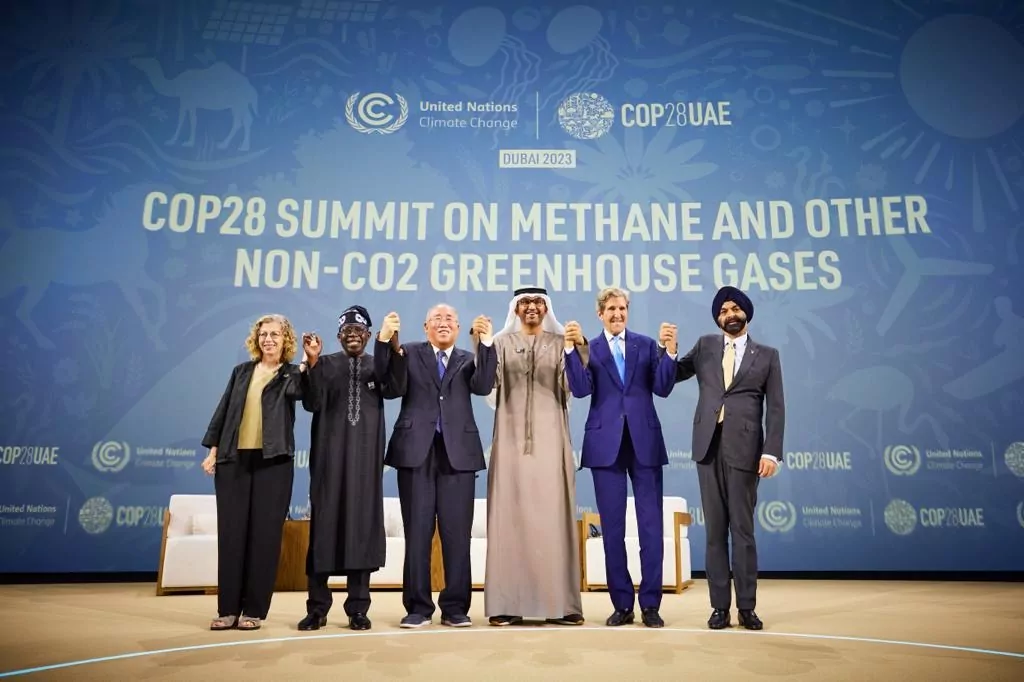
COP28:

The United Nations Climate Change Conference (COP28) closed today with an agreement that signals the “beginning of the end” of the fossil fuel era by laying the ground for a swift, just and equitable transition, underpinned by deep emissions cuts and scaled-up finance.

UN Climate Change News, 12/13/2023

Real world:

“That intrinsic demand that is not visible is so significant that we don’t see demand peaking – I don’t think we’ll see [oil] demand peaking in our lifetimes,” he said. “Particularly as demand growth in [emerging markets] continues to surprise the upside.” 

Christyan Malek, JPMorgan’s top energy strategist

The 19th century is known as the “century of coal,” but, as the technology scholar Vaclav Smil has noted, not until the beginning of the 20th century did coal actually overtake wood as the world’s No. 1 energy source. Moreover, past energy transitions have also been “energy additions”—one source atop another. Oil, discovered in 1859, did not surpass coal as the world’s primary energy source until the 1960s, yet today the world uses almost three times as much coal as it did in the ’60s.

Dan Yergin

You be the judge.

Read Full Post »