Feeds:
Posts
Comments

Posts Tagged ‘BOEM forecast’

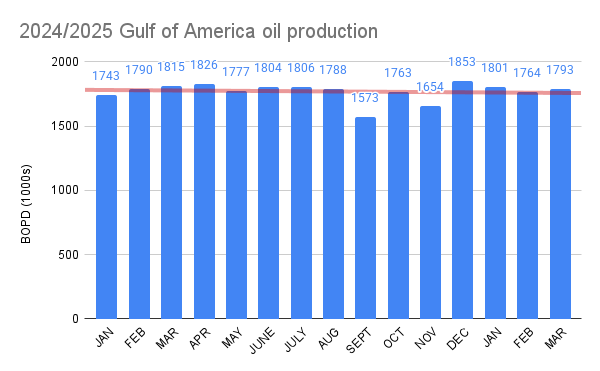
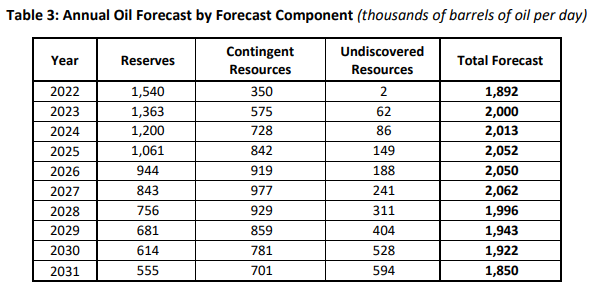
March Gulf of America oil production was nearly identical to the 2024/2025 average, and the trend line (red) is remarkably flat. However, production remains below the volumes forecasted by EIA and well below those forecasted by BOEM.

It appears that new deepwater production is replacing Gulf-wide production declines, but is not yet sufficient to increase total production. We will see if that changes as the year progresses.

  • March 2025 Gulf of America production: 1.793 million bopd
  • 2024/2025 average production: 1.77 million bopd
  • 2024/2025 average omitting Sept. 2024 (tropical storms): 1.784 million bopd
  • EIA forecast for 2025 (published 9/16/2024): 1.9 million bopd
  • BOEM forecast for 2025 (published in 2022, table below): 2.052 million bopd
Read Full Post »

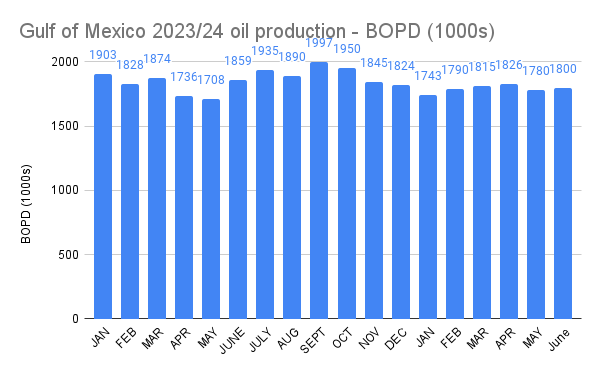
EIA has posted the June 2024 US production data. Gulf of Mexico production was remarkably flat from February through June, with a maximum deviation of only 2.0% (FEB vs. APR) and a deviation of only 0.5% from the beginning of this 5 month period to the end. Looking at the historical EIA data, this is about as stable of a 5 month period as I could find. Presumably, production from the new deepwater facilities is offsetting declines elsewhere as anticipated.

Unfortunately, the production growth forecasted by BOEM is not being realized. BOEM’s 2024 production forecast of 2.013 million bopd will likely be more than 200,000 bopd too high. Their forecast of >2 million bopd through 2027 is increasingly doubtful.  These production forecasts contributed to (or were an excuse for) unprecedented leasing policies intended to prevent production from rising too high for too long.

Per ONRR data, the Gulf of Mexico continued to be the top oil producer for Federal lands in 2023. An additional 72.7 million bbls were produced on Native American lands. New Mexico, which has experienced significant Permian basin production growth, ranked second. The Texas Permian was the dominant US oil producer, but that production is almost exclusively on private lands (a big factor in the Permian success story).

Location (Federal lands)2023 production (bbls)
Gulf of Mexico680,548,975
New Mexico409,987,014
Wyoming47,232,043
North Dakota43,225,104
Other33,635,796

Read Full Post »

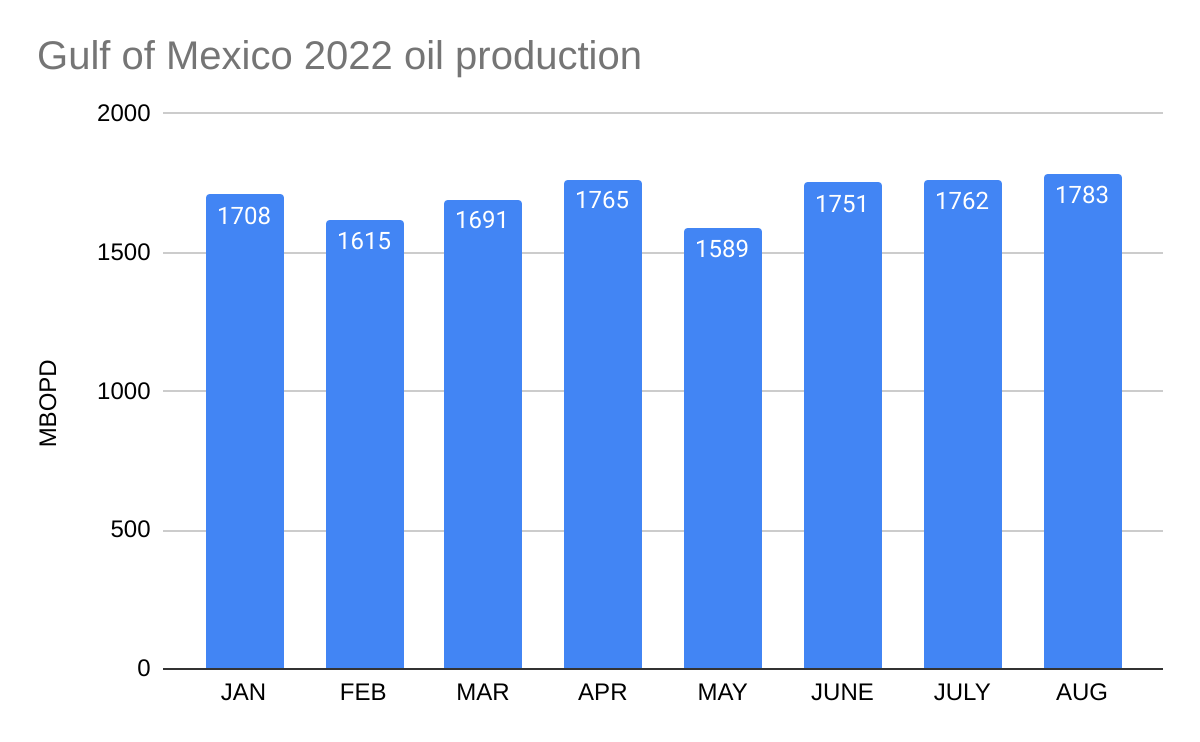
BOEM’s 2022 production forecast, which was just published in July, was 1.9 million BOPD, and will likely be a full 10% too high for the year. One has to assume that the staff work was completed well before the document was actually published. Of greater concern, BOEM’s longer term production forecast, along with unrealistic expectations for the “transition,” were used to justify a subminimal 5 year leasing plan with the fewest sales in history.

Read Full Post »

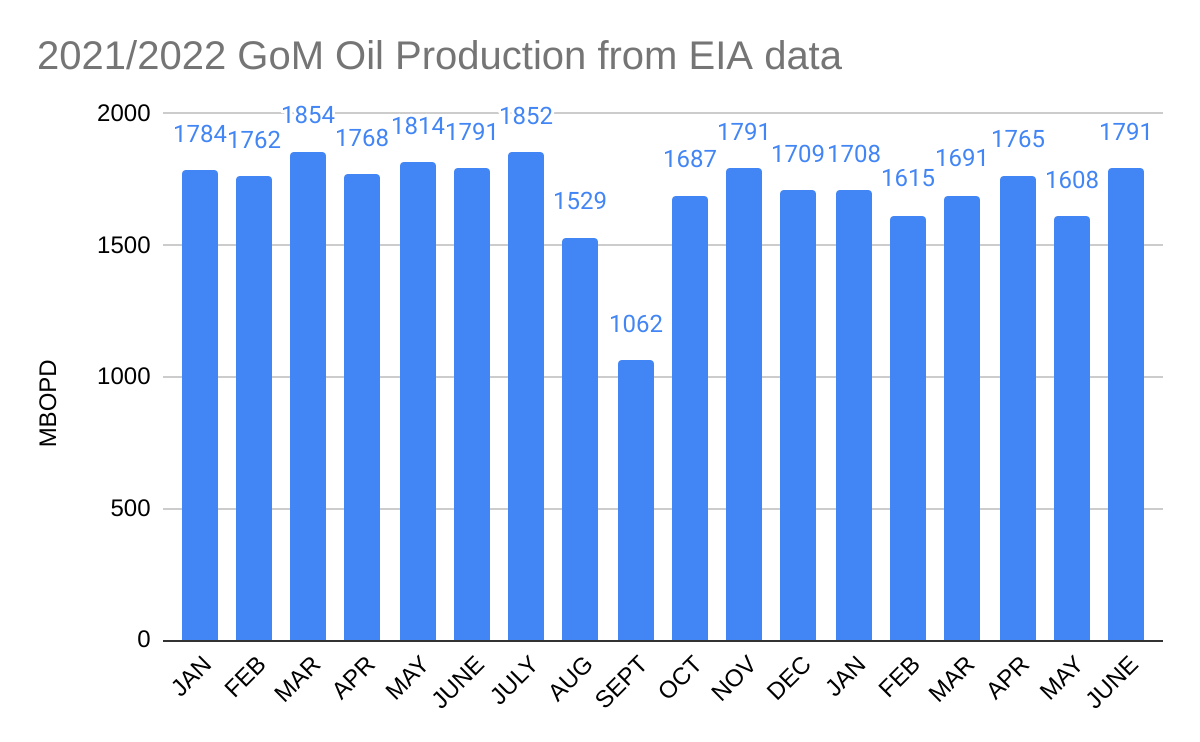
GoM oil production for June increased (see chart below) with King’s Quay and Spruance contributing to the uptick. Other anticipated 2022 startups are not yet producing.

The EIA production forecast for 2022 is proving to be pretty accurate. Kudos to them. However, BOEM’s 2022 forecast of 1.9 million bopd is not achievable and concerns about the intermediate and longer term persist. Unfortunately, BOEM’s highly optimistic forecast for 2022 and beyond, along with unrealistic expectations regarding the energy transition, have significant policy implications. This stunning quote from the 5 year leasing plan explains why so few lease sales were proposed:

BOEM’s short-term (20-year) production forecast for existing leases shows steady growth from 2022 through 2024 and declining thereafter (see Section 5.2.1). The long-term nature of OCS oil and gas development, such that production on a lease can continue for decades makes consideration of future climate pathways relevant to the Secretary’s determinations with respect to how the OCS leasing program best meets the Nation’s energy needs.

5 Year Leasing Program, p.3

Read Full Post »