Good news; production has ramped up nicely via the LMRP cap.
Getting a better picture of the well’s flow rate potential.
Posted in accidents, well control incidents, tagged accidents, blowouts, Deepwater Horizon, drilling, Gulf of Mexico, macondo, oil spill, safety, well control on June 6, 2010| Leave a Comment »
Good news; production has ramped up nicely via the LMRP cap.
Getting a better picture of the well’s flow rate potential.
Posted in accidents, well control incidents, tagged accidents, blowouts, Deepwater Horizon, drilling, Gulf of Mexico, macondo, offshore oil, oil spill, safety, well control on June 4, 2010| Leave a Comment »
We won’t get a good read on the cap’s effectiveness until its placement is adjusted and oil production is stabilized. Flow to the surface may also be initiated through the choke and kill lines, which could supplement and improve the effectiveness of the cap system.
Update from Deepwater Horizon Response Facebook page:
The LMRP Cap is in place and nitrogen pressure head is slowly being reduced in the riser. Throughout the day, the vents in the cap will be closed as production begins on the surface. The goal is to ensure methane hydrates do not form in the cap.
Posted in accidents, well control incidents, tagged accidents, blowouts, bp, Deepwater Horizon, drilling, Gulf of Mexico, Louisiana, macondo, offshore oil, oil spill, safety, well control on June 3, 2010| 2 Comments »
Posted in accidents, well control incidents, tagged accidents, blowouts, Deepwater Horizon, drilling, Gulf of Mexico, macondo, offshore oil, oil spill, safety, well control on June 2, 2010| Leave a Comment »

Posted in accidents, well control incidents, tagged blowouts, drilling, macondo, psychology, safety, Sonnemann, well control on June 1, 2010| Leave a Comment »
I was in the audience almost 18 years ago when Paul Sonnemann made an outstanding presentation on the thought processes and human response tendencies that contribute to well control incidents and other accidents. These tendencies may have been significant contributing factors at both Montara and Macondo. With Paul’s permission I have attached a copy of his 1992 paper. I strongly suggest that you read it.
While considering new regulations, standards, and procedures, the industry and government need to look closely at the issues identified in Paul’s paper.
Posted in accidents, well control incidents, tagged accidents, blowouts, Coast Guard, Deepwater Horizon, drilling, Gulf of Mexico, macondo, Minerals Management Service, offshore oil, oil spill, safety, well control on June 1, 2010| 1 Comment »

The Washington Salute - "You Did It!"
Not surprisingly, the finger pointing in Washington is as out-of-control as the well that precipitated it. This public spectacle is now more closely followed than the actual spill response. As a result, perceptions become reality and reality is altered to support perceptions.
If you want to participate in the bash-fest and dare to compete with Washington’s best, here are some tips:

Posted in Uncategorized, tagged accidents, blowouts, Coast Guard, Deepwater Horizon, Gulf of Mexico, macondo, Memorial Day, offshore oil on May 31, 2010| 1 Comment »

For almost 220 years the Coast Guard has been rescuing distressed mariners, defending our borders, protecting our maritime interests, and responding to environmental threats. With regard to the latter, the Coast Guard is once again demonstrating outstanding leadership in directing the unprecedented national response to the Macondo spill.
I worked closely with Coast Guard personnel throughout my career, both in the field and at the headquarters level, and was extremely impressed with their dedication and professionalism. This military service sometimes goes unnoticed and performs many thankless tasks, like the major spill response it is engaged in today. On Memorial Day, we salute the Coast Guard for its sacrifice and public service. Well done!
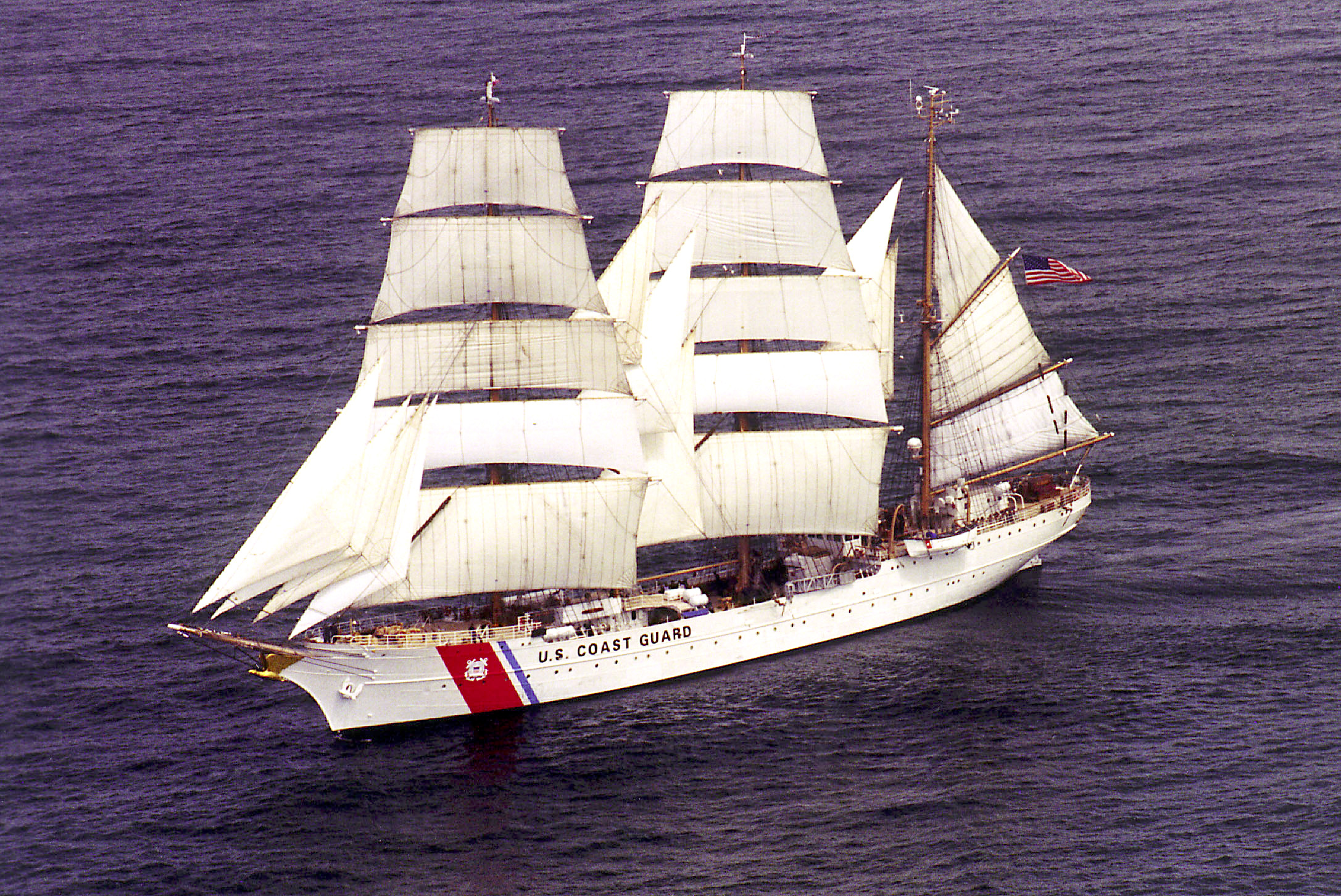
Coast Guard Eagle - tall ship and training vessel
Posted in accidents, well control incidents, tagged accidents, blowouts, Colin Leach, Deepwater Horizon, drilling, Gulf of Mexico, hydrates, macondo, offshore oil, oil spill, safety, well control on May 30, 2010| Leave a Comment »
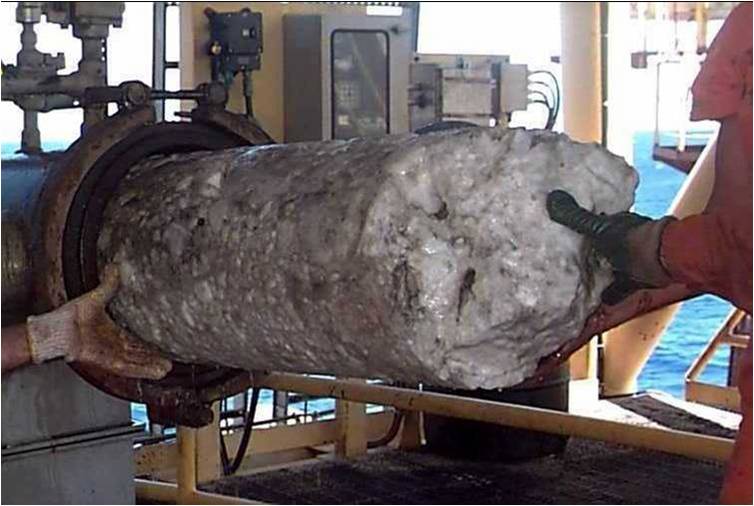
hydrate plug removed from pipeline
In a recent conversation, Colin Leach suggested an interesting plugging option for the Macondo well – hydrates. Why not take advantage of nature and induce hydrate formation to plug the well? We know that hydrates are difficult to prevent when methane mixes with water under the pressure conditions at Macondo. Why not pump cold water down the choke line where it will mix with methane in the stack to form hydrates and plug the well? To optimize the hydrate formation, methane could be injected down the kill line.
Hydrates would definitely form. Chances are good that natural forces would form a solid hydrate plug that would prevent further flow from the well. The only risk would be that the hydrates would form too slowly (unlikely given the experience with the seafloor containment chamber) or that they wouldn’t completely plug the well. The presence of a hydrate plug would also require additional caution when the well is finally re-entered (after the relief well has secured the downhole flowpaths). The best time to attempt the hydrate option would seem to be right now, after the more conventional BOP intervention attempts and before cutting the riser to install the cap.
Posted in accidents, well control incidents, tagged accidents, blowouts, Deepwater Horizon, drilling, Gulf of Mexico, offshore oil, oil spill, safety, well control on May 29, 2010| Leave a Comment »
The Top Kill Operation has been terminated. The next step is to cut the riser above the lower marine riser package and install a cap above that. Oil and gas will flow inside drill pipe to the support vessel. A riser will also be installed and hot water will be pumped down the drill pipe riser annulus to prevent hydrate formation.
Posted in accidents, well control incidents, tagged accidents, blowouts, Deepwater Horizon, drilling, Gulf of Mexico, macondo, offshore, offshore oil, oil spill, safety, well control on May 29, 2010| Leave a Comment »
While I have great respect for the technical and operational teams who are conducting the well intervention work, their allies and supporters are being alienated by the people who are managing the news. From Day 1, the information on the well intervention operations has not been good enough, not even close. We received no details on the repeated ROV attempts to actuate BOPE, very little information about the design and operation of the ill-fated seafloor collection chamber, and are now being totally stonewalled on the critical and long awaited top kill operation.
This is not a private drilling program or research project. This became a public operation when the well blew out on April 20th. Public resources are threatened, and the regional and national economic implications are enormous. How and why are the top kill and other technical data confidential?
The Unified Command needs to stop managing the news and tell us what is happening. For each injection period, we need the starting time, ending time, pressure fluctuations, injection rates, and volume and types of materials injected. For observation periods, we need pressure readings versus time. This information is surely being collected and summarized. Share those summaries with the stakeholders in this massive effort – the American people.
 Bud's Offshore Energy (BOE)