Feeds:
Posts
Comments

Record low exploratory drilling: 2023 will be the third consecutive year with fewer than 50 deepwater exploratory well starts. The only other year this century with <50 deepwater exploratory well starts was 2010 when there was a post-Macondo drilling moratorium.
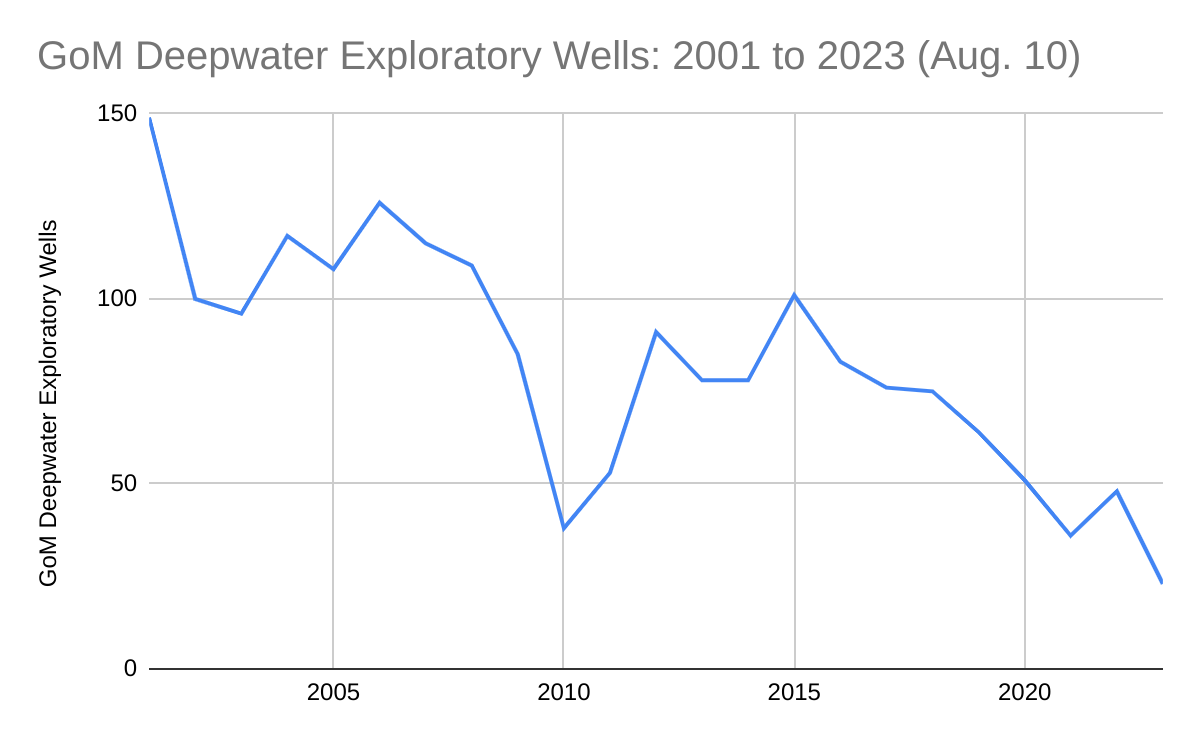
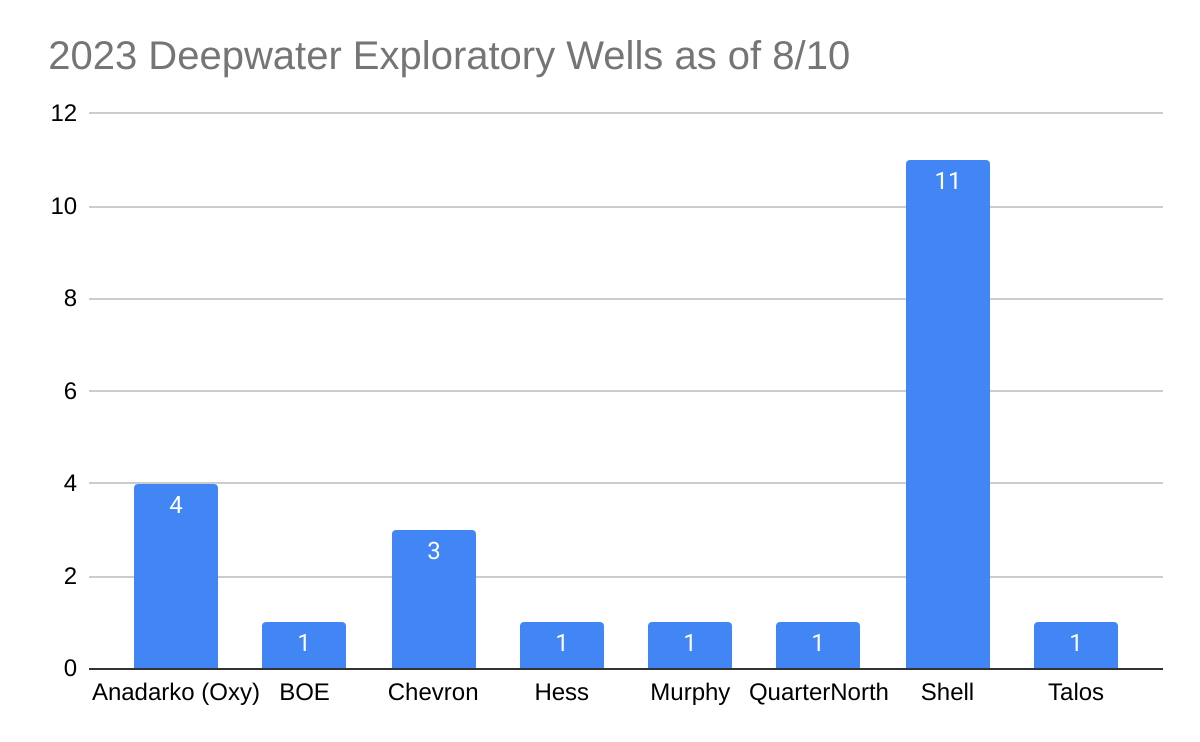
Low participation: Only 8 companies have started deepwater exploratory wells in 2023 YTD. Anadarko, Chevron, and Shell drilled 78% of the wells, with Shell alone accounting for 48%. Compare these numbers with 2001, when 24 companies drilled 149 deepwater exploratory wells.
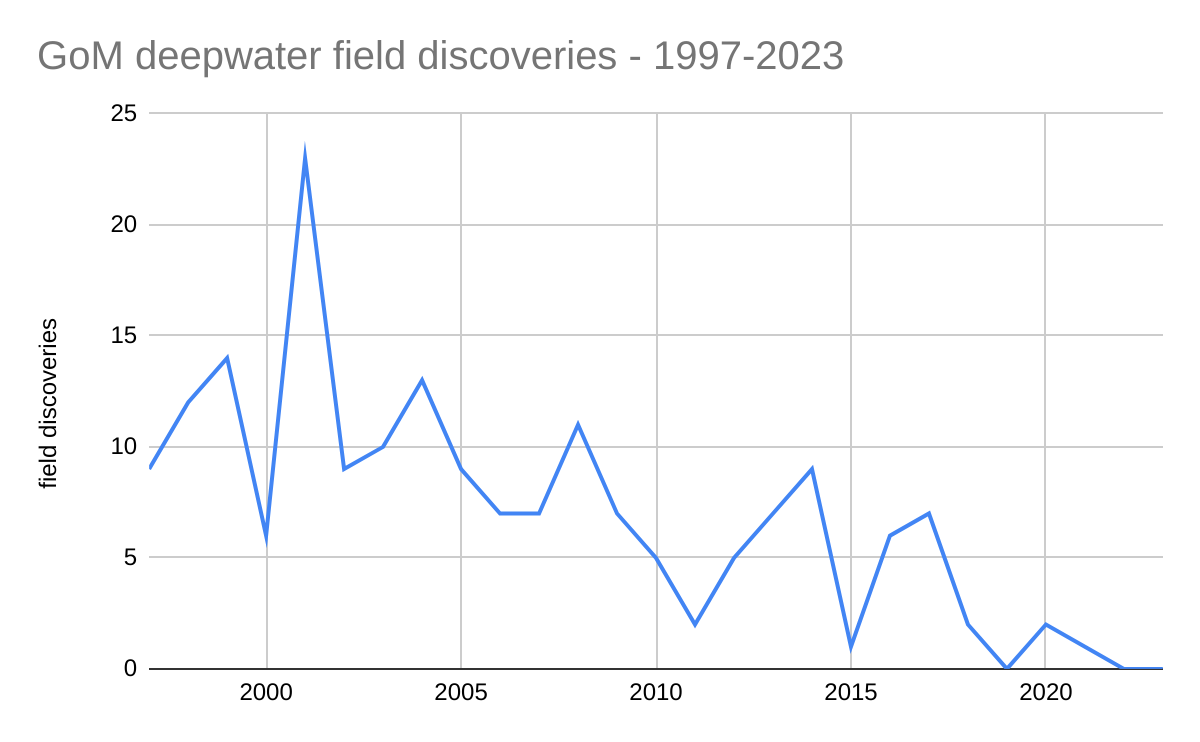
Absence of new field discoveries: Per BOEM’s database, no deepwater fields have been discovered since March 2021 and there were only 3 discoveries in the past 5 years (see chart below)
Leasing and regulatory uncertainty: When will the 5 year leasing plan be finalized and how much will leasing be restricted? What will be the effect of the expanded Rice’s whale area on deepwater operations? To what extent is this expansion justified? What other legal and regulatory threats are on the horizon?

Unrealistic expectations regarding the “energy transition:” In a stunning introductory statement, the Proposed 5 Year Leasing Plan expressed concerns that new leases would produce too much oil and gas for too long. OPEC+ must love the way the US sanctions its own energy production, most notably the oil and gas resources of the OCS. More than 96% of the OCS is off-limits to oil and gas leasing, and the 5 year plan proposed to constrain leasing in the only areas that remain. The favored offshore wind program was intended to be a complement to, not a replacement for, the oil and gas program. Wind energy is limited by intermittency, space preemption, navigation, and wildlife protection concerns.

Some companies have visions of the GoM as a carbon dumping hub: The largest US oil company, which hasn’t drilled a well in the GoM in nearly 4 years and operates just one production platform, seeks praise and profit by sequestering CO2 beneath the Gulf while maximizing oil production elsewhere. How will this sustain economically and strategically important GoM oil and gas production?

1137 comments to date per Regulations.gov. This would imply one or more organized commenting campaigns.

I will share my comments on this blog after they have been submitted.

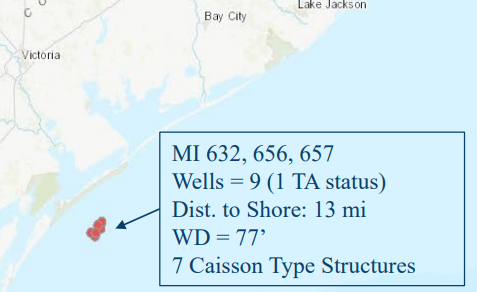
For the first time in the history of the US OCS program, Federal ontracts have been awarded for the decommissioning of facilities in the Matagorda Island area of the Gulf of Mexico. The use of taxpayer funds for this purpose should be an embarrassment for the offshore industry and its regulators, past and present.

Rather than touting these contracts, the regulators should be explaining how this happened and how it will be prevented in the future. Fortunately, BOEM’s proposed decommissioning financial assurance rule is open for comment until the end of this month, so we have an opportunity to provide input.

Matagorda Island Gas, the company whose wells the public will be plugging, had a poor compliance record, and is another example of why compliance should be a primary factor in determining supplemental financial assurance requirements.

USS Oriskany (CV-34) holds the distinction of being the final Essex-class aircraft carrier ever completed. Instead of being decommissioned and scrapped, the ship was intentionally sunk approximately 25 miles south of Pensacola, Florida. This unique decision transformed the USS Oriskany into the largest ship ever used to create an artificial reef. Due to this extraordinary use, the carrier has earned the affectionate nickname “The Great Carrier Reef.” from Military Tactics

Savvy marketing? Looking for mandates and incentives? Taxation opportunity?

Burps are the top source of methane emissions from cattle. Semex, the genetics company that sold Loewith the semen, said adoption of the low-methane trait could reduce methane emissions from Canada’s dairy herd by 1.5% annually, and up to 20%-30% by 2050.

The Canadian government currently offers no incentives for low-methane cattle breeding, but the agriculture department said in an email that Ottawa is working to introduce offset credits for reducing methane through better manure management.

New Zealand will begin taxing farmers for methane from cattle in 2025.

Reuters

Common sense reservations:

Juha Nousiainen, senior vice-president at Valio, a Finnish dairy, warned that breeding cattle to burp less methane could create digestive problems. Methane is produced by microbes in the cow’s gut as it digests fibre, not by the animal itself, he said.

We have our own genetically engineered livestock offshore. 😀

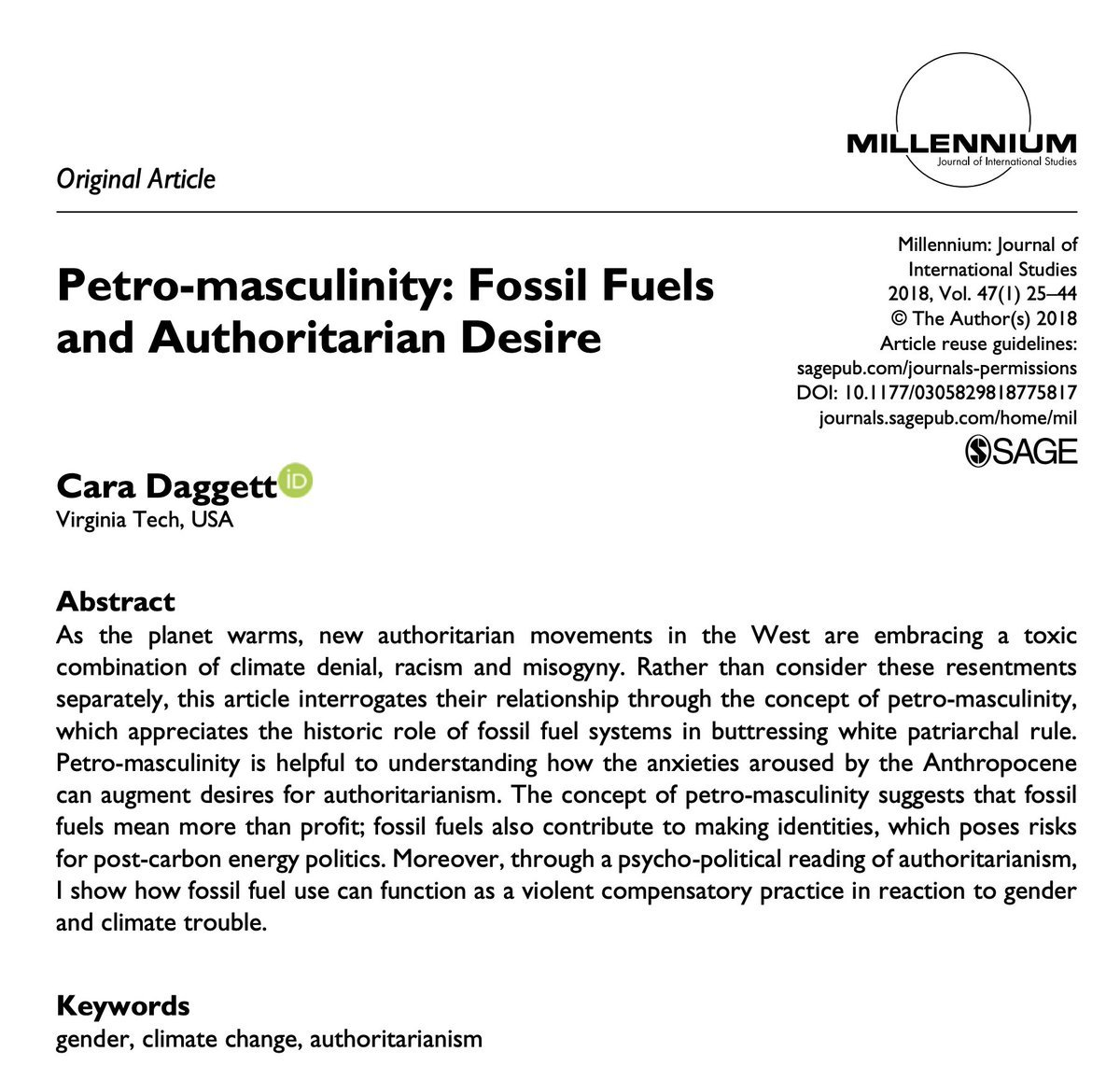
I thought the abstract below might be satire, but alas that is not the case. Here is a link to the full paper.

The paper is short on facts and long on dogma and political rhetoric, but is not entirely without merit. The author acknowledges, albeit in a backhanded manner, the massive social benefits that fossil fuels have provided (quote below). Would our economy have been strong enough to support academic pursuits such as hers were it not for fossil fuels and “petro-masculine” ingenuity and labor?

Fossil fuels built the modern world. There remains an appreciation for fossil fuels – or, at least, for the high energy consumption they provided – as a catalyst of mass liberal democracy. This is evident in ecomodernist calls for a good Anthropocene that would decouple the benefits of fossil fuels from the fuels themselves. After all, while industrialisation wreaks planetary destruction, its spread was coterminous with humanist victories like the abolition of slavery, increased literacy rates, gender equality and poverty reduction. Dipesh Chakrabarty notes that this cannot be a coincidence, and that ‘the mansion of modern freedoms stands on an ever-expanding base of fossil-fuel use. Most of our freedoms so far have been energy-intensive.

In the interest of balance, the author might have also acknowledged the impressive technical advances that have made fossil fuel production cleaner and more efficient. See also: simpler, safer, greener and the beauty of deepwater production.

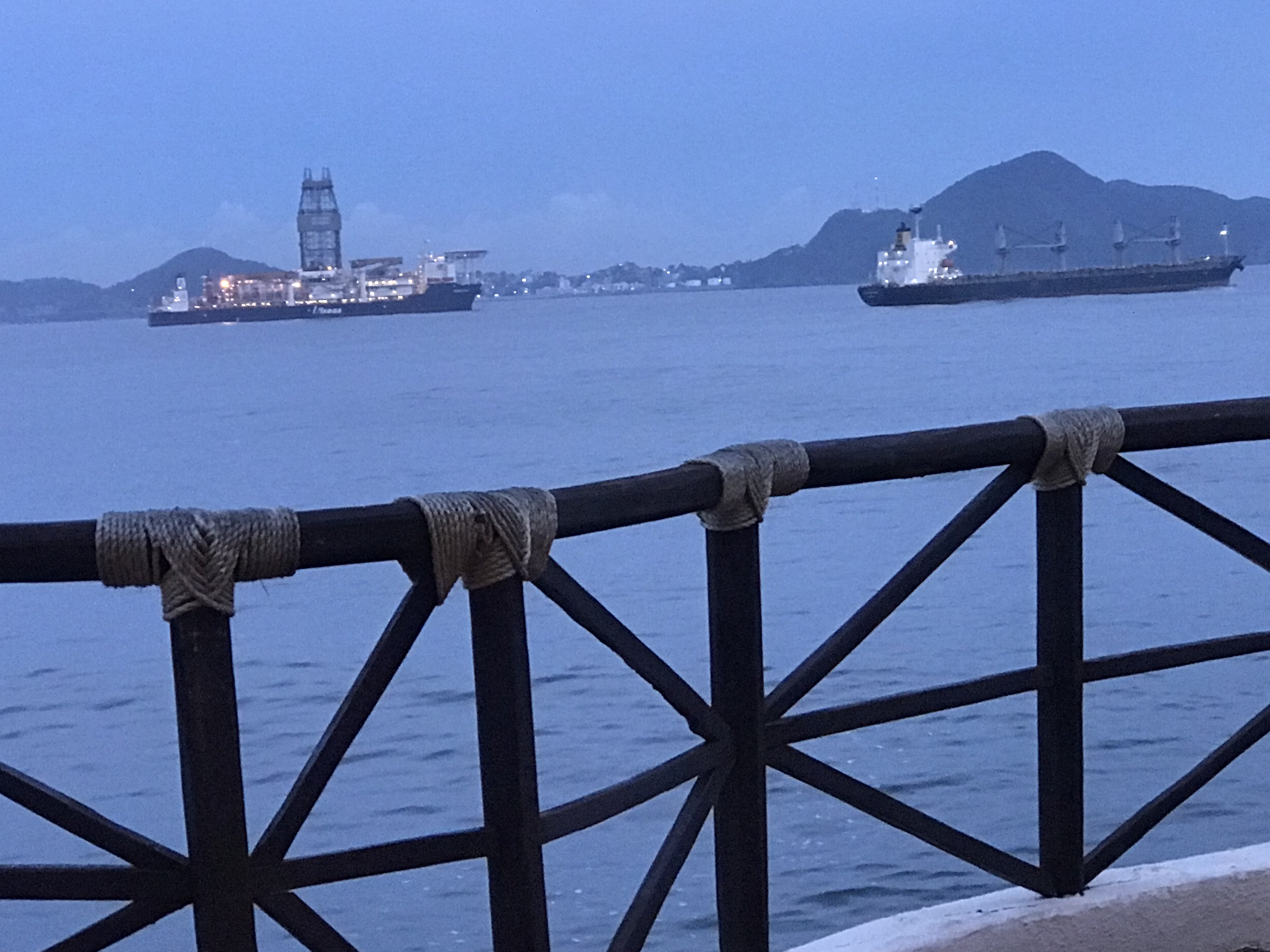
Our Mexican correspondent, Andrew Konczvald, reports that the Hidden Gem, a deepsea mining vessel owned by The Metals Company (TMC) is still parked offshore Manzanillo. The ship has moved a couple of miles and is now near a shipping lane. See Andrew’s pictures below.

Per TMC’s latest update, the earliest that deepsea mining operations could be conducted is late 2025, so the vessel is likely to remain in Manzanillo for Andrew’s viewing pleasure. Nothing like a water view with a rig on the horizon. 😉

Andrew’s viewing location
5X enlargement for a better look at the mining vessel.

As Dan Yergin reminds us, energy transitions don’t happen on command:

The 19th century is known as the “century of coal,” but, as the technology scholar Vaclav Smil has noted, not until the beginning of the 20th century did coal actually overtake wood as the world’s No. 1 energy source. Moreover, past energy transitions have also been “energy additions”—one source atop another. Oil, discovered in 1859, did not surpass coal as the world’s primary energy source until the 1960s, yet today the world uses almost three times as much coal as it did in the ’60s.

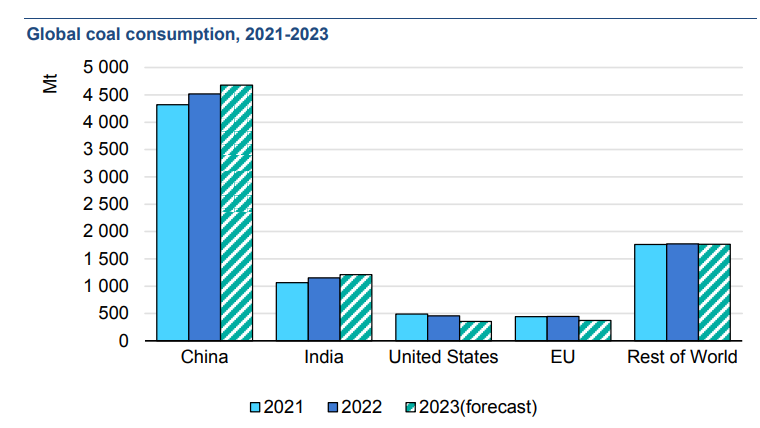
Coal is not going away. Per IEA, coal consumption in 2022 set a new record (8.3 billion tonnes) and will stay at or near that level in 2023 and 2024. See the chart below for 2021, 2022, and 2023 (est.) consumption in million tonnes. India and China are joined by the “Rest of the World” (outside the US and EU) in the billion tonne club.

Message: Coal is cost effective and reliable, and will continue to be a major source of energy.

See the Block Island Wind Farm’s reef environment in the BOEM video below.

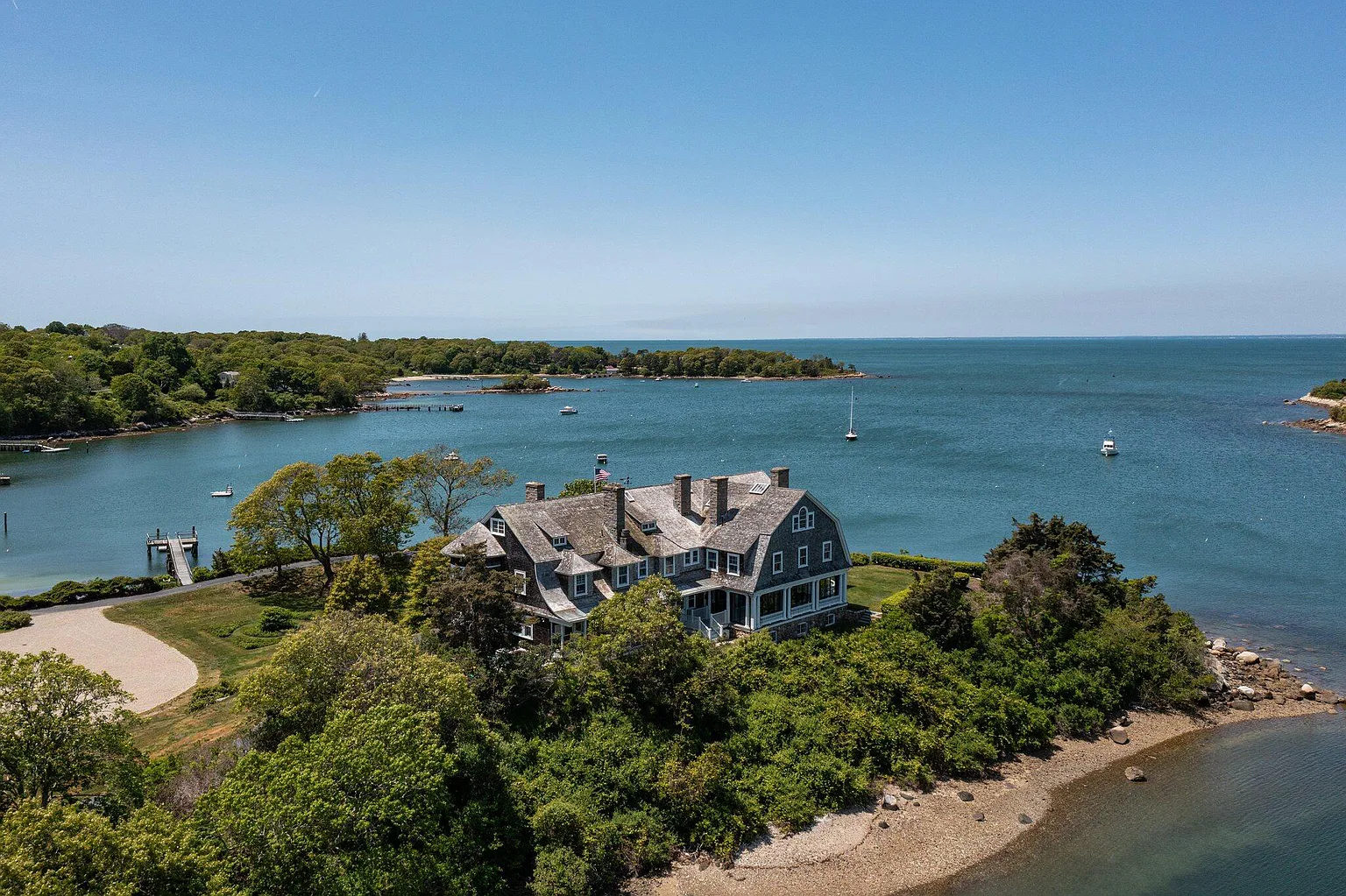
According to Zillow, the National Academies beloved Jonsson Center in Woods Hole was sold on Friday (8/4) for $13.5 million, less than half the original asking price. I have no idea who bought it and how it will be used. The Jonsson Center was an amazing venue for meetings and conferences. The beautiful estate served the marine science and policy communities well for decades.