Feeds:
Posts
Comments

This year’s presidential race features an oddity: a discussion about a ban on fracking. What’s striking is that such a conversation is happening at all. This talk takes participants through the Wayback Machine to the first two decades of this century, when hydraulic fracturing and horizontal drilling—together known as fracking—came to public attention. The U.S. was then the world’s largest importer of oil. Today it is energy-independent with, S&P Global estimates, more than 70% of its oil and more than 80% of its natural gas produced through fracking. The process has become essential to the nation’s energy supply and can’t be eliminated.

Not long ago the prospect of U.S. energy independence seemed fanciful. For more than four decades every president aspired to it, but their goal seemed unattainable. Many observers considered the U.S. destined to grow more dependent on imports. In recent years, however, America has achieved energy independence on a net basis. U.S. output is closing in on 13.5 million barrels of crude oil a day, exceeding that of perennial big producers Saudi Arabia and Russia by several million barrels per day. Add what are called natural-gas liquids, and the U.S. produces around 20 million barrels per day.

WSJ article

More from Dan Yergin

The table below illustrates the dramatic decline in bidding for Atlantic wind leases over the past 2 years. (The California sale is also included in the table.)

offshore areasale dateleases soldacres leasedbonus bids
($ millions)
$/acre
NY/NJ2/20226488,0004,3708955
California12/20225373,268757.12028
Central Atl.8/20242277,94892.65333
Gulf of Maine10/20244439,09621.9 50

Accepting that bidding at the 2/2022 sale, which averaged nearly $9000/acre, was irrationally exuberant, bidding at this week’s sale was still incredibly weak. Even the bids at the Central Atlantic sale, just 2 months ago, averaged $333/acre, 6.7 times higher than the Gulf of Maine bids.

Energy giants Equinor, Repsol, and Total were among the eligible Gulf of Maine bidders that opted not to participate.

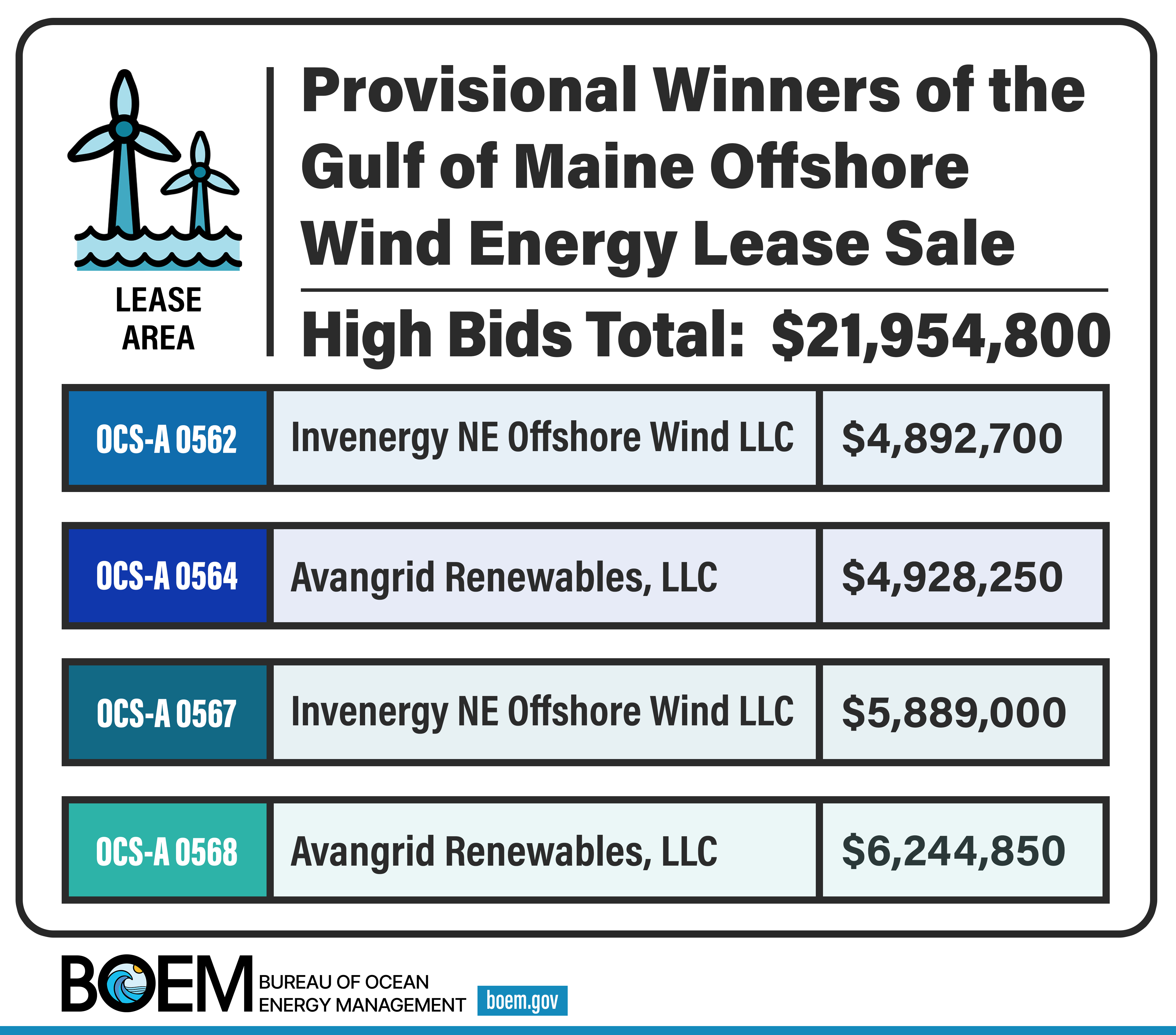
Do the Gulf of Maine bids pass BOEM’s fair market value tests? Apparently so; the sale notice established $50/acre as the minimum bid, and that is where the bidding started and ended. Invenergy and Avangrid had no competition and presumably got the tracts they wanted at the lowest possible price. We’ll see how this works out for the companies and power consumers.

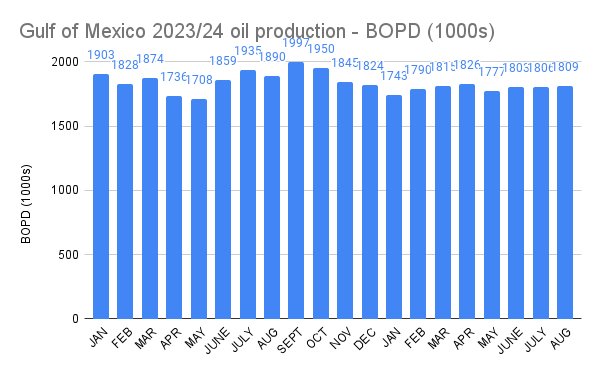
The streak of unprecedented Gulf of Mexico oil production stability was extended to 7 months in August.

As a result of shut-ins for Tropical Storms Francine and Helene, the streak will end when the production for Sept. is posted.

As promised, Ocean City, Maryland, neighboring towns, counties, fishing groups, the Save Right Whales Coalition, and a long list of commercial entities have sued BOEM for approving the Construction and Operations Plan (COP) for the Maryland Offshore Wind project. The complete filing is attached.

The plaintiffs’ discussion of BOEM’s failure to consider true alternatives (begins on p. 43) is particularly interesting. They contend that “BOEM rejected out-of-hand all true alternatives, and selected alternatives with only minor differences in number of turbines and the route for the power cables from the proposed action.

The plaintiffs also assert (p. 44) that “BOEM flatly rejected the option of not authorizing the Maryland Offshore Wind Project—as though approval were foreordained, with only the details to be determined.

The plaintiffs’ argue further (p. 46) that BOEM failed to analyze the 3 phases of the project, particularly the third phase which is open-ended at this time.

Blade failure concerns are discussed beginning on p. 49. Excerpt:

Missing from BOEM’s Final EIS is any discussion or analysis of the environmental impacts in the event of blade and turbine failure and the degradation of Project components, which are known and foreseeable possibilities that should have been reviewed and analyzed by BOEM. Risks of blade and turbine failure and component degradation are not hypothetical. Rather, they pose real dangers to the water quality of the ocean, fish and essential fish habitats, marine mammals, benthic resources, and recreational and commercial boaters.”

As previously recommended, wind leasing and plan approvals should be paused until BSEE’s investigation of the Vineyard Wind blade failure and the associated environmental damage study have been completed.

There is much more in this filing for those who want to take a closer look.

Four of the eight tracts that were offered received bids. Only two companies participated, and the amounts were a fraction of the bids submitted for just two leases at the last Central Atlantic sale.

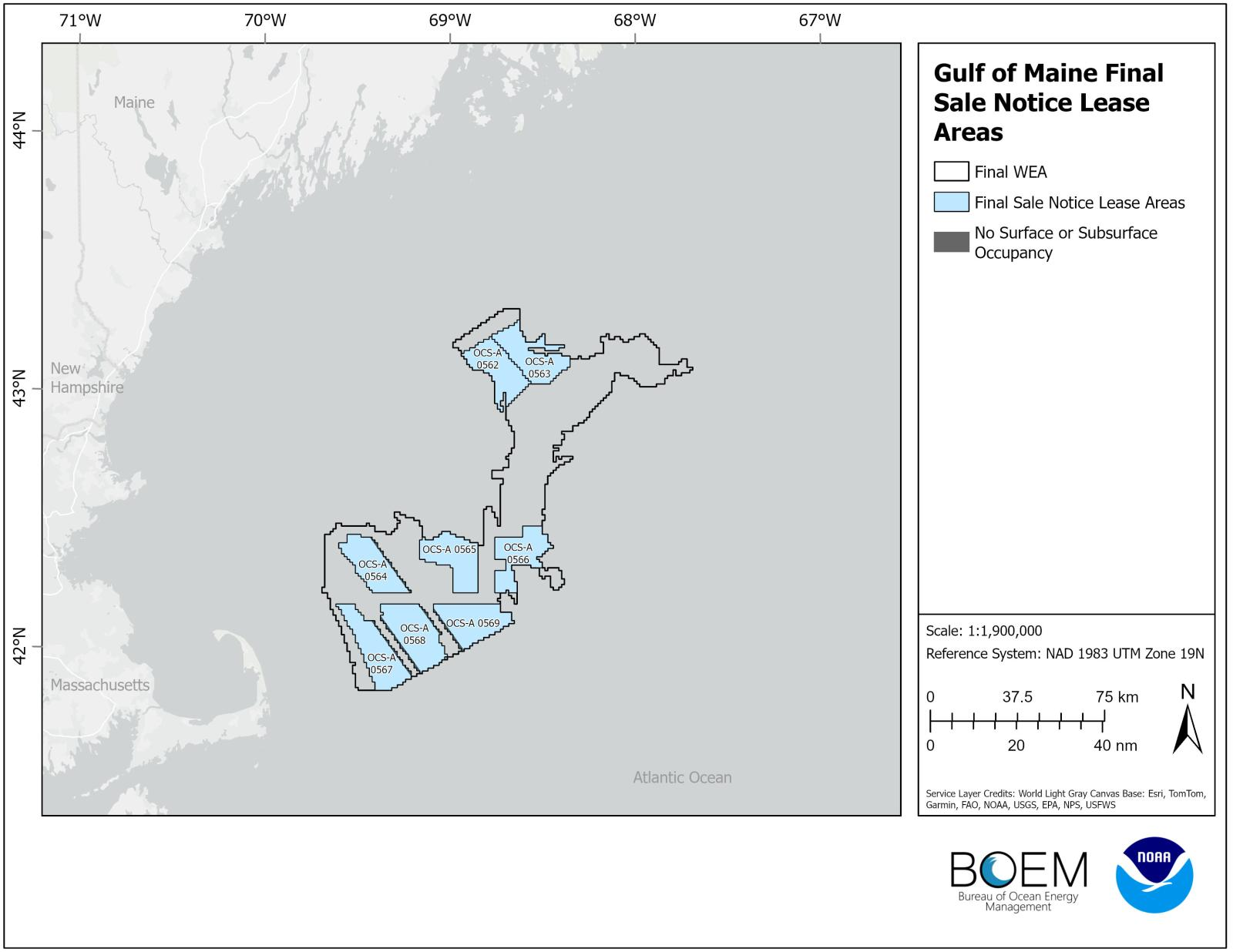
Gulf of Maine Final Lease Areas, Acres, and Assigned Region

Lease Area ID Total Acres Developable Acres 
OCS-A 0562 97,854 97,854 
OCS-A 0563 105,682 105,682 
OCS-A 0564 98,565 93,756 
OCS-A 0565 103,191 103,191 
OCS-A 0566 96,075 96,075 
OCS-A 0567 117,780 113,208 
OCS-A 0568 124,897 116,363 
OCS-A 0569 106,038 101,757 
Total 850,082 827,886 
Average106,260103,486
Note that the ave. lease size is 18.4 times larger than a typical Gulf of Mexico oil and gas lease

Today’s Gulf of Maine sale will likely be the last wind lease sale for at least a year.

Per a provision in the “Inflation Reduction Act,” no offshore wind leases may be issued after 12/20/2024, the one year anniversary of the last oil and gas lease sale (no. 261).

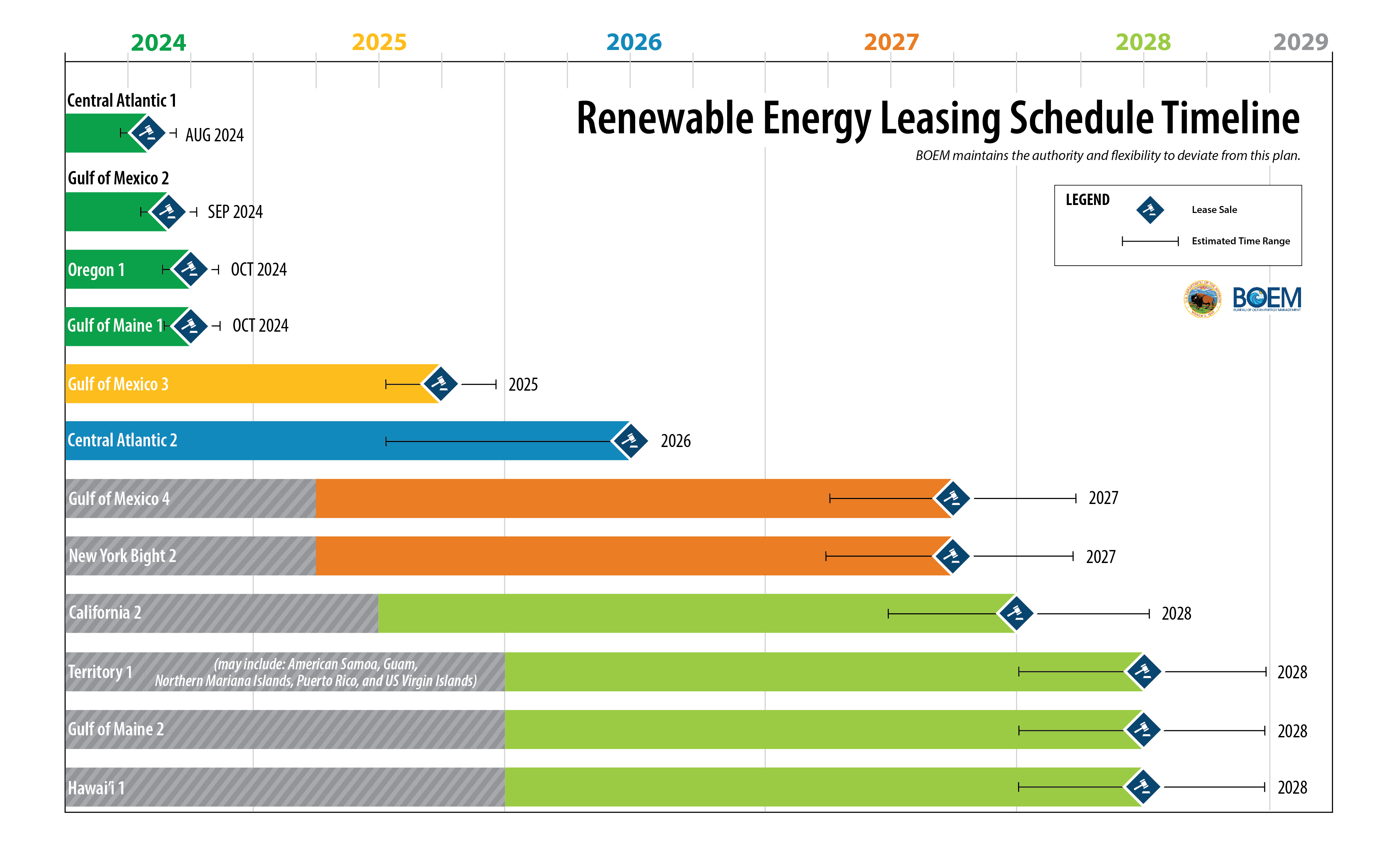
Perhaps as a result of the legislative restriction, their desire to maximize wind leasing, and their plan to hold the fewest oil and gas lease sales in the history of the OCS program, BOEM front-loaded the 5 year wind leasing plan to include 4 sales from Aug. – Sept. 2024 (see schedule below). However, contrary to plan, the Gulf of Mexico sale was cancelled for lack of interest and the Oregon sale was cancelled at the request of the Governor in response to tribal and coastal county opposition.

The date of the next oil and gas lease sale is anyone’s guess. Next week’s elections are, of course, the elephant in the room. However, there is also an enormous ruling by a Federal judge in Maryland that would halt the issuance of Gulf of Mexico oil and gas leases and the approval of operating plans effective Dec. 20, 2024. Ironically (or perhaps not?), this is the same date after which no wind leases may be issued absent an oil and gas lease sale.

Chevron and industry trade associations have appealed Judge Boardman’s ruling. (Given the enormous implications of that ruling on current and future Gulf of Mexico production, I’m curious as to why Chevron is the only major producer that is a party in this appeal. Chevron was also the only producer that was a party in the litigation overturning the restrictive Sale 261 lease sale provisions. I’m assuming there is some legal or tactical reason for the absence of participation by Shell, bp, and Oxy?)

Finally, given the legislation linking future wind sales with oil and gas sales, are the Sierra Club et al, the plaintiffs in this case, comfortable with Judge Boardman’s decision? Perhaps they are okay with the judge’s ruling given the absence of any planned Atlantic wind leasing until 2026?

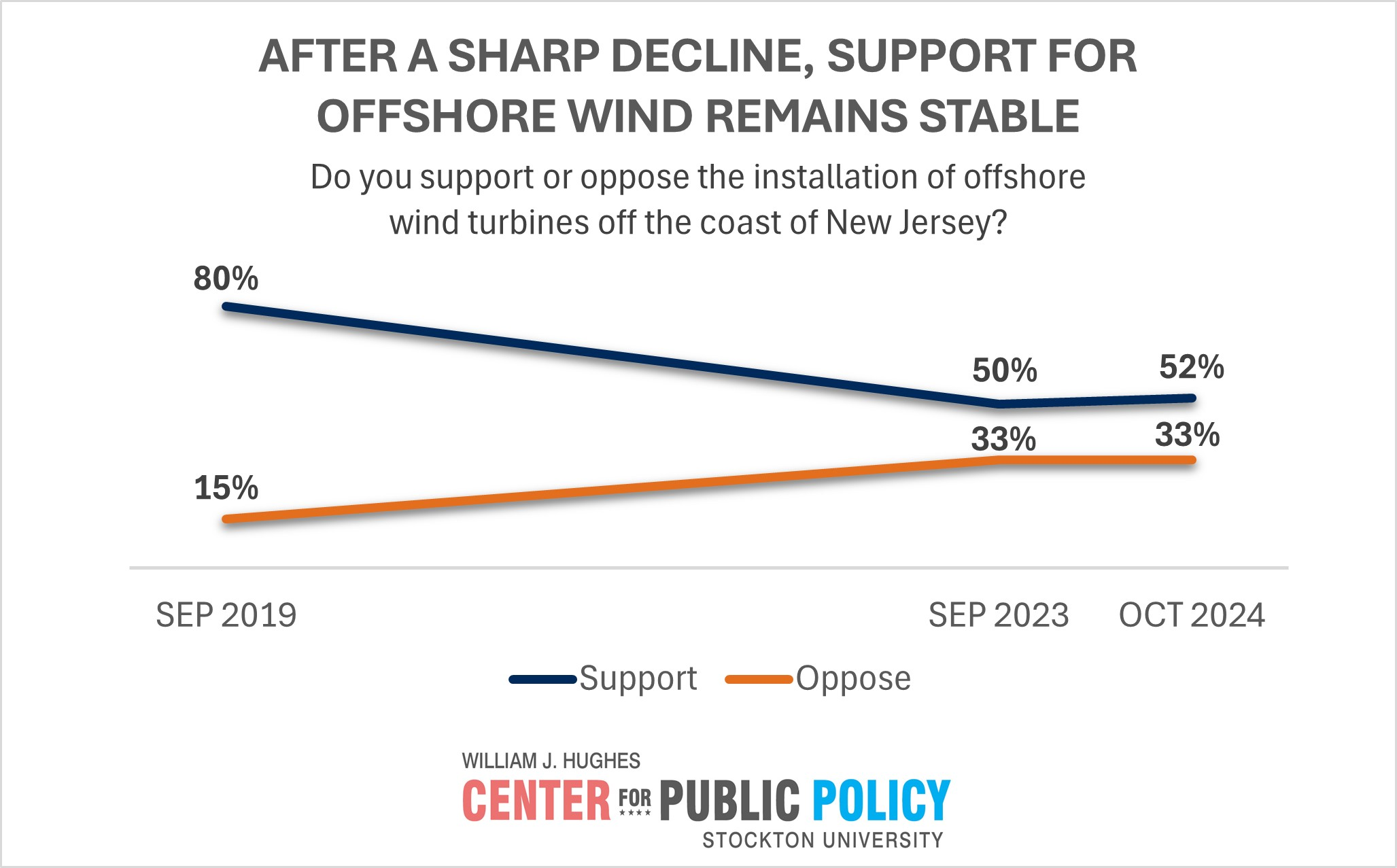
Attached are the full results of a Stockton University poll that assessed New Jersey voters’ support for offshore wind development. Stockton’s methodology is explained on the last page of the attachment (also pasted below).

Observations:

  • The poll does not appear to be agenda driven, either for or against offshore wind development.
  • The sharp decline in public support (first slide below) was contrary to the advocacy flow in that it occurred during a period of strong and persistent State and Federal promotion of offshore wind energy.
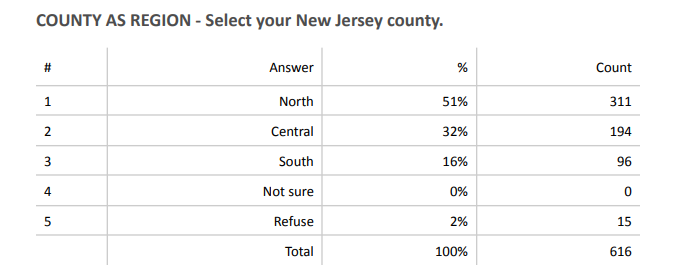
  • More than half of the respondents were from North Jersey, the region that is more closely aligned politically with the Governor and the Federal Administration. Only 16% of the respondents were from South Jersey where opposition to offshore wind projects is the strongest. The imbalance is understandable in that it is consistent with the regional imbalance in population.
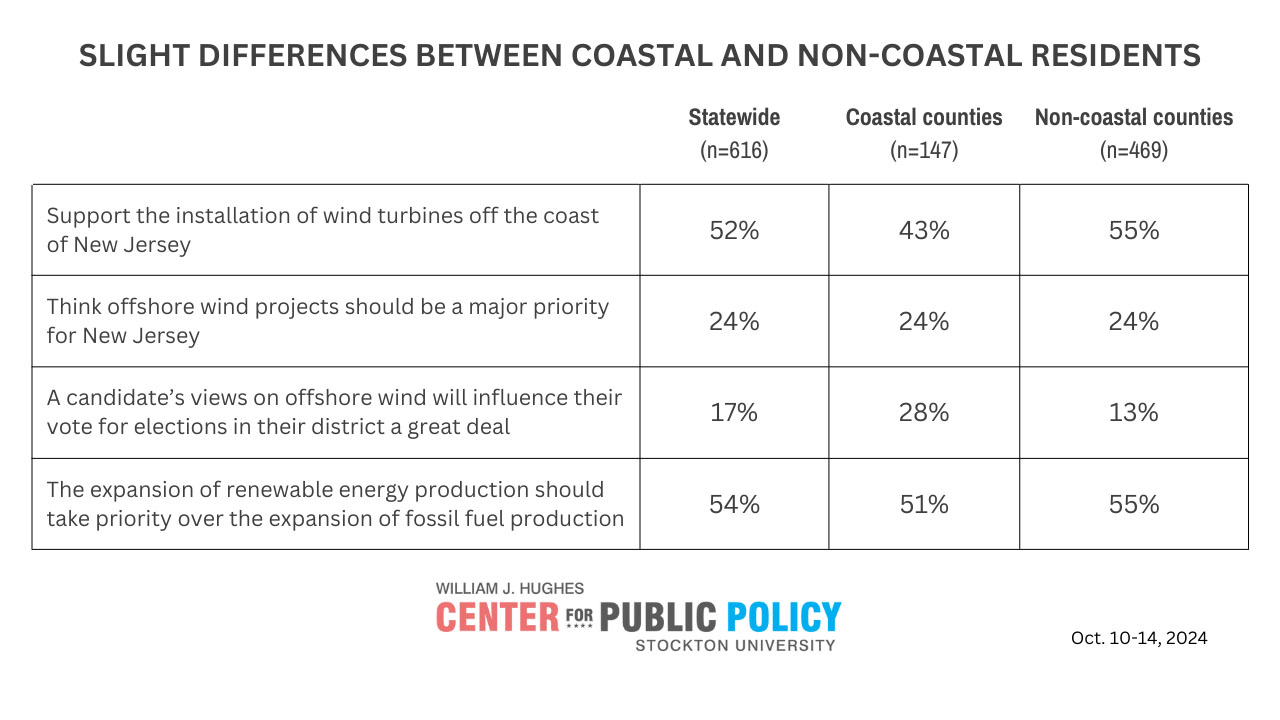
  • Unsurprisingly, support for offshore wind is lowest in coastal counties. In that regard, more granularity would have been nice. Cape May County is the US epicenter of resistance to offshore wind development and is engaged in litigation with the Federal government over the Ocean Wind 1 project. Polling specific to Cape May and each of the other coastal counties would be beneficial.
  • The polling data suggest that offshore wind projects are not a priority for most New Jersey voters. Only 24% of both coastal and non-coastal residents view offshore wind as a major priority (third slide below).

Methodology
The poll of New Jersey registered voters was conducted by the Stockton Polling Institute of the William J. Hughes Center for Public Policy from Oct. 10-14, 2024. Stockton University students texted cell phones with invitations to take the survey online and Opinion Services supplemented the dialing portion of the fieldwork, which consisted of cell and landline telephone calls. Overall, 91% of interviews were conducted on cell phones and 9% on landline phones. In terms of mode, 65% were reached via dialing and 35% were reached via text-to-web. A random sample of 616 New Jersey registered voters were interviewed. Both cell and landline samples consisted of random digit dialing (RDD) and voter list sample from MSG. Data are weighted based on U.S.Census Bureau ACS 2023 data for the citizen voting age population in New Jersey on variables ofage, race, education level, and sex. The poll’s margin of error is +/- 3.9 percentage points at a95% confidence level. MOE is higher for subsets. Sampling error does not account for other potential sources of bias in polls such as measurement error or non-response.

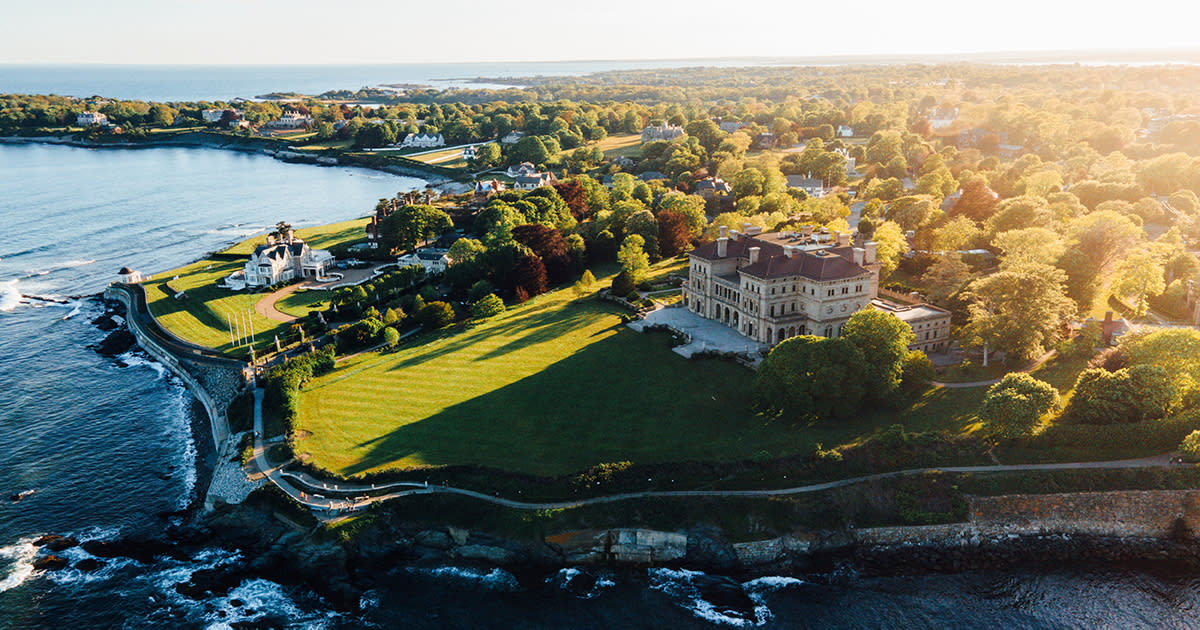
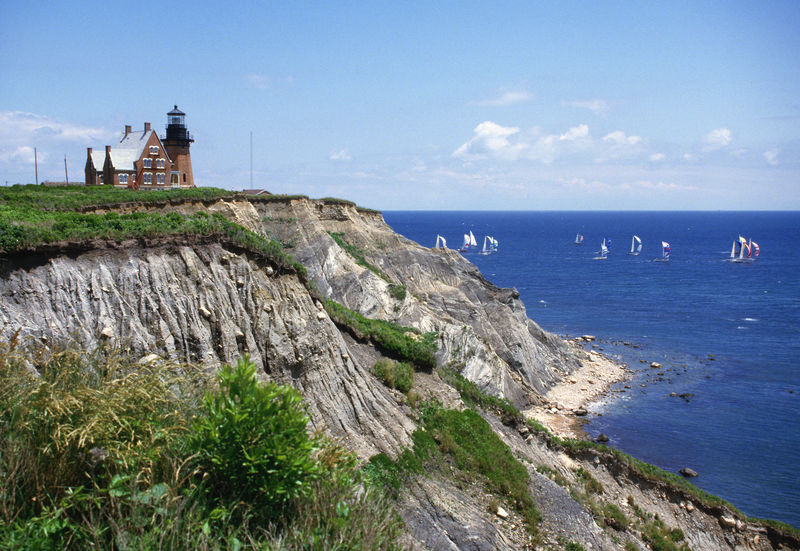
Newport Cliff Walk

Defendant Bureau of Ocean Energy Management (“BOEM”), acting as lead federal agency, violated federal law when it approved an industrial-scale energy project known as Revolution Wind. BOEM approved this project without considering its adverse effects on National Historic Landmarks (NHLs) and other historic properties within one of the most historically and culturally significant communities in the country. BOEM also failed to take a “hard look” at Revolution Wind’s impacts on the environment, leaving unanswered questions even though the law required BOEM to inform the public about the project’s environmental benefits and costs.

Those who have visited the Newport Cliff Walk and historic “cottages” are likely to appreciate the concerns of the Preservation Society. Their court filing is attached.

The Southeast Lighthouse Foundation is also a party in this litigation

The attached brief was filed in the Supreme Court today by the Aquinnah Wampanoag Tribe of Gay Head in support of the Nantucket group ACK for Whales petition that was previously posted.

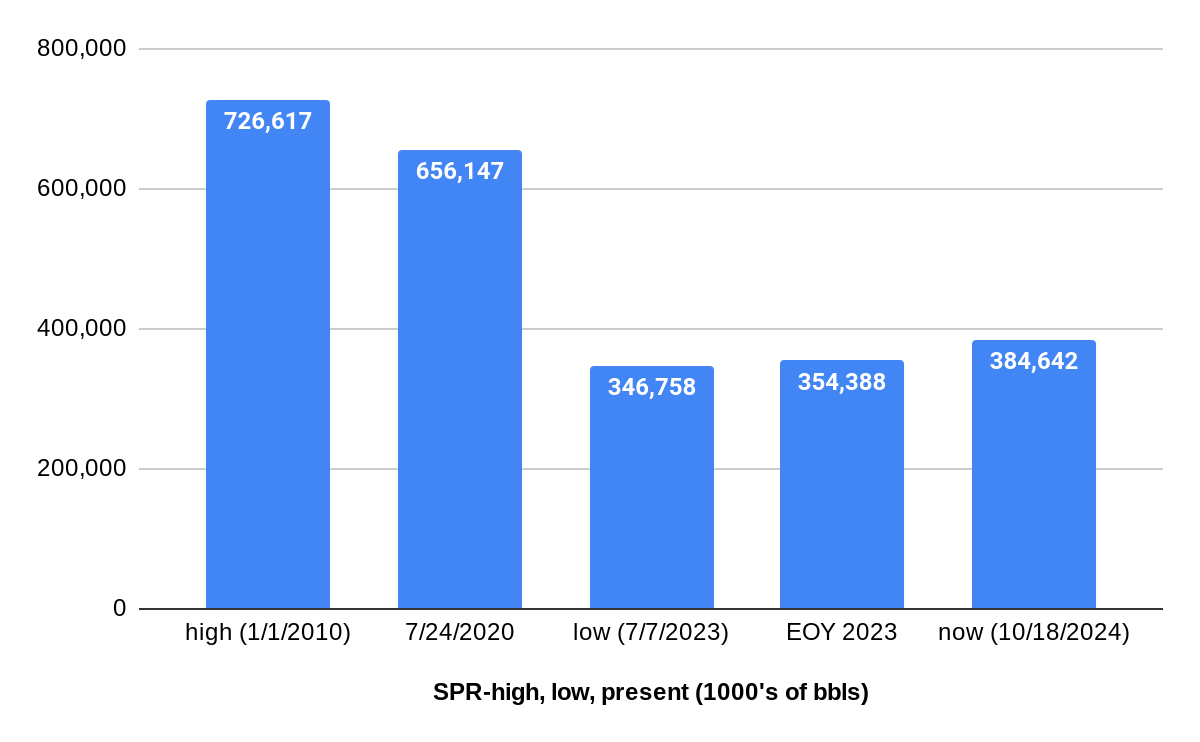
The Strategic Petroleum Reserve would have no doubt been tapped again, as the Administration implied in June, if prices had exceeded $80/bbl for a sustained period prior to the upcoming elections. Fortunately, for the consumer and the SPR, that has not been the case.

Prior to the 2022 midterm elections, oil prices reached as high as $122/bbl in June and remained above $90/bbl through July. The SPR was tapped hard with a massive reduction of 123 million bbls in the 5 months prior to the elections.

Despite the modest additions to the SPR in 2024, the reserve is only about one-half of capacity and 11% above the all-time low (7/7/2023).